Föräldrakraft – a gathering place that strengthens families
Every Friday, families gather at Erikshjälpen Framtidsverkstad in Gränby and shares experiences and builds relationships. With support from the Postcode Lottery we run the project Föräldrakraft , with the goal of strengthening parents and giving children safer growing up conditions.
The air is filled with the aroma of coffee and freshly made cheese sandwiches. Parents arrive, greet one another, and take their seats at the tables. They talk about everyday worries and dreams for the future—about children, school, setting boundaries, and the teenage years. The children play nearby. The atmosphere is relaxed, open, and unpretentious.
Café Framtid
From 11 a.m. to 1 p.m., the Café Framtid activity takes place. The main focus here is to meet, talk, and support one another. When “ Föräldrakraft ” was launched, consideration was given to the fact that many families are in a financially vulnerable situation. Therefore, the program focuses on being accessible and costing as little as possible.
“We want to offer a wide range of support to parents,” says program coordinator Sarah Campbell. “This could be a study group, a place to get information, or simply a place where you can take a breather. We recommend activities that cost little or nothing at all, or we organize our own.”
We tailor our activities to the people who come here. How many there are. How they’re feeling. Whether they’re tired, sad, or just need to sit down for a while.
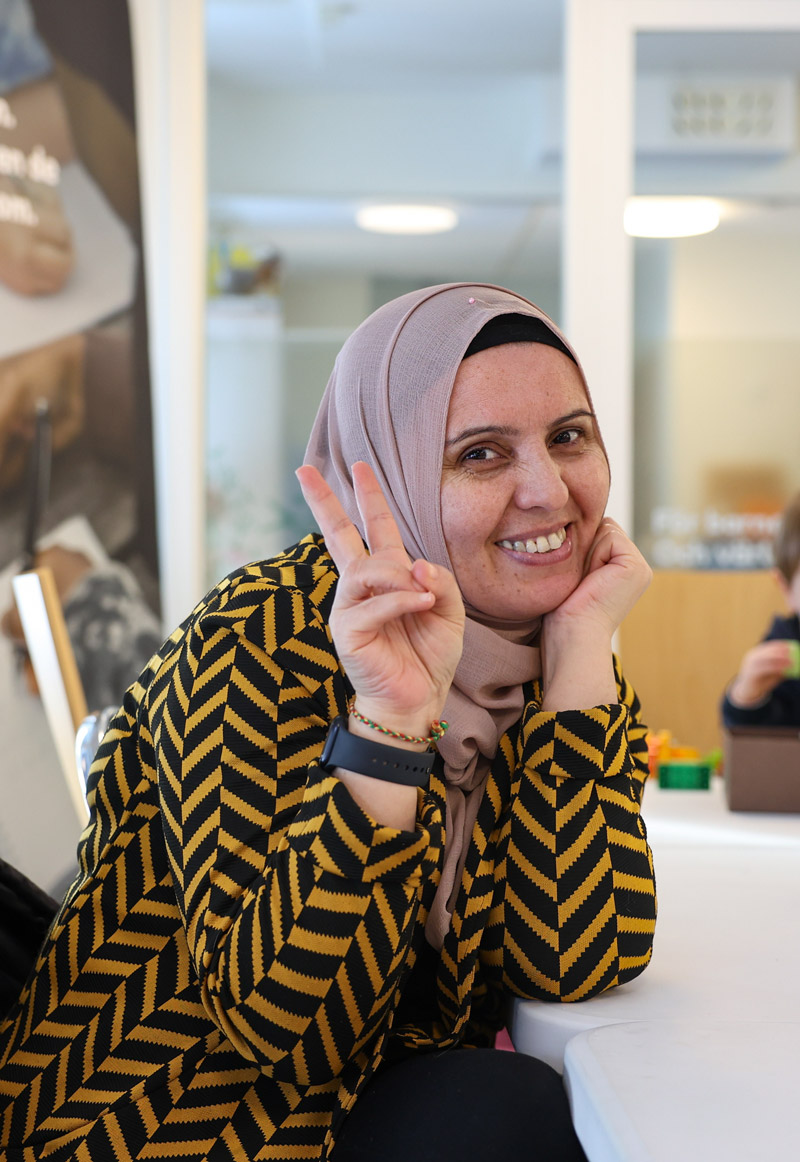
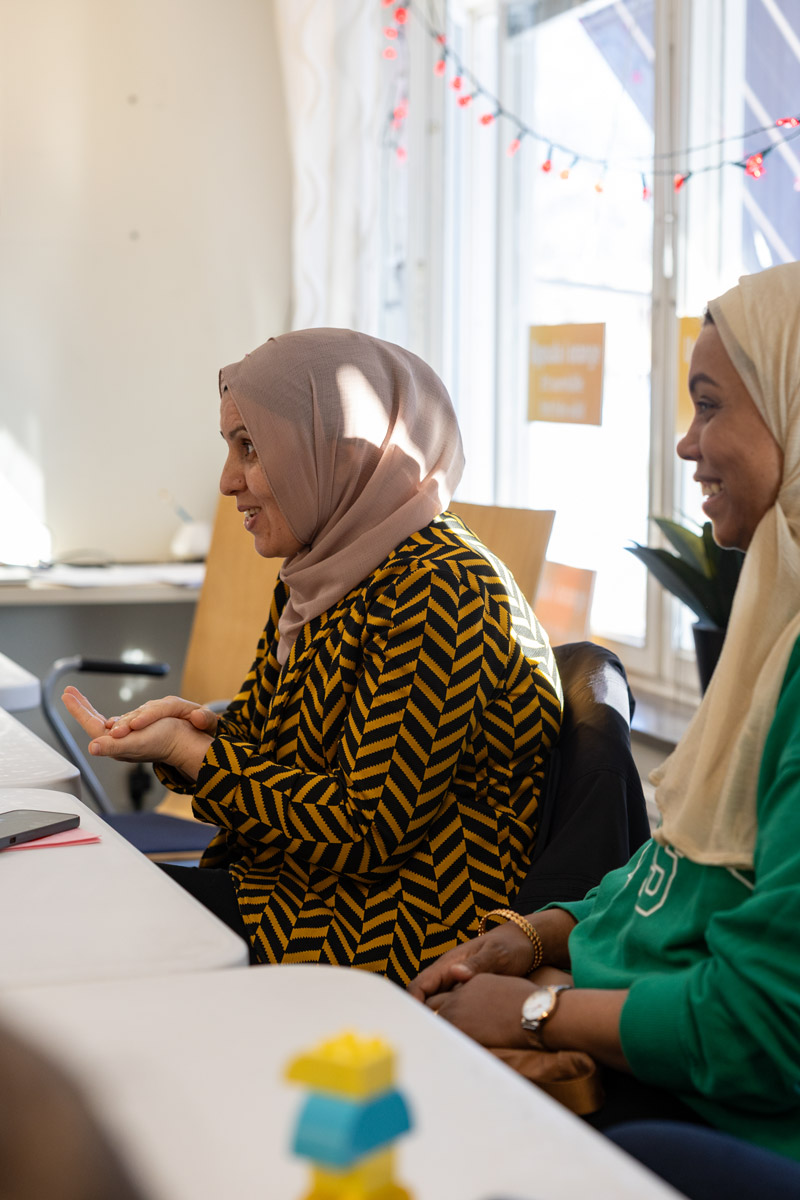
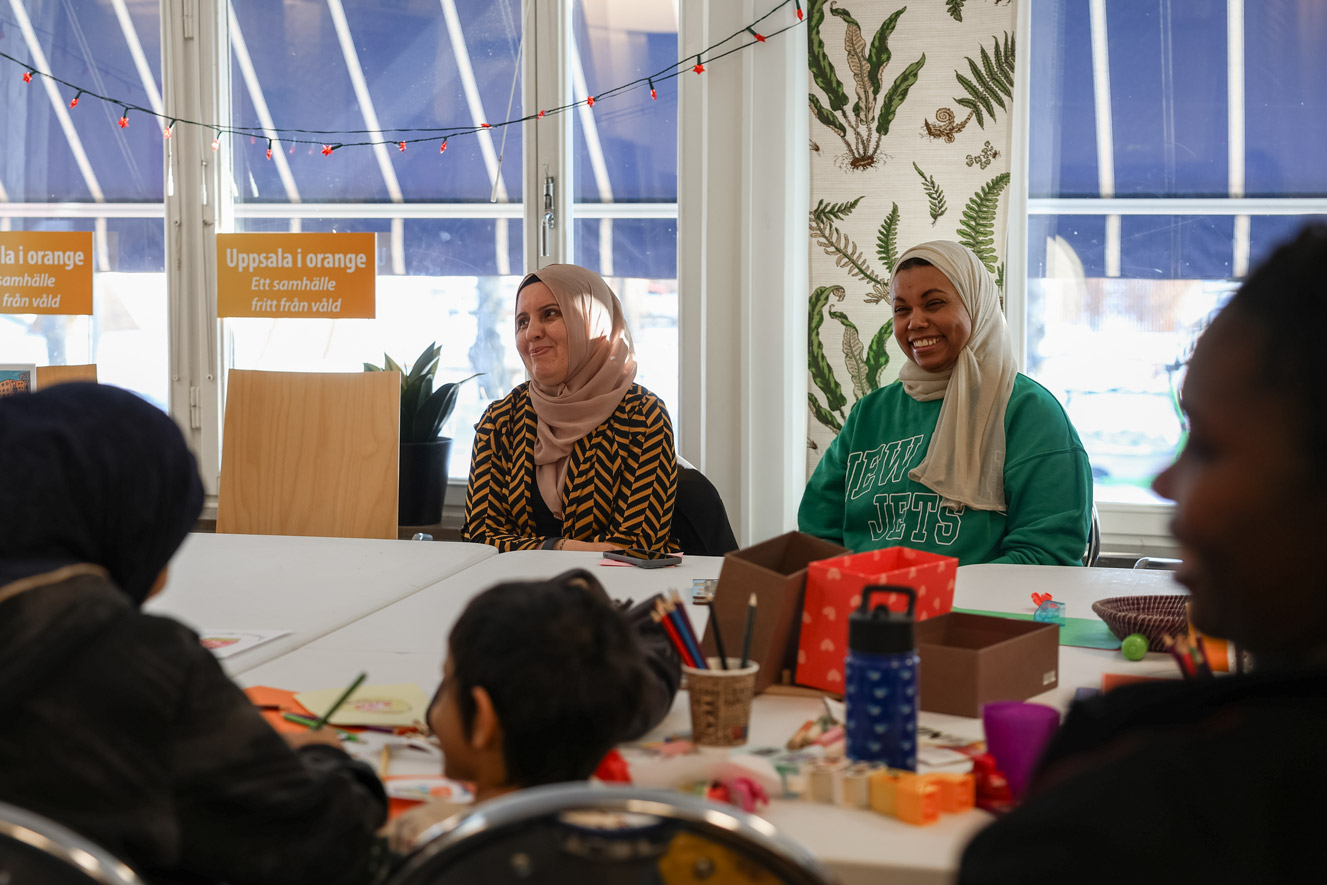
Pinar and Najat, participants in " Föräldrakraft."
Pinar and Najat, participants in " Föräldrakraft."
Finding balance in a new country
Pinar has three children and has been a participant on * Föräldrakraft * since the show began. She and her family are from Turkey and have lived in Sweden for ten years. Pinar’s husband works as an electrician, and she herself completed her training as a childcare worker last year. She says that parenting sometimes feels like walking a tightrope between cultures. The children want to do what their friends do—for example, eat candy more often than just on Saturdays and start wearing makeup earlier than Pinar feels is appropriate.
“Being a parent here in Sweden is very different,” she says. “Religion, language, rules—everything is different.”
For Pinar, it’s important to meet other parents. Not least to get tips and advice from people who are going through similar experiences in their daily lives. That advice means more to her than advice from experts who don’t understand her reality.
“I feel like we understand each other better as a family now,” she says. “My kids listen to me more, and we’ve grown closer as a family.”
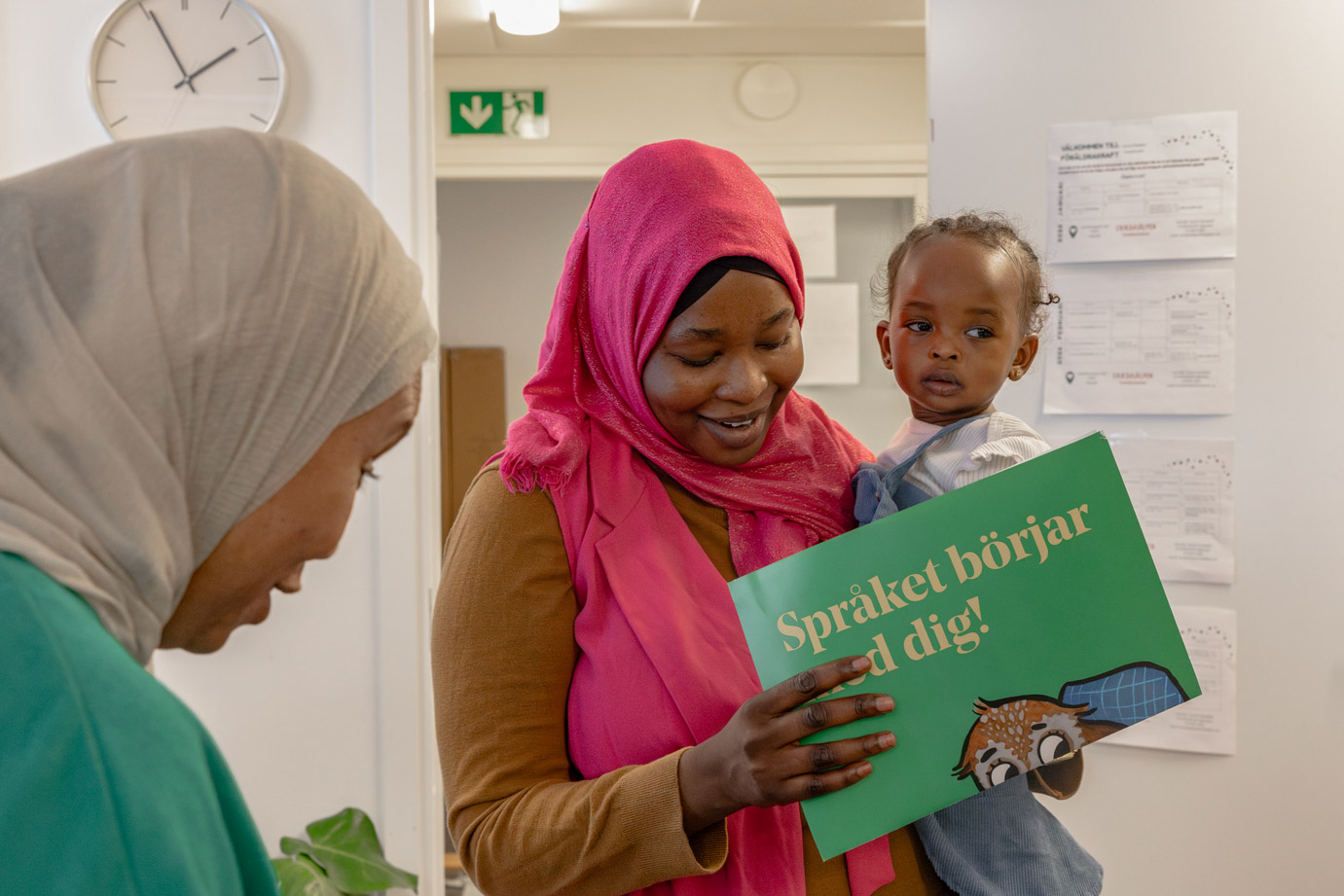
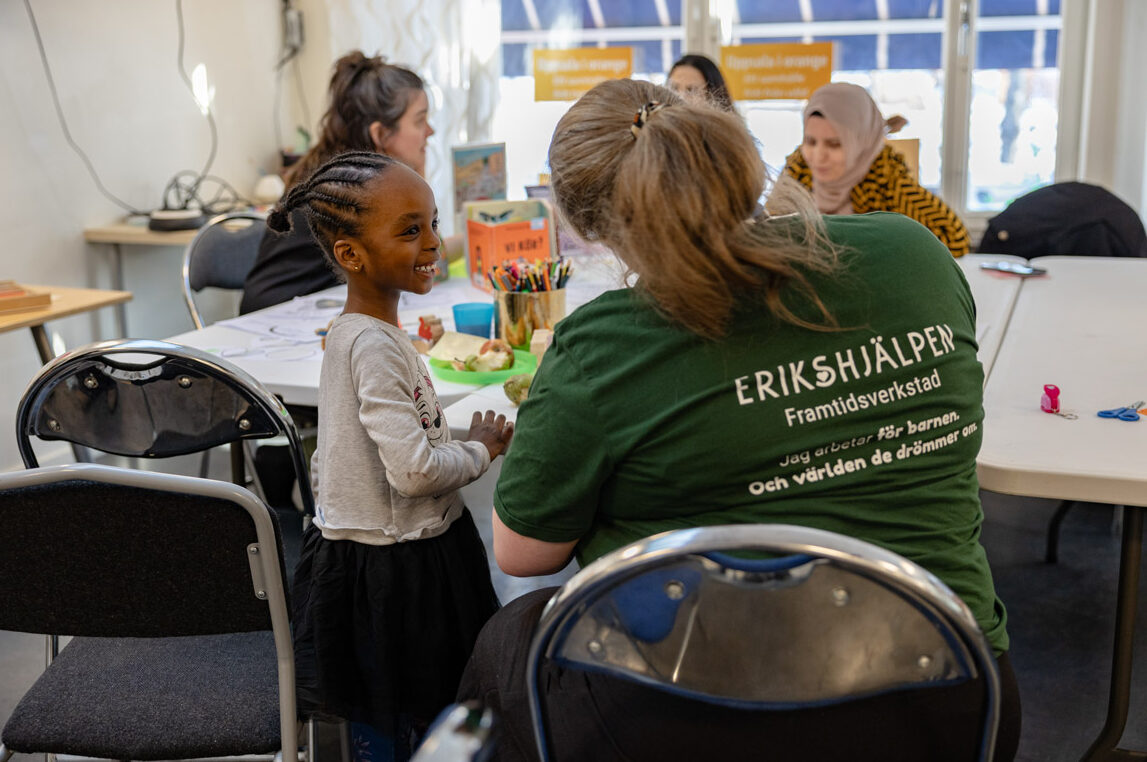
Najat with Amina and her daughter.
Najat with Amina and her daughter.
The Future Workshop as a Second Family
Amina is from Sudan and has no relatives in Sweden. She describes Erikshjälpen Framtidsverkstad a second family—a place where she feels a sense of belonging and receives support. At Café Framtid, she meets other parents, shares experiences, and makes new friends.
“Here, we can socialize and get information at the same time. I’ve become happier and feel more secure,” says Amina.
I've become happier and more confident.
Future Plus – Language, Identity, and the Future
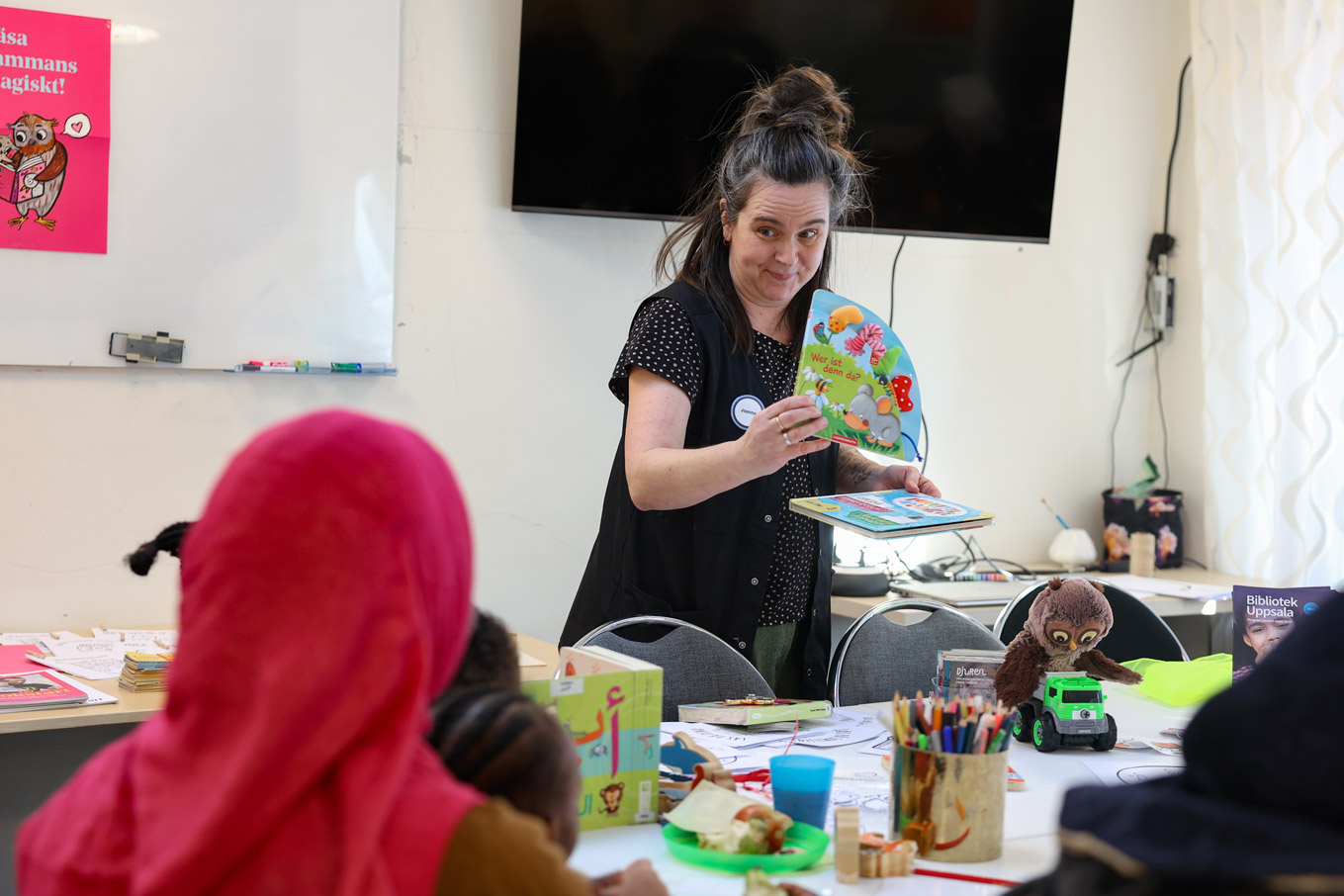
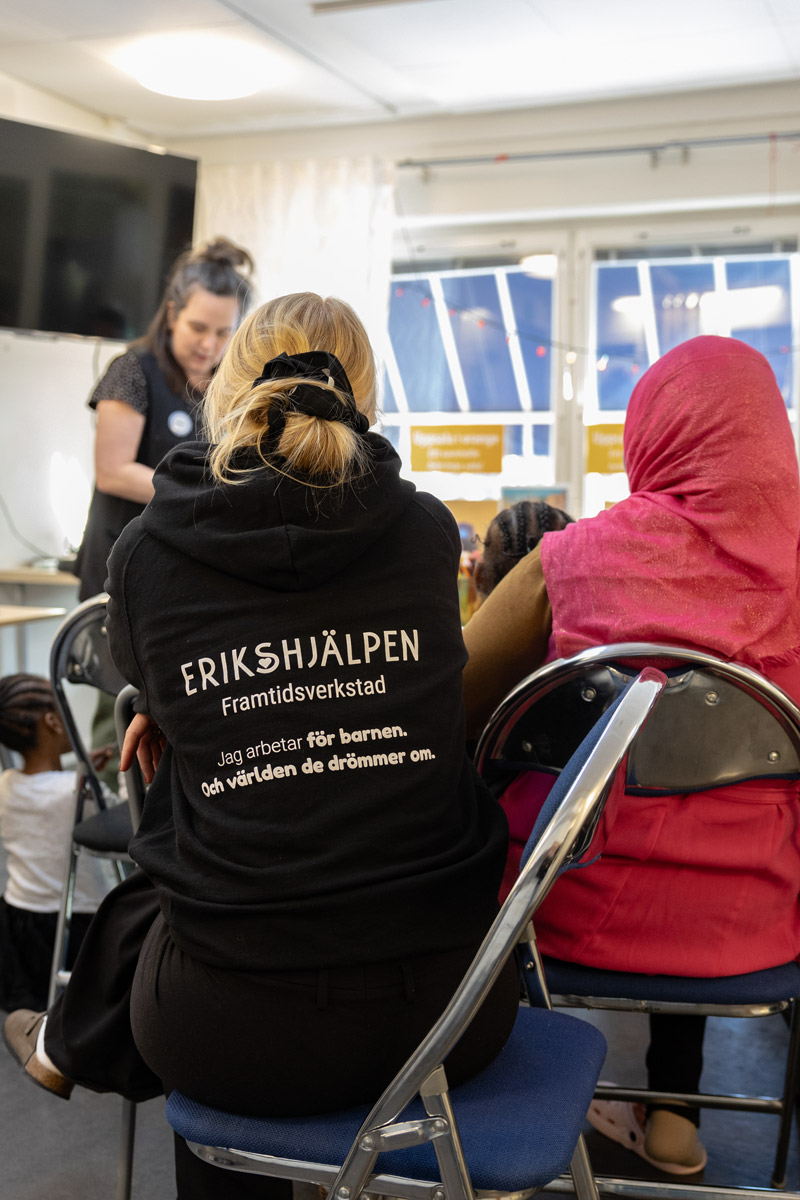
After lunch, the day shifts focus. From 1:00 to 3:00 p.m., it’s time for Framtid Plus. Today, librarian Joanna Meier is visiting. She reads aloud to the children and talks with the parents about language—about speaking multiple languages. About the meaning of words and how language carries both identity and the future. The children participate with curiosity, fascinated by Joanna’s energy and the fact that she speaks multiple languages and uses sign language.
When representatives from libraries, social services, or the police, for example, meet with families in the area, it lowers the barriers to engagement. Parents get to meet the people behind the professional roles and learn where to turn if they need help. This fosters a sense of security and inclusion—an important part of Föräldrakraft’s mission.
Intermission
Through “ Föräldrakraft ,” children and parents have the opportunity to come together through various activities. One example is “Mellansnack”—an activity aimed at children at an age when they sometimes pull away from their parents and test their independence. This is a time when many parents worry about losing touch with their children.
Sarah describes how wonderful it is to see fathers who are a bit reserved at first, but who, after a while, start joking around playing with their children. Because when parents dare to step in, be present, and show that they want to be part of their children’s world, trust is built, and moments like these can be crucial in preventing the relationship from drifting apart.
This is how we reach parents in the area
One of the biggest challenges for “ Erikshjälpen Framtidsverkstad ” is reaching out to parents. Information about activities is often shared through social media, posters, WhatsApp groups, and key individuals in the area. But collaboration with other organizations is also an important part of the effort. “ Föräldrakraft ” works in partnership with, among others, Lötenkyrkan, Gränby Allaktivitetshus, and Platssamverkan to strengthen the network supporting families.
One example of how “ Föräldrakraft ” reaches out to parents is the “Activity Cart.” When staff members go out into the neighborhood, they bring a cart filled with items that can make everyday life easier. There’s also a party box available to borrow for birthday parties, complete with plates, glasses, and a popcorn machine. This is a much-appreciated resource for families who can’t afford to buy everything themselves, but it’s also good for the environment.
“The cart was the first thing we bought,” says Sarah, proudly showing off the cart filled with essentials like toothpaste, reflectors, paper towels, and small hygiene items. These items were Corporate donated by Corporate purchased at a good price.
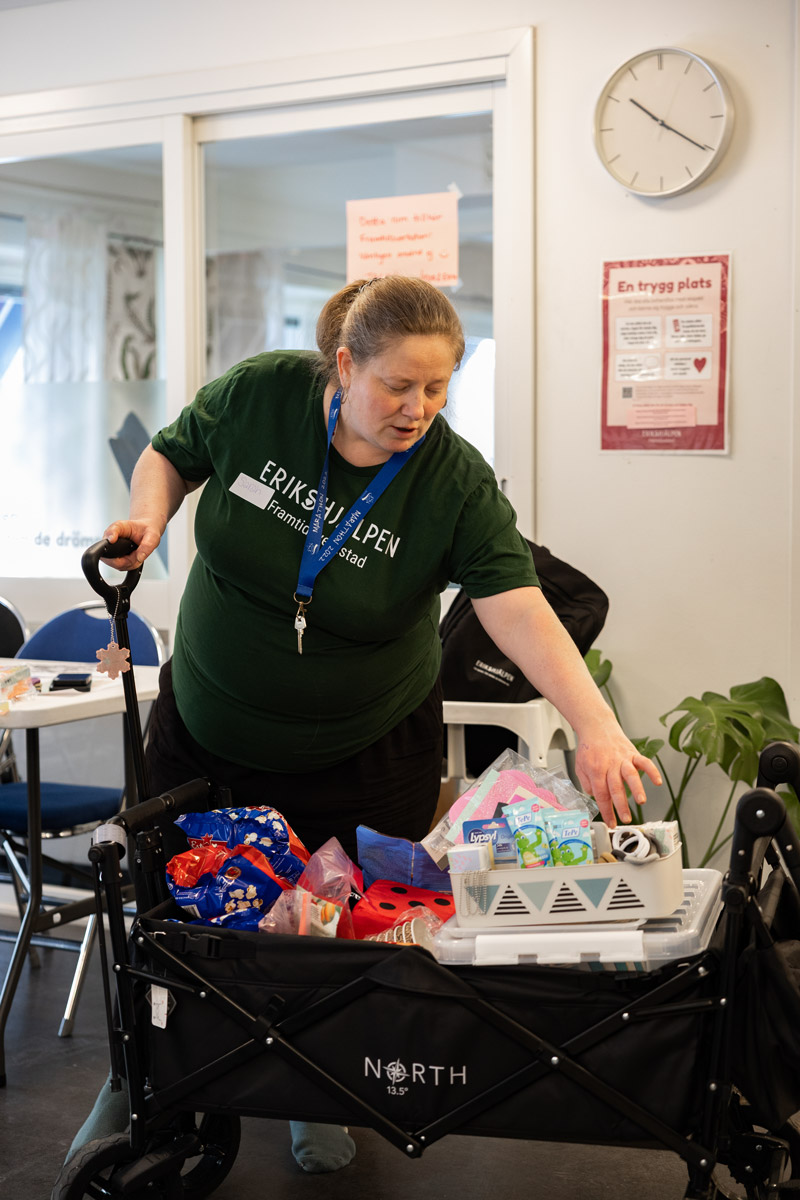
Sarah shows off the “Activity Cart.”
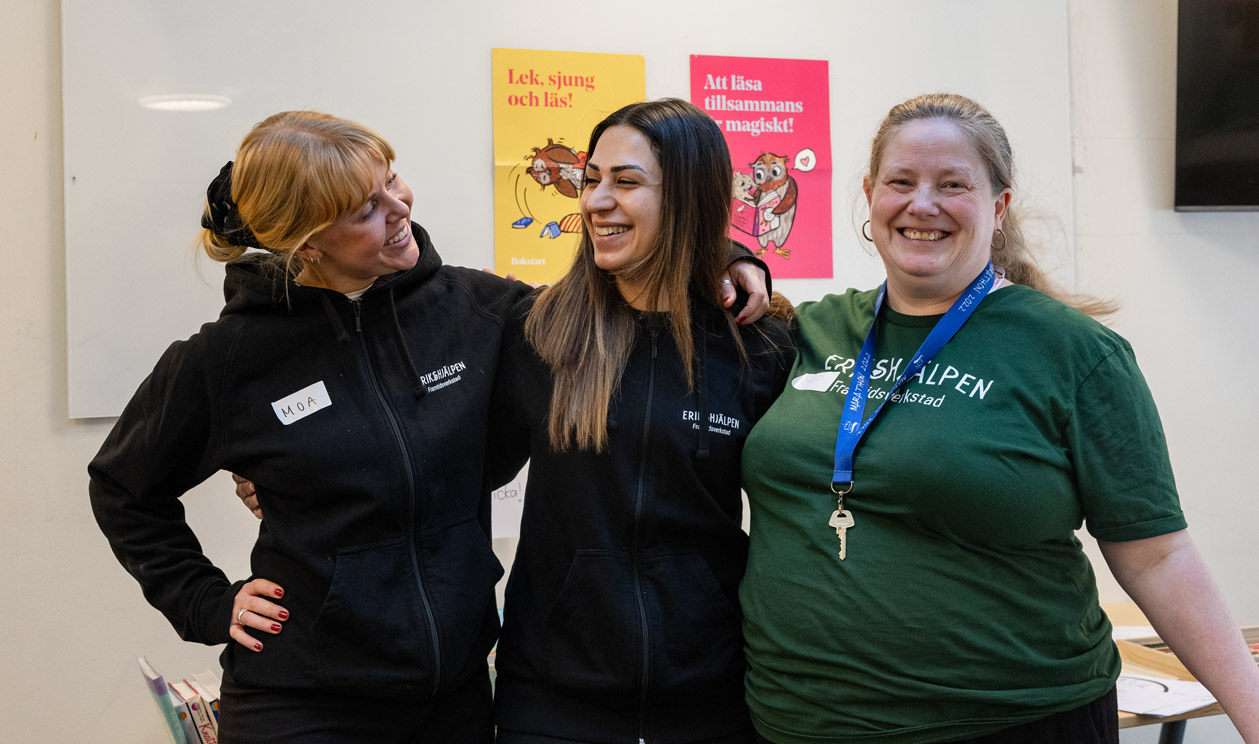
Unit Manager Moa Lindgren, Activity Leader Seham Alali, and Operations Coordinator Sarah Campbell.
Sarah shows off the “Activity Cart.”
Unit Manager Moa Lindgren, Activity Leader Seham Alali, and Operations Coordinator Sarah Campbell.
Föräldrakraft
Föräldrakraft is a project within Erikshjälpen's Framtidsverkstad, which currently operates in seven locations in Sweden.
The aim is to empower parents to support their children in the challenges they face at school and in life. During parent meetings, participants exchange experiences, but also learn more about how society works and how they can support their children.
The project is funded by the Postcode Lottery .
Author: Lena Elf
Photographer: Ronja Fagré
Published: 27 March 2026
 Listening