“People, the Environment, and Children’s Rights 2025” is a sustainability report from Erikshjälpen Second Hand.The document provides a summary of our most significant and important impacts in the areas of the environment, climate, and social sustainability.
We also discuss our advocacy efforts to promote more sustainable consumption and an environmentally and socially sustainable circular economy.
This document replaces the 2025 Sustainability Report but does not contain as much detailed information about the company’s impact and working methods as previous sustainability reports.
Note: On page 6, the figure for energy recovery is rounded to 40%, but the correct figure is 39%.
Erikshjälpen: Environment, People, and Children's Rights 2025
Erikshjälpen's Sustainability Policy formulates our view of and our work for sustainability and sustainable development and covers both the children's rights organization and secondhand. Decided by the foundation board
2021-09-25
Contents
- Introduction and purpose
- Definition of sustainable development
- Values and attitudes
- Organization of sustainability work
- Environmental sustainability - protecting and preserving the Earth's ecosystems
- Social sustainability - respecting human needs and rights
- Economic sustainability - managing resources for the long term
- Complementary documents
1. Introduction and purpose
Erikshjälpen’s vision is a world where children’s dreams come true. To contribute to our vision, our work on sustainability is of fundamental importance, as it impacts children’s and families’ opportunities for a long-term future. With a focus on the opportunities for children and families, Erikshjälpen is committed to actively working with the three pillars of sustainability—environmental, social, and economic sustainability—to create a better where children’s dreams come true.
The purpose of the sustainability policy is to formulate Erikshjälpen's view of and work for sustainability and sustainable development and covers both the children's rights organization and secondhand. The sustainability policy is based on Erikshjälpen's vision and values, and sets out overall definitions, approaches, commitments and responsibilities. Erikshjälpen shall be a good example and ensure positive contributions to sustainable development. The sustainability policy interacts with the organization's other policies and, for various parts of Erikshjälpen's operations, guidelines and strategies are developed as needed to provide guidance to all employees within the organization in how the work should be conducted.
2. Definition of sustainable development
Sustainable development is development that meets the needs of the present without compromising the ability of future generations to meet their own needs¹. Sustainable development consists of three dimensions that interact and support each other: environmental, social and economic sustainability. Being sustainable means operating within the limits of the planet. Only on a viable planet is it possible to maintain social and economic development². Agenda 2030 and the global goals adopted by the UN member states in 2015³ are important starting points for Erikshjälpens work. The goals are aimed at all countries and are therefore relevant everywhere Erikshjälpen works. In order to achieve the UN's global goals for sustainable development and thus the opportunity for all people to meet their basic needs, it is incumbent on individuals, organisations, Corporate and society in general, as well as the international community, to use resources responsibly and in such a way that future generations have equal opportunities to use the same resources.
3. Values and attitudes
Erikshjälpen fights poverty and vulnerability by realizing children's rights. The activities are based on a threefold value base: Erik's spirit, a Christian view of humanity and the UN Convention on the Rights of the Child. These values emphasize, among other things, the equal value of all people, the right of all people to a dignified and fulfilling life, and the responsibility of all people for the earth in using and not abusing it. These words give reason and guidance for our work in the various aspects of sustainability. Erik's spirit means focusing on opportunities, being creative and looking outwards to the needs of others.
The child perspective is the core of Erikshjälpen. In all parts of its operations, Erikshjälpen must work in such a way that sustainable development is promoted so that the children who grow up can have their needs and rights met. This means both working to minimize the negative effects of the activities of the business, and to create positive effects through the business within the three perspectives of sustainability. The fulfillment of children's rights is strongly influenced by effects in environmental, social and economic sustainability. To work with sustainability in focus is to work for the child perspective. Changing the world for and with children is a long-term process and sustainable change requires children's participation, where they have influence over decisions that affect their everyday lives, the society they live in and their future.
What we undertake should make a positive difference at the local level but also at the regional, national and global level. Erikshjälpen believes that real and sustainable change can only happen if actors in the local context are involved and act. We want to be a sustainable actor in what we do while being an actor that drives sustainable development.
A close and engaged civil society actor
In all parts of its operations, Erikshjälpen wants to be a positive force in society and drive development forward in the areas of children's rights, social sustainability, economic equality and circular transition. Erikshjälpen is convinced that change is possible and through our activities we will set a good example internally, in our networks and in society at large. We want to help instill hope in people in our international projects as well as the people who meet our activities in Sweden and among our employees. Together with associations and partners, we contribute to a sustainable society and are a voice for children's rights in all contexts in which we operate.
Sustainable cooperation
Erikshjälpen shall be a role model that promotes active work on sustainability issues both internally and externally. All organisations that we work with in Sweden and internationally have a responsibility to contribute to a sustainable world, environmentally, socially and economically. Erikshjälpen has an open dialogue with partner organisations on sustainability issues and provides support and advice when needed to enable them to develop their work in the context in which they operate.
By partnering with organisations that have knowledge of the local living conditions and by promoting local ownership, interventions become more relevant, effective and sustainable than if Erikshjälpen would act on its own.
Partnering with the children's rights organization and second-hand chain brings significant goodwill to many Corporate through joint brand exposure. With increasing demand for partnerships comes increased sustainability and branding risks. Commercial partners must be chosen with care and with regard to Erikshjälpen's vision, values and policies.
Credibility and sustainable communication
Credibility is one of Erikshjälpen's most important resources. Openness and transparency are of the utmost importance to have credibility in sustainability work. We must be able to stand for our actions and withstand scrutiny. Erikshjälpen plans and reports its activities according to established national and international standards. We are committed to being transparent with our sustainability goals and reporting on our progress and challenges in internal and external channels.
Erikshjälpen's communication is based on children's needs, conditions and future. Erikshjälpen communicates about the environment and climate based on children's future and about social sustainability based on children's needs and rights. Communication should be a tool for creating understanding and respect between people and everyone's responsibility for a sustainable world. Erikshjälpen wants to create a platform for children's voices and promote their participation in communication.
International cooperation and agreements
Erikshjälpen is a member of and participates in national and international organisations and networks to be able to share knowledge and experience that can help develop and improve our sustainability work.
Based on our values and mission, we participate in international transparency and accountability initiatives.
4. Organization of the sustainability work
The boards of Erikshjälpen and Erikshjälpen Second Hand decide on the policy and the Secretary General of the Foundation and the Executive Director of Second Hand have the overall responsibility for ensuring that sustainability is an integral part of Erikshjälpen's activities. The heads of each department are in turn responsible for ensuring that the necessary steering documents and working methods are in place for sustainability to be an integral part of the departments' work. All employees have a responsibility to contribute to the realization of the policy's intentions and to work for sustainable decisions in all aspects of their work.
Erikshjälpen is a child rights organisation that works in various areas, including international development cooperation and humanitarian aid, projects in Sweden to strengthen children's rights, fundraising and advocacy and Erikshjälpen Second Hand. Sustainability work differs in practice in different parts of the organization but must take the same principles into account. For successful sustainability work, continuous Monitoring and evaluation of the work must be done. This policy must form the basis for specific strategies and action plans with monitorable goals or, alternatively, the sustainability perspective must be integrated into the overall business planning and monitoring. The overall goal is the same, but guidelines, strategies and action plans are developed based on the organization's different roles as a child rights actor, collector and communicator, second-hand store chain, employer and partner
5. Environmental sustainability - protecting and preserving the Earth's ecosystems
Environmental sustainability means developing the environment and climate with respect for the ecosystems that keep the planet alive. In accordance with our core values, Erikshjälpen will work for responsible stewardship of the earth where our children will grow up, now and in the future. There is a clear connection between negative advocacy on the environment and climate, increased poverty and situations where children's rights are threatened. Erikshjälpen will work for environmental and climate sustainability with awareness and reduced negative advocacy.
Sustainable travel and transport
Erikshjälpen will continuously work to reduce emissions associated with travel and transportation.
Sustainable travel is ensured through the Travel Policy, which states that planning a trip is always preceded by an evaluation of alternatives to travel. Erikshjälpen works actively to develop opportunities for digital meetings and encourages more sustainable ways of traveling.
Erikshjälpen wants to reduce fossil-dependent transport, which should be a guiding principle when ordering transport and renewing Erikshjälpen's vehicle fleet.
Sustainable sourcing and procurement
Erikshjälpen's purchases and procurements must be carried out as environmentally friendly and climate-smart as possible in every purchasing situation. The economic consideration must always be balanced against ethical and environmental aspects. Erikshjälpen must operate with high cost awareness and careful considerations to minimize unnecessary or incorrect purchases. This is ensured through Erikshjälpen's procurement policy. Erikshjälpen shall promote ethical and sustainable consumption by choosing third-party certified suppliers and goods as far as possible, as well as organic and ethically labeled food whenever possible.
Sustainable energy consumption
Erikshjälpen strives for workplaces with low energy consumption through awareness and minimization of unnecessary consumption. Where Erikshjälpen has advocacy , our workplaces will be powered by a renewable energy mix and low energy lighting.
No environmentally hazardous chemicals
In Erikshjälpen's operations, no chemicals are used that are harmful to humans or the environment, and thus no emissions are made that risk damaging the environment.
Recycling and management of hazardous waste
In all parts of the business, Erikshjälpen shall strive to minimize waste in accordance with the EU's waste ladder by avoiding the creation of waste and working for a high recycling rate. Source sorting should be routine in our staff areas. Hazardous waste is handled and documented according to current waste directives in Erikshjälpen Second Hand's preparations and hubs.
Sustainable second-hand chain
Environmental sustainability is a cornerstone of the organization, and Erikshjälpen Second Hand's business concept and business model are based on it. Erikshjälpen Second Hand contributes to reducing society's waste in accordance with the EU's waste ladder, and our employees, our donors and customers in the second-hand shops are encouraged to switch to more sustainable and circular consumption. Through attractive store concepts that make circular consumption available to many in a simple way, Erikshjälpen will work for environmentally sustainable development.
6. Social sustainability - respecting human needs and rights
Erikshjälpen's mission is to fight poverty and vulnerability by realizing children's rights. Poverty has many dimensions and does not only relate to economic aspects. It is a condition in which people are deprived of their rights and opportunities to make their own decisions about their future. Social sustainability is about that, about well-being, rights, justice, power and about the needs of individuals and their ability to realize their dreams in Sweden and internationally.
In its various roles, Erikshjälpen must take into account all stakeholders affected by Erikshjälpen's activities. We work to ensure that the children and their families who are part of the rights-based work, our employees, customers and the society in which we operate are positively affected by what we do.
Children and young people
Erikshjälpen works to give children and young people improved prospects for the future through direct and indirect interventions in Sweden and internationally. Through interventions for education and leisure, health and safety and protection, we give children and young people support and the opportunity to dare to dream about the future.
Children and young people are reached by getting involved in rights work, but also in vacation jobs, internships, volunteering and other activities. The right to participation is both a tool and a goal for realizing children's rights. Erikshjälpen gives hope to children and young people by increasing their and their parents' empowerment and participation in society.
All forms of exploitation and abuse of children constitute a violation of the child's rights against which they are entitled to be protected. In its work to realize children's rights, Erikshjälpen has an obligation to prevent child abuse and protect children. This is developed in Erikshjälpen's "Child Protection Policy".
Diversity, equal treatment and gender equality
All people are born free and equal in value and rights. The UN conventions on human rights, including the Convention on the Rights of the Child, and the Swedish Discrimination Act form the legal framework for Erikshjälpen's Diversity Policy.
In Sweden and in our partner countries, there are structures that hinder positive development for all people. To create sustainable development, diversity, equal treatment and gender equality must be integrated into all work. Erikshjälpen will be a role model that promotes positive attitudes and values for increased diversity and equal treatment in working life, in organisations and society at large. Socially sustainable development depends on people's participation and trust in each other.
Sustainable employer
Erikshjälpen shall offer a healthy, safe and developing workplace where all employees thrive and are safe. Erikshjälpen's workplaces should be characterized by a culture where everyone feels welcome, is heard and respected. Employee health and well-being are important and therefore both physical and psychosocial work environment are systematically monitored. Sustainable leadership and employeeship are crucial.
The social mission
Erikshjälpen Second Hand has an expanded social mission to give people who live in various forms of social or economic vulnerability an opportunity to find paths to personal development through community, work training and internships. The shop is a meeting place for trainees, volunteers and others who through their commitment contribute to sustainable development. In a number of interventions , Erikshjälpen will offer a good place for personal development and commitment according to the needs of individuals that lead to increased empowerment, improved self-esteem, increased health and well-being, and participation in society.
7. Economic sustainability - managing resources for the long term
Economic sustainability covers how resources are distributed and cannot be separated from environmental and social sustainability. The world's resources are unevenly distributed. There are many who have almost no assets at all, which has negative social, political and economic effects. Erikshjälpen's mission is to fight poverty and vulnerability by realizing children's rights.
Being financially sustainable as an organization is about having sufficient financial resources for its own operations without seizing resources that the outside world and future generations need better. Financial sustainability for Erikshjälpen is a long-term, responsible management and increase of the financial resources that enable the organization and its work for children's rights. It is a development that takes place with regard to the surrounding world environmentally and socially.
Responsible gift management
The gift, both financial and material, is the foundation of Erikshjälpen's activities and therefore the importance of the donor is great. Donors should feel confident that the gift is handled sustainably, responsibly and they should feel confident in the organization's working methods.
Erikshjälpen has a 90-account, which means that we meet the requirements of Swedish Fundraising Control. We are also a member of professional association Giva Sverige and apply its quality code. We continuously follow up our projects to check that donors' money goes where it should and is used correctly. Erikshjälpen has various sources of funding, gifts from individual donors, Corporate, surplus from Erikshjälpen Second Hand and institutional funds, which helps to create a stable financial situation with great opportunities to plan and prioritize interventions.
Financial efficiency and cost awareness
Erikshjälpen shall work for financial efficiency and high cost awareness with regard to our donors who fund the rights-based and humanitarian work. Financial responsibility means measures to secure the organization's financial position according to set goals. Our Investment Policy provides a framework for responsible and effective financial management.
Cost consciousness must never mean choosing the cheapest option if this also means social or environmental damage to the world around us or can negatively affect employees and their working environment. The procurement and purchasing policy ensures that contracts balance cost with sustainability aspects.
One definition of success for Erikshjälpen Second Hand is the surplus that goes to the rights-based work. Key figures and results are continuously monitored to ensure the financial viability of the business, and good business acumen creates the opportunity to contribute to the fulfillment of Erikshjälpen's vision.
Corruption
Corruption is an obstacle to economic and social development and to achieving our vision. Corruption also risks damaging Erikshjälpen's trust both among those we work with and those who finance the business. Erikshjälpen therefore works against all forms of corruption, and in our anti-corruption policy we describe what we do to counteract, detect and act on corruption.
8. Supplementary documents
Within Erikshjälpen there are basic policies such as the Child Safety and Protection Policy, the Development Policy, the Diversity, Equality and Gender Equality Policy, the Communication Policy and the Sustainability Policy. There are also policies in specific areas that support these policies.
As regards the Sustainability Policy, it is supported not least by the Procurement and Purchasing Policy, the Travel Policy, the Health and Safety Policy, the Human Resources and Recruitment Policy, the Investment Policy and the Anti-Corruption Policy.
¹ "The Brundtland Report", Our Common Future, World Commission on Environment and Development, 1988
²Withinthe planetary boundaries - WWF
2030 Agenda- Sustainable Development Goals - Svenska FN-förbundet
The Sustainability Report 2024 covers Erikshjälpen Second Hand's activities in 2024. It describes the long-term goals and what has been achieved so far within the three perspectives of sustainability; environmental, social and economic.
Note: A typo has appeared on page p.40 under the heading "Social mission & sustainable employment". The correct percentages in the row Full-time/part-time* should be 46% / 54% for 2024 instead of 58% / 64%
Sustainability report 2024
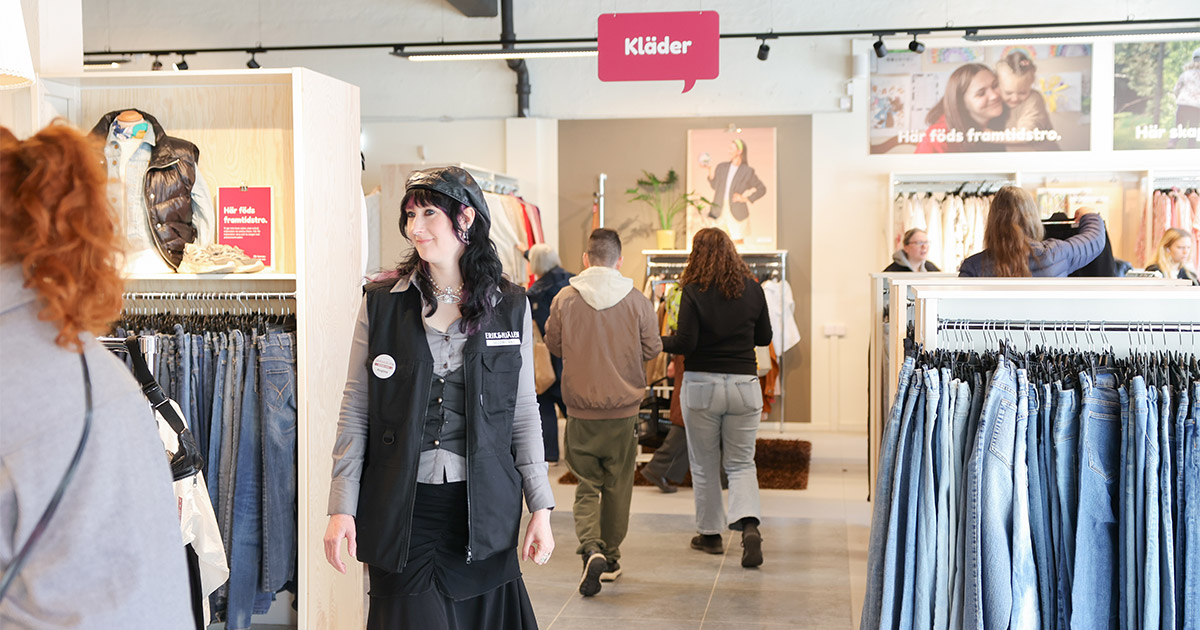
Sustainability Report 2023 covers Erikshjälpen Second Hand's activities in 2023. It describes the long-term goals and what has been achieved so far in the three perspectives of sustainability; environmental, social and economic.
Sustainability report 2023
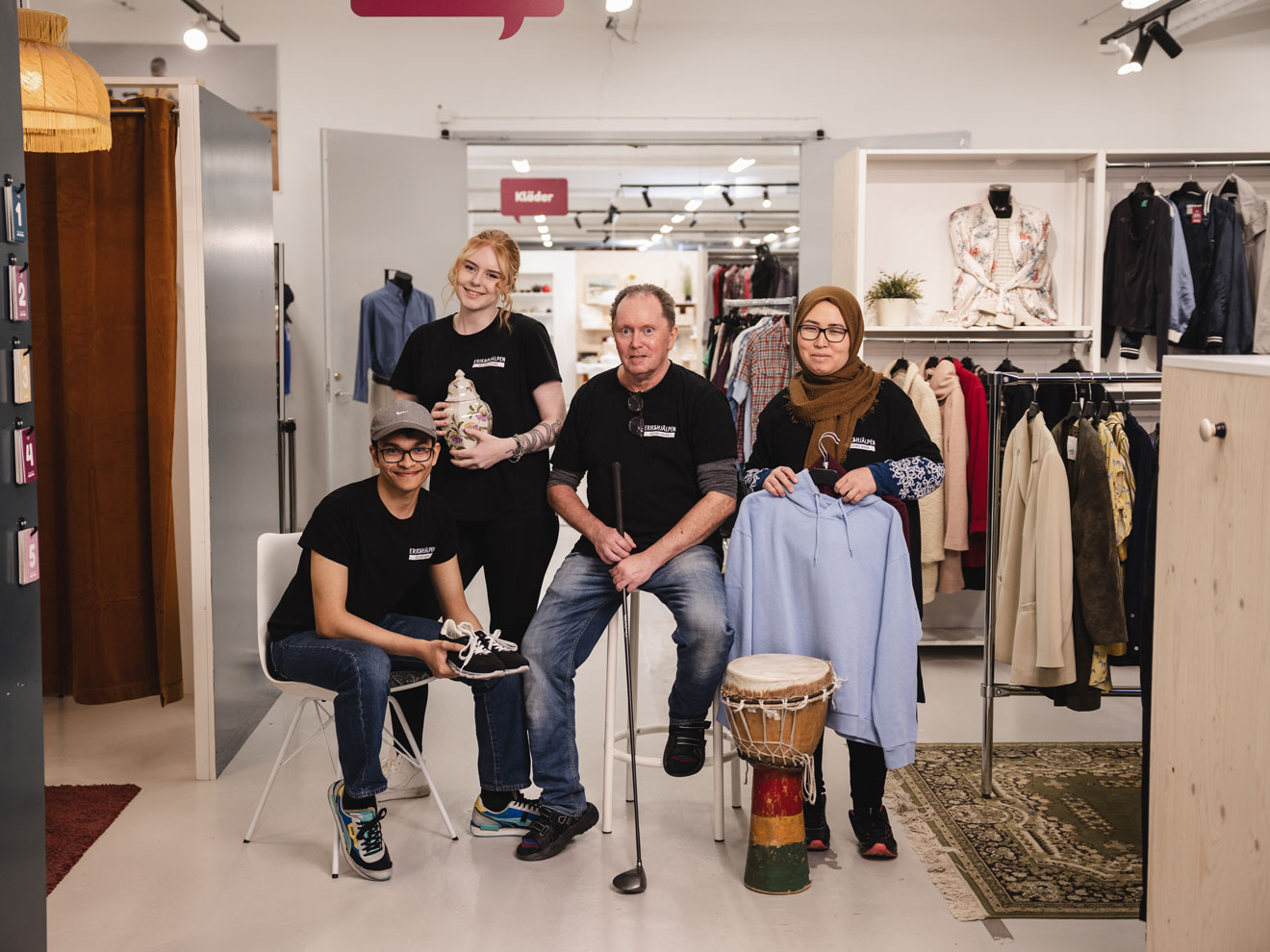
The 2022 Sustainability Report covers Erikshjälpen Second Hand's activities in 2022. It describes the long-term goals and what has been achieved so far within the three perspectives of sustainability; environmental, social and economic.
Sustainability report 2022
The Sustainability Report 2021 covers Erikshjälpen Second Hand's activities in 2021. It describes the long-term goals and what has been achieved so far within the three perspectives of sustainability; environmental, social and economic.
 Listening