portable schools to help more children get an education
In Bangladesh, the land of many rivers, Erikshjälpen works together with the partner organization Friendship with portable schools, so that children can go to school despite the climate disasters that constantly threaten the country.
Together with the partner organization Friendship, Erikshjälpen works to strengthen children's right to education, health and safety and protection in northwestern and northern Bangladesh. Here it is far from obvious that the children who live in the remote areas in the countryside around all the river deltas have access to education. Most commonly, children attend school up to grade five. What happens after that depends on the family's economic situation and how close or far away the school is.
It is particularly difficult for girls. Instead of being given the opportunity to continue studying, many risk being married off. If one member of the family is married off, there is one less mouth to feed. Other girls risk missing large parts of their education because the road to school is long and dangerous, or because they prefer to stay at home rather than go to school due to a lack of sanitation and the possibility of good hygiene during periods.
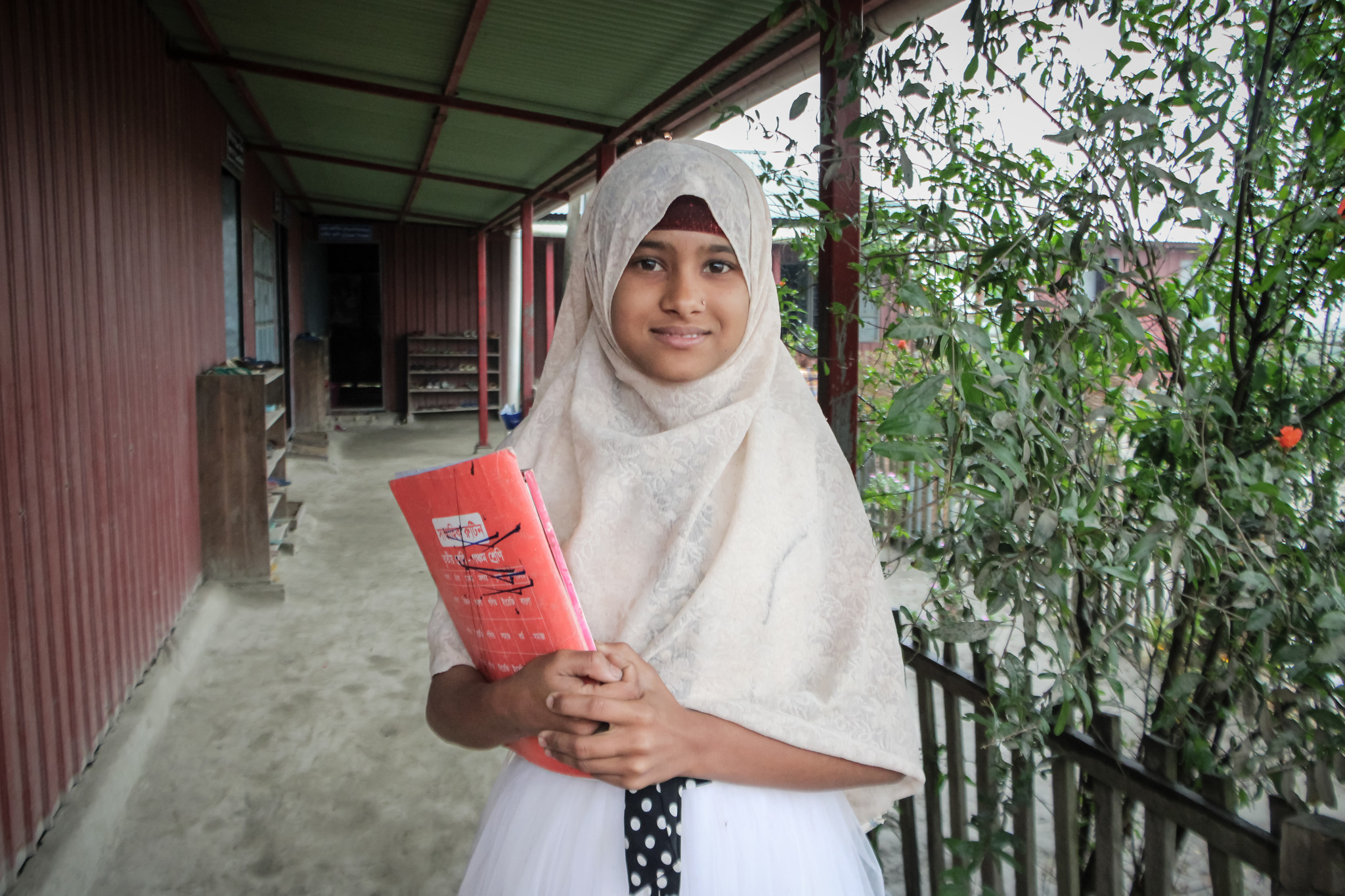
Mim is in grade five at Friendship Primary School Khamarbashpata. She loves school, especially English and is very involved in school activities.
Mim is in grade five at Friendship Primary School Khamarbashpata. She loves school, especially English and is very involved in school activities.
Children can change society
Bangladesh is the land of many rivers. The islands in the river deltas are volatile and prone to recurrent floods and other natural disasters. Because of the islands' impermanence, it has not been possible to establish infrastructure in the form of electricity supply, roads, school buildings and clinics there.
portable schools have proven to be a successful way to reach children living in the most inaccessible and climate-vulnerable areas. Investing in educating children about crisis and disaster preparedness and their rights has also proven to be a success factor. Through their new knowledge, children themselves become involved in changing not only their own future but also entire communities.
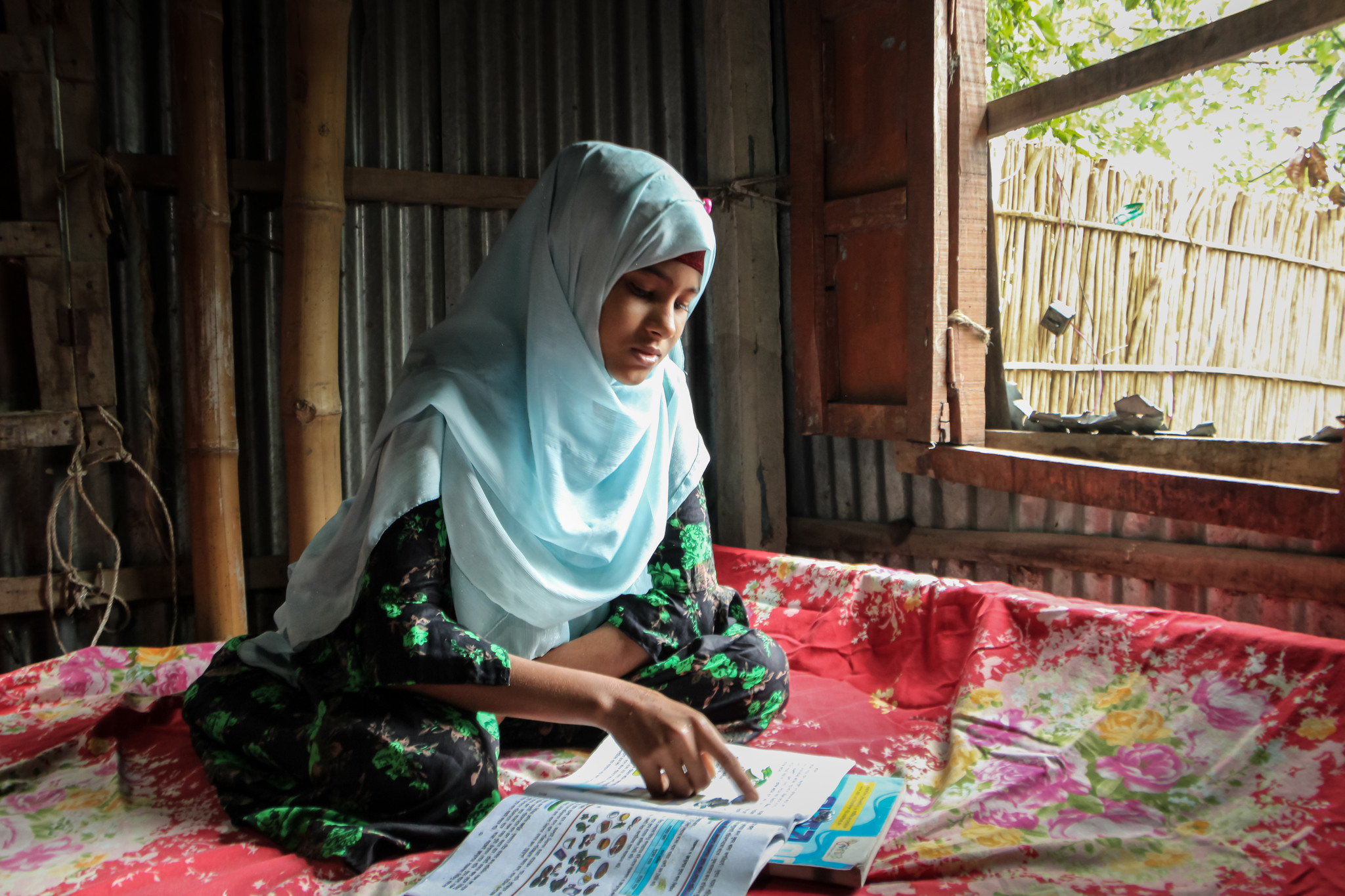
Mim studies at home.
Mim studies at home.
Schools make dreams possible
Staying in school and getting a full education is something 11-year-old Mim Akter hopes for. But it's not something she takes for granted. Coming from Khamarbashpata in Chilmari, northern Bangladesh, she knows too many girls whose lives have taken a different turn.
Child marriage and child labor are common in Bangladesh. Mims' own mother was married off at the age of 15. When a girl is married off, she is forced to drop out of school to take care of the new household and in-laws, and contribute to the family's livelihood.
- I will do everything I can to make my future different. I want to become a teacher and help more children go to school," she says.
Mim is in grade five at Friendship Primary School Khamarbashpata. She loves school, especially English and is very involved in school activities. Her biggest dream is to continue her studies. Today, around 650 million girls in the world receive no or very little education. Poverty, menstruation, or long and dangerous journeys to school are some of the reasons why girls miss large parts of their schooling or are forced to drop out completely.
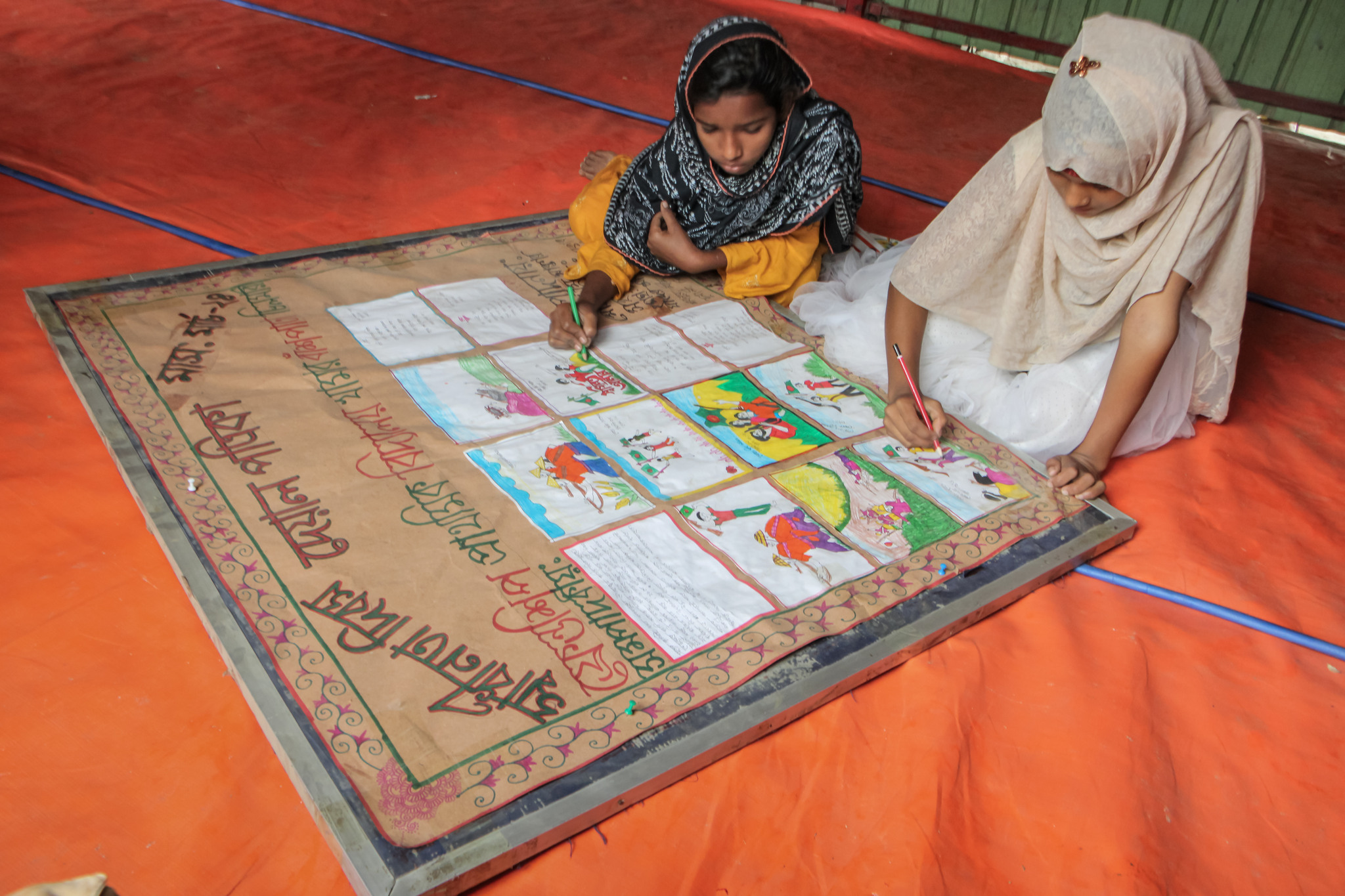
Mims with her friend.
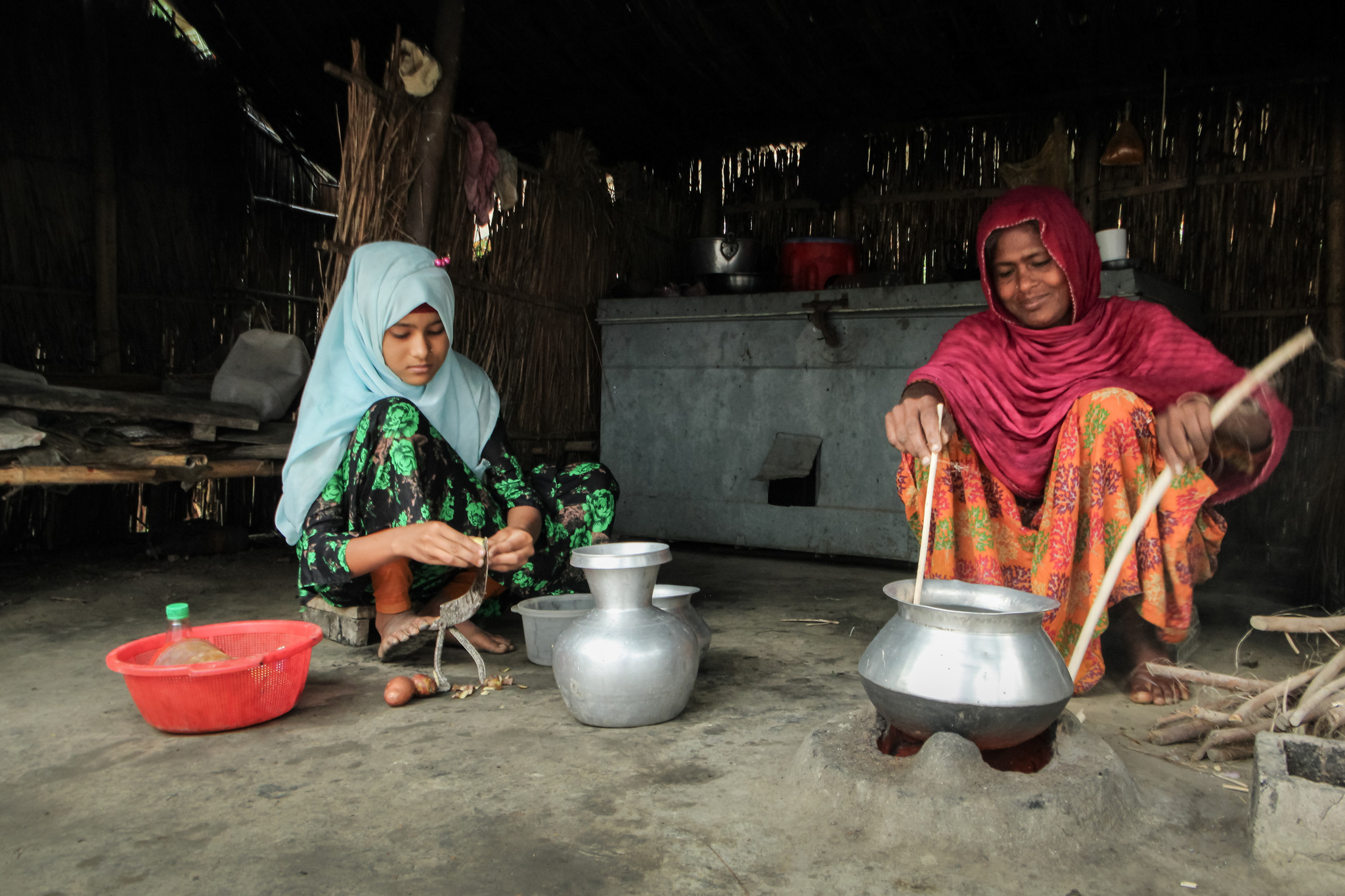
At home, Mim helps her mom cook.
Mims with her friend.
At home, Mim helps her mom cook.
Mim, her parents and five siblings live in a small house on one of the many sand islands that form part of the Brahmaputra River Delta. The area is inaccessible, vulnerable and hard hit by climate change. Floods, cyclones and other natural disasters strike once or twice a year, causing great devastation. Landslides and soil erosion make it difficult to build permanent infrastructure like roads and schools. But thanks to the portable school, which Erikshjälpen has developed and established together with the organization Friendship, Mim and many other children in the area have the opportunity to go to school.
Through school, Mim and her friends have learned about their rights and how to build resilience and cope with natural disasters. The whole village is better. And now Mim dares to hope for a future different from her mother’s.
- Now everyone in the village is committed to the issue of child marriage, she says proudly.
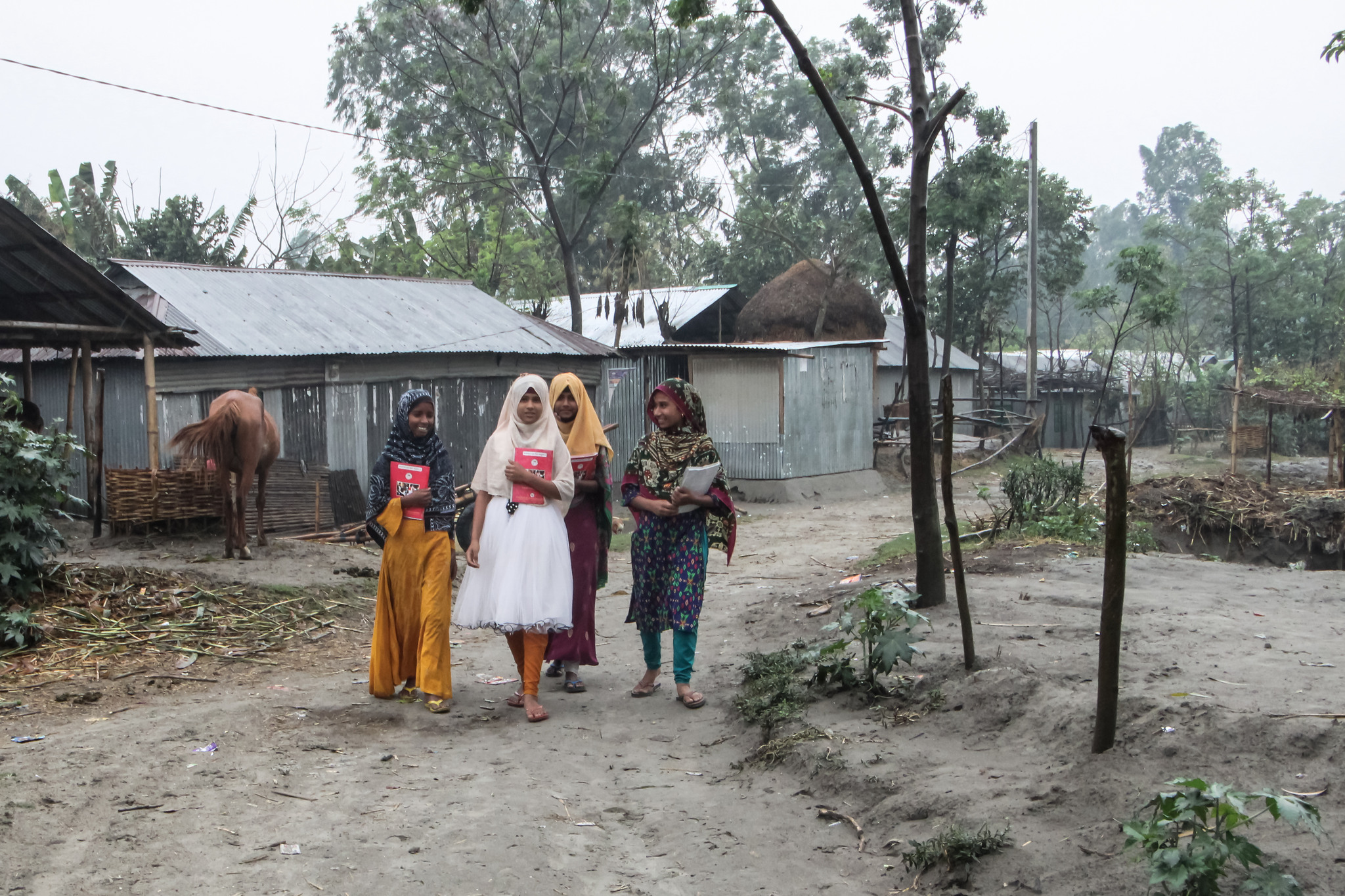
Mims on her way to school with her friends.
Mims on her way to school with her friends.
Today, around 650 million girls worldwide receive no or very poor education. Poverty, menstruation, or long and dangerous journeys to school are some of the reasons why girls miss large parts of their schooling or are forced to drop out completely.
Example of costs
- 100 SEK is enough for school supplies and hygiene products for one child for one to two months
- 300 SEK is enough for school supplies, hygiene products and food for one child for one to two months
- 7000 SEK is the cost of dismantling a portable school and establishing it in a new location
Published: 27 August 2024
 Listening