The epaca no longer has to go hungry
"Before, we used to go to bed hungry and my mom couldn't buy us school books. But now we can afford both books and school uniforms," says eight-year-old Epakan Esekon.
The drought in northern Kenya is the worst in over 40 years. In Turkana district, one in three children is at risk of acute malnutrition. Epakan lives here with her parents and three siblings in the small village of Ngikwatex. Her family is used to droughts every year and has adapted their lives to the weather. But in recent years, climate change has made the dry spells longer and the consequences worse. Livestock die, crops fail and families go without food. Sometimes for days at a time.
Before, we used to go to bed hungry and mom couldn't buy us school books.
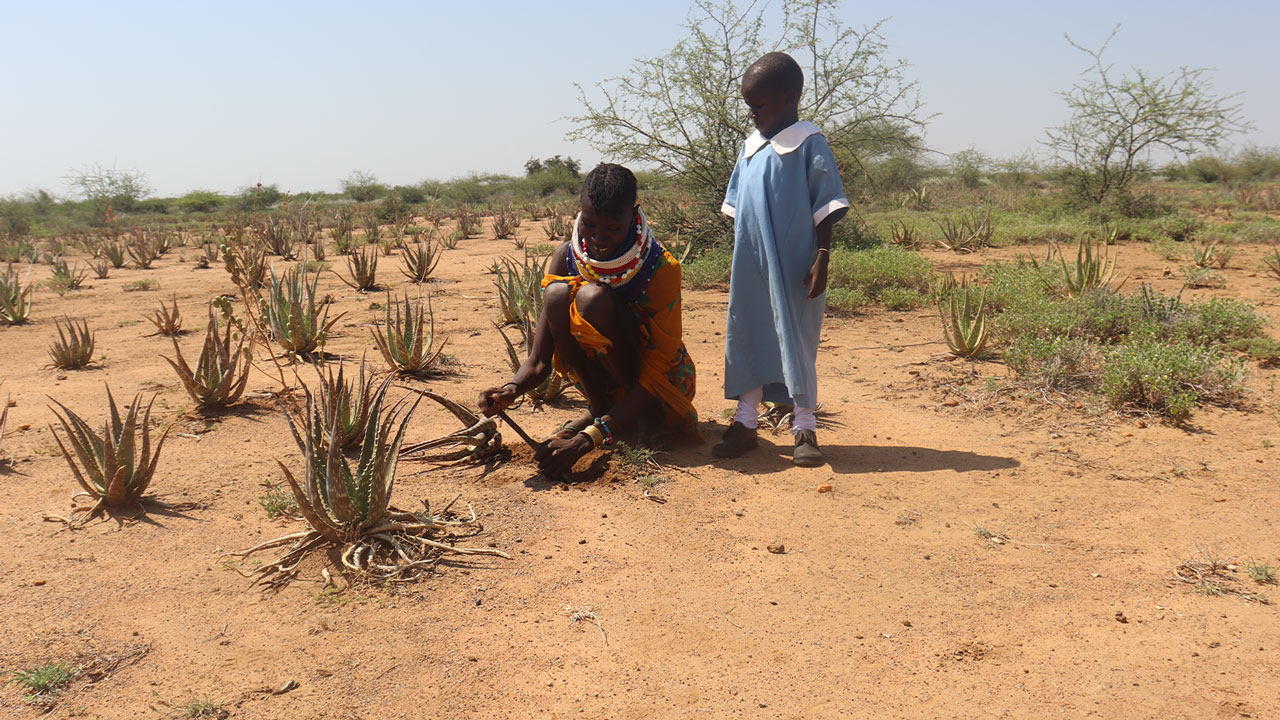
Aloe vera cultivation was the solution
But amidst the cracked ground, something green has started to grow. For Epakan and her family, it was aloe vera that turned their lives around. When the family was at its worst, mother Aweet received support and training from Erikshjälpen that enabled her to start growing in the dry landscape. She learned which cultivation techniques work best, how to prepare the sap from the leaves and what it takes to sell successfully in the local market.
- I have been given many good tools to cope with all the challenges when the drought comes. Now I can feed my family two meals a day and the children can continue going to school," says Aweet.
Growing aloe vera may seem like a small change. But for Epakan it is actually life-changing. The money isn't just for food - now her mother Aweet can afford to send her children to school. And for the start of the school year, Epakan has been given a school uniform, shoes, socks and exercise books.
Now we can afford to buy food every day and our lives have improved!
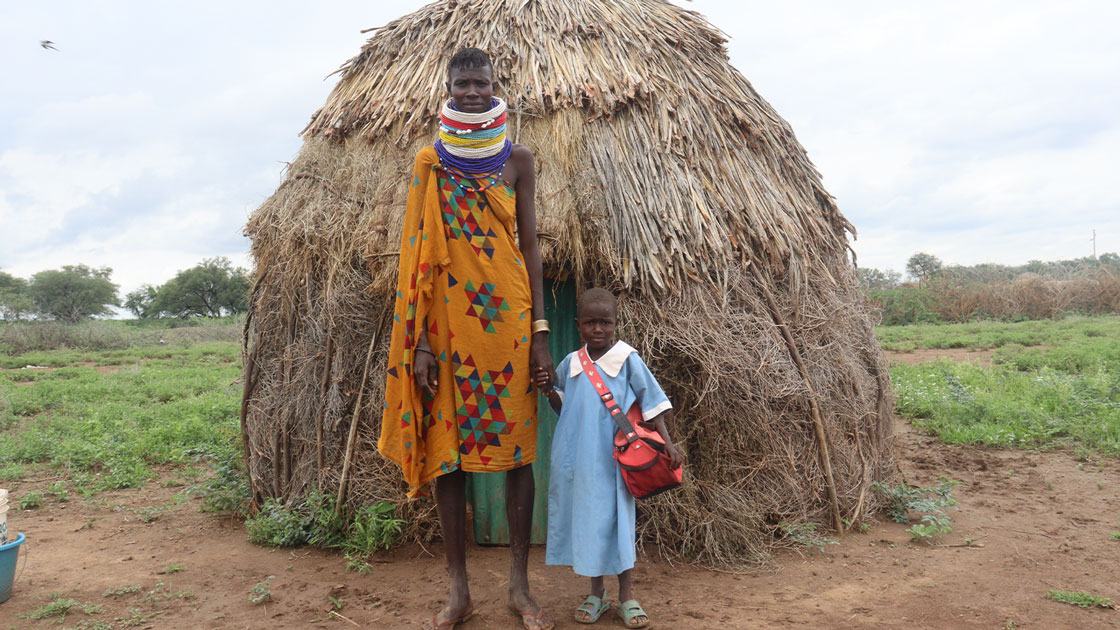
Epakan and mom Aweet on their way to school.
Epakan and mom Aweet on their way to school.
Published: 24 November 2025
 Listening