New aid policy makes Erikshjälp's work even more important
 Listening
 Before Christmas, the Government and the Sweden Democrats presented their reform agenda for Swedish aid. There is much in the reform agenda that raises concerns for the countries that need the most support.
There are some positive elements in the government's new aid policy, but above all there are many concerns.

Anders Malmstigen, International Director at Erikshjälpen.
Anders Malmstigen, International Director at Erikshjälpen.
Concerns about the link between trade and aid
- "There are some positive elements in the government's new aid policy, but above all there is much that raises concern. One example is the clear link between trade and aid, which now leads to turning its back on some of the countries that need the most support," says Anders Malmstigen, International Director of Erikshjälpen.
"Aid for a new era - Freedom, empowerment and sustainable growth" is the name of the government's reform agenda that will determine the direction of Sweden's future global development work.
When the government's aid reform agenda was released in early December, Erikshjälpen eagerly awaited the letter of regulation to Sida to see what specific consequences the new reform agenda would have. The regulation letter with directives for Sida's activities came the following week and is largely in line with the changes contained in the reform agenda.
Aid policy has shifted focus from poverty reduction to promoting trade and development.
- "It is clear that the focus of aid policy has shifted from poverty reduction to primarily promoting trade and development," says Anders Malmstigen.
The concern about the link between trade and aid is that Sweden's aid policy is moving away from conflict-affected countries where poverty is increasing. This applies, for example, to Burkina Faso, Mali and South Sudan, countries where Erikshjälpen is active and where needs have increased.
The government's directive to Sida for 2024 now confirms that aid to these three countries in Africa, together with Cambodia in Asia, is being phased out within the framework of ongoing regional support. In the four countries that are being phased out, Erikshjälpen has interventions together with local partner organisations.
- The letter confirmed the concern that Sweden's aid no longer focuses primarily on people living in poverty and oppression. "Now our work and that of other civil society organizations becomes even more important. We can't just sit back and watch Swedish interests dictate who gets aid," says Anders Malmstigen.
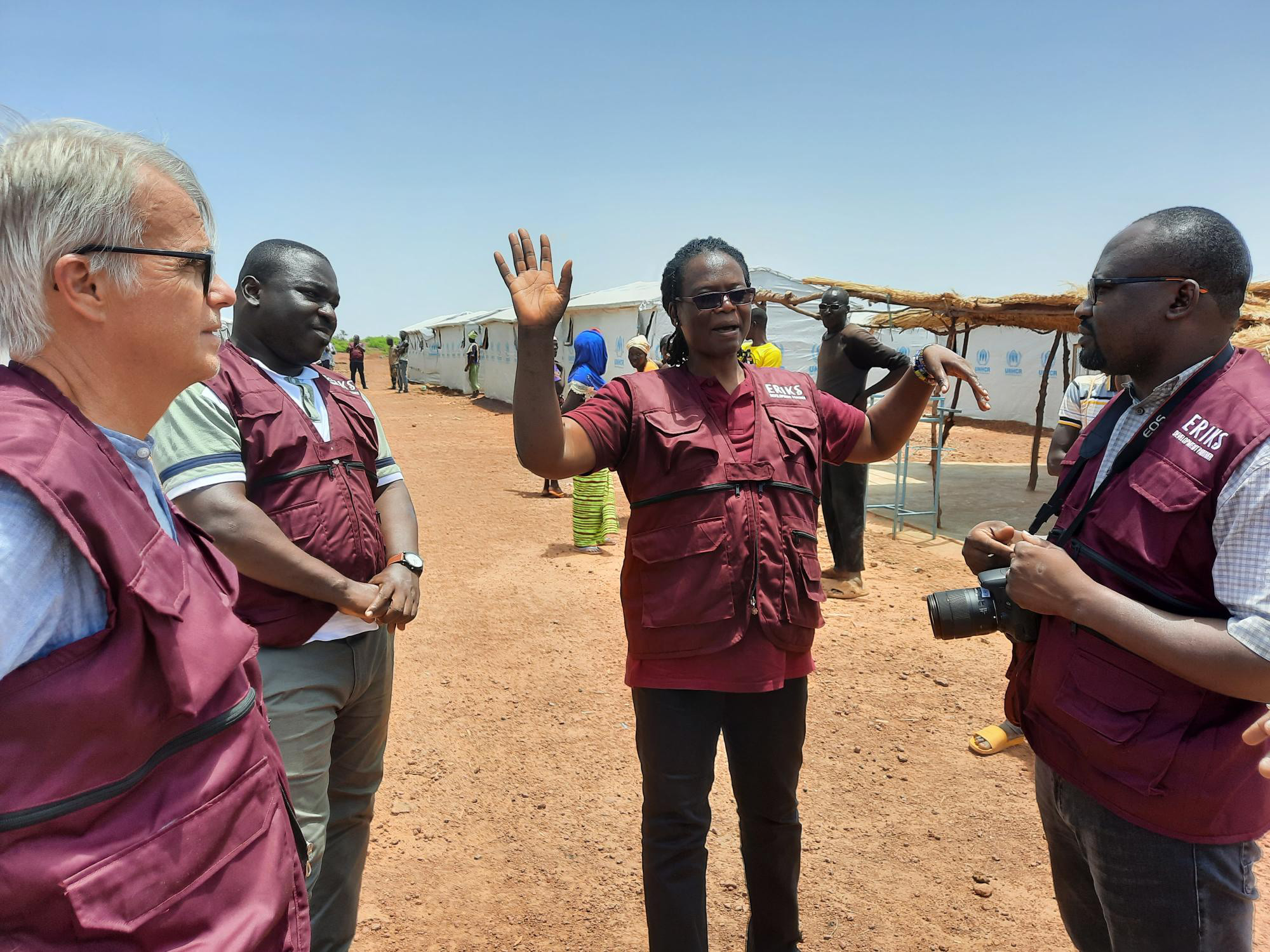
Anders Malmstigen together with Erikshjälpen's employees in Burkina Faso.
Anders Malmstigen together with Erikshjälpen's employees in Burkina Faso.
Now our work and that of other civil society organizations becomes even more important.
Analysis of the reform agenda and appropriation directions
Concord Sweden is an umbrella platform that brings together 82 aid organizations in civil society. In its analysis of aid policy and the appropriation letter to Sida, Concord highlights a few points in particular:
- The general condition that the funds may only be used in accordance with the OECD/DAC guidelines for what can be classified as aid is not included in the appropriation directions.
- The appropriation line for communication and information activities in Sweden is removed completely.
- There will be the same low allocation for aid through Swedish popular movement organizations (CIVSAM allocation) as last year.
During the year, Erikshjälpen worked with the Concord Sweden network to develop recommendations for what the government's aid reforms should look like for sustainable global development. An important piece of the puzzle has been to ensure that the promise of increased Funding to civil society can be kept.
The reform agenda indicates that future cooperation with civil society organizations is a priority, but there are no clear strategies.
- Now it is just a matter of ensuring that this is put into practice. "Even though the aid provided through Swedish NGOs has increased proportionally, we are still seeing a decrease in actual money. This is because the total volume of aid has decreased," says Anders Malmstigen.
The reform agenda is positive
In the government's reform agenda for aid, Erikshjälpen welcomes the fact that children are highlighted as a priority group with their own specific rights and that the rights and freedoms of girls are given a prominent position. Sexual and reproductive health and rights, SRHR, and working against, for example, genital mutilation are also on the agenda, which bodes well for the future. But it is now important that children's rights are made visible in future strategies in order to have a proper impact.
Analysis of the aid reform agenda, concord.se.
Analysis of appropriation directions to Sida, concord.se.
Read Anders Malmstigen's opinion piece on the subject in Dagen, Sweden phases out aid to particularly vulnerable countries, Dagen.se.
Author: Lena Elf.
Published: 03 January 2024