Games from around the world
 Listening
 Children play games all over the world. They hopscotch, play tag, and play make-believe. The rules and names of the games may differ. Here we have collected some of the games that children play around the world.
Ekyesho
Fiona is in grade five in Uganda. At her school, many of the children play the game Ekyesho. The game is played in many countries and has different names depending on where you are in the world. In Uganda it is called Ekyesho, in Malawi it is called Ngodo and in northern Kenya it is called Toki. It is also played in South-East Asia, North Africa and the Balkans.
How to play the game Ekyesho
Collect 14 stones that are slightly larger than marbles. Draw a ring on the ground and put 13 stones in the ring.
- Throw up a stone. Take 2 stones out of the ring before you catch the stone you threw. Put back 1 of the stones you took from the ring.
- Throw up a stone. Take 3 stones out of the ring before you catch the stone you threw. Put back 2 of the stones you took from the ring.
- Continue until you have 7 stones.
If you don't manage to catch the stone you threw up or if you pick up the wrong number of stones, it will be the next person's turn to try.
Mak
Children in Cambodia play a game they call Mak. In the game, the children practice both balance and coordination. Bonny and her friends describe and demonstrate how the game is played.
How to play the game Mak
To play Mak, you will need a garden that you can jump through on one leg. Everyone involved in the game also needs a stone each.
- The first person in line stands just before the start of the garden. You should now throw the stone into the first square of the garden. Then hop on one leg through the whole hedge and pick up your stone on the way back.
- Throw the stone in the second square of the garden and hop on one leg through the whole garden again. Pick up the stone on the way back.
- If at any time in the garden you land on two feet or if the stone lands outside the garden, it is your friend's turn. When the stone has landed once in all the squares of the enclosure without the player putting in both feet, the person has won.

limp
This game is played by children in Nepal and elsewhere. Each child in turn goes forward and tries to hit the bucket with a strong stick. The person who hits the bucket with the stick is blindfolded and has to spin around a few times before starting to hit.
How to play the Hinken
You will need an old bucket, a thick stick, a sturdy stick and a shawl.
- Start by knocking the thick stick into the ground and turning the bucket over. Then place the bucket on top of the stick with the bottom up. In this game, there is a risk of breaking the bucket, so preferably use a bucket that is old and broken.
- Blindfold the person who is going to start. Spin them around a few times so that they are no longer sure where the bucket is placed.
- The batter should try to get as close to the bucket as possible and try to hit it once. It's not easy when you can't see anything!
- Then it's the next child's turn.
Whoever manages to hit the bucket wins the game. If no one manages to hit the bucket, the closest wins.
Lion, rope and mouse
The game of lion, rope and mouse is a game from Kenya. It is a game played all over the world. It has different names in different countries. In Sweden it is called rock, paper, scissors.
How to play the lion, rope and mouse game
You don't need any tools, you just use your own hands. You need to be two people.
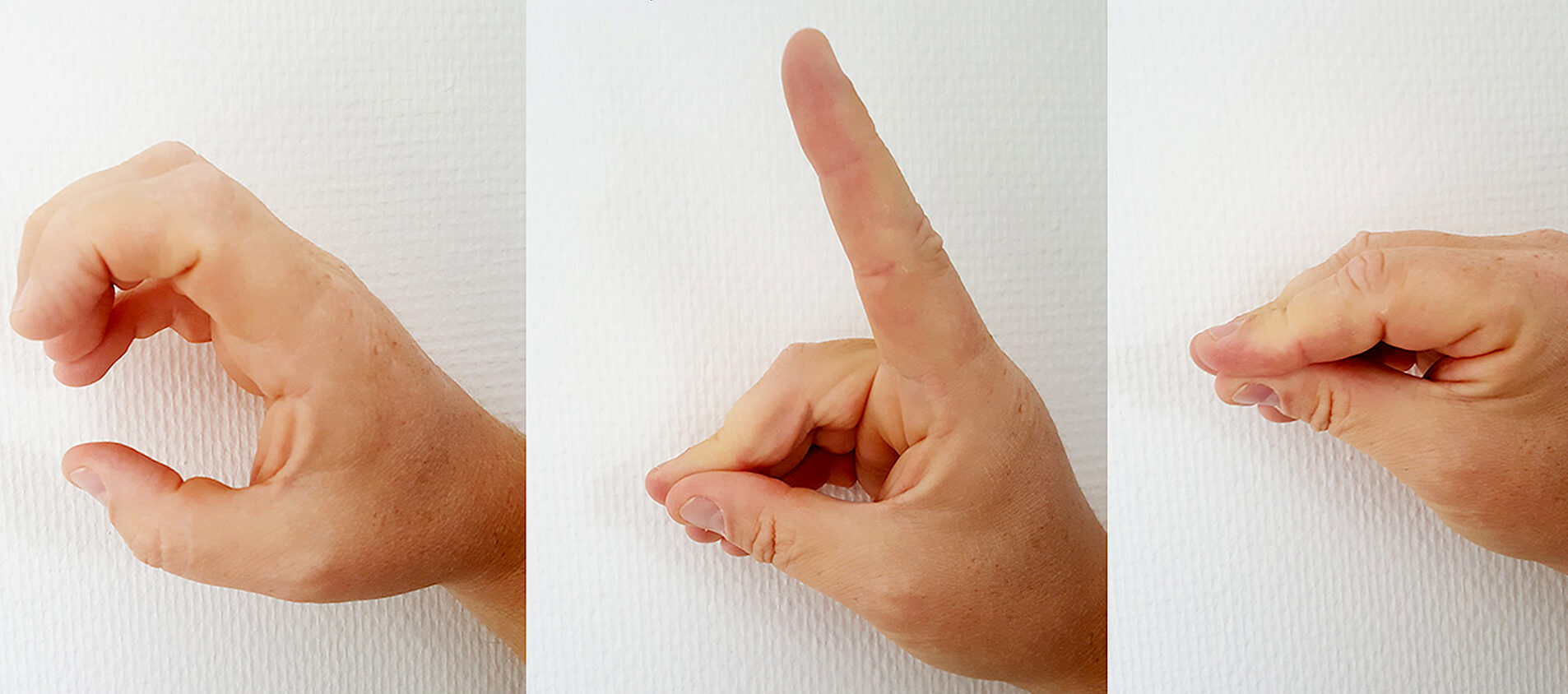
Count in lion, mouse, rope and on the last word show the sign you chose.
The sign of the Lek
Lion: Form your hand into a snapdragon.
Rope: Hold up your index finger.
Mouse: Shape your hand into a mouse by holding your fingers together with your thumb underneath.
Lion wins over mouse, mouse over rope and rope over lion.
Published: 30 September 2024