Sweden's minority groups and minority languages
 Listening
 In Sweden, there are five minority groups, each with its own minority language. What is a minority group and a minority language? You can read more about it here!
What is a minority group?
A minority group is a group of people who have lived in Sweden for a long time, they have their own culture and language.
There are five national minorities in Sweden. The five groups are:
- Judar
- Romanians
- Sami
- Swedish Finns
- Tornedalians.
What is a minority language?
The language spoken by a minority group is called a minority language. A minority language must have been spoken in Sweden for at least three generations. Sweden's minority languages are:
- Yiddish
- Romani chib
- Sami language
- Finnish
- Meänkieli.
Sweden has a long history of discrimination and mistreatment of people because they belong to a minority group. There are laws and regulations in Sweden to protect the rights of minority groups.
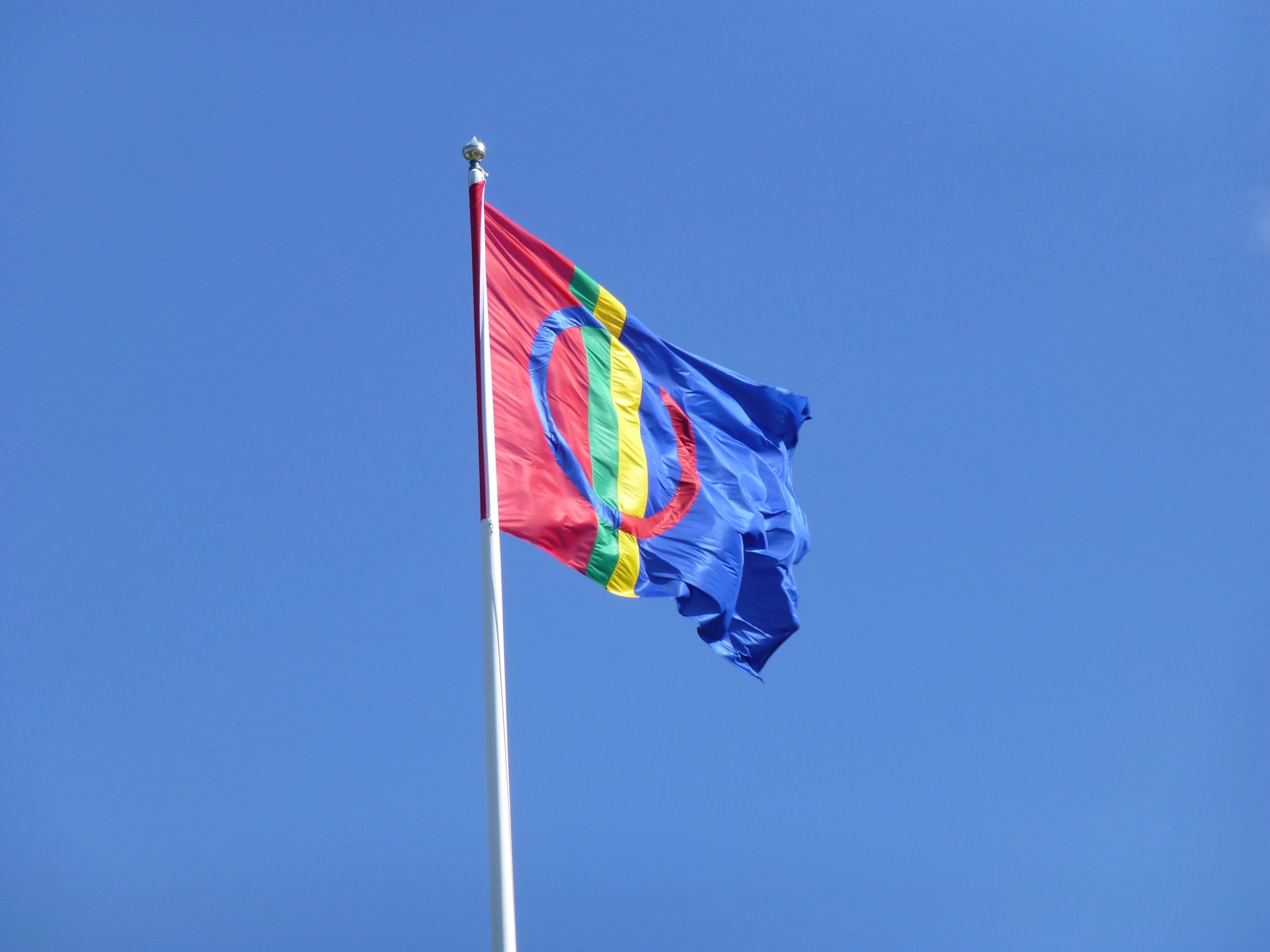
The Sami flag. The Sami are a minority living in Sweden, Norway, Russia and Finland. Photo: Thom Reijnders/Unsplash
The Sami flag. The Sami are a minority living in Sweden, Norway, Russia and Finland. Photo: Thom Reijnders/Unsplash
Sweden's five minority groups
Judar
Jews have lived in Sweden since the 18th century. During the 20th century, many Jews fled to Sweden. The language that many Jews speak is Yiddish. For many Jews, Yiddish is a language used in connection with Jewish festivals.
Romanians
There are various Roma groups in Sweden. These groups have existed in Sweden since the 16th century. Roma have been highly discriminated against for a long time. Today, there are laws and regulations in place to protect the rights of Roma and other minority groups.
The language spoken by Roma is Romani Chib. Roma National Day is on April 8.
Sami
The Sámi are an indigenous people living in Sweden, Norway, Finland and Russia. Some Sami work as reindeer herders. The area where reindeer herders live is called Sápmi. The language spoken by many Sami is Sami. The most common is North Sámi.
Swedish Finns
Until 1809, Finland and Sweden were one country. Then many people moved around the country. Many worked in the forest or in mines. Others lived in the capital Stockholm. Even later, when Finland became its own country, many people moved from Finland to Sweden to seek refuge from war or to work. Many people who call themselves Swedish Finns were born in Finland and then moved to Sweden.
Tornedalians
After the end of the war between Sweden and Russia in 1809, the border between Sweden and Finland was redrawn. Sweden was forced to give the eastern half of the country to Russia and the border was drawn through Tornedalen. The western part of the valley remained Swedish. The Tornedalians living on the western side were forced to speak Swedish, which meant that their culture almost disappeared.
The language they speak is Tornedal Finnish, mostly known as Meänkieli.
This text was originally published on November 1, 2016.
Published: 26 November 2024