ERIKS Anti-Corruption Policy is Erikshjälpens Antikorruptionspolicy in English. The policy describes how we define and relate to corruption and how we work to counteract, detect and act on corruption. Adopted by Erikshjälpen's Board of Directors April 2024.
1 Introduction and Purpose
ERIKS Development Partner (hereafter ERIKS) is a non-profit second-hand business and a child rights organization that works to ensure that children's rights are respected, protected, and fulfilled in Sweden and around the world. Corruption is always an obstacle to social and economic development. It also risks damaging ERIKS´ trust among those we work with in our programs, as well as in relation to private and institutional donors, partners, and customers in our stores. ERIKS, therefore, sees corruption as a serious risk that counteracts our vision of a changed world where children's dreams come to life.
Parts of ERIKS´ programs, both in Sweden and internationally, are carried out in environments and contexts with a relatively high risk of corruption, which requires specific measures and approaches. Countries with a high level of inequality, weak democracy, and conflicts often have a higher risk of corruption. Likewise, internal risks such as handling large amounts of money, close and long-term relationships between colleagues and representatives of different actors, along with weak internal control can foster corruption. There is also a risk of corruption in, for example, procurements, purchases, and corporate collaborations that often occur in Sweden.
The purpose of this policy is to describe how ERIKS defines and relates to corruption and how we work to prevent, detect, and act on corruption.
ERIKS' work with anti-corruption is based on our identity document "In the Service of Love", which establishes our values. In addition to this, the following documents are linked to our work on anti-corruption:
- Policy for Feedback, Complaints and Whistleblowing
- Procurement Policy
- Code of conduct
- Child Safeguarding Policy
- Personnel and Recruitment Policy
This policy is valid for all parts of ERIKS´ operations, i.e., both ERIKS Development Partner and ERIKS Second Hand, in Sweden and internationally, and applies to ERIKS' staff, interns, volunteers, elected officials, and consultants. Through agreements, the policy also applies to ERIKS´ international partner organizations.
2. definition and approach
Definition of
ERIKS follows Sida's definition of corruption, which is the abuse of trust, power, or position for improper gain. Corruption includes, among other things, bribery, embezzlement, extortion, conflict of interest, nepotism, and other similar improprieties. The definition thus means that someone uses their position of power to benefit themselves, a relative, or their own interests. The benefit can include both financial and other advantages. Corruption also refers to the neglect to take action.
Approach
ERIKS' approach to corruption is based on Sida's anti-corruption rule, which means to always prevent, never accept, always inform, and always act. This should be applied in all situations, even if it means that interventions are delayed or partnerships terminated.
ERIKS is subject to Swedish law. Swedish laws and regulations apply to ERIKS' work abroad, where local legislation and rules must also be followed and respected. However, local legislation can never be used as an excuse for corrupt or unethical actions.
3. implementation
Always prevent
ERIKS works at all levels to make risk assessments that include risks of corruption. Structures and systems within the organization should always be designed to minimize the risk of corruption and at the same time values and ethics should continuously be discussed. All employees, elected officials, and volunteers have a responsibility to prevent corruption and should be given training and support in how they can do this.
Trust is also an important part of preventing corruption. Therefore, ERIKS works constantly to build trusting relationships with partners and to create a good and constructive dialog.
Never accept
ERIKS' employees, interns, elected officials, volunteers, and consultants should never accept corruption or corrupt actions, whether in ERIKS' own programmes or in programmes that we support financially or in other ways. It is our collective responsibility to ensure that every part of our operations is characterized by fairness, transparency, and accountability. Never accepting corruption means not only compliance with the law but also acting based on our values and being role models for ethical behaviour in all situations. At the slightest suspicion of an irregularity, this should be reported.
Always inform
ERIKS´ employees, interns, elected officials, volunteers, and consultants are obliged to report suspected or detected corruption through our complaint and whistleblowing functions on our international website (eriksdevelopment.org) or our Swedish website (erikshjalpen.se). Further reporting measures and descriptions of responsibilities are available in our Guidelines for Complaints and Response Mechanism. If it concerns an intervention financed by Sida, the Swedish Mission Council (SMR) must be informed. If the intervention has another institutional donor, the respective donor must be informed.
Always act
ERIKS must always act on tips, warning signals, and suspicions of corruption. The action should be taken with discretion and respect for those involved. ERIKS investigates all suspicions of corruption, and appropriate measures are taken to handle the specific case and prevent something similar from happening again. Internal and external informants and whistleblowers are offered anonymity and other security measures if needed. The routines for how a case is assessed are the same whether the information first reaches ERIKS through our complaint or whistleblowing functions or in another way. More information about the procedure in case of suspected corruption is available on our website and in our Policy for Feedback, Complaints and Whistleblowing.
Transparency
ERIKS always strives for openness and transparency in all parts of the organization's operations. This applies to policies, strategies, plans, decisions, and reports. Through this, insight into and scrutiny of the operations are made possible, which can contribute to increasing trust in ERIKS among employees, volunteers, and elected officials, as well as partners and other actors.
Accountability
ERIKS strives for clarity in mandate and division of responsibilities and to have structures and systems to trace mistakes and deliberate errors. Those responsible within the organization should be held accountable for their actions. An important part of this work is our complaint and whistleblowing functions through which suspected corruption can be reported. What we define as complaints and whistleblowing is described on our website and in our Policy for Feedback, Complaints and Whistleblowing.
Partner organizations
ERIKS encourages and supports our international and national partner organizations to have their own systems and routines for working preventively with corruption and to detect and report on corruption as early as possible. Through our agreements with partners, it is regulated how partner organizations and ERIKS act in case of suspected corruption.
ERIKS strives for an open and continuous dialogue with partners on the issue of corruption and around values and ethics. Support is given to partner organizations that need to improve their internal control systems or implement other measures that prevent corruption.
Communication
This policy should be available on ERIKS' intranet and website as well as shared and attached as an appendix when agreements are signed with a partner organization. It should also be presented to new employees as well as elected officials, interns, volunteers, and consultants within the organization.
4. follow up
To have a successful work against corruption, continuous follow-up and evaluation of the work must be done. The Secretary General is ultimately responsible for the work with anti-corruption, that the policy is followed, and that the work is evaluated. The policy is approved by ERIKS' board and revised as needed.
All directors and managers within both ERIKS Development Partner and ERIKS Second Hand have a responsibility to integrate anti-corruption work into their operations. The immediate manager also has a responsibility to ensure that employees are aware of the policy and the other documents that reflect ERIKS' view on and work with corruption. All employees, in turn, have a responsibility to contribute to the realization of the policy's intentions and to work for anti-corruption.
Erikshjälpen's Anti-Corruption Policy describes how we define and relate to corruption and how we work to counteract, detect and act on corruption.
Adopted by Erikshjälpen's board 2024-04-12. Erikshjälpen's Anti-Corruption Policy is available in English and is then called ERIKS Anti-Corruption Policy.
1. Introduction and purpose
Erikshjälpen is a nonprofit secondhand organization and a child rights organisation works to ensure that children’s rights are respected, protected, and fulfilled in Sweden and around the world. Corruption is always an obstacle to social and economic development. It also risks damaging Erikshjälpen’s credibility among those we work with in our interventions in our relationships with private and institutional donors, partners, and customers in our stores. Erikshjälpen therefore views corruption as a serious risk that undermines our vision of a better where children’s dreams come true.
Parts of Erikshjälpen's activities, both in Sweden and internationally, are carried out in environments and contexts with a relatively high risk of corruption, which requires specific measures and approaches. Countries with high inequality, weak democracy and conflicts often have a higher risk of corruption. Similarly, internal risks such as handling large sums of money, close and long-term relationships between colleagues and representatives of different parties, and weak internal accountability can promote corruption. There is also a risk of corruption in, for example, procurement, purchasing and business partnerships, which often take place in Sweden.
The purpose of this policy is to describe how Erikshjälpen defines and relates to corruption and how we work to counteract, detect and act on corruption.
Erikshjälpen's work with anti-corruption is based on our identity document "In the service of love" which establishes our core values. In addition, the following documents are also linked to our work on anti-corruption:
- feedback, complaint and Whistle blowing policy
- Procurement policy
- Code of conduct
- Child safety and protection policy
- Staff and recruitment policy
This policy is valid for all parts of Erikshjälpen's activities, i.e. the children's rights organization and Erikshjälpen Second Hand, in Sweden and internationally, and applies to Erikshjälpen's staff, interns, volunteers, elected representatives and consultants. The policy also applies via agreement to Erikshjälpen's international partner organisations.
2. definition and approach
Definition of
Erikshjälpen follows Sida's definition of corruption, which is the abuse of trust, power or position for improper gain. Corruption includes, among other things, bribery, embezzlement, extortion, conflict of interest, nepotism and other similar irregularities. It is defined as the use of a position of power to benefit oneself, a close associate or one's own interests. The gain can include both financial and other benefits. Corruption also refers to the failure to take action.
Approach
Erikshjälpens approach to corruption is based on Sida's anti-corruption rule, which means always prevent, never accept, always inform and always act. This should be applied in all situations even if it means delays in interventions or termination of partnerships.
Erikshjälpen's activities are subject to Swedish law. The Swedish laws and regulations are applied to Erikshjälpen's work abroad where local legislation and rules must also be followed and respected. However, local laws can never be used as an excuse for corrupt or unethical actions.
3. implementation
Always prevent
Erikshjälpen works at all levels to conduct risk assessments that include risks of corruption. Structures and systems within the organization must always be designed to minimize the risk of corruption while continuously discussing values and ethics. All employees, elected representatives and volunteers have a responsibility to prevent corruption and must be given training and support in how to do this.
Trust is also an important part of combating corruption. Erikshjälpen therefore works constantly to build trusting relationships with partners and to create a good and constructive dialog.
Never accept
Erikshjälpen's employees, trainees, elected officials, volunteers and consultants should never accept corruption or corrupt acts, whether in our own operations or in interventions that we support financially or in other ways. It is our shared responsibility to ensure that every aspect of our work is characterized by fairness, transparency and honesty. Never accepting corruption means not only complying with the law, but also acting on our values and setting an example of ethical behavior in all situations. At the slightest suspicion of an irregularity, it must be reported.
Always inform
Erikshjälpen's employees, trainees, elected officials, volunteers and consultants are obliged to report suspected or discovered corruption via our complaint function or Whistle blowing on our website. More reporting routes and responsibilities can be found in our feedback, complaint and Whistle blowing Policy.
If the operation is funded by Sida, the Swedish Mission Council (SMC) must be informed. If the operation has another institutional donor, the relevant party must be informed.
Always act
Erikshjälpen must always act on tips, warning signals and suspicions of corruption. The action must be taken with discretion and with respect for those involved. Erikshjälpen investigates all suspicions of corruption and appropriate measures are taken to deal with the specific case and prevent something similar from happening again. Internal and external reporters and whistleblowers are offered anonymity and other security measures if needed. The procedures for how a case is assessed are the same whether the information first comes to Erikshjälpen through our complaint and Whistle blowing function or otherwise. More information on the procedure for suspected corruption can be found on our website and in our feedback, complaint and Whistle blowing policy
Transparency
Erikshjälpen always strives for openness and transparency in all parts of the organization's activities. This applies to policies, strategies, plans, decisions and reports. This enables insight into and scrutiny of the business, which can help to increase confidence in Erikshjälpen among employees, volunteers and elected officials as well as partners and other stakeholders.
Accountability
Erikshjälpen strives to have a clear mandate and division of responsibilities and to have structures and systems to track mistakes and deliberate errors. The people who have responsibility within the organization must be held accountable for their actions. An important part of this work is our complaint and Whistle blowing function, where suspected corruption can be reported. What we define as complaint and Whistle blowing is described on our website and in our feedback, complaint and Whistle blowing policy.
Participation
All relevant actors in Erikshjälpen's partnerships, including the intended target groups, must have ownership and influence over the planning, implementation and follow-up of our partnerships in order to be able to participate more easily in the work against corruption.
partner organisations
Erikshjälpen encourages and supports our international and national partner organisations to have their own systems and procedures for working preventively with corruption and to detect and report corruption at the earliest possible stage. Our and our partners' agreements regulate how partner organisations and Erikshjälpen act in the event of suspected corruption.
Erikshjälpen strives to have an open and continuous dialogue with partners on the issue of corruption and on values and ethics. Support is given to partner organisations that need to improve their internal control systems or implement other measures that prevent corruption.
Communication
This policy must be available on Erikshjälpen's intranet and website and be shared and added as an annex when signing an agreement with a partner organization. It should also be presented to new employees as well as elected officials, interns, volunteers and consultants within the organization.
4. Monitoring
Successful anti-corruption work requires continuous Monitoring and evaluation of the work. The Secretary General is ultimately responsible for the work on anti-corruption, that the policy is followed and that the work is evaluated. The policy is adopted by the board of the children's rights organization and revised when necessary.
All managers in both the children's rights organization and the second-hand business have a responsibility to ensure that anti-corruption work becomes an integral part of the work within their business. The immediate manager is also responsible for ensuring that employees are aware of the policy and the other documents that reflect Erikshjälpen's view of and work with corruption. All employees, in turn, have a responsibility to contribute to the realization of the policy's intentions and to work for anti-corruption.
ERIKS Code of Conduct is Erikshjälpen's Code of Conduct policy in English. The policy governs that Erikshjälpen's vision and values are reflected in all work and conduct, both inside and outside the organization. Adopted by Erikshjälpen's board 2013-10-01.
1. introduction
Being involved with ERIKS brings with it great responsibility, not only in the implementation of the work, but also in terms of the behavior of the people involved. The vision and values of ERIKS are to be reflected in all our work and conduct, inside and outside the organization. This means that it is very important for you to maintain our good reputation, in your work with partner organizations, in contact with authorities and with people in general - in-country and abroad.
These guidelines are expected to be adhered to by everyone who engages in assignments on behalf of ERIKS; all staff, board members, and those engaged as experts or consultants.
2. transparency
Decisions must be open and transparent. Everything you do in your work must be transparent and verifiable for collegues and others ERIKS chooses to involve in this work.
3. respect
You have a responsibility to treat all people with respect. You must have understanding for the opinions and views of others. When working to promote child rights and ERIKS' vision and values in a context which conflicts with these values, it is important to act wisely and with sensitivity.
4. No Abuse of Your Position of Power
Development aid and assistance not only means a transfer of financial resources and knowledge, it often brings with it an aspect of power. In your work, it is therefore likely that you will come into contact with people who are or who feel as though they are in a position of dependence to you. This could be people in the partner organization or people in the target group, or other people within ERIKS. You must never abuse your position of power. In addition, you must not abuse your position of power to give other people benefits that they would not normally have had. Your behaviour and relationship with the partner organization and other people must not be such that people believe you are demanding or expecting different services or benefits.
5. Non-Discrimination
You must not discriminate against any individual person or group, irrespective of gender, age, ethnic background, religion, sexual preference, political beliefs or functional impairment; either within ERIKS, the partner organization or people in general. It is important that you pursue this obligation actively in the framework of partnership collaboration, as project and its activities should aim at making it possible for the aforementioned groups or people to take part.
6. No Sexual Abuse or Harassment
All forms of sexual abuse are forbidden, as are all forms of sexual contact between adults and children, i.e. persons under the age of 18. Purchasing sexual services is strictly forbidden. It is forbidden to use the technical equipment (computers etc.) that ERIKS provides you with to look at or spread pornographic material. No employee or person that you come into contact with should in any way be exposed to sexual harassment, either physically or psychologically. Sexual harassment refers to unwelcome behavior based on gender, or unwelcome behavior of a sexual nature that violates the person's integrity. You have an obligation to know about and follow ERIKS' Child Protection Policy.
7. Non-Corruption
Corruption means misusing an organization's/company's/authority's resources for your own benefit. You must not in any way contribute to corruption, for example by giving or receiving bribes, either in the form of money or other benefits with the aim of giving you advantages over others. ERIKS' Anti-Corruption policy and response plan have a zero tolerance approach to corruption. If you suspect any irregularities, the response plan tells you whom at ERIKS to contact.
8. alcohol and drugs
When you are working (in-country or abroad), alcohol consumption is only allowed in exceptional circumstances, such as official dinners or similar occasions. On these occasions, it is extremely important to consume alcohol in moderation. During your free time on work mission, you should also be restrained in your alcohol consumption, as you are a representative for ERIKS. ERIKS never pays or offers alcohol. Alcohol consumption is completely forbidden when driving, and as a passenger, you should always react if you suspect that the driver is drunk. All forms of involvement with, possession or consumption of narcotic preparations are forbidden, unless when they are prescription drugs for your own use.
9. Knowledge of the Guidelines
Everyone who engages in assignments on behalf of ERIKS; all staff, board members, and those engaged as experts or consultants, must be made familiar with this Code of Conduct. Being one of these persons, you are obliged to familiarize yourself with and follow these guidelines.
10. follow-up
This code of conduct is a guiding document that has been adopted by ERIKS' Board of Directors. From October 1st 2013, this document must be signed by all engaged in assignments on behalf of ERIKS; all staff, board of directors, and those engaged as experts or consultants. In case of suspected breach of the Code of Conduct, you must be given a written warning and the possibility to respond to the allegations. Repeated or deliberate breach of the Code of Conduct may result in termination of the employment/assignment. Any termination of employment will be presented to the Board of Directors for a final decision on the matter. If a failure to follow the regulations is also a breach of Swedish law, you can also be taken to court.
Eriks Child Safeguarding Policy is Policy för barns rätt till trygghet och skydd in English. The policy aims to formulate and clarify the principles and approaches that Erikshjälpen applies to prevent children from being harmed and how the organization acts if any child is harmed in any of Erikshjälpen's activities.
Adopted by Erikshjälpen's board 2022-02-03. Minor adjustment approved by Erikshjälpen and Erikshjälpen Second Hand's management groups 2023-01-31.
1. introduction and purpose
ERIKS vision is "A better world where children's dreams come true". It is a world where every child feels safe and secure. Therefore, ERIKS takes all necessary measures to ensure that the organization, its programs, and employees have the best interests of the child in focus and prevent children from being harmed. Any suspicious or confirmed cases of neglect, violation and abuse are taken seriously and handled according to established procedures and guidelines.
This Child Safeguarding Policy aims to formulate and clarify the principles and approaches that ERIKS applies to prevent children from being maltreated and how the organization acts if any child is harmed in any of ERIKS' activities. It applies to the entire ERIKS, which means the Child Rights- and the Second Hand- organization in Sweden as well as internationally and should be applied to by ERIKS's employees, trainees, field students, volunteers, recruiters, board members, consultants and other people who perform work for ERIKS. The policy determines responsibilities and roles in the work to ensure that children are protected and safe within the organization. The policy is complemented by a position paper¹, describing ERIKS's view on children's right to protection and explaining how ERIKS works with this issue as a focus area in the Programme activities.
The Child Safeguarding Policy interacts with the organization's other policies. When needed, guidelines and practices are developed to provide guidance to employees in how the work should be carried out within different parts of the organization.
ERIKS is a child rights organization and works primarily with a focus on children. A child is any person under the age of 18. ERIKS's own activities or projects supported by ERIKS also involve young adults, above the age of 18. The overarching principles of the right to protection in this policy, and related documents, apply to all persons who participate in or are affected by ERIKS's work and activities.
The policy's main message is adapted and made accessible and understandable to participating children in the activities for which ERIKS is directly responsible.
In cases where activities are carried out by partners, and the partner has its own policy for child safeguarding, the partners policy should be followed.
This policy is followed up annually and revised if necessary.
ERIKS' Thematic Position paper - Right to Protection
2. ERIKS' fundamental values
ERIKS' commitment to work for the rights of the child is guided by the organization's identity and values - to work in the spirit of founder Erik Nilsson, based on Christian values, a Christian view of humanity, and the UN Convention on the Rights of the Child. The Convention on the Rights of the Child clearly states that every child has the right to life and development, and to be protected from all forms of violence, abuse, maltreatment, and exploitation. All children, without distinction, have the right to be protected in the activities of ERIKS and its partners. Everything ERIKS does should have the best interests of the child in focus. Therefore, ERIKS commits itself to create safe environments for children where they can develop and prosper, as well as to integrate measures to ensure children's safety and protection in all processes and systems within the organization. ERIKS has zero tolerance for child exploitation and abuse, as well as violations and harassment.
ERIKS adheres to the following definition of child protection: Measures and structures to prevent and respond to abuse, neglect, exploitation, and violence affecting children. Child protection means safeguarding children from harm. Harm includes violence, abuse, exploitation, and neglect. The goal of child protection is to promote, protect and fulfill children's rights to protection from abuse, neglect, exploitation, and violence as expressed in the UN Convention on the Rights of the Child (UNCRC) and other human rights, humanitarian and refugee treaties and conventions, as well as national laws.²
In addition to the above, ERIKS recognizes that harm includes physical, sexual, social, psychological, emotional, and spiritual aspects which affect the child's health, survival, development, or dignity in the context of a relationship or responsibility, trust, or power. Children must be protected from both potential and actual harm.
² ERIKS Thematic Position paper - Right to Protection
3. ERIKS' commitments to ensure that children are protected
In order to ensure children's right to protection in their activities, ERIKS undertakes to prevent, act and follow up as follows:
3.1 Prevent
All workers in Sweden and internationally, i.e., employees, trainees, field students, volunteers, recruiters, board members, consultants and other people who perform work for ERIKS are obliged to sign that they have read and understood ERIKS's policy and will follow its guidelines.
When recruiting workers for work assignments together with children, their suitability is checked through, for example, references and extracts from criminal records.
ERIKS creates awareness among staff and other persons concerned about the issue of children's safety and protection through information and training.
ERIKS plans its work so that risks are minimized for children to be harmed, exploited, or abused, which includes carrying out risk assessments.
ERIKS has an easily accessible and child-friendly complaints and response mechanism for reporting on anomalies in its activities as well as routines for how complaints should be followed up.
ERIKS informs participants and guardians in activities for which ERIKS is directly responsible about the Policy on Child Safeguarding and where they can turn to report irregularities. In cases where activities are carried out by partners, it is the partner's responsibility to inform participants and guardians about its policy. The partner's reporting procedure shall be followed.
ERIKS has specially appointed persons (child protection representatives) in the organization with the task of proactively monitoring the issue of children's safety and protection and ensuring that the organization's commitments are fulfilled.
ERIKS ensures that partner organizations within the programs have their own policy for child safeguarding and that it is complied with. ERIKS also encourages partners to have their own child-friendly complaints and response mechanism. In cases where such a policy is missing, partners must apply ERIKS's policy until they have designed their own.
3.2 Act
ERIKS commits itself to take any concerns raised seriously and to act promptly based on developed guidelines and practices in the event of suspicion of or detected misconducts and irregularities related to children's right to safety and protection. ERIKS also ensures that partners act according to this paragraph.
ERIKS assists in facilitating any investigation in cases that must be reported to authorities.
3.3 Follow-up
If misconducts or irregularities are detected, this is followed up with measures to ensure that the incident does not happen again. It may involve amendments of routines, suspension of cooperation or transfer of staff or termination of contracts. Victims of abuse or violation are offered support based on what the situation requires.
4. reporting
In the event of suspicion of or detected misconducts and irregularities relating to children's right to safety and protection in ERIKS´s activities, reporting must be done in accordance with decided guidelines. Internal reporting takes place in all cases. Reporting to the relevant authorities is made after consultation with the nearest manager concerned and where the conclusion is that it should be done.
In the event of incidents within international projects supported by ERIKS, ERIKS' regional offices ensures that the partner organization handles the matter in accordance with the current policy and applicable laws and regulations in the country in question.
All reporting, both near miss and incident reporting, shall take place urgently, if possible, within 24 hours.
All reports received are handled professionally, confidentially and in the most appropriate manner. If the authorities need to be involved, this is done with the best interests of the child in mind.
For more detailed instructions on reporting procedures guidelines should be available.
5 Liability
The Boards of ERIKS and ERIKS Second Hand are responsible for adopting the policy and for revising it if necessary.
The Secretary General of ERIKS and Chief Executive Officer for ERIKS Second Hand have the ultimate responsibility for the safety and protection of children within ERIKS' activities, that the policy is implemented, followed, and complied with as well as kept alive and updated. A summary description of how the policy has been complied with should be included in ERIKS' annual report.
Each Programme director and regional manager are responsible for ensuring that the policy is followed in their area of responsibility, and that perspectives on children's safety and protection are integrated into all work. This is done in consultation with the specially appointed child protection representatives from the Programme departments.
In international projects run by partners, the regional manager is responsible for ensuring that a Child Safeguarding Policy are in place and complied with.
Everyone who works for ERIKS (employees, trainees, field students, volunteers, recruiters, board members, consultants and other people who perform work for ERIKS) should contribute to ensure that children are safe within the organization's activities by following this policy and attached guidelines, as well as reporting deviations from the policy.
In connection with temporary visits to ERIKS's projects or activities, in Sweden as well as internationally, where children participate, receiving staff are responsible for ensuring that visitors follow ERIKS's Child Safeguarding Policy and associated guidelines
6. attachments
- Attachment 1: Definitions
- Attachment 2: Guidelines for child safeguarding and reporting procedure
- Attachment 3: Statement of acceptance for child safeguarding
7. certification
I hereby certify that I have read and understood ERIKS Child Safeguarding Policy and associated attachments. I undertake to always act in accordance with this policy and to contribute to its compliance with the organization. I undertake to do everything I can, based on my powers and responsibilities, to protect children from harm, risk of harm or of being subjected to violation and abuse as well as to report deviations from the policy. I thereby contribute to ensuring that children can be safe and secure in all the activities conducted by ERIKS and its partners.
I understand that violations of ERIKS Child Safeguarding Policy can lead to labor law measures and constitute reasons for the termination of my employment or assignment for ERIKS.
I am aware that certain behaviors that breach ERIKS Child Safeguarding Policy might result in a police report which can lead to consequences under criminal law.
Children's right to safety and protection
Erikshjälpen works for all children's right to safety and protection, to influence and change the fact that many children in the world are suffering. Our goal is that all children should be able to live a life in safety.
Read more about how we work on safety and security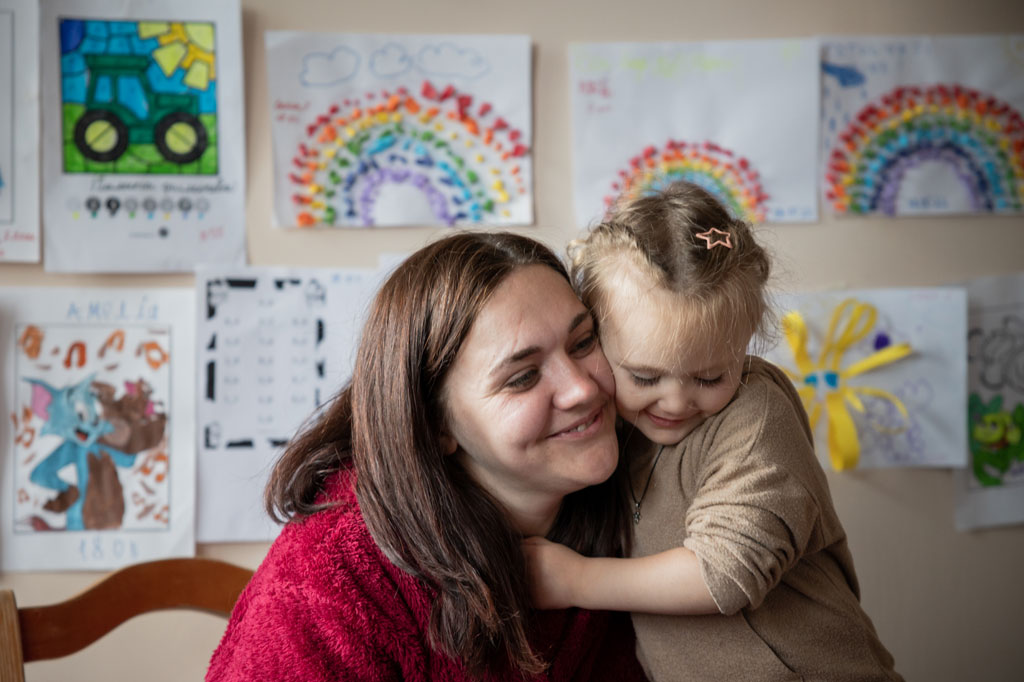
Erikshjälpen's fundraising policy governs all fundraising within Erikshjälpen and must be applied to all types of fundraising. Approved by Erikshjälpen's board 2024-11-29.
1. Introduction and purpose
At Erikshjälpen, we boldly raise funds so we can continue our work toward a better where children’s dreams come true. We uphold children’s rights through interventions education and recreation, health and safety, protection, and humanitarian interventions. In this way, we aim to provide children and young people around the world with the support and opportunity to dare to dream of the future. We believe in children and want to give them the tools for a better life and a safer future.
According to Erikshjälpen's values, we want to work in "Erik's spirit". This means that we take the responsibility of managing donors' gifts and trust very seriously. Erikshjälpen's fundraising work is aimed at private individuals, Corporate, parishes and associations. We regard every gift as an expression of personal commitment. This has been the case since the days of Erik Nilsson.
Erikshjälpen's activities are funded by private fundraising, institutional contributions and surplus from our Second Hand shops. This policy clarifies for our donors the principles that apply to fundraising activities, how Erikshjälpen raises money and how we handle gifts. The fundraising policy also provides guidance and direction to Erikshjälpen's employees, volunteers and others who participate in our fundraising work.
Erikshjälpen's fundraising policy governs all fundraising within Erikshjälpen. However, gifts in the form of used goods to Erikshjälpen Second Hand are not covered by this policy.
2. Definition of funds raised
Gifts from the public/privateprivate individuals, organisations, Corporate, communities, private and non-profit funds and foundations, testamentary gifts and the value of donated assets are counted as funds raised. A gift to Erikshjälpen must always be voluntary.
Contributions in the form of money from Corporate can be legally defined as either a gift or sponsorship. Corporate partnerships, where the contribution from the company is to be met by some type of counter-performance from Erikshjälpen, are considered sponsorship and are designed in dialog, after which we write an agreement that clarifies the scope and division of responsibilities.
3. transparency and accountability
Information and reporting back
We see our various aid and development projects as a partnership with our donors. As part of strengthening this partnership, we provide regular feedback with examples of how funds raised have been used.
We've got it covered! Safe and controlled fundraising
Erikshjälpen's fundraising towards the public, and the handling of donations, always takes place via a 90 account that is controlled by Swedish Fundraising Control. This means that the collection is checked annually to ensure that we do not have unreasonable collection and administration costs. At least 75 percent of the total income must go to the purpose. Erikshjälpen is also a member of Giva Sverige, the professional association for fundraising in Sweden, and applies their quality code. The purpose of the code is to promote transparency, professionalism and increased trust.
In Erikshjälpen's annual report, which is available at erikshjalpen.se, we report funds raised, costs, funds distributed and the results and effects of our interventions.
Erikshjälpen follows current legislation when handling personal data. Detailed regulations can be found in our Privacy Policy (personal data policy).
4. Approach to donors
We respect our donors!
Erikshjälpen's fundraising work is completely dependent on committed donors who want to join us in the work for children's rights and future. We do not just want to collect as much money or as large gifts as possible. For us, the small gift is as important as the big one.
In Erikshjälpen's fundraising work, it is central to respect the donor's wishes. This means that:
- If a donor does not wish to be called, receive a fundraising letter or our magazine, we respect this and note it in our register.
- If a donor wishes to remain anonymous, this should be respected. The donor's name should never be published
without the donor's consent. Erikshjälpen does not pass on the donor's name to another
organization or Corporate, unless this is required to conduct information and
fundraising work (e.g. printers). - The donor must be able to find out the names and contact details of people in
Erikshjälpen's management. - The donor has the right to know if the person requesting a contribution to Erikshjälpen is a volunteer
an employee or an external consultant - The donor should be able to expect a correct and professional treatment from
Erikshjälpen's representatives and should never be subjected to pressure. - The donor should be able to ask questions to Erikshjälpen at any time and expect a quick
and reliable answer. Any complaint can be submitted directly to an employee at Erikshjälpen
or submitted via a form on erikshjalpen.se, where it is also possible to be
anonymous. complaint are always treated with respect and kindness, followed up carefully, and lead to
relevant measures.
What can a donor be involved in deciding?
Erikshjälpen strives to ensure that most of the funds raised are not earmarked. This means that we can use the funds where they are most needed and do the most good. If it is of great importance to the donor to direct the gift to a special purpose within the framework of Erikshjälpen's projects, this can be done in consultation with donor service.
The donor has the right to receive information about what the funds raised are used for. In fundraising campaigns and disasters, the donor must be able to easily find out what purpose the funds raised are for and, for example, which organisations Erikshjälpen chooses to cooperate with on site in the crisis-affected area.
If, for some reason, targeted gifts cannot be used for what the donor wanted, the donor must be contacted and offered the opportunity to direct the gift to another purpose. If Erikshjälpen wants to change the area of use, the donor must first be contacted.
When do we pay back?
If a donor wishes to have a gift returned and contacts Erikshjälpen within a reasonable time, we will, as far as possible, accommodate this request and pay back the gift. If Erikshjälpen discovers that an incorrect gift has been received or that a gift has been paid twice by mistake, this must be rectified and refunded to the donor as soon as possible.
We say thank you!
We want to show our gratitude for the gifts we receive. We aim to ensure that all new donors receive a personalized thank you and information on how the money is used.
Can young people be involved? (Minors in fundraising)
Erikshjälpen wants to make it easier for young people to get involved. With our founder Erik Nilsson as a role model and example, we know that children and young people can change the world.
We are present in many contexts where young people, including those under 18, move and participate (festivals, concerts, etc.). People under 18 who want to become donors are welcome to join, but only after the consent of the guardian and/or the signature of an agreement.
We also want to encourage the involvement of children and young people and their fundraising initiatives. This may involve, for example, school classes, groups of children in parishes, sports clubs and others who want to organize fundraising events. We encourage and welcome these initiatives, but always with the approval and involvement of teachers, parents and/or other responsible adults.
We do not target minors in direct marketing activities, such as mailings or targeted campaigns.
5. Ethics and professionalism
Are there gifts we cannot receive?
Our basic rule is that everyone who wants to can donate money to Erikshjälpen. Erikshjälpen can sometimes still choose to decline a donated gift if the donor wants to condition the gift in a way that we cannot accept or live up to. Erikshjälpen can also choose to decline a gift if the donor's values or activities are in conflict with the organization's values and if the origin of the gift is contrary to Erikshjälpen's Guideline for sustainable cooperation. Erikshjälpen can also decline a gift if it is associated with conditions that we cannot fulfill or if the costs of the gift are not in reasonable proportion to the gift itself. Other reasons for refusal may be that the gift has undesirable consequences or if it consists of goods, services, buildings, etc. that Erikshjälpen cannot use or dispose of.
The Guideline on Sustainable Cooperation providesdetailed information.
Gifts in the form of Securities or real estate
If the gift/will is received in the form of Shares, these may be retained for a shorter or longer period unless this is clearly contrary to the donor's wishes as expressed in the deed of gift or will.
Holding Shares in Corporate whose main business is in the alcohol, tobacco, pornography or arms industries is not in line with our policy. If such Shares are received as a gift/will, a responsible liquidation must take place within a maximum of one year unless there are exceptional reasons. Erikshjälpen's Investment Policy containsdetailed information regarding shareholdings.
Gifts in the form of real estate are sold as soon as possible and the amount received is used in accordance with the donor's wishes. However, exceptions can be made if continued ownership of the property in some form can contribute to the realization of Erikshjälpen's purpose, or if the donor in his deed of gift or will expressed a specific wish.
Bequeathed gifts
When Erikshjälpen receives a will, we make a careful accountability that the bequeathed funds can be used according to the testator's last will. If it turns out that the will is written in such a way that we cannot fulfill the testator's wishes, we contact the estate to discuss the design and whether the gift can be used for similar activities. If this is not possible, we will decline the gift out of respect for the donor's last wishes.
Wills that benefit Erikshjälpen where another party raises a complaint, we handle with the help of legal expertise, with the aim of fully respecting the deceased's will.
This is an easy-to-read version of Erikshjälpen's Child Safety and Protection Policy. In order for everyone to feel safe and secure at Erikshjälpen, there is a policy for children's safety and protection. At Erikshjälpen, everyone should be treated fairly and with respect.
All the work Erikshjälpen does is based on the UN Convention on the Rights of the Child - also known as the Convention on the Rights of the Child. This means that all children and young people have the same rights and are equally valuable. Children and young people are defined as people under the age of 18.
The policy was adopted by Erikshjälpen's board 2022-02-03. Minor adjustment approved by Erikshjälpen and Erikshjälpen Second Hand's management groups 2023-01-31.
1. How should this policy be used?
Everyone who works at Erikshjälpen must promise to follow this policy, after they have read, understood and signed it.
Children and their guardians shall be informed of this policy and how they can report if they believe or have seen that a child is abused in any of Erikshjälpen's activities.
All Erikshjälpen employees who work directly with children receive training in child safety and protection and are checked for previous criminal convictions.
2. everyone working at Erikshjälpen must ensure that children and young people are protected by:
Always
- create a safe and secure environment where children can develop and thrive
- listen to children and consider them and their best interests in everything that affects them. All children have the right to be heard
- respect children's right to their own beliefs
- ask permission before taking pictures, filming or sharing pictures, names or other personal data of participants in Erikshjälpen's activities. For children under the age of 16, approval is also needed from their guardians
- be at least two adults when working directly with children and young people, unless otherwise informed by their manager
- ensure that people visiting or participating in Erikshjälpen activities comply with this policy.
Never
- teasing, threatening, hitting or otherwise making a child feel bad
- force a child to take part in spiritual or religious activities against their will
- contacting children for sexual purposes, either in real life or online
- touching, talking or interacting with children in ways that may be perceived as inappropriate
- photograph, film, download or share sexual images of children
How do I report if I suspect a child is being abused?
If you see or believe that a participant in one of Erikshjälpen's activities has been injured, you should always report it as soon as possible, preferably within 24 hours of the incident.
Tell the nearest manager in the organization or use our website for complaint and Whistle blowing - erikshjalpen.se/complaints-and-whistle-blowing. If it is the manager who is suspected, talk to their manager or another senior manager instead.
If someone violates Erikshjälpen's policy for child safety and protection, it can lead to them no longer being able to work for Erikshjälpen. Serious crimes against children can lead to a police report.
Children's right to safety and protection
Erikshjälpen works for all children's right to safety and protection, to influence and change the fact that many children in the world are suffering. Our goal is that all children should be able to live a life in safety.
Read more about how we work on safety and security
Policy for feedback, complaint and Whistle blowing describes how feedback, complaint and whistle blowing alarms can be reported within Erikshjälpen and how reported cases are handled. Approved by Erikshjälpen's board 2025-05-22.
The policy applies to all of Erikshjälpen, i.e. the second-hand business and the children's rights organization in both Sweden and internationally. The policy is also available in English and is called Policy for Feedback, Complaints and Whistleblowing.
Contents
- Introduction and purpose
- feedback
- Complaints
- Whistle blowing
- complaint and Whistle blowing regarding partner organizations
- Can I report anonymously?
- Principles for handling cases
- Procedure for complaint and whistleblowing alerts
- Appeal against the handling of a case
- External reporting of whistleblowing alerts
1. Introduction and purpose
This policy describes how feedback, complaint and whistleblower alarms can be reported within Erikshjälpen and how reported cases are handled. It applies to the whole of Erikshjälpen, i.e. the Second Hand activities and the children's rights organization in Sweden as well as internationally. feedback can be positive or negative, complaint point to shortcomings in our activities while Whistle blowing warns of serious abuses. Chapters 2-4 describe these in more detail.
Erikshjälpen works to ensure that children's rights are respected, protected and fulfilled in Sweden and around the world. We have zero tolerance for discrimination, all forms of abuse, sexual exploitation and sexual harassment. We strive to be transparent and accountable in the management of the gifts we receive and work preventively on anti-corruption. Our approach is described in our Child Safety and Protection Policy, our Code of Conduct and our Anti-Corruption Policy, among others.
Erikshjälpen encourages the reporting of both suggestions for improvement and grievances in order to improve quality and address any shortcomings in our operations both in Sweden and in our other program countries. The purpose of this policy is to create a safe and open environment where transparent procedures ensure that all feedback, complaint and whistleblowing alarms are treated seriously, fairly and confidentially and with respect for the individuals involved.
Whistle blowing is based on the rights and obligations stipulated in the Act (2021:890) on the protection of persons reporting wrongdoing (the "Whistleblowing Act"). The Act is based on the EU Whistleblowing Directive. When a whistleblowing case arises outside the EU, the specific legal requirements of that country will also be taken into account.
2. feedback
2.1 What counts as feedback?
feedback can concern anything within Erikshjälpen's activities, both positive and negative. For example, it can be praise, feedback or suggestions for improvement.
2.2 Who can provide feedback?
Anyone who in any way comes into contact with Erikshjälpen or Erikshjälpen Second Hand can submit feedback, including participants and guardians that we meet in our program initiatives.
2.3 How to submit feedback?
feedback is given directly to the business concerned. Contact details are available on our website.
2.4 Who handles feedback?
feedback is handled in the first instance within the relevant activity. If necessary, senior managers can be involved. When deemed relevant, the comment can be handled as a complaint, see below.
3. complaint
3.1 What counts as a complaint?
A complaint is intended to draw our attention to shortcomings in our operations and those of our partners. It may concern deviations from, or suspected deviations from, agreements, guidelines and policies.
A complaint may, for example, concern unethical behavior in one of our businesses or among our partners, but it is not considered to fall within the scope of Whistle blowing, i.e. it is not of such a nature that the public has an interest in it being discovered and stopped (see further what applies to Whistle blowing in section 4 below).
Incidents concerning an individual employee's work environment are instead reported as an incident or an occupational injury via the intranet or directly to the immediate manager.
Opinions about in-store products are instead handled as feedback and given directly to the store in question.
3.2 Who can lodge a complaint?
Anyone who in any way comes into contact with Erikshjälpen or Erikshjälpen Second Hand can submit a complaint. For example, it can be employees, volunteers, trainees, partners and their employees, donors and customers. It can also be participants and guardians that we meet in our interventions.
3.3 How to report a complaint?
complaint are reported via forms on Erikshjälpen's website. In order for us to be able to act on incoming complaint , it is desirable to state which business or store the case concerns. It is also possible to report a complaint to complaints@erikshjalpen.se or directly to a manager or employee at Erikshjälpen or Erikshjälpen Second Hand. The person receiving the complaint can then enter the information in the form.
We also ensure that in our interventions we have easily accessible ways for participants and guardians to lodge complaint and that our international partner organisations have their own policies and systems for complaint handling. Reporting channels should be easily accessible and adapted to the local context and rights holder in our work.
If a partner organization within our international program activities receives a complaint , the regional office can support the partner if possible. The complaint will then be reported through Erikshjälpen's complaint form.
Reporting of deviations from our child safety and protection policy should be done promptly, if possible within 24 hours. Internationally, reporting is done as defined in the partner agreement.
3.4 Who receives the complaint reported?
Reported complaint are sent to the relevant quality control group, based on which activity the case concerns. There are quality control groups for different parts of the business, including second hand, program activities in Sweden, program activities internationally and Erikshjälpen in general. The groups consist of operational managers and in some cases controllers and/or coordinators. If necessary, other functions can be involved, e.g. child protection officer, safety officer, financial manager or HR manager. If the case concerns someone in the quality control group, the next higher manager is involved, or the relevant board or external party.
4. Whistle blowing
The Act (2021:890) on the protection of persons reporting wrongdoing (the "Whistleblowers Act") describes the rights and obligations of whistleblowers. The Act is based on the EU Whistleblower Directive. Whistleblowers must not be prevented from reporting wrongdoing and must be protected from retaliation. Below is a description of how Erikshjälpen and Erikshjälpen Second Hand handle whistleblower alarms. Erikshjälpen's HR department can provide more details on the whistleblower law if needed.
4.1 What counts as Whistle blowing?
Whistle blowing is used to draw an organization's attention to serious wrongdoing that is of such a nature that the public has an interest in its detection and stopping.
The whistleblowing should concern wrongdoings that have occurred or are highly likely to occur in the activity in which the whistleblower is/has been/may become active or in another activity with which the whistleblower is or has been in contact through his/her work.
The whistleblower must have had reasonable grounds to believe that the information about the misconduct was true at the time of reporting in order to be covered by whistleblower protection.
For example, whistleblower alarms can be messy:
- Unethical conduct; for example, breaches of our Code of Conduct
- Corruption and financial irregularities; for example, bribery, unfair competition, money laundering and fraud
- Crimes related to health and safety; for example, health and safety crimes
- Environmental crime; for example, illegal handling of hazardous waste
- Privacy breaches; for example, misuse of personal data
Deviations linked to the above categories but which are not deemed to be so serious that the public has an interest in them being discovered and stopped can instead be reported as complaint (see section 3 above). Information that only concerns an individual employee's own working or employment relationship is not normally covered by the Whistleblowing Act but should instead be raised with the immediate manager or HR or the union.
4.2 Who can blow the whistle?
A whistleblower is protected by the Whistleblowing Act if he or she, in a work-related context, has become aware of or obtained information about wrongdoing and reports it. The whistleblower must also belong to one of the following categories of persons:
- workers (including agency staff and staff of contractors/suppliers/partners)
- job seekers
- self-employed
- persons who are members of the management or supervisory body of an organization
- trainees
- volunteers
Persons who belonged to one of the listed categories of persons and then received the information are also covered by whistleblowing protection.
In addition to the whistleblower, persons who assist the whistleblower in reporting, persons associated with the reporting person, and legal persons that the reporting person owns, works for or otherwise has a work-related connection to are also protected.
4.3 How to report a whistleblowing alert?
There are four reporting channels for whistleblower alarms internally within Erikshjälpen/ErikshjälpenErikshjälpen Second Hand:
- Via form on erikshjälpen.se
- Via email to visselblasning@erikshjalpen.se or to the responsible report recipient
- By telephone to the responsible report recipient
- Via personal meeting with the responsible report recipient if requested by email or phone
Forms and contact details for the responsible report recipients are available at erikshjalpen.se
Whistle blowing forms guarantee anonymity if the whistleblower does not provide any personal data in the form.
Regardless of the channel you choose, your report should include the following information:
- Your connection to Erikshjälpen. If your case concerns a specific store, it is desirable that you indicate which store it concerns.
- Describe the misconduct you want to report.
- When did the abuse take place? Is it still going on?
- Who or what people are involved?
- Is there any documentation or other evidence?
- Have you taken any other measures in response to the misconduct?
- Are you available for additional questions to facilitate the investigation of the case?
- Name and contact details of the data provider (optional).
Reporting of deviations from our child safety and protection policy should be done promptly, if possible within 24 hours. In international programming, reporting is done according to what is established in the partner agreement. If a partner organization in our international program activities so wishes, the regional office can, if possible, support the reporting of whistleblower alarms to Erikshjälpen.
4.4 Who are the responsible recipients of whistleblowing reports?
Erikshjälpen's HR manager and a designated HR specialist are responsible for receiving reports of misconduct in accordance with Chapter 5, Section 5 of the Whistleblower Act and are also the ones who receive alarms via forms on erikshjalpen.se and the email address visselblasning@erikshjalpen.se.
If the HR manager or designated HR specialist is directly linked to what is being reported, reporting can also be made to the highest operational manager, Erikshjälpens Secretary-General, or to the Chairman of the Board. Contact details can be found at erikshjalpen.se.
The designated report recipients are mandated to independently and autonomously handle and investigate reports received. In order to investigate and remedy the misconduct, more people may need to be involved, access to any personal data will then be limited to what each person needs to fulfill their duties. The person handling a whistleblowing case must not unauthorizedly disclose any information that may reveal the identity of the reporting person or of any other individual involved in the case.
5. complaint and Whistle blowing regarding partner organizations
Erikshjälpen cooperates with local partner organizations to implement initiatives for children's rights. According to Erikshjälpen's intervention agreement, the partner organization undertakes to work to prevent, detect and identify any illegal or inappropriate activities or misuse of funds.
Erikshjälpen receives complaint and Whistle blowing regarding local partner organizations and their employees, but also encourages partner organizations to develop their own systems to handle this to increase accessibility and transparency in the operations. Reporting channels should be accessible and adapted to the local context and participants in the operations.
In order for participants to make a complaint , partner organizations are expected, as a minimum, to provide information on the name and contact details of the intervention leader and other leaders in the partner organization. If the partner organization has a system for handling complaint and Whistle blowing, it is expected that the system includes the interventions supported by Erikshjälpen.
6. Can I report anonymously?
When you report a complaint or a Whistle blowing via the form on our website, you can choose to remain anonymous. However, we encourage you to provide your name and contact details so that we can investigate the incident and address it properly, and so that you can receive feedback on what has been done. Even when personal data is provided, it is treated confidentially, i.e. the information is only accessible to the persons authorized to access it.
7. Principles for handling cases
We follow these principles when handling cases:
- Accessibility - Erikshjälpen has easily accessible ways for reporting abuse. This also includes complaint reporting that is adapted for children.
- Transparency - Erikshjälpen strives for openness and transparency in all parts of the organization's operations. This increases the possibility of scrutiny and that any irregularities are addressed in a safe way.
- Accountability - Erikshjälpen strives to have a clear mandate and division of responsibilities and to have structures and systems to track mistakes and deliberate errors. The people who have responsibility within the organization must be accountable for their actions.
- Confidentiality - the information in reported cases is shared only with those persons authorized to access it. Access to personal data is limited to what is necessary for each person to carry out their duties.
- Safety and protection - Erikshjälpen attaches great importance to ensuring the safety and protection of anyone who reports misconduct or anyone who has been subjected to any irregularity linked to our activities.
- Non-retaliation - those who raise complaint or whistleblowing alert should not suffer any type of retaliation, reprisal or negative consequence for their reporting.
- Objectivity - case handlers strive to handle cases professionally and to conduct investigations as objectively as possible.
- Right to appeal - Erikshjälpen offers the right to appeal when the case is not handled as expected.
8 Procedure for complaint and whistleblowing alerts
The procedure followed for incoming cases is described below. The principles set out in section 7 are followed at all stages.
8.1 Reception
The cases reported via the forms enter directly into a case management system, and are assigned a category for the specific case type. The case is given a reference number. Only authorized persons have access to the specific categories. If the case is communicated orally, the reporter and the recipient can fill in the form together.
This applies specifically to Whistle blowing:
In the case of an oral whistleblowing alert, the recipient must document the report. This can be done through a recording if the reporter agrees to it, or alternatively by drawing up a protocol. The reporting person must be given the opportunity to check, correct and approve by signature an established protocol. A case is created in the case management system where documentation is saved.
The recipient sends an acknowledgement of receipt of the whistleblowing report within seven days of receipt, unless the reporting person has declined acknowledgement or the recipient has reason to believe that acknowledgement would reveal the identity of the person.
8.2 Investigation
The case is investigated by the designated recipients. More people can be involved when necessary, but the number involved should always be kept to a few.
Whistleblower alerts are investigated to determine their accuracy.
All whistleblowing alerts and complaint containing particularly sensitive information, such as allegations of gross misconduct, corruption, sexual exploitation and sexual abuse, harassment and assault, are investigated with special discretion and protection for the victim.
If the investigation is deemed to be better handled by an external party - for example for reasons of conflict of interest, credibility or if expert knowledge is needed - such a party will be engaged.
If the case concerns a lack of compliance with our policy on child safety and protection and the involvement of children, action must always be taken promptly. If necessary, Erikshjälpen's child protection officer may participate in the investigation.
When serious cases are received, the Secretary-General of Erikshjälpen and/or the Executive Director of Erikshjälpen Second Hand Hand are informed as soon as possible. They then make an assessment of whether the boards or part of the boards should be informed.
If the matter is considered to be so serious that there is a risk of an organizational crisis, the crisis management group is involved and management takes place according to the established crisis management plan.
8.3 Measures
The recipient will decide on what action, if any, to take in response to the findings of the investigation. If necessary, other functions will be involved in order to implement the necessary measures. Again, with due discretion and protection of personal data involved in the case.
If there is a suspicion that a child is being abused, it may be necessary to report the concern to the Social Services, see further in Child Safety and Protection, Appendix 2 - Guidelines.
If the case involves a breach of the law, this should be reported to the nearest police authority. Before reporting, the nearest supervisor or manager should be contacted.
Beneficiaries regularly follow up on the implementation of agreed measures.
8.4 Feedback
If the reporter has not chosen to remain anonymous, the recipient ensures that the reporter receives feedback regarding his or her case, preferably continuously throughout the process whenever possible.
In the case of Whistle blowing , confirmation of receipt must be made within 7 days. The measures and reasons for these must then be communicated back to the whistleblower within 3 months if they can be reached and wish to receive feedback.
Regardless of the type of case, however, our internal goal is to provide feedback as soon as possible, but within one month at the latest.
8.5 Reporting, evaluation, accountability and disposal
All cases received that, after investigation, are deemed to be of a high level of seriousness will be shared with management and the Board. Reporting is done in an anonymized format where appropriate.
Once a year, cases and actions will be compiled and reported to management and, where appropriate, the Board, also in anonymized format. In connection with the compilation, an evaluation of the process for handling incoming cases is also made and any identified improvements are implemented.
To ensure that whistleblowing alerts are handled correctly by the designated recipients, an accountability review is carried out every quarter, where Secretary-General or the Executive Director reviews all alerts received in the previous quarter and ensures that they have been handled correctly. The results of the review are reported to the Board as part of the reporting of the internal control plan.
Whistleblowing cases are deleted at the latest two years after the case is closed.
9. Appeal against the handling of a case
If the reporter is not satisfied with the handling of a case, he/she can log a new case via the same form on the website, indicate the case reference number and describe his/her dissatisfaction.
10. External reporting of whistleblowing alerts
In Sweden, the government has designated a number of competent authorities that have so-called external reporting channels on their websites that can be used if you want to blow the whistle to an external party. The different authorities receive different types of whistleblowing, see the list of their areas of responsibility here:
List of authorities with responsibility according to area of responsibility under Regulation 2021:949 - Arbetsmiljöverket (av.se)
Internationally, external reporting channels may differ. If necessary, the relevant regional office can refer to the relevant party.
In the 2023 Annual Report, you can read more about our interventions children's right to education and leisure, health, safety, and protection. The Annual Report contains the financial statements for 2023.
Erikshjälpen Annual Report 2023
In the 2022 Annual Report, you can read more about our interventions children's right to education and leisure, health, safety, and protection. The Annual Report contains the financial statements for 2022.
EH Annual Report 2022
The 2021 Annual Report describes Erikshjälpen's interventions children's right to education and leisure, health, safety, and protection during the year. The Annual Report contains the financial statements for 2021.
 Listening