What is the most important preventive measure to stop children from being recruited into criminal gangs? We asked members of the Riksdag from every party this question ahead of the September election. Here are the parties’ proposed measures and Erikshjälpen’s analysis of the responses.
Several of the parties emphasize early- interventions s in the environments surrounding children, particularly in schools, social services, and the family. Others highlight the need to crack down hard on criminal gangs and their ability to recruit new members.

The Center Party
Martina Johansson
Trauma screening is the single most important measure. By this we mean that all children, starting when they begin attending the child health center (BVC) and continuing through school age, are asked questions and followed up with to identify domestic violence. interventions can be implemented immediately so that no child has to grow up experiencing any form of violence. Many children and young people who are later recruited into criminal circles have experienced violence during their upbringing.

The Christian Democrats
Christian Carlsson
Secure families lay the foundation for a secure society. The most important measure is to pursue policies that strengthen families. This includes lowering taxes and providing increased financial support to families with children across the country. It also means ensuring children have more time at home with their parents, as well as with other adults in preschool, school, and community organizations, and by expanding the country’s parenting centers, parenting education programs, and parenting support programs.

The Liberals
Joar Forssell
Focus on early intervention in schools. More special education teachers, stronger student health services, and closer cooperation between schools, social services, and the police. Children who are falling behind, have high absenteeism, or show other warning signs should be identified immediately. In this regard, the new Social Services Act provides better conditions for more preventive and knowledge-based work.

The Green Party
Ulrika Westerlund
Implement a long-term, government-led Funding of crime prevention efforts. Invest more in schools, social services, healthcare, child and adolescent mental health services (BUP), after-school programs, and civil society. Introduce a coordinated national model in which the police, schools, preschools, social services, and civil society identify at-risk children, involve their families, and monitor the children over time. Ensure rapid interventions and long-term Monitoring.

The Moderate Party
Noria Manouchi
In addition to tripling the penalty for anyone who recruits children into criminal networks, new legislation will be introduced at the turn of the year. It is called “Mellantvång” and is intended to bridge the gap between voluntary interventions and compulsory measures under the Care of Young Persons Act (LVU). The new law gives social services the right to impose specific conditions on at-risk children and their parents. These may include requirements that the child attend school, remain drug-free, or that the parents participate in parenting support programs—even without their consent.

The Social Democrats
Teresa Carvalho
Adopt the principle of allocating one krona to preventive efforts for every extra krona allocated to the judicial system. Index state grants to municipalities and regions. Implement a reform of elementary schools with smaller classes and more qualified teachers. Launch a program for at-risk families and strengthen collaboration between social services, preschools, and schools. Provide support for municipalities’ crime prevention efforts. Break down segregation, strengthen civil society, and give young people in vulnerable areas access to safe recreational activities and trained leaders.

The Sweden Democrats
Adam Marttinen
We have already toughened the penalties for those who recruit children and made it easier for the police to use covert investigative techniques to catch recruiters. In the next legislative term, we want to introduce special legislation targeting gang criminals, make it illegal to be a member of a gang, and revoke the citizenship of gang criminals who hold dual citizenship. We will strike at both the gangs’ finances and their capabilities, and we will impose particularly severe penalties on those who attempt to recruit young people.

The Left Party
Maj Karlsson
Build a network of early- interventions s around children—at school, in social services, and during their free time—before problems have a chance to escalate. Prioritize a significant strengthening of schools, student health services, social services, and meaningful leisure activities, especially in areas where children are at risk of being recruited. Children should receive support quickly; families should be met with help rather than threats; and social services must be given the time and resources to engage in outreach and relationship-building.
Erikshjälpen's Analysis of the Political Parties' Responses
There is broad consensus on the importance of preventive efforts, but significantly greater differences regarding where the focus should lie —in schools and social services, within the family, on the early detection of risk factors, or on “ interventions ” efforts directed specifically at criminal gangs.
With the exception of the Sweden Democrats, whose policy “ interventions ” focuses exclusively on direct action against criminal gangs, all parties emphasize preventive measures. The Social Democrats, the Green Party, and the Liberals want to see increased collaboration between schools and social services. The Green Party also mentions the police and civil society, while the Liberals include the police but not civil society. A safe after-school environment is important to the Christian Democrats, the Left Party, and the Social Democrats. The Center Party emphasizes the early detection of domestic violence.
Erikshjälpen views it as positive that nearly all political parties are highlighting the need for preventive measures. For us, it is essential that society take early, long-term, and coordinated action . Children should not have to wait until their problems have grown too big or until they are already on the verge of becoming involved in criminal activity to receive support.
Children need supportive adults around them, a school where all children have the opportunity to succeed, social services with the resources to intervene early, and meaningful after-school activities where children can develop and feel a sense of belonging. At the same time, society must take action when criminal adults attempt to recruit children.
But now is the time to take action
The parties' responses paint a clear picture of what's on the political agenda. Now those words need to be turned into action.
Erikshjälpen wants to see long-term investments in preventive efforts, clearly defined responsibilities among societal actors, and early- interventions s that reach children and families before problems become serious. Children’s access to support should not depend on which municipality they live in or how early society manages to identify their needs.
Children's access to support should not depend on which municipality they live in.
At a later date, we will follow up on the parties’ responses. At that time, we want to be able to see which of the proposed measures have been implemented as decisions, allocated resources, and launched initiatives—and which ones remain pending.
Author: Lena Elf
This Is How Erikshjälpen Aims to Prevent Children from Being Drawn into Crime
Through “ Erikshjälpen Framtidsverkstad ,” we create spaces where children, young people, and parents receive support to grow, make their voices heard, and actively participate in shaping their neighborhoods. The goal is to level the playing field for children growing up in unequal circumstances and to foster hope for the future.
The work is carried out together with the children and their parents, in collaboration with municipalities, the business community, and other civil society actors. The initiatives may include academic support and homework assistance, after-school activities, leadership training, and discussion groups.
Erikshjälpen Framtidsverkstad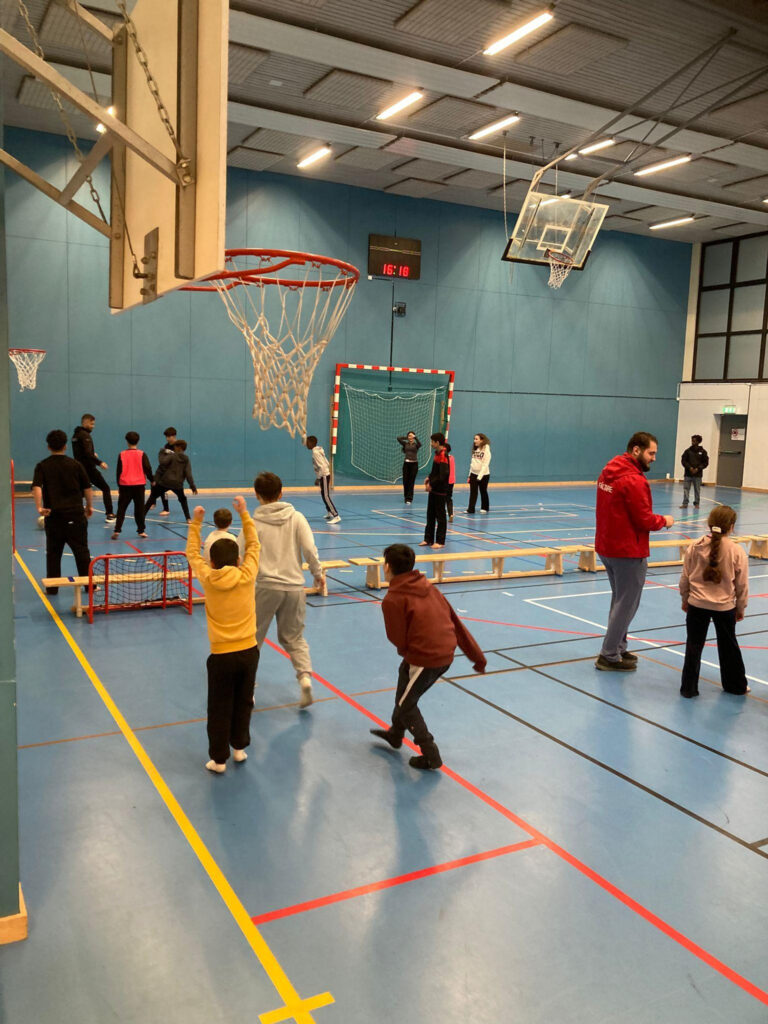
 Listening
 On August 13, 2026, the Swedish Parliament passed a bill to temporarily lower the age of criminal responsibility to 14 for particularly serious crimes. For Erikshjälpen, this decision is a cause for great concern.
This issue is about more than just criminal law. It concerns our views on children, responsibility, and society’s role when children go astray. Children have enjoyed special protection within the legal system, based on an understanding of their development, maturity, and ability to understand the consequences of their actions.
Sweden has long been a pioneer in the field of children’s rights. When Sweden ratified the the United Nations Convention on the Rights of the Child , we endorsed the principle that children’s rights should be strengthened over time, not weakened. The decision to lower the age of criminal responsibility represents a clear departure from that principle.
Erikshjälpen shares the deep concern that many people feel about the fact that increasingly younger children are becoming involved in serious crime. Children who commit particularly serious crimes cause great suffering for victims, their families, and local communities. Society must be able to take strong action when children pose a danger to others.
But as the problems grow, we need to hold fast to what we know about child development, children’s rights, and the importance of preventive measures. The Council on Legislation, the UN Committee on the Rights of the Child, the Children’s Ombudsman, the Institute for Human Rights, researchers, and large segments of civil society have advised against or strongly criticized the proposal. What many of these voices have in common is not that they underestimate the seriousness of the problem, but that they question whether lowering the age of criminal responsibility is the right answer.
As the problems grow, we need to hold fast to what we know about child development, children’s rights, and the importance of preventive measures.
Research and experience show that preventive efforts, early interventions, safe upbringings, and strong safety nets are more effective at reducing crime and recidivism than repressive measures targeting children. We also know that such interventions are more sustainable and resource-efficient than measures that are implemented only after problems have already escalated.
Ultimately, it comes down to what kind of society we want to be. A society that responds to children in crisis with more criminal justice measures, or a society that responds to them with the support, protection, and rehabilitation that give them the opportunity to leave a life of crime behind.
Erikshjälpen continues to advocate for putting children’s rights at the center and for society to invest in the preventive interventions that we know make a difference.
Author: Jonatan Saldner
Despite widespread criticism, the government is moving forward with the bill to lower the age of criminal responsibility. In an op-ed on altinget.se, Erikshjälpen points out that the bill violates the United Nations Convention on the Rights of the Child. Putting children in prison does not make Sweden safer.
Saying no to lowering the age of criminal responsibility does not mean accepting that a child shoots someone. Protecting society is not just about locking people up, but about preventing the next shooting.
In its opinion piece, Erikshjälpen points out that lowering the age of criminal responsibility is a measure that looks powerful on paper but in practice makes it easier to miss the core issue: the adults who exploit children and the structures that make this possible. When children are drawn into crime, it is a sign that society has failed.
The proposal is not consistent with the United Nations Convention on the Rights of the Child , and the UN Committee on the Rights of the Child urges Sweden not to lower the age of criminal responsibility. One of the experts criticizes the shift of responsibility and blame from adults to children, saying:
– You're targeting the children, not the adults who are leading them.
Read the entire debate article on altinget.se here:
Debate: Children in prison do not make Sweden safer
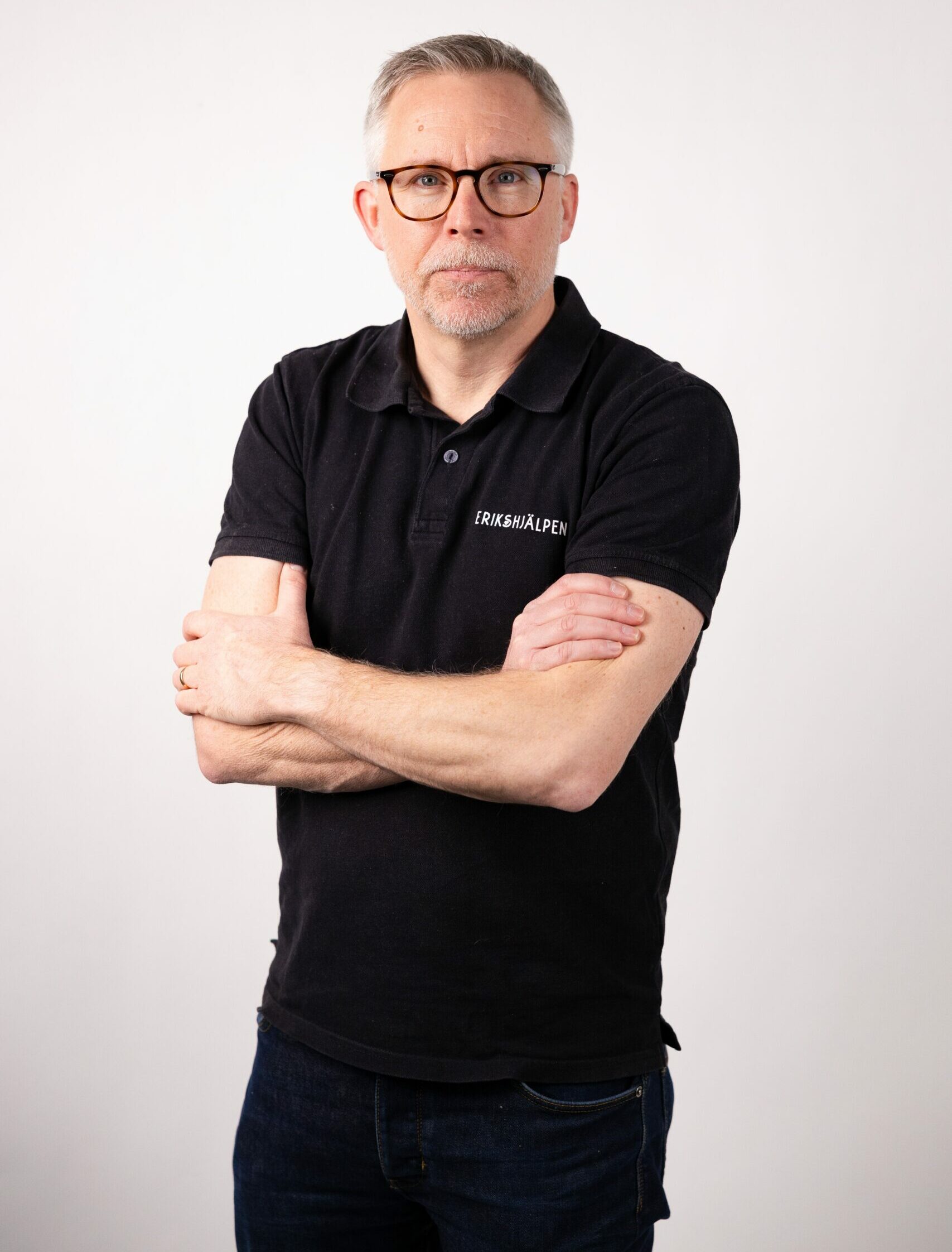
Mattias Ingeson, Secretary-General Erikshjälpen
Mattias Ingeson, Secretary-General Erikshjälpen
We know we need to change. Yet we continue to act as if the future does not concern us. The dopamine rush from a new purchase lasts for minutes, but the consequences for the planet last for generations.
Together with the second-hand chain Artikel2, journalist Maria Soxbo (Klimatklubben), the waste company Luleå Miljöresurs, the association Medveten konsumtion and business strategist Louise Wintzell, we have written an opinion piece on the personal benefits of refraining from shopping.
In Sweden, we consume clothes as if we were three times more people and most of us already have ten thousand things at home that are hardly used. Saying no to unnecessary purchases is actually a yes to something bigger. A yes to a life where relationships, sustainability and quality of life matter more than the amount of stuff. When you choose sustainable consumption, you choose the future we build together.
The article Why you should give up Black Week - 7 unexpected insights is published in Dagens Arena. It was published the week before Black Week to highlight our resistance to the buying frenzy and inspire more conscious and sustainable consumption.
When climate change puts children's safety, education and future at stake, politicians need to take responsibility. That is why Erikshjälpen supports the 89% campaign. For us, the climate crisis is not just an environmental issue. It is a child rights crisis.
89% demand change
A 2024 study of over 130,000 citizens in 125 countries found that 89% believe their governments are doing too little to address the climate crisis. A crisis that means life on this planet will never be the same again.
The research behind the 89% campaign is based on real voices - individuals asking their elected officials to do more. But 11-year-old Mim Akter, who lives in one of Bangladesh's most climate-affected areas, was not asked. Yet Mim belongs to the group that has contributed least to her precarious existence. Emissions from the global north determined Mim's fate long before she was born.
Climate crisis threatens children's rights
For many people, climate change has already changed their daily lives. One of them is Mim Akter, who lives with her parents and five siblings on a sand island in the Brahmaputra River in Bangladesh.
The sand islands are inaccessible, constantly changing and subject to recurrent floods and cyclones. Landslides and soil erosion make it difficult to build permanent infrastructure.
When storms hit, they sweep away homes and school buildings, wiping out children's access to safety and education. Both child marriage and child labor are common in Bangladesh, particularly affecting children who can no longer get to school.
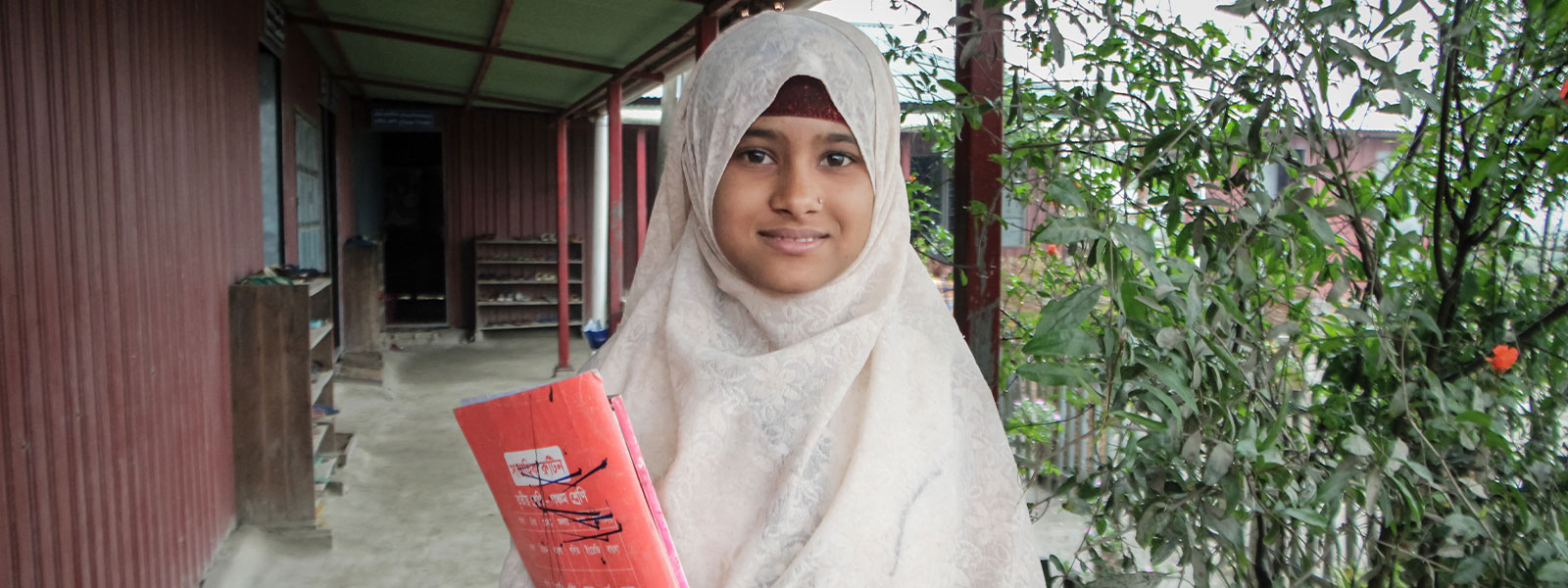
Mim Akter outside her school.
Mim Akter outside her school.
Our choices affect children's future
As a child rights organisation with a non-profit second-hand chain, we are constantly working to extend the life of things and save the earth's resources. How we produce, consume and conduct climate policy is a child rights issue. For every kilogram of carbon dioxide emissions, the possibility of a safe and secure future for the world's children is affected.
The surplus from our stores goes to the work for children's rights and to reduce the injustices created by the climate crisis.In Bangladesh, Erikshjälpen collaborates with the local organization Friendship to enable children to go to school despite the climate disasters that constantly threaten the country. Together we have established schools that can be moved, they can be dismantled when the flood comes and rebuilt in a new and safe place. Children are also being trained in disaster preparedness and their rights. In this way, they are involved in changing not only their own future, but that of entire communities.
Your circular purchases give hope for the future of the climate and contribute to preparedness and adaptation in places where it is already vital. Consumers are leading the way today - by making sustainable choices, challenging the norms of neo-consumerism and shopping in a circular way. Choices that in small ways make a big difference, for the planet and for Mim and her classmates.
Politicians, show that you are on the side of children
The climate crisis is a children's rights crisis and by addressing one, we can counteract the other. Make your voice heard to show that we are a strong majority, for the climate, and for every child. Children's right to a secure future cannot rest on individual initiatives - it requires political leadership. That's why we are committed to the 89% campaign and call on this and future governments: take responsibility, act now and show that you are on the side of children on climate.
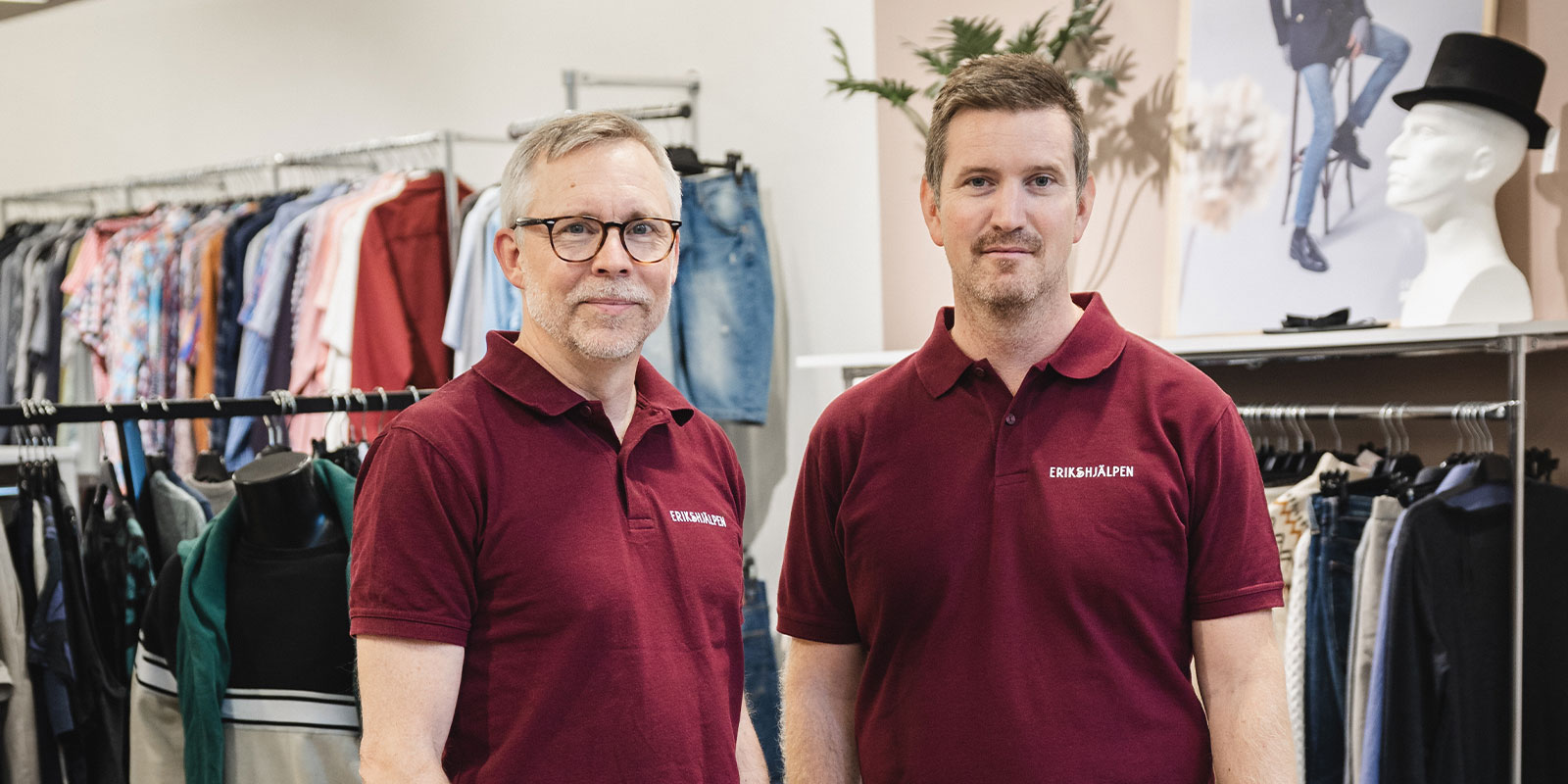
Mattias Ingeson and Jerker Sandell.
Mattias Ingeson and Jerker Sandell.
Author:
Jerker Sandell, Executive Director of Erikshjälpen Second Hand
Mattias Ingeson, Secretary-General of the children's rights organization Erikshjälpen
It takes more than just giving young people a formal seat at the table; we must also give them the tools and support to be able to participate, says Erikshjälpen's Secretary-General Mattias Ingeson and Erikshjälpen's Head of Sweden Birgitta Johansson.
This year marks the 35th anniversary of the the United Nations Convention on the Rights of the Child . Ever since the convention was adopted by the United Nations on November 20, 1989, it has been a global symbol for the protection and promotion of children’s rights. Sweden also enacted the the United Nations Convention on the Rights of the Child into law nearly four years ago, but we still need to ask ourselves: How far have we come in ensuring children’s rights in practice?
The gaps between our neighborhoods are growing at an accelerated pace, a trend that is clearly reflected in the educational achievements, economic conditions and well-being of young people. Socio-economic disparities are not only visible at the individual level, but also stigmatize entire neighbourhoods. Young people's chances of success are strongly linked to where in the country they grow up.
We can no longer turn a blind eye to the downward spiral. Inequalities in children's opportunities must be taken seriously. All young people, regardless of where they grow up, have the right to an equal chance of education and a good life. Political action is now needed to slow down this trend.
Sweden, along with other countries that have ratified the the United Nations Convention on the Rights of the Child, is reviewed every five years by the UN Committee on the Rights of the Child. This is an accountability of how well a country is fulfilling children’s rights. In its most recent review, the UN Committee on the Rights of the Child issued several observations regarding Sweden. Among other things, the Committee noted that many children do not feel their voices are being heard and that Swedish authorities do not take children’s opinions seriously.
Fine words and promises are no longer enough - our young people deserve real influence and participation.
Mattias Ingeson Secretary General Erikshjälpen
Birgitta Johansson Head of Erikshjälpen Sweden
Mattias Ingeson Secretary General Erikshjälpen
Birgitta Johansson Head of Erikshjälpen Sweden
A central aspect of the United Nations Convention on the Rights of the Child is precisely the right of children to be heard and to have their views taken into account in decisions that affect them. Sweden has made significant progress in involving children. Today, children and young people have the right to express their views on matters that affect them in both family and legal contexts.
However, there are still significant gaps in how children's views are taken into account in practice, particularly in situations related to migration and social services. Children's voices are sometimes not given equal weight, leading to their perspectives being overlooked in decision-making processes. This is a democratic problem and a loss for society as a whole. Children's views and experiences contribute to better decisions and solutions, for all of us.
We hear politicians talk about how they want to include young people in societal development, but it takes more than just giving young people a formal seat at the table; we also need to give them the tools and support to participate.
Many of the young people Erikshjälpen meets in its work with people in underprivileged neighborhoods feel like strangers in their own country. No one cares what they think. We believe this can be countered by empowering all children to participate in society, especially when it comes to issues that affect them. Allowing children and young people to own their issues, platforms and meeting places.
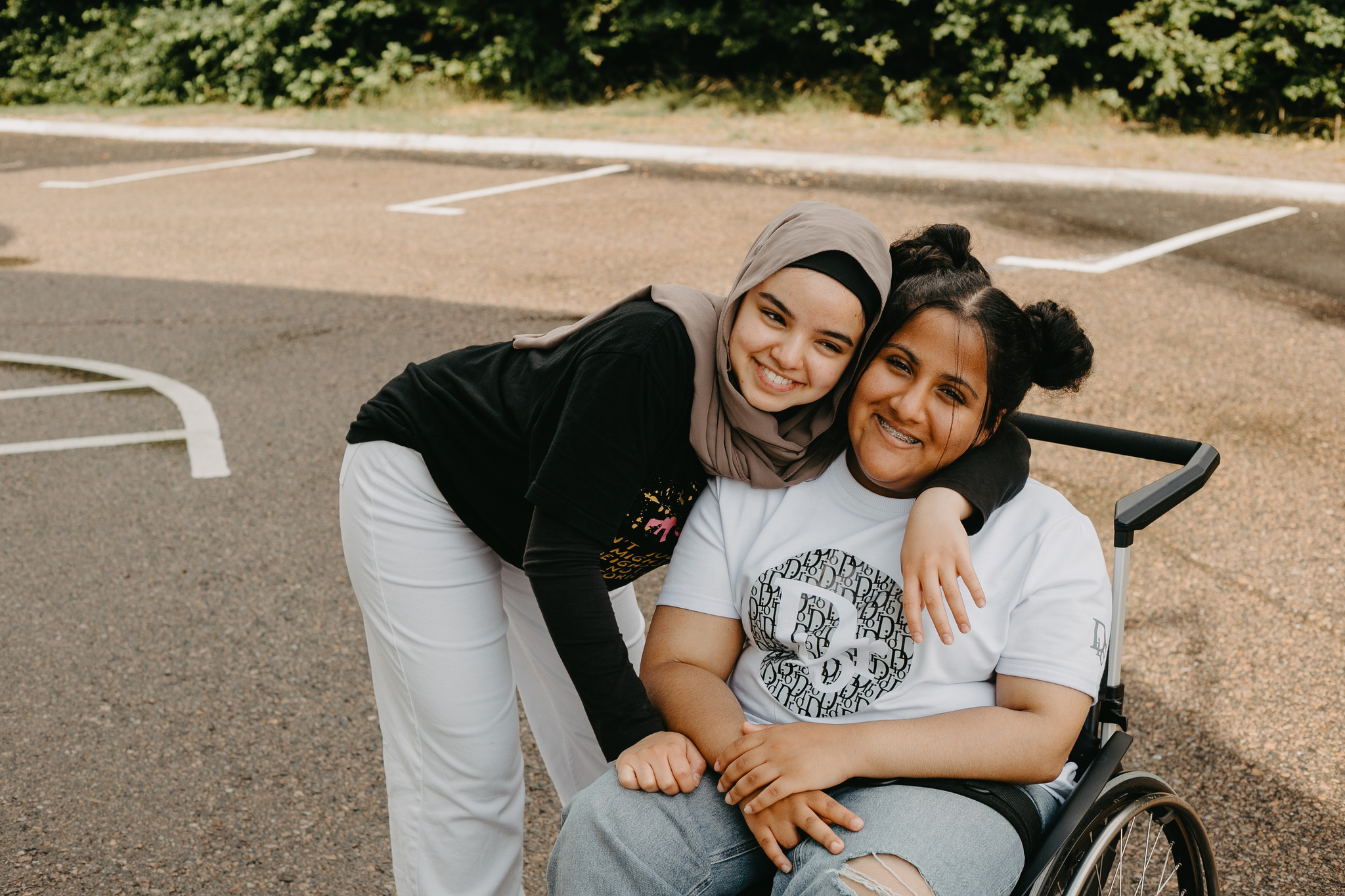
Minna and Fadek from Erikshjälpen Framtidsverkstad in Helsingborg.
Minna and Fadek from Erikshjälpen Framtidsverkstad in Helsingborg.
Children and parents need help to realize their potential and create the conditions to develop both themselves and their area.
These measures could make it a reality:
- Participation and Influence: Children and young people must be given the conditions and opportunities for platforms to exert influence and be genuinely involved. Municipalities and government agencies need to establish clear structures for issues that affect young people.
- Training: Politicians and officials should be provided with training on children's rights and in particular on children's right to participation and how to promote children's empowerment in a meaningful way.
- Child impact assessments: Child impact assessments should be a mandatory part of decision-making processes, to ensure that children's interests and rights are taken into account.
The UN Convention on the Rights of the Child is clear. All children, without exception, should have their rights fulfilled. This means the right to education, health, adequate living conditions, protection from violence and to grow up in conditions that allow them to develop and reach their full potential.
So now that the Convention on the Rights of the Child ( the United Nations Convention on the Rights of the Child ) is turning 35, let’s make sure that children’s rights aren’t just words on a piece of paper, but that they are implemented and apply to all children, no matter where they grow up in Sweden. Fine words and promises are no longer enough—our young people deserve real influence and participation.
Now we want to see concrete action from responsible politicians and officials: Give young people to influence the decisions that shape their future. We want to see it now! Sweden cannot lose another generation to exclusion. Let's work together to create an inclusive society where young people's voices are not only heard, but also taken seriously.
Author:
Mattias Ingeson, Secretary General of Erikshjälpen.
Birgitta Johansson, Head of Erikshjälpen Sweden.
Last year, Erikshjälpen Second Hand launched the "Vanliga veckan" concept. A counter-reaction to Black Friday/week/month, which is supposed to drive consumption before the Christmas holidays. During Vanliga veckan , we questioned norms and common thoughts about consumption, as a way to get more people to open their eyes to circular shopping.
We're now in the middle of this year's retail campaign, and our counter-concept is more important than ever. To make second hand the normal way to consume. Because we still wonder how new production can be the norm, when we now know so much better? For many people, it is still unthinkable to buy goods that someone else has used before. Even though it feels luxurious to sleep in a hotel bed with sheets that many others have slept in, or to eat in a restaurant where the fork has seen the inside of an infinite number of mouths.
Christmas is a time when our consumption really reaches its peak for the year. And these days, even the holidays seem to be all about fast trends. Isn't that strange? One year Christmas will be blue, the next year it will be beige, the third year it will be green and the next year it will be red again. We buy new decorations, ornaments, clothes, presents and food as if there were no tomorrow.
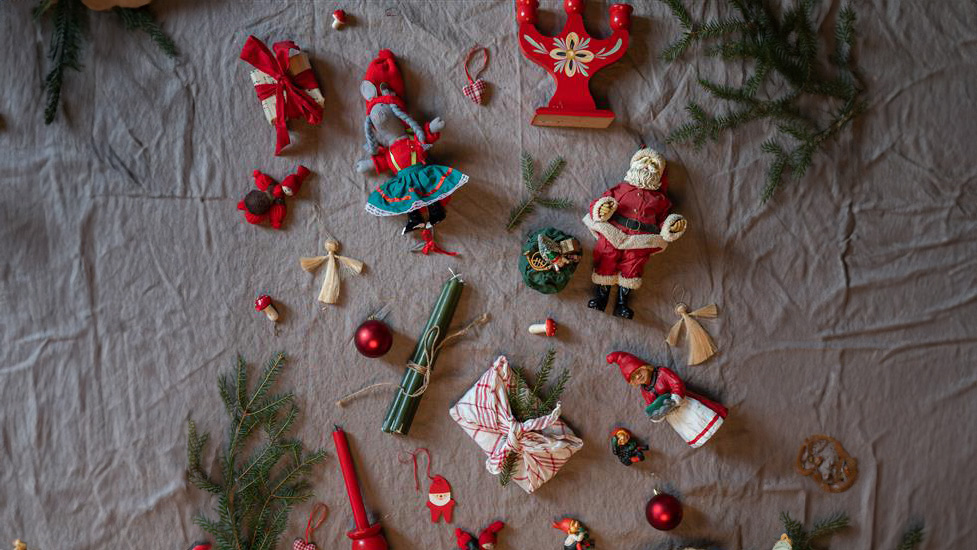
Christmas, which could otherwise be such a clear example of what circularity can offer. If we stop buying new and instead reuse Christmas decorations and dresses, we can give our children those shimmering memories of Christmas. A sense of security and nostalgia, built up by having the same Santa in the same place and the same baubles hanging on the tree year after year.
Sometimes it seems that Christmas is mostly about getting a new star to hang in the window, a unique styling of the Christmas tree, an elf door with countless accessories, Christmas calendars with tea, make-up, toys or wine. But haven't we got our priorities wrong somewhere? Aren't the best memories of Christmas our traditions? The ones that remain unchanged year after year?
Of course, there are times when it makes sense to consume something new. But then you have to make the right choice. Buying cheap goods may seem easy and economical, but in the long run it is an expensive and unsustainable choice. Poorer quality products break down faster and need to be replaced more often.
Long-lasting products are more than just a personal investment - they are building blocks of a circular system. They retain their value and live on through the second-hand market, where they can be refurbished, repaired and used again and again. A cheap product that quickly ends up in landfill doesn't have that opportunity. The purchase choices we make today directly determine whether our things can live on in a circular cycle.
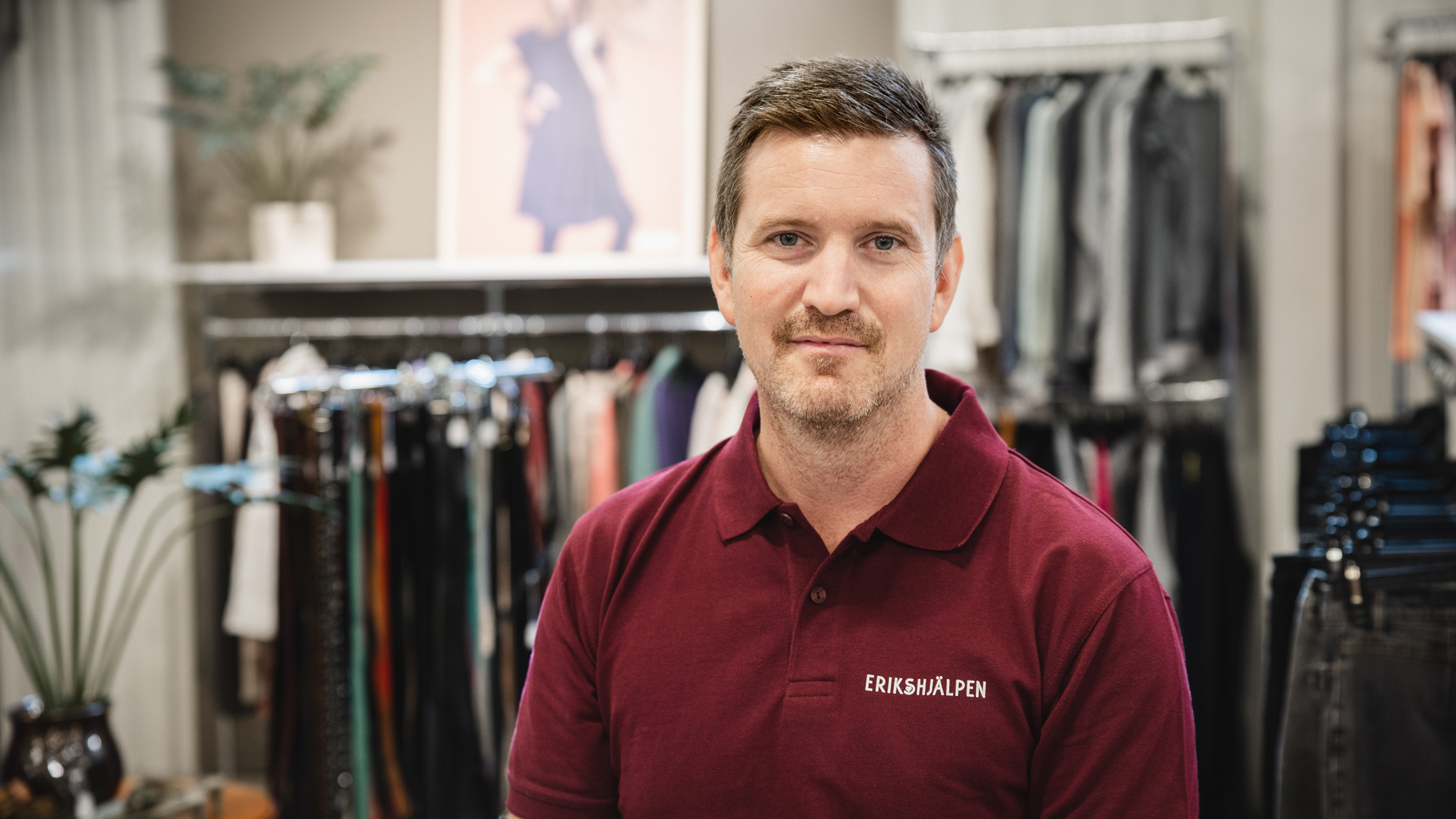
Jerker Sandell Managing Director Erikshjälpen Second Hand
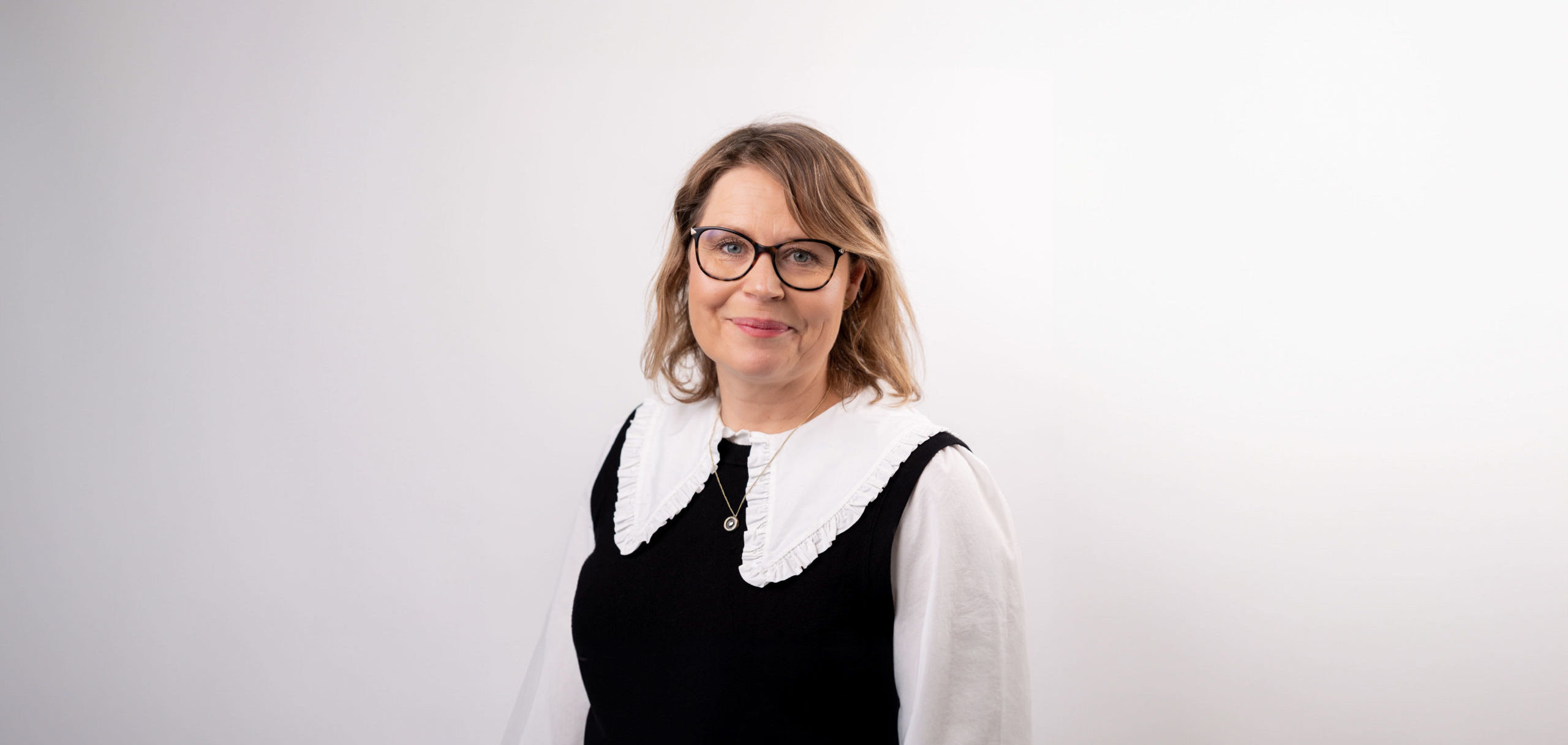
Cathrine Kylesten Sustainability Manager Erikshjälpen Second Hand
Jerker Sandell Managing Director Erikshjälpen Second Hand
Cathrine Kylesten Sustainability Manager Erikshjälpen Second Hand
There will always be new consumption, but we need to look beyond it and choose products that can last. By buying fewer but better things, we are laying the foundations for a sustainable economy that can take us into the future. We are creating a market where quality products are given new life, and where second-hand becomes as attractive and accessible as buying new. And when there's a need to replenish the Christmas decoration box, we know that there's no need to produce another Santa. When you choose decorations and gifts from non-profit second-hand, you also make Christmas better for all children.
A concrete action that reduces pressure on the environment and climate, so that future generations can be better off. So let this Christmas be circular, both for the children around you and for those further away.
Author:
Jerker Sandell, Executive Director of Erikshjälpen Second Hand
Cathrine Kylesten, Sustainability Manager for Erikshjälpen Second Hand