What difference can a toilet make to girls and the work for girls' rights and a more equal world? For Shukhi and Piya and all their friends in Mongla, in southern Bangladesh - it makes all the difference. Thanks to the school's new toilet, girls' school attendance has increased. The girls can now also concentrate on their schoolwork in a whole new way, absorbing the knowledge and performing better at school.
It is not just the toilet itself that has made the difference. It is also the recognition that girls' needs, situation and challenges are real. It is the signal that girls are important. Yes, that they are and are seen as a resource and a force in society, and that they have the right to be given the conditions to educate themselves and help shape their own future.
- This toilet affects our everyday life and our future. Now we have the opportunity to keep up better with education and thus we have better conditions for the future, says 15-year-old Piya Mong, one of the students at ABC Secondary School in Mithakhali.
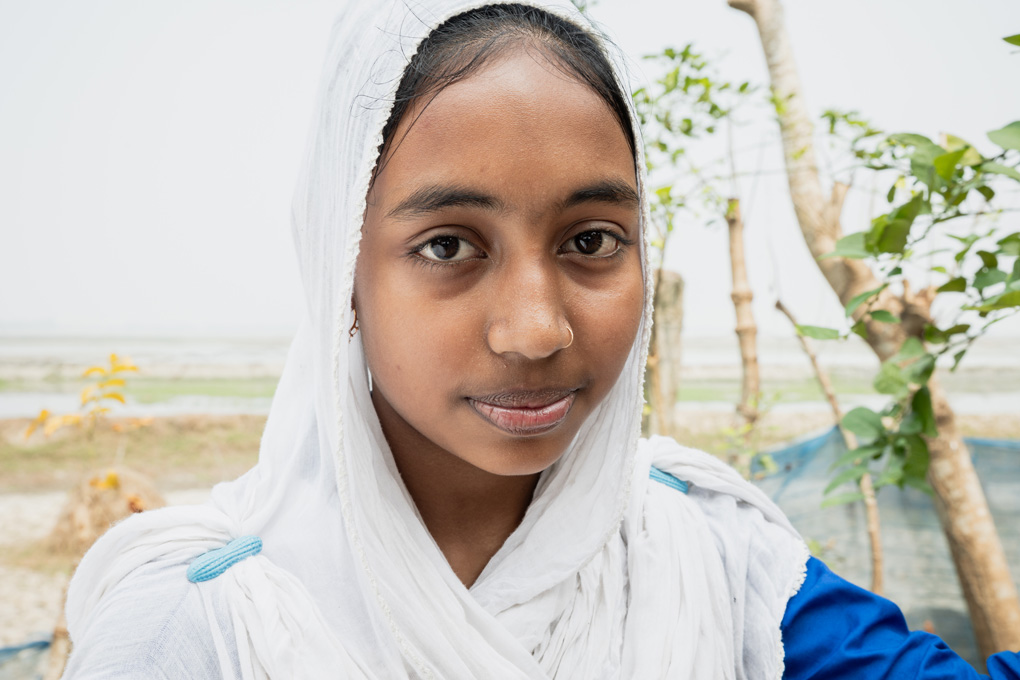
Shukhi Mony 12 years
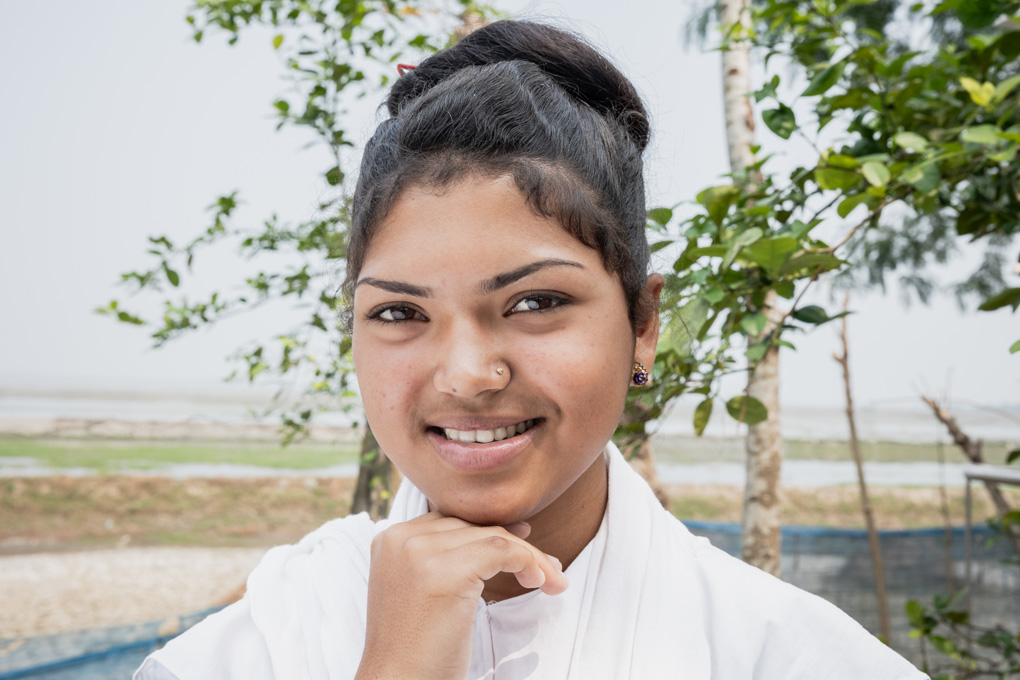
Piya Mong 15 years
Shukhi Mony 12 years
Piya Mong 15 years
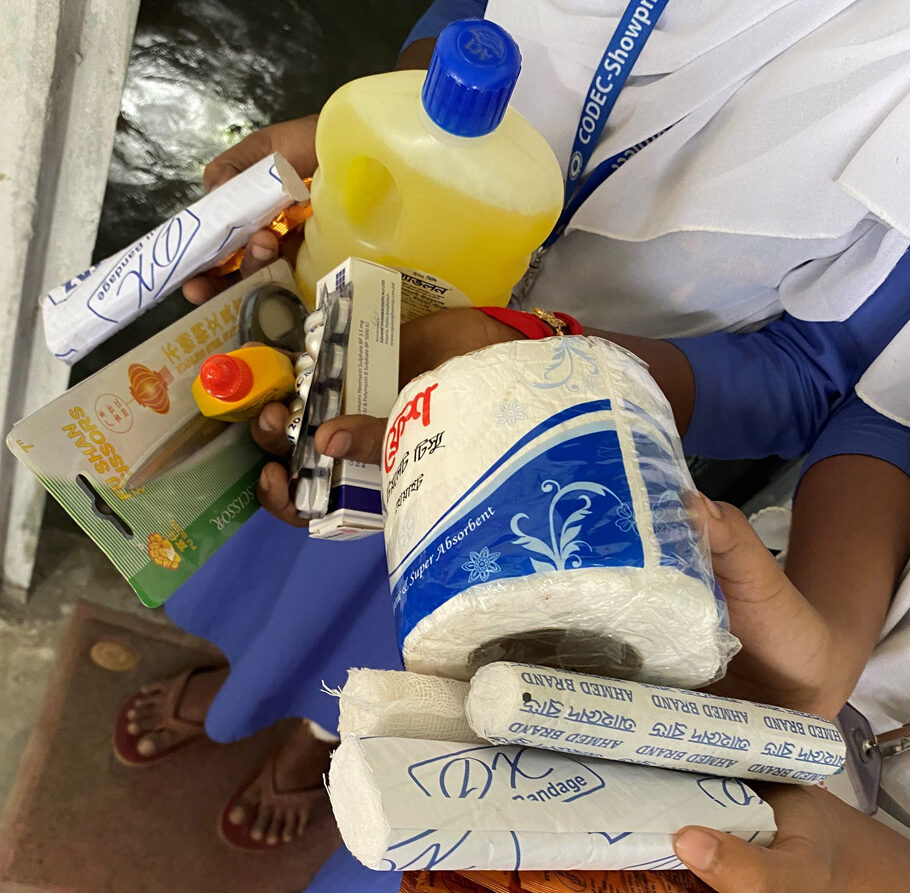
When we didn't have access to sanitary protection, we used clothes and other textiles for protection
Lack of protection has been a problem
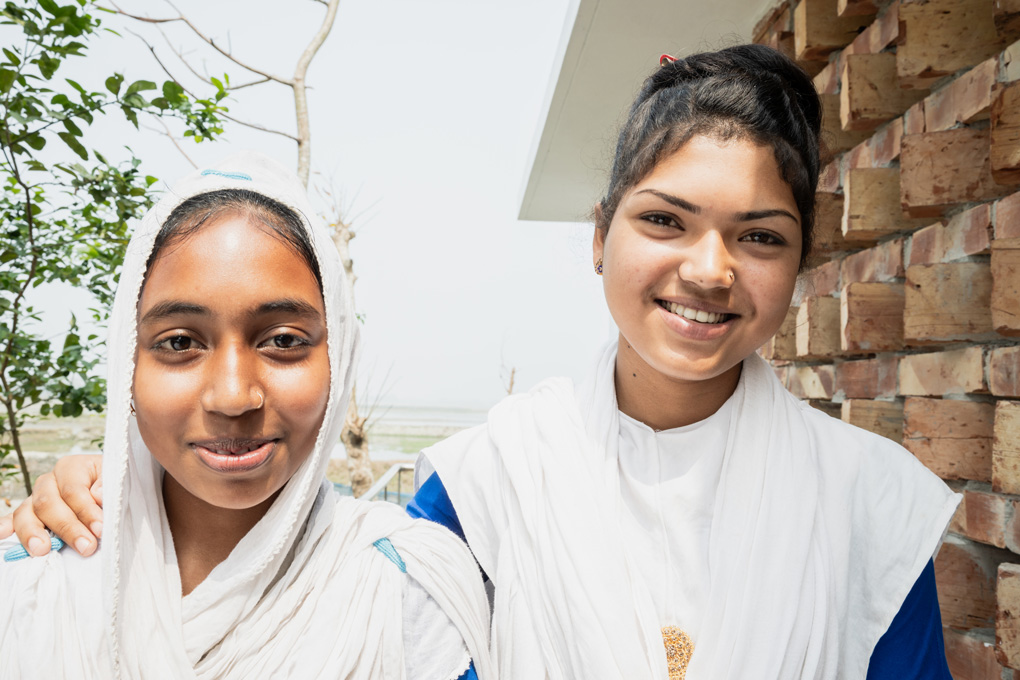
The school has around 250 students in grades five to eight. Piya and his friend Shukhi Mony, 12, show off the school's new accessible toilet. It houses both a traditional toilet with a hole in the floor and a water toilet, the first in the area. There are also several new sinks and a cupboard full of everything a girl might need during her period.
- "When we haven't had access to sanitary towels, we've used clothes and other textiles as protection, but it's not very good because it's so unhygienic. The water we wash ourselves and our clothes in is not very clean either, and there are many risks of disease," says Piya.
Join us in supporting our work for children's right to health
Thanks to you, more girls can have access to safe Menstrual health and thus have a greater opportunity to reach their full potential.

Swisha a gift
900 92 83

In the past, when girls have had their period, they have avoided coming to school
School - a safe place
The girls' math teacher, Selina Akter, confirms that the toilet means a lot. The girls now feel much safer and their school attendance and results have improved significantly.
- In the past, when the girls had their periods, they avoided coming to school. Now they have access to everything they need to feel safe and hygienic here at school, and they miss less classes," she says.
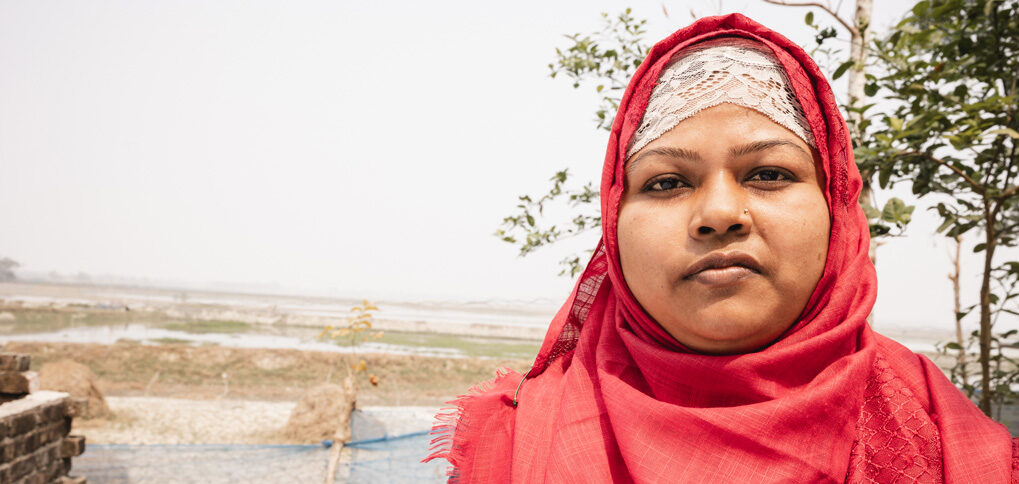
Selina Akter, Mathematics teacher at ABS Secondary School
Selina Akter, Mathematics teacher at ABS Secondary School
Previously, all the school's students had to share two worn and very dirty toilets. The walls of which are not sealed, through gaps you could peek in even though the door was closed.
- The old toilet was so dirty, you didn't feel safe there," says Shukhi.
- "Yes, and there was always a queue, and since we didn't want to use them, we preferred to go home if we needed to go to the toilet. But because of the road, we rarely came back," says Piya. She adds:
- It feels great that we have a new toilet! It's so clean here, no dirt. There is running water and sanitary pads.
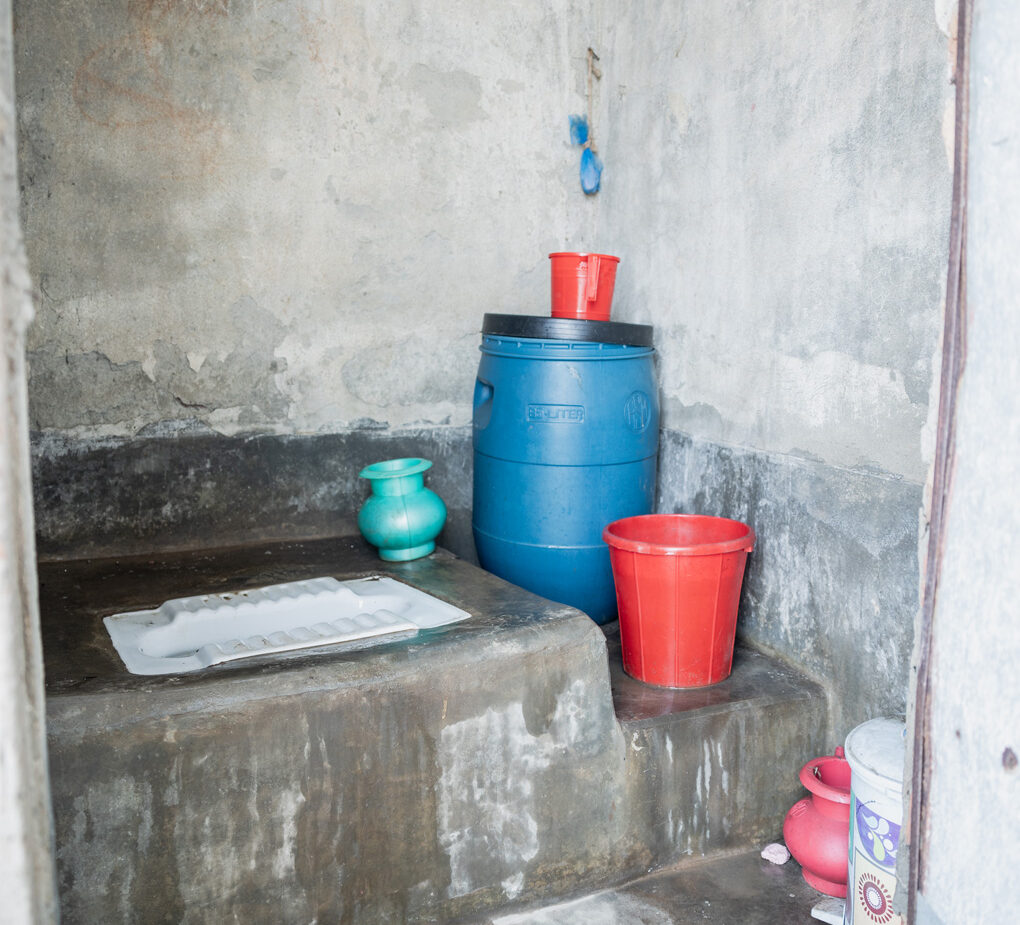
The school's old toilet cleaned before Erikshjälp's visit
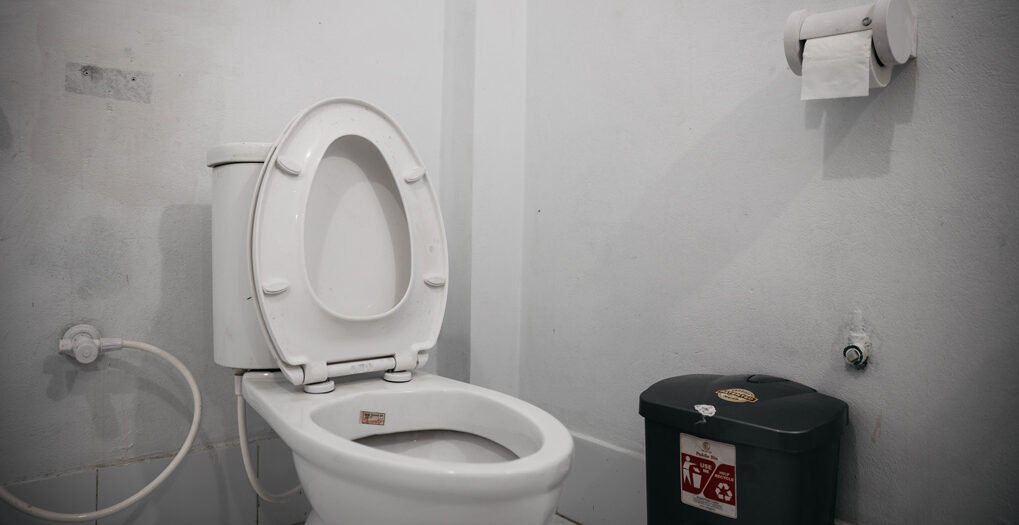
The school's new water toilet
The school's old toilet cleaned before Erikshjälp's visit
The school's new water toilet
Fewer interruptions in schooling
Piya and Shukhi have a couple of kilometers to go to school and the road can be very busy. Despite this being the case for most of the school, they and many others usually chose to walk home to go to the toilet. Despite the fact that they would then miss classes, which clearly affected the results.
- The girls really didn't want to use the old toilets. Some of them avoided drinking water the whole school day so they wouldn't have to go," says Selina Akter. She continues:
- "It also took a lot out of the girls' concentration to keep thinking about how to avoid the toilet. They were unfocused but didn't want to talk about it either.
- Yes, now we are much more present in school than before. It feels safe and it feels fun to be here. We no longer miss so much of the school lessons," says Piya.
Millions of girls are affected and have it every month. Menstruation. Yet we rarely talk about it. In parts of the world, girls are forced to stay home from school during menstruation, missing out on much of their education. At Shonatola Bridge School in southern Bangladesh, there are separate toilets for girls and boys. The girls' toilets include sanitary pads, tampons, washcloths and painkillers that enable girls to go to school, even during their periods.
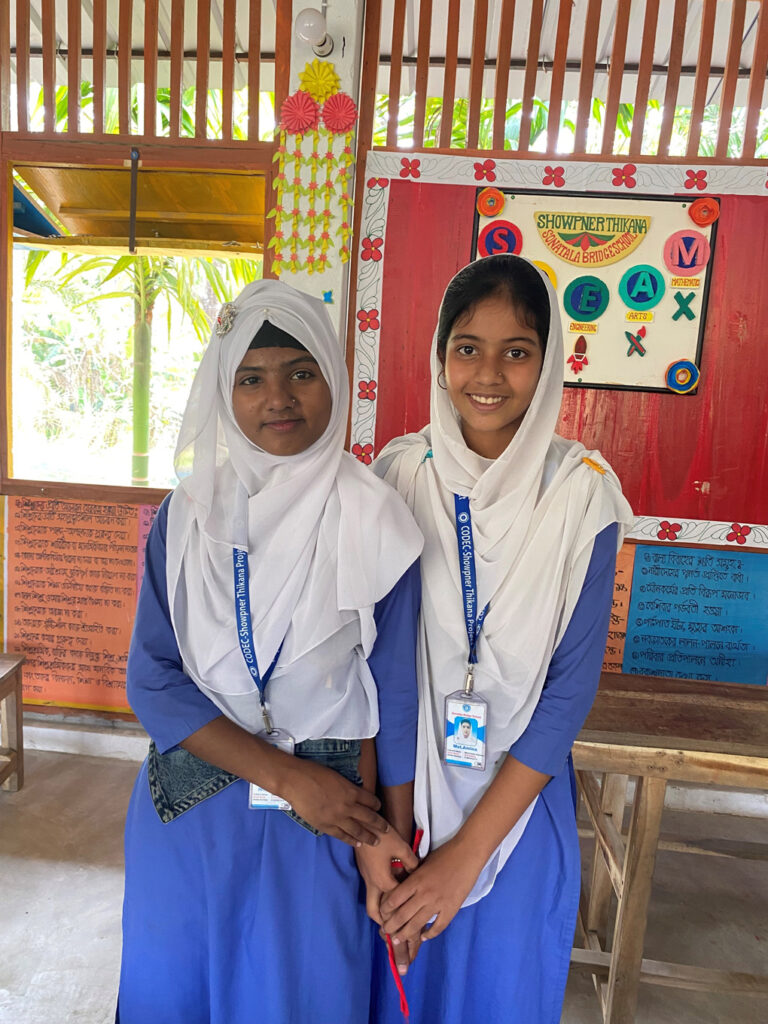
The Shonatola Bridge School in southern Bangladesh is bustling with life. Lessons follow one another. First math, then language, then sports. And then the science club and the girls' group. When the bell rings, it's break time. Sabona and Amina are best friends and are in year seven. They say this school is different from other schools in Bangladesh in many ways.
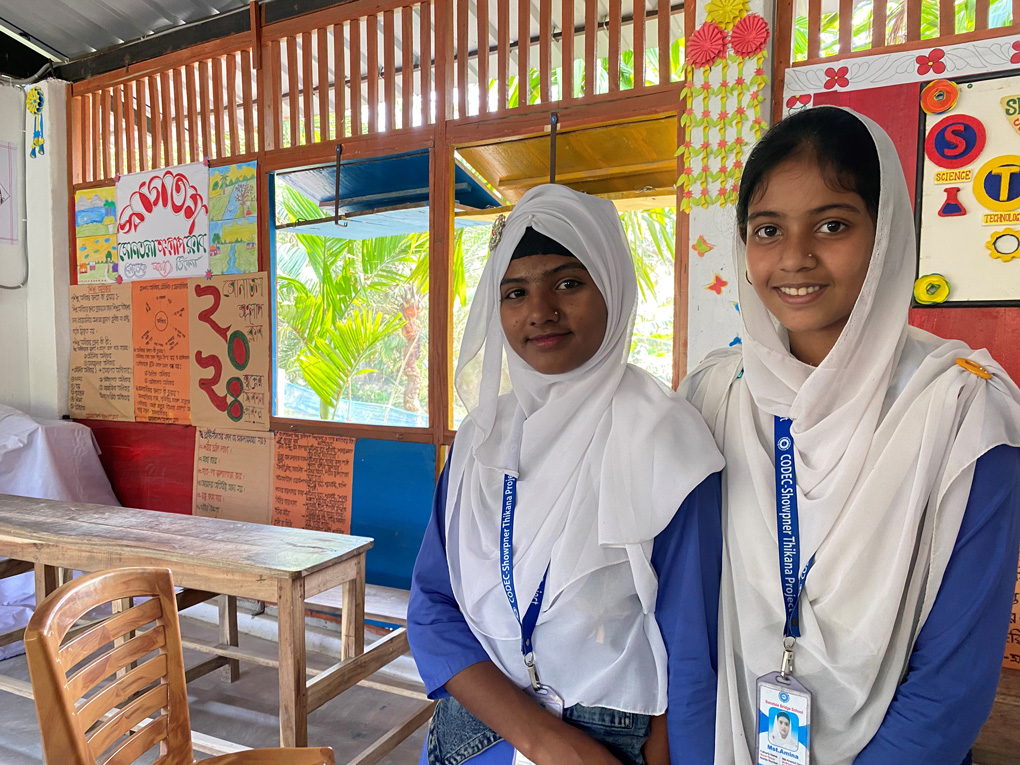
Sabona Akter 15 years & Amina Akther 14 years
Sabona Akter 15 years & Amina Akther 14 years
-"The school means safety for me. Here I have learned to speak in front of people and here there is clean water and clean toilets," says Sabona Akter, who is 15 years old.
Because her family could not afford it, she was forced to drop out of school after grade five. She was at home for two years before, after this school was built, she was able to start again.
- "If I hadn't gotten a place at this school, I would have had a completely different life. I would have been married off or forced to take a job at the textile factory to help support my family," says Sabona.
Only school in the area
Two cohorts of students are currently attending Shonatola Bridge School in southern Bangladesh. The school is the only one in the area for children in grades six to eight. It is located in a rural area with difficult access. Thanks to solar panels, the school has electricity and internet access, allowing the children to benefit from both digital and classroom-based education. There are separate toilets for girls and boys and access to clean drinking water. Many of the children attending the school live in extreme poverty and would not be able to continue their studies if it were not for the school. Many of them have previously been forced to drop out of school.
Join us in supporting our work for children's right to health
Thanks to you, more girls can have access to safe Menstrual health and thus have a greater opportunity to reach their full potential.
Swisha a gift
900 92 83
Many children here stay at home during periods when they are menstruating and miss large parts of school
Being a girl in Bangladesh
14-year-old Amina Akther is also happy to have the opportunity to continue her studies. She talks about what it is like to be a girl in Bangladesh. "Many have a long and dangerous journey to school. And that there are risks of assault and abuse that mean that girls should not go out alone. Many girls also risk being married off. And then there is menstruation, which causes many girls to miss large parts of their schooling.
- "Many children here stay at home during their periods and miss a lot of school," she says.
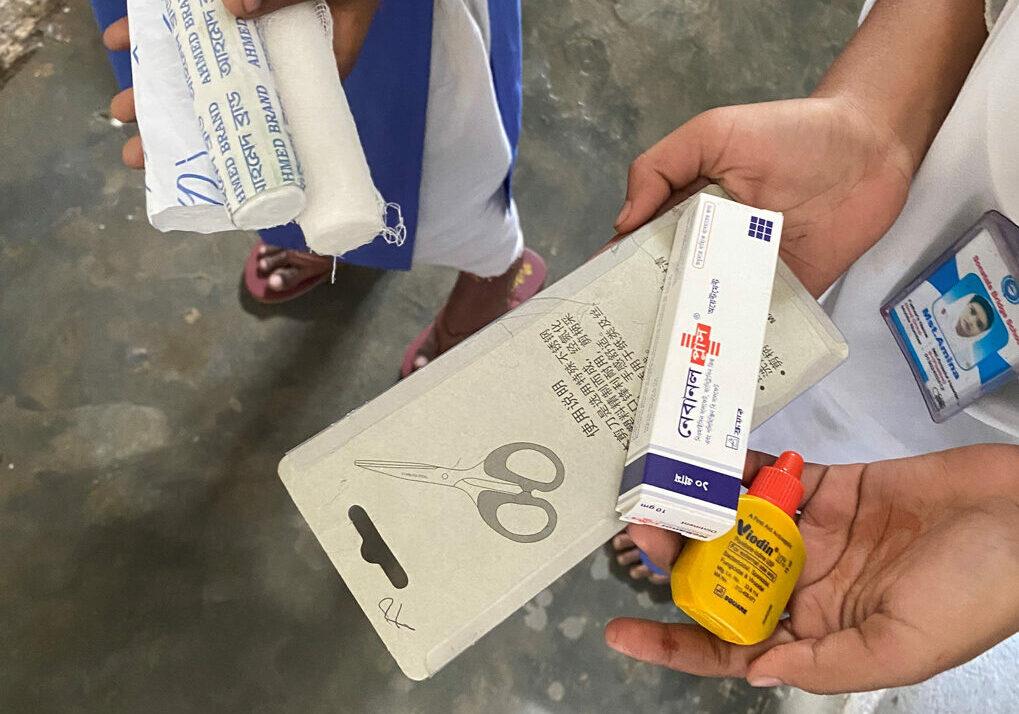
We girls can come to school even when we have our period, the school helps and supports us
Girls can now come to school even during their period
At school, girls receive a lot of support, which they do not take for granted based on previous experiences.
- There is a separate toilet just for girls, with pads and everything you need, it feels safe. We girls can come to school even when we have our periods, the school helps and supports us," says Amina and continues:
- In school we learn about sanitation and hygiene. About washing our hands properly and taking care of ourselves. My mom is very happy about the opportunities I have now, she has not had those opportunities.
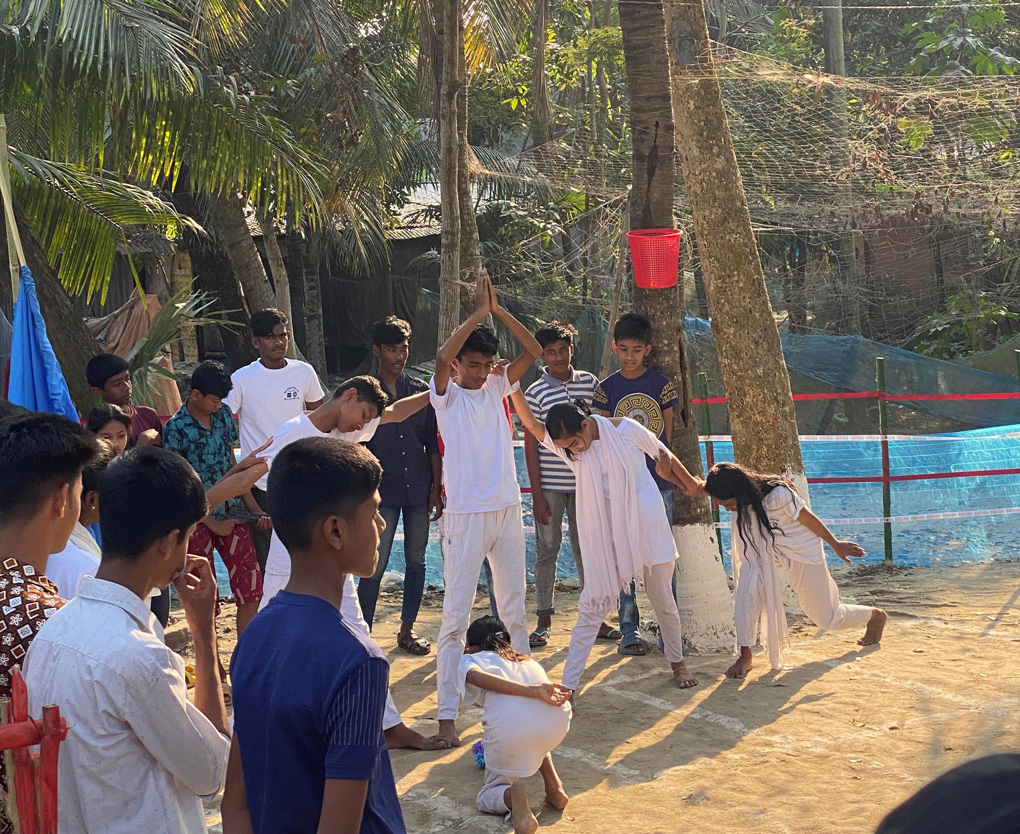
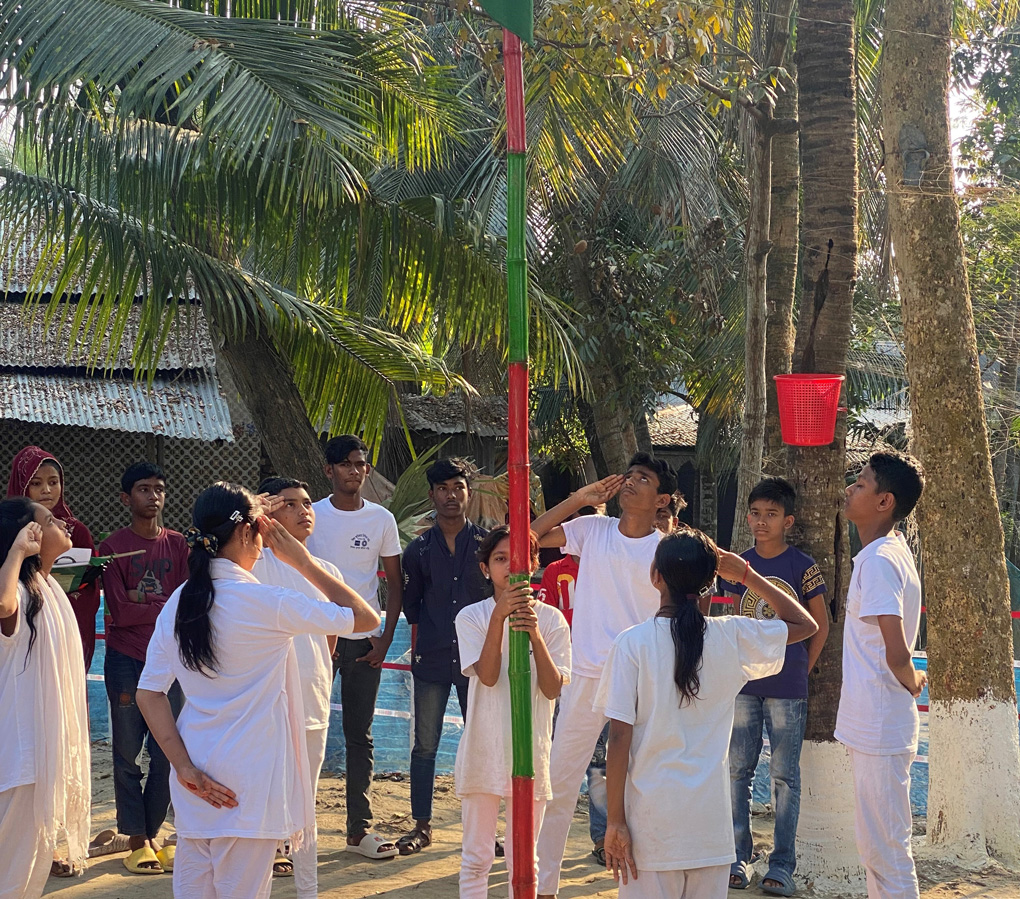
In Rampal, in southern Bangladesh, is the Surjer alo Child center, supported by Erikshjälpen's donors. The center is a kind of recreational activity, with children's clubs and other activities for the children in the area. There, the children learn about children's rights and practice putting their feelings into words, expressing their opinions and being involved in influencing their situation.
At the Surjer alo Child center in southern Bangladesh, 16-year-old Ayesha Akter and 15-year-old Preema Das participate in the children's club activities. Here they have learned about children's rights and practiced expressing their feelings, needs and opinions. 16-year-old Ayesha tells us:
- Before, I couldn't talk to my parents at all, but it's better now. Now they hear me and my opinion matters, that makes me happy.
Her friend Preema Das, 15, fills in:
- I used to be shy and no one in my family knew what was going on or what I was going through. I often felt overlooked, especially when my brothers got more attention than me. It's better now but it's still very unequal.
Lack of sanitary protection and clean toilets has been a problem
The girls are almost finished with secondary school and both dream of studying further. Keeping up with school has been tough. They both go to a government school and the lack of sanitary pads and clean toilets has been a problem ever since they started menstruating. Preema tells us:
- In the past, we and our mothers used clothes as protection.
- Yes, there were. There weren't always pads or other protection, so we used clothes, but it was unhygienic in many ways. Now we can buy sanitary pads through the center for half the price, which makes it easier," says Ayesha.
In the past, we and our mothers used clothes as protection
Join us in supporting our work for children's right to health
Thanks to you, more girls can have access to safe Menstrual health and thus have a greater opportunity to reach their full potential.
Swisha a gift
900 92 83
Missing school due to menstruation
Both girls say that they have missed quite a lot of school due to being at home during periods of menstruation.
- I used to stay at home for the whole period, but now I usually only stay at home for the first two or three days.
- To avoid missing too much, we try to study at home, but it's clear that people have made it harder to keep up," says Preema.
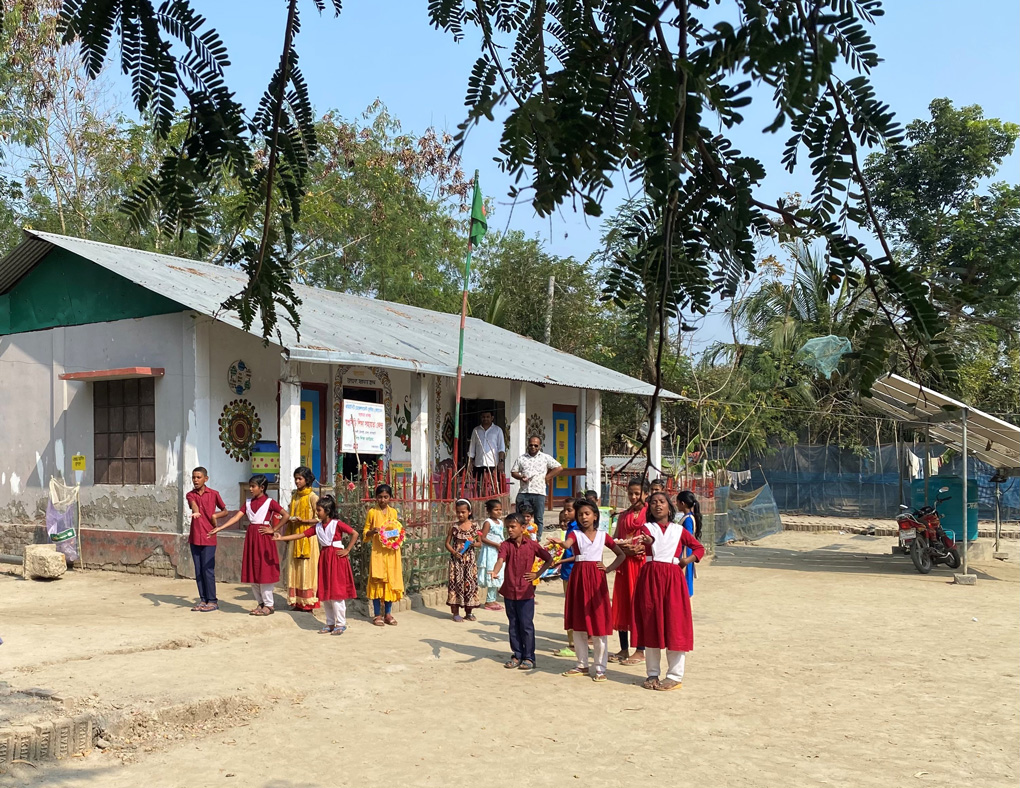
Boys are more important in the family and are always given priority in society
They dream of changing
They talk about life as a girl in Bangladesh, about everyday life and that they feel that although girls and boys should have the same rights, boys are often given priority.
- "Boys are more important in the family and they are always given priority in society and in school," says Preema.
- "Girls don't have the same rights as boys in practice," says Ayesha, citing an example of a particular dish in Bangladesh, where the head of the fig is considered the tastiest part. She continues:
- "My brother is always asked if he wants the fish head, I don't want the fish head but I would like to be asked," explains Ayesha.
Despite the challenges they face, the girls have clear goals. They want to work for the betterment of society and they want to be involved in changing their situation and that of others.
- Soon I will have a higher education than my brother. My mother supports me, she never got to study herself, so she wants me to have this opportunity," says Preema.
A new study from Umeå University shows that a religious worldview can be an asset in the work against human trafficking.
- "Despite differences in religion, Christian aid organizations manage to create a common understanding of what causes trafficking and how to combat it," says researcher Andreas Henriksson.
Trafficking is a global problem that affected around 49 million people in 2023.
Erikshjälpen is one of the organisations that, together with partners, work against human trafficking in different countries. Strengthening the rights of women and children is a central part of this work.
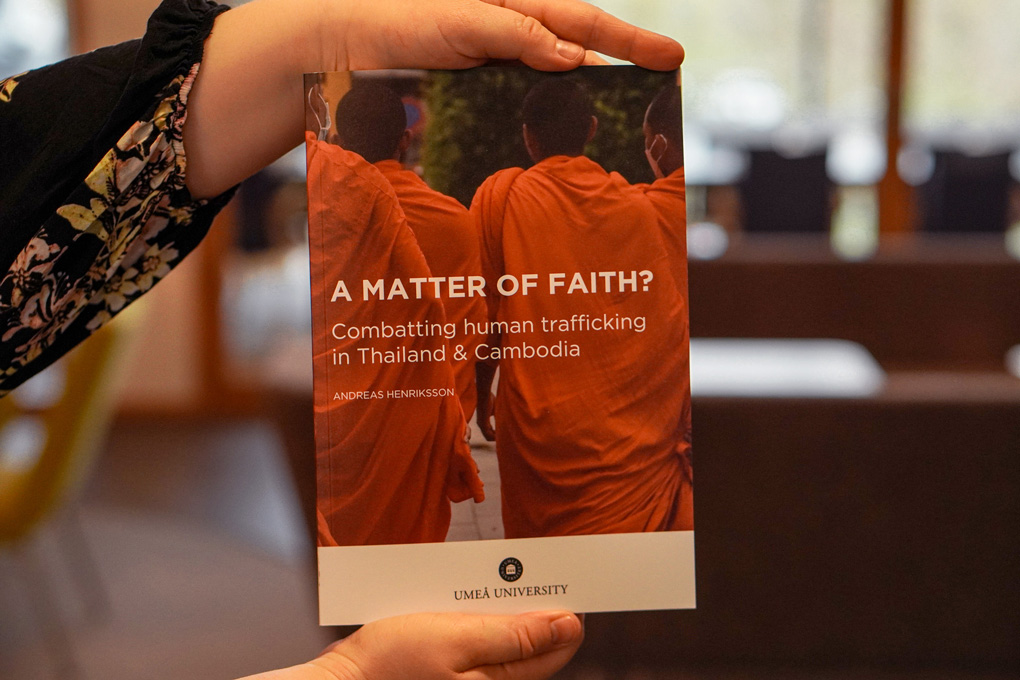
In his thesis "A matter of faith?The fight against human trafficking in Thailand & Cambodia", Andreas Henriksson has examined how religion shapes the work against human trafficking. The research report is based on case studies of Christian aid organizations working in Thailand and Cambodia, where the children's rights organization Erikshjälpen and the parish and missionary movement Evangelical Free Church (EFK) have been included as partners.
- "I have tried to understand what governs the work of religious organizations and how it is received in the local communities where they operate," says Andreas Henriksson. "A religious worldview can make cooperation with secular aid actors and donors difficult, but at the same time religion is often an asset in relation to the local communities where they operate.
Easier to bridge the gap
International aid is characterized by a secular approach, which means that Christian aid organizations are mainly funded by religious donor networks. Networks that make it easier for organizations to highlight the role of religion.
Henriksson has investigated how religious organizations succeed in reaching out to the secular aid world and shows that organisations that are not affiliated with a particular church or denomination may in some cases find it easier to bridge the distance to secular actors.
- "Our organization is based on Christian values, and this is reflected in how we treat people around the world," says Mattias Ingeson, Secretary-General of Erikshjälpen. "Based on our identity and background, we have knowledge of the importance of religion for both individuals and societies. Our understanding and respect for other people's religion and culture creates good conditions for working together.
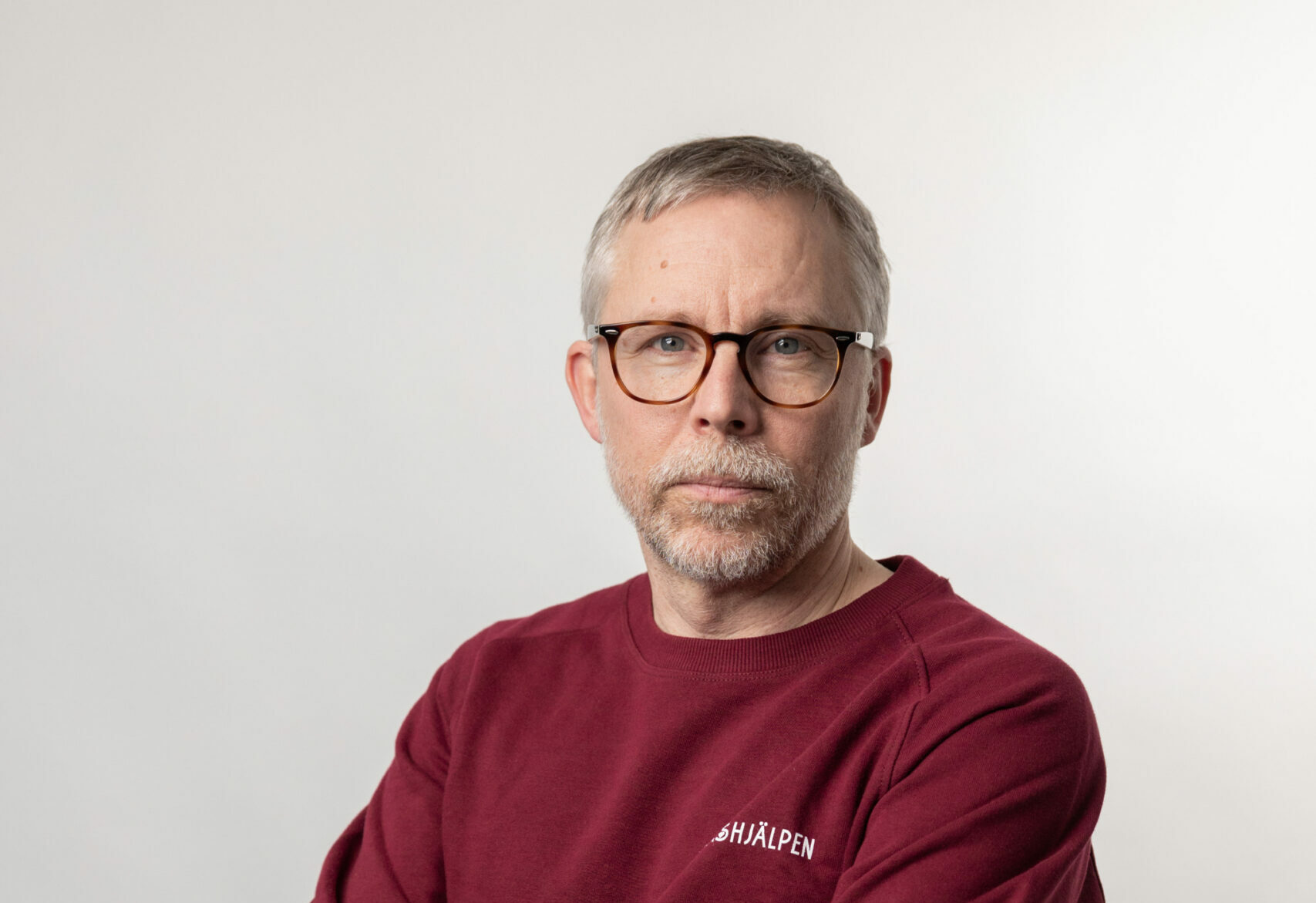
Mattias Ingeson Secretary General Erikshjälpen
Mattias Ingeson Secretary General Erikshjälpen
A motivating factor
Henriksson's research shows that there is local trust in religious actors. That religion is not seen as something negative, even if you do not share the same beliefs. Faith is even a motivating factor.
The results of the thesis can provide insights to improve collaboration with other actors. The hope is a better understanding of religious aid organizations and how their identity and worldview leads to both opportunities and challenges.
- "Erikshjälpen will disseminate Andrea's research results to our partner organisations and use it in our joint work against trafficking," says Mattias Ingeson. We will also highlight the results and spread the knowledge further in our networks.
Saturday, April 27, is ERIK's day at Erikshjälpen Second Hand. Thisan opportunity to honor the memory of founder Erik Nilsson, but also an important fundraising day for ErikshHelp’s children's rights work. By shopping at one of our stores on this day, you’re helping to ensure that children have a safe upbringing.
I Kenya Erikshjälpen operates Erikshjälpen through its partnerorganization Investing in Children and their Societies (ICS). ICS is a local non-profit organization that works to create awareness and raise public opinion on children's rights. ICS aims to empower children and their families for a safe everyday life both at home and at school.
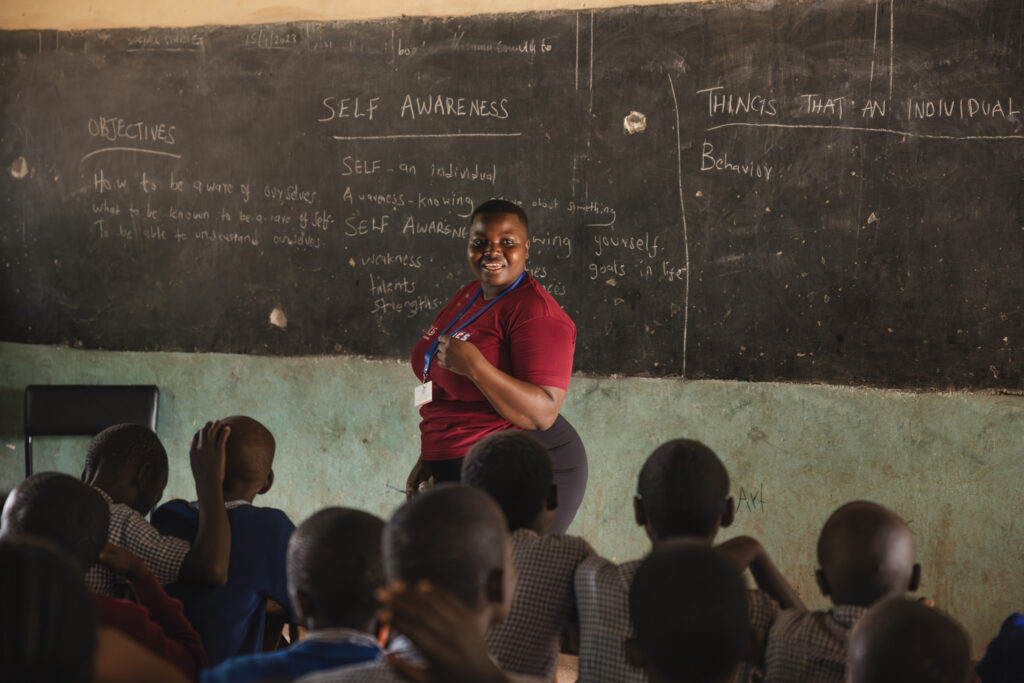
In Kenya, violence is a common way to solve problems and children are at high risk ofof being abused in their daily lives. Susan Odiambo is 11 years old and in sixth grade at Kodiaga Prison Primary School i Kisumu. In the past, Susan has kept difficult experiences to herself. Talking to any adult has only made the situation worse and the culture of silence when it comes to violence against children is strong. But gith the ICS project Life Skills Susan and her parents have learnedt to talk to each other about difficult things. Susan can turn to her parents or her teacher if she has a problem.
- Adults are not aware that hitting children is forbidden in Kenya, says Lillian Onyango, program coordinator for LifeSkills-project in Kisumu. The use of violence as a method of parenting is common, both at school and at home. Our task is not only to inform guardians and teachers that they are committing a crime if they hit a child, but also to empower children and give them the tools to stand up for their rights.
Adults are not aware that it is illegal to hit children in Kenya.
The aim of Life Skills is to work with children, parents, teachers and authorities to ensure that children feel safe, improve social skills and increase motivation to study.
A safe life is the basis for being able to benefit from a good education and Erikshjälpen works in large parts of the world with children's right to a safe everyday life.
ERIK's day
On this year's Eriksdag, the entire daily cash from Erikshjälpen Second Hand's stores will go to Erikshjälpen's interventions for children's safety and protection.
Help stop violence against children. By shopping in our stores on Saturday, April 27, you are helping to ensure that all children have a safe childhood.
Radiohjälpen has decided which projects will be awarded money from fundraising for Världens Barn 2023. Erikshjälpen takesr receive 12.5 million Swedish kronor (SEK) for interventions for children's right to education, health and safety.
The collection Children of the World started in 1997. Since then, the the organization collected over two billion Swedish kronor (SEK). In 2023 104.6 million Swedish kronor (SEK) were raised, resulting in the second highest fundraising result since the start.

Money for projects that strengthen children's rights
Radio Aid's fundraising for World's Childrenn, raised 104.6 million Swedish kronor (SEK) in 2023. Now 23 projects in 14 countries are being supported to strengthen children's rights. The projects that benefit from the support contribute to improving the situation of children in three focus areas: School, Health and Safety.
Children's right to education
In the area of children's right to education, seven projects will share a total of Swedish kronor (SEK) 45.3 million. Erikshjälpen's work in Mali is one of the projects that will receive funding. Also our projects with a focus on education in South Sudan have been granted funding from Världens Barn.


Queen Silvia's fundraising goes to Ukraine
In connection with Queen Silvia's 80th birthday, The Queen started a fundraising campaign thattogether with support from Radiohjälpen's disaster fund, resulted in 5.3 million Swedish kronor (SEK).these funds went to three projects in Ukraine with a focus on improving children's mental health. One of these projects is our intervention through partner organizationsn Womens Concortium of Ukraine.
On On April 8, the Governor of Jönköping County, Brittis Benzler and the Second Deputy Speaker of the Riksdag, Julia Kronlid, visited Erikshjälpen’s head office at Huskvarna and Erikshjälpen Second Hand at Jönköping. The visit was part of a larger county tour organized by the County Administrative Board at Jönköping.
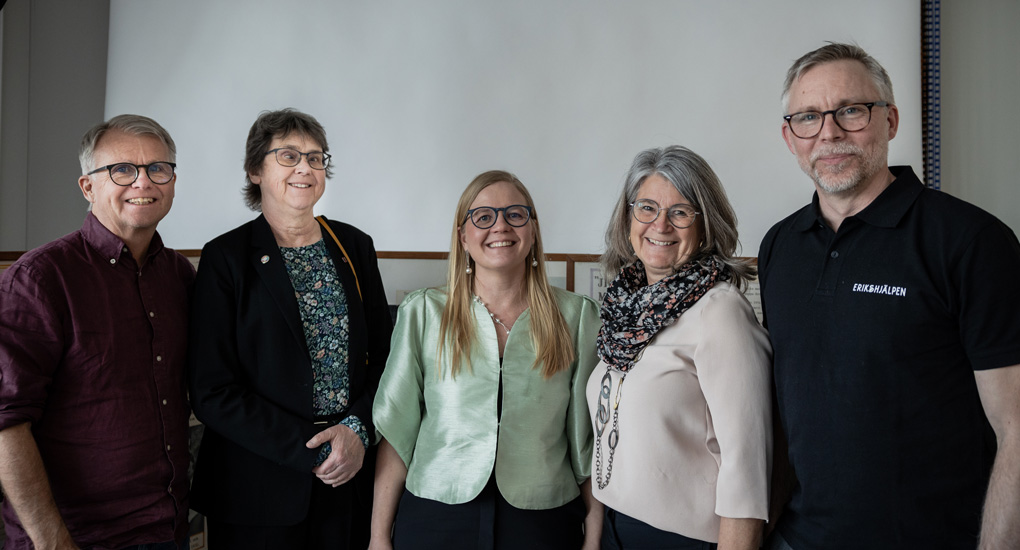
Anders Malmstigen, Brittis Benzler, Julia Kronlid, Birgitta Johansson and Mattias Ingeson
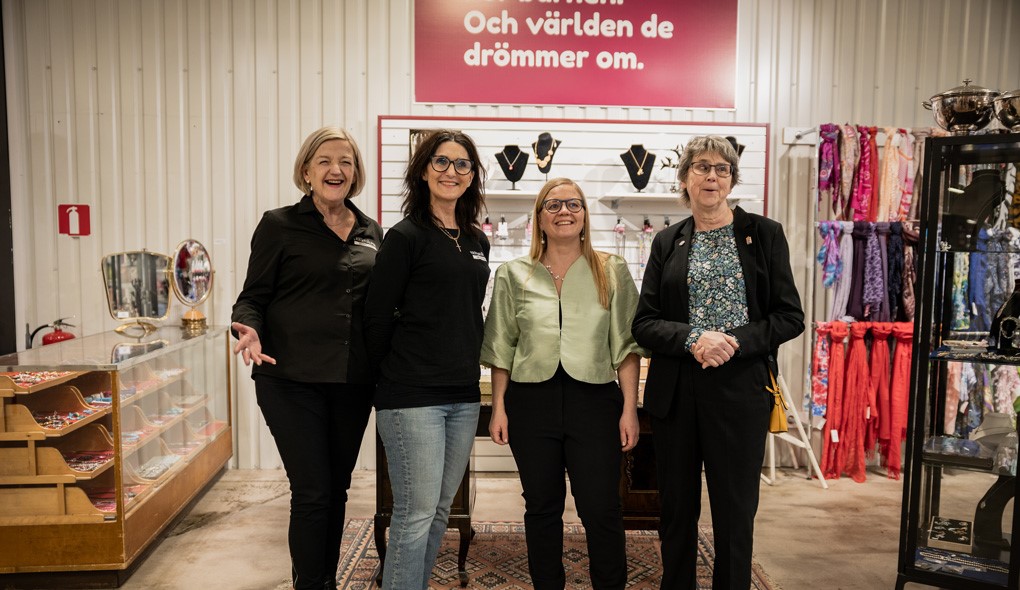
Anette Alm Gustavsson, Caroline Pehrs, Julia Kronlid and Brittis Benzler
Anders Malmstigen, Brittis Benzler, Julia Kronlid, Birgitta Johansson and Mattias Ingeson
Anette Alm Gustavsson, Caroline Pehrs, Julia Kronlid and Brittis Benzler
Headquarters in Huskvarna
The visit to the headquarters in Huskvarna began with Mattias Ingeson, Secretary-General , discussing the organization’s history and its work for children’s rights in Sweden and around the world. Julia Kronlid’s wish was , among other things, to learn more about our work in Ukraine and how it has been affected by the economic downturn and other global crises. Anders Malmstigen, Director of International Operations, and Birgitta Johansson, Country Director for Sweden, provided an in-depth look at our interventions.
Erikshjälpen took up aid organizations' concerns about the government's new strategy for development cooperation with civil society, Civsamand Julia Kronlid promised to take the issue on board. She said said respect for the fact that Swedish civil society organizationsr have a lot of knowledge about how aid works best and hopes for continued good cooperation.
Tour of the second-hand shop
One of the Second Deputy Speaker's wishes for the day was to visit Erikshjälpen Second Hand. Managing Director Anette Alm Gustafsson and Store Manager Caroline Pehrs welcomed us to the Jönköping store. Both Brittis Benzler and Julia Kronlid showed great interest during the tour and were impressed both by how the store is structured and how Erikshjälpen Second Hand Hand works with social and environmental sustainability.
The day concluded with dinner at the county governor's residence in Jönköping.
During Postkodlotteriet's annual gala evening in Stockholm City Hall, Erikshjälpen received 15 million Swedish kronor (SEK) in support that will contribute to the work in 2024. In total, 61 organisations received 1.2 billion Swedish kronor (SEK).
- It is a confirmation that our work is important. The long-term support that we can distribute ourselves means an incredible amount," says Mattias Ingeson, Secretary General of Erikshjälpen.
It is a confirmation that our work is important.

Mattias Ingeson, Secretary General Erikshjälpen
Mattias Ingeson, Secretary General Erikshjälpen
Approximately one in five households in Sweden is involved in the Postcode Lottery Everyone who has a postal code lottery is involved and contributes to it. surplus which are distributed to non-profit organizations organisations who, among other things, work with:
- children and young people
- animals and nature
- research and health
- democracy and society
- climate and environment
- sport and outdoor activities.
All organisations are different but have the same goal - to work together to make the world a better place for people, animals and nature.

Erikshjälpen has been a beneficiary of the Swedish the Postcode Lottery since 2009 and has received a total of 207 million Swedish kronor (SEK) In 2023, we were able to support projects in Uganda and Republic of Moldova to strengthen children's rights, give more children the opportunity to go back to school and train school staff to be able to support children who have experienced trauma. In Sweden we were able to start a new Future Workshop in Kristianstad where new activities have been created for both children and parents. Since the support from the Postcode Lottery is not earmarked, it is extra valuable. We can use the money where we see the greatest need and build our business long-term.
– This is money that will make a big difference for many children. Erikshjälpen would like to thank the Postcode Lottery and all lottery buyers who continue to support our work to bring children's dreams to life, says Mattias Ingeson.
the Postcode Lottery
With over a million lottery buyers, the Postcode Lottery Sweden's largest lottery, but also Sweden's largest private donor to the non-profit sector. Today, the lottery generates one billion Swedish kronor (SEK) per year to over 60 organisations who work to make the world a better place. That's what the Postcode Effect is.
In January, the Ugandan government hosted an international summit. In an attempt to make the capital Kampala more attractive for the summit, the ruling politicians chose to remove over 700 children living on the streets of the city center. The children were sent to the Masulita Children's Village where a difficult situation has now been created.
Summit in Kampala, Uganda
Leaders from over 120 countries were invited to an international summit in the Ugandan capital Kampala in January. Ahead of the summit, the Kampala Capital City Authority (KCCA) launched an operation to keep children off the streets. Over 700 children and youth were removed from the center of Kampala. The children were taken to the Women's Effort to Save Orphans (UWESO) facilities in Masulita.
The children of Masulita
As a result of the government's actions, the influx of children into Masulita has become difficult to manage. There is an urgent need to ensure the basic needs of the children, such as food, medical care and psychosocial support.


Erikshjälpen's partner organization in Uganda
Erikshjälpen has started a short-term humanitarian operation together with our partner organization in Uganda, Dwelling Places. At the same time, we are looking at the possibilities for a long-term solution. The humanitarian intervention will provide direct assistance and protection to the total of 711 children currently living in the UWESCO Masulitas center.
This is done by:
- Ensure that children get enough nutritious food
- Distribute medical supplies and ensure access to specialist care if needed
- Offer all children individualized psychological trauma-informed care
- Improving sanitation conditions in Masulita, through toiletries and cleaning products
- Provide learning materials for children.
Erikshjälpen is now doing its utmost to help our partner in Uganda to ensure that the humanitarian needs of these children are met.
Dwelling Places
Dwelling Places is part of the Uganda Child Rights NGO Network and the Children at Risk Action Network. In addition to the direct work of helping children living on the streets, the organization is involved in advocacy work at the national level. Erikshjälpen has an ongoing effort with Dwelling Places in particularly vulnerable areas such as Nepak and Kampala.
February 24 marks two years since Russia's invasion of Ukraine. Two years of war, fear and human suffering. From day one, Erikshjälpen has been on the side of the children and together with local partner organisations we have been able to help Ukrainian children and families. But the need for humanitarian and psychosocial support is still great.
Early in the morning of 24 February 2022, Russia launched an attack on Ukraine. Ukrainian children and families have endured 730 days of war. 730 days of fear, air raids and trauma. When Ukraine was invaded, Erikshjälpen was there early on to support children and families, both those who fled and those who remained in the country. Through local partner organisations , immediate help was provided with a special focus on the situation of children. In the early days of the war, assistance focused on providing people with supplies and cash, and helping with information and registration at borders. Today, the need for support and interventions remains high.
UNHCR estimates that over 14 million people are in urgent need of Humanitarian Assistance. Most are women and children.
Give a gift to children and families in Ukraine
Your gift will help ensure that war-affected children in Ukraine receive the help they need to feel safe.
Give a gift to the children of Ukraine
Over time, the need for psychosocial support has increased. Since the beginning of the war, Erikshjälpen has supported the local partner Women's Consortium of Ukraine (WCU), which offers counseling and image therapy. WCU also has a support line that children and adults can call. The psychologists who work with the support line testify to how the calls were initially about getting practical help. Now the calls are more about finding joy in life in the midst of a burning war. Children as young as 11 call in worried about losing a family member or friend. Psychologist Tetiana Grigorieva, who works with the support line, explains:
- The children who call us have often lost a close relative and we can support them in the grieving process. The calls help the children express their feelings and deal with the immense pain of losing a relative. Especially if it was someone who was very close to them and meant everything to them.


Children who call us have often lost a loved one.
The situation in Ukraine is serious. Erikshjälpen is present where the need is greatest and together with our local partner organization, our work continues.
 Listening