Shornali gained both friends and self-confidence
Shornali often saw other children playing outside while she sat alone indoors. Her limited mobility in her legs made it difficult for her to join in. Now she takes part in adapted activities at the renovated children’s center together with her new friends.
Now I know I'm not in the way. I'm just as important as everyone else. And I have dreams, too.
Shornali is twelve years old and lives in the village of Pargobindopur Abashon in Rampal, southern Bangladesh. She lives with her parents and her sister, who is two years younger. Shornali has lived her entire life with limited mobility in her legs, which makes it difficult for her to walk. There are no roads in the village and few buildings adapted for accessibility, so for a long time her world was limited to two places: school and home.
But when the Shopner Chowa Children’s Center was renovated, everything changed. The center is a place where children can play, get help with their homework, and participate in workshops. When the building and its surroundings were adapted to improve accessibility, Shornali’s world became a bigger place.
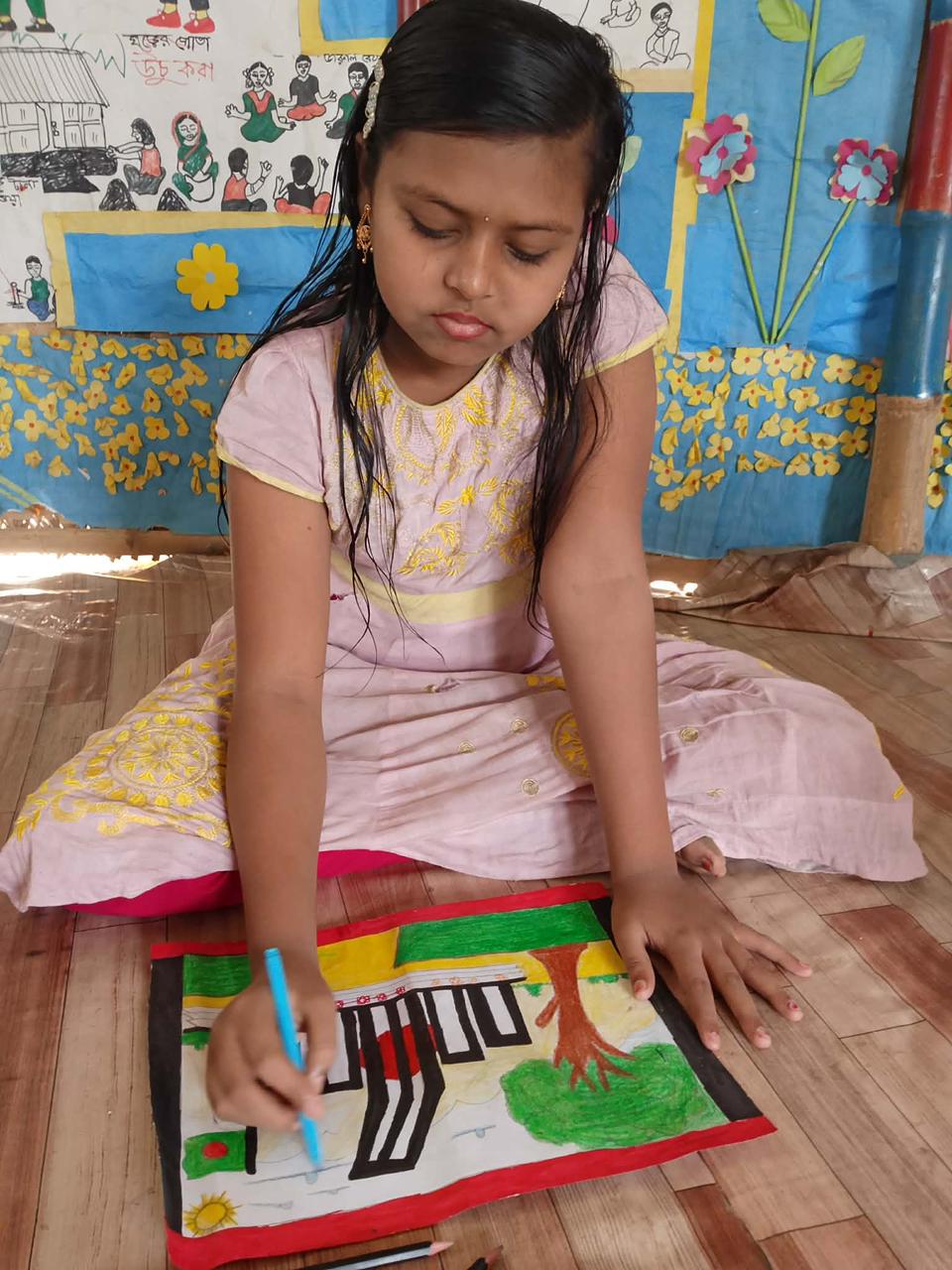
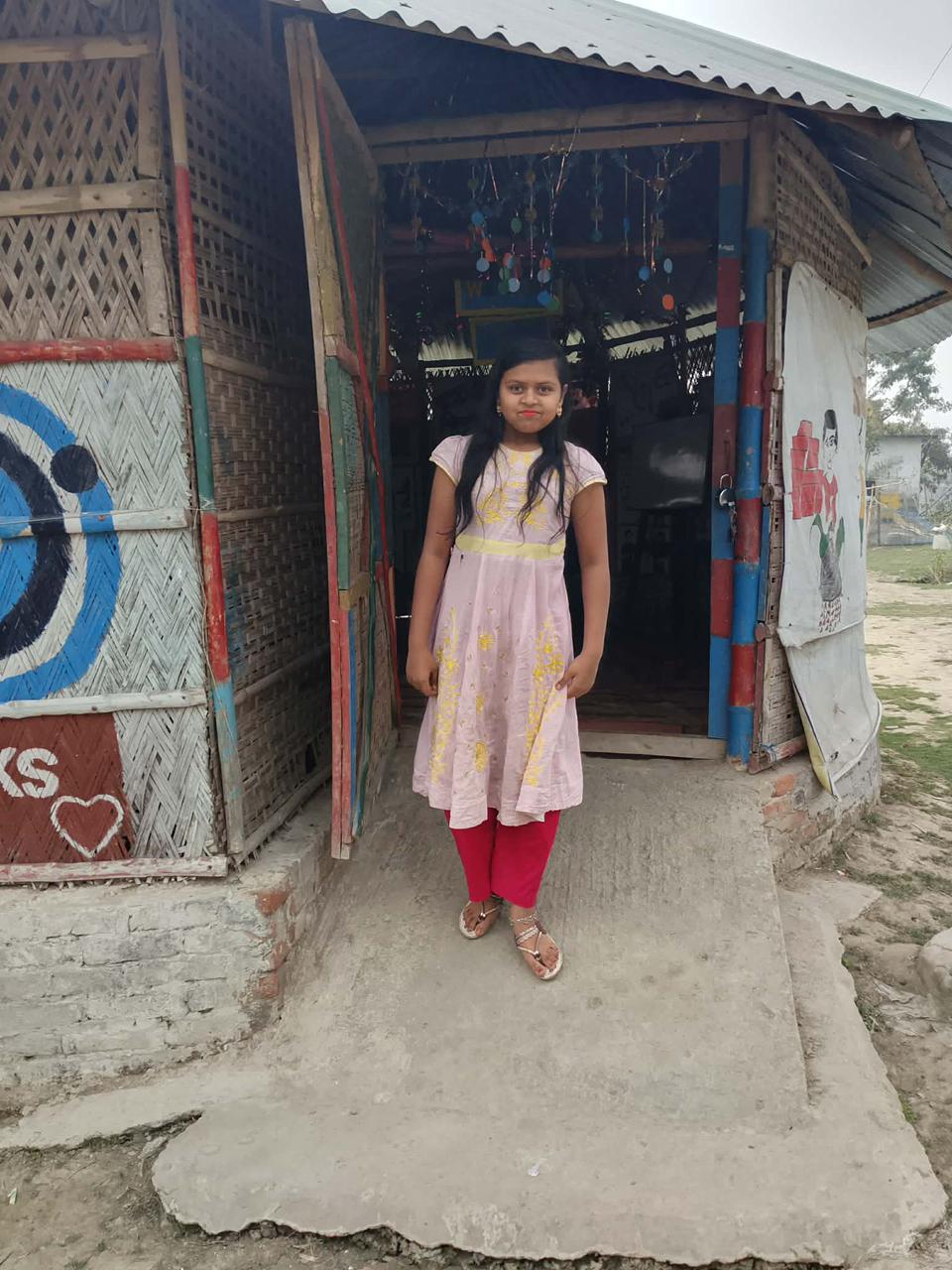
Shornali, twelve years old.
Shornali, twelve years old.
A lonely everyday life
Before Shornali started going to the children’s center, she rarely joined in games with the neighborhood children. The games were often physically demanding, and the other children didn’t know how to include her.
“The kids in my village used to play different games after school. I’d watch them through the window or from the garden. Those games weren’t for me. I couldn’t run like them. I couldn’t jump like them,” says Shornali.
The evenings were the worst. When the sun went down and she could hear the laughter of other children outside, she felt especially lonely.
“It felt like the world was moving, but I was standing still. But my sister was always with me. She was my only friend. Without her, I don’t know what I would have done on all those lonely evenings,” saysShornali.
A ramp changed everything
Shornali says that the renovation of the children’s center gave her something she had long been missing—freedom.
– I have a hard time walking up stairs. When they built a ramp to the children’s center, it completely changed my life.
When the center installed a ramp, the entrance became accessible, and children with mobility difficulties were able to enter on their own for the first time. This simple change removed a major barrier and gave the children both independence and greater self-confidence. Now Shornali could visit the center regularly and meet other children, and her life began to change.
For the first time, I was able to walk in all by myself. I felt free.
A place where all children can participate
Together with local partner organizations, Erikshjälpen works to promote accessibility and inclusion. At the children’s center, children learn more about inclusion through conversations and play. Many children also share what they’ve learned with their parents and neighbors, helping to spread the message further.
“We’ve learned about children’s rights. Now I know I’m not in the way. I’m just as important as everyone else. And I have dreams, too,” says Shornali.
Indoor games and adapted outdoor activities ensure that all children can participate.
“I love playing carrom and Ludo. I’ve even tried to learn chess,” Shornali says proudly.
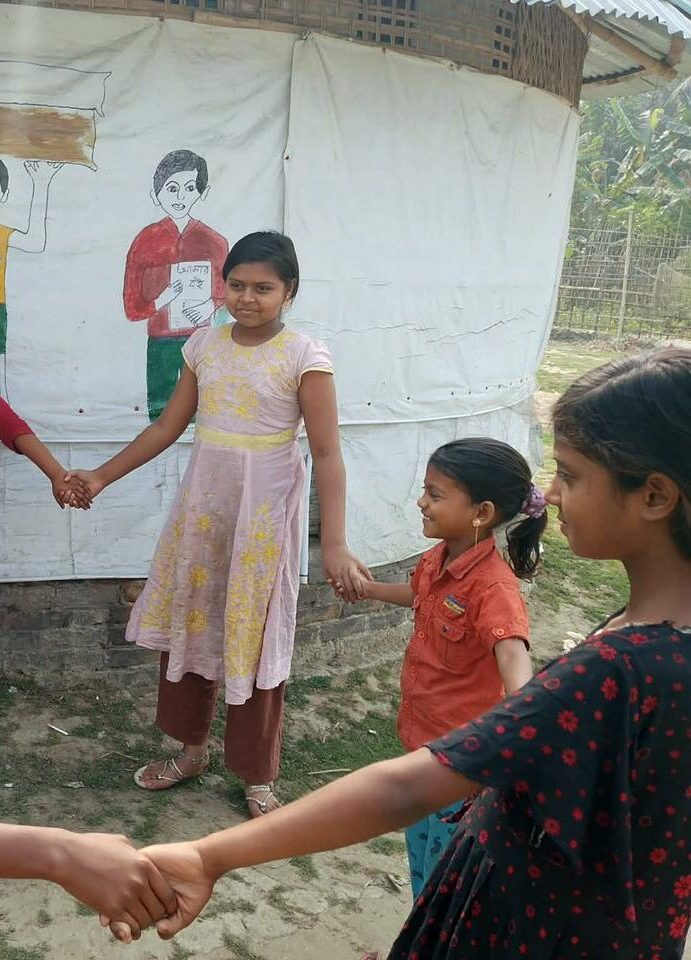
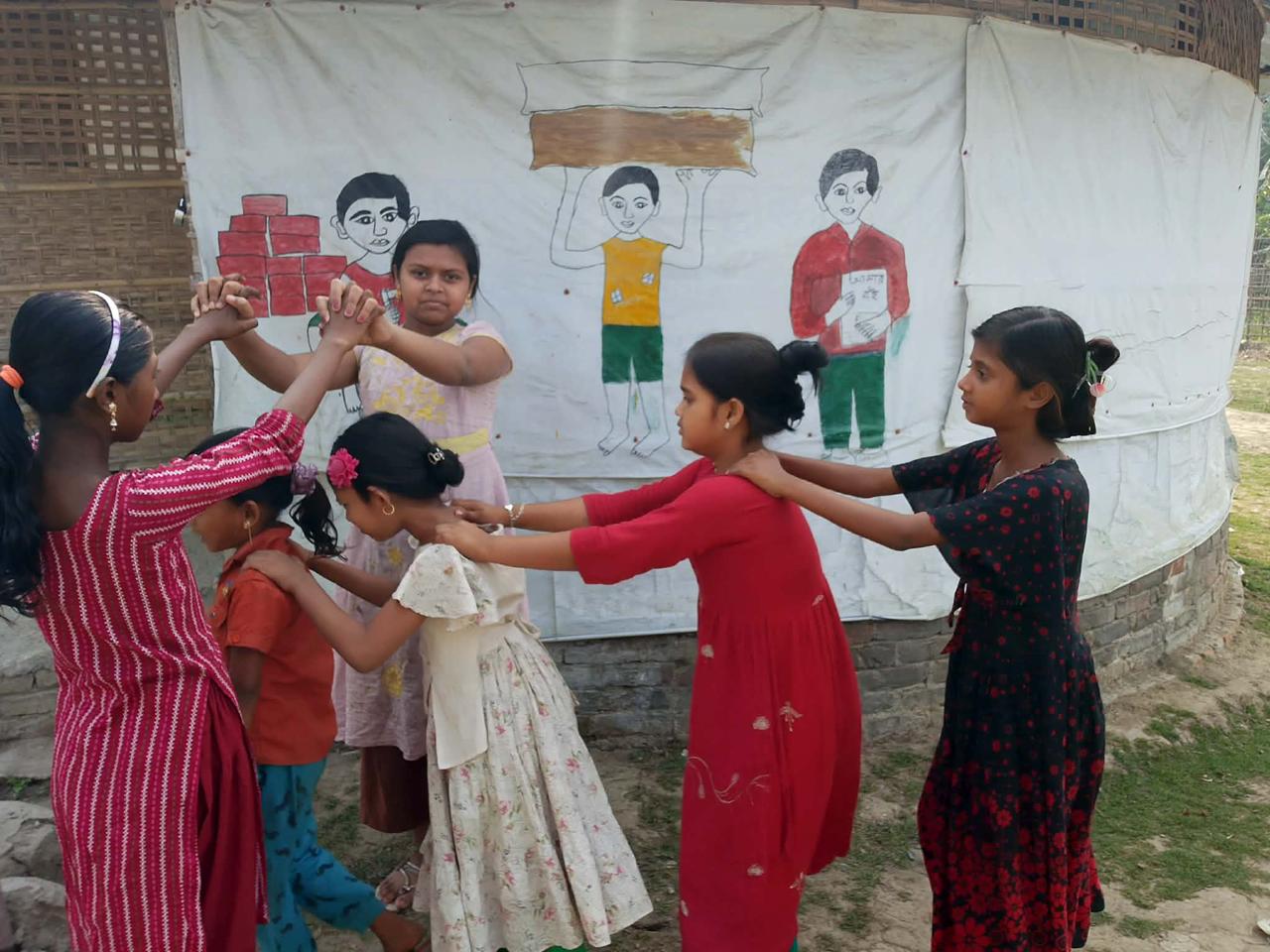
Shornali is playing with her friends outside the children's center.
Shornali is playing with her friends outside the children's center.
“The best part is my new friends”
In the past, Shornali used to feel shy and uncomfortable when talking to her classmates at school because of her disability. She was afraid that the other children would think she was different. But now that she can participate in activities and games, she has made many new friends and her self-confidence has grown.
“The best thing about the center is my 36 friends. They understand me and support me. With them, I don’t feel different,” says Shornali.
Now my evenings aren't lonely anymore. They're the best part of my day.
Pargobindopur Abashon is a government-run settlement consisting of small houses built on a hill. The residents moved here due to river erosion and flooding.
Children with disabilities in villages like these often face both physical and social barriers. Roads and buildings are rarely accessible, and awareness of disabilities is low.
Together with local partner organizations, Erikshjälpen works to change attitudes, improve accessibility, and create a more inclusive environment.
Published: 24 March 2026
 Listening