Sabona & Amina school has a separate toilet for girls
Millions of girls are affected and have it every month. Menstruation. Yet we rarely talk about it. In parts of the world, girls are forced to stay home from school during menstruation, missing out on much of their education. At Shonatola Bridge School in southern Bangladesh, there are separate toilets for girls and boys. The girls' toilets include sanitary pads, tampons, washcloths and painkillers that enable girls to go to school, even during their periods.
The Shonatola Bridge School in southern Bangladesh is bustling with life. Lessons follow one another. First math, then language, then sports. And then the science club and the girls' group. When the bell rings, it's break time. Sabona and Amina are best friends and are in year seven. They say this school is different from other schools in Bangladesh in many ways.
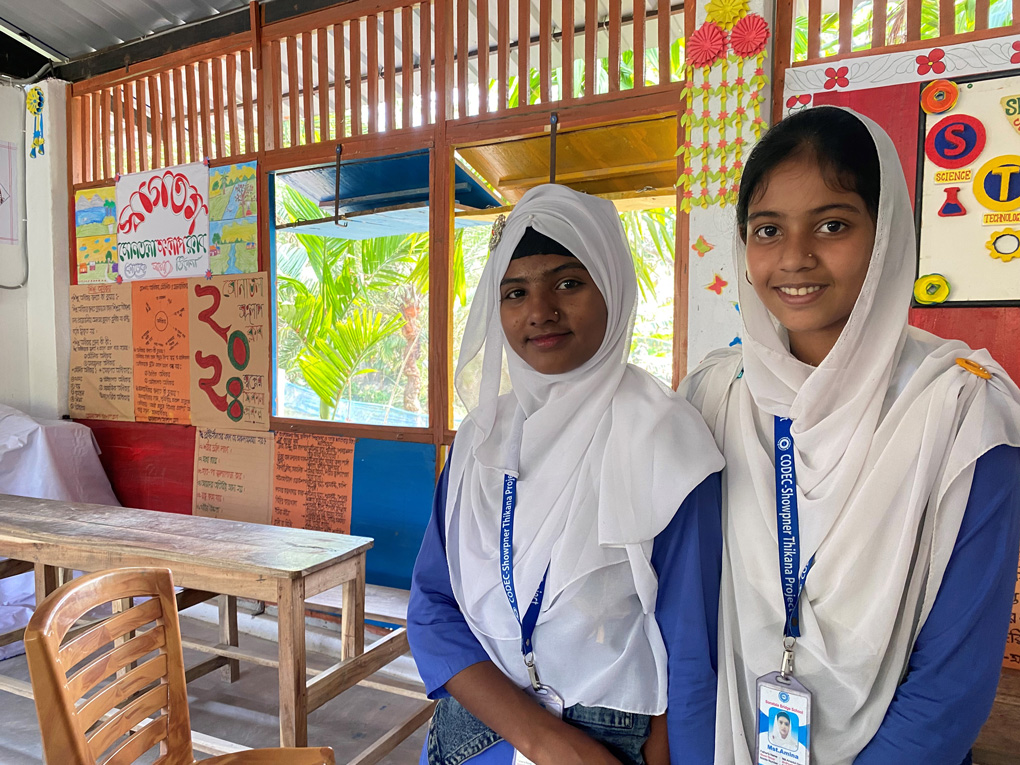
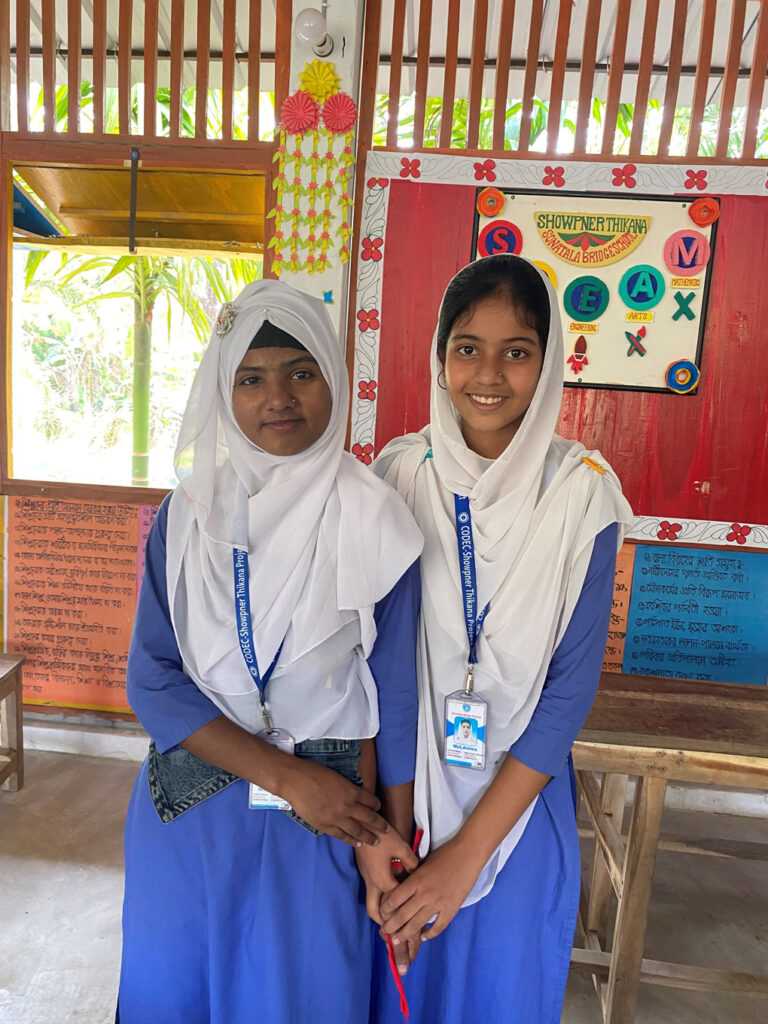
Sabona Akter 15 years & Amina Akther 14 years
Sabona Akter 15 years & Amina Akther 14 years
-"The school means safety for me. Here I have learned to speak in front of people and here there is clean water and clean toilets," says Sabona Akter, who is 15 years old.
Because her family could not afford it, she was forced to drop out of school after grade five. She was at home for two years before, after this school was built, she was able to start again.
- "If I hadn't gotten a place at this school, I would have had a completely different life. I would have been married off or forced to take a job at the textile factory to help support my family," says Sabona.
Only school in the area
Two cohorts of students are currently attending Shonatola Bridge School in southern Bangladesh. The school is the only one in the area for children in grades six to eight. It is located in a rural area with difficult access. Thanks to solar panels, the school has electricity and internet access, allowing the children to benefit from both digital and classroom-based education. There are separate toilets for girls and boys and access to clean drinking water. Many of the children attending the school live in extreme poverty and would not be able to continue their studies if it were not for the school. Many of them have previously been forced to drop out of school.
Join us in supporting our work for children's right to health
Thanks to you, more girls can have access to safe Menstrual health and thus have a greater opportunity to reach their full potential.

Swisha a gift
900 92 83

Many children here stay at home during periods when they are menstruating and miss large parts of school
Being a girl in Bangladesh
14-year-old Amina Akther is also happy to have the opportunity to continue her studies. She talks about what it is like to be a girl in Bangladesh. "Many have a long and dangerous journey to school. And that there are risks of assault and abuse that mean that girls should not go out alone. Many girls also risk being married off. And then there is menstruation, which causes many girls to miss large parts of their schooling.
- "Many children here stay at home during their periods and miss a lot of school," she says.
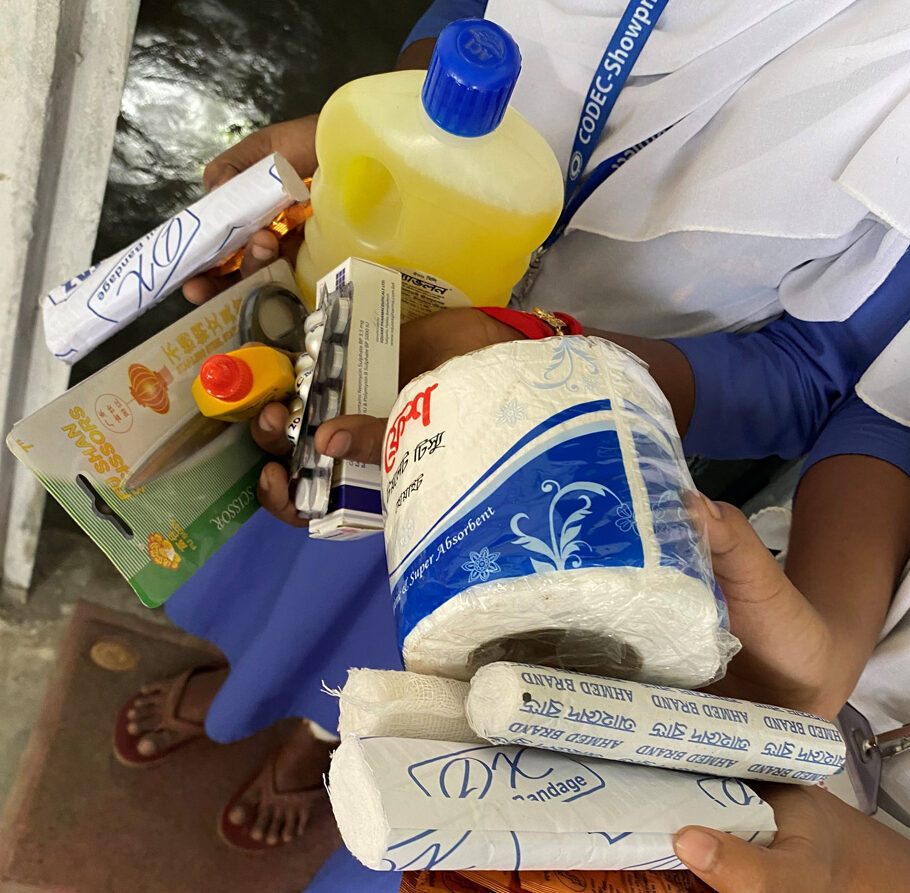
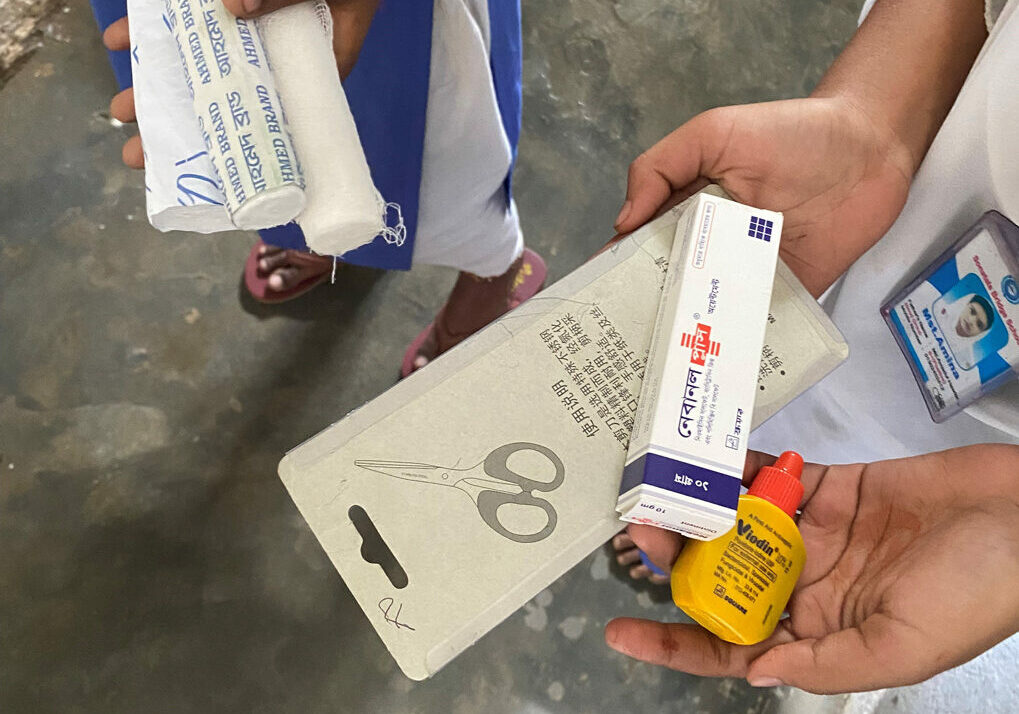
We girls can come to school even when we have our period, the school helps and supports us
Girls can now come to school even during their period
At school, girls receive a lot of support, which they do not take for granted based on previous experiences.
- There is a separate toilet just for girls, with pads and everything you need, it feels safe. We girls can come to school even when we have our periods, the school helps and supports us," says Amina and continues:
- In school we learn about sanitation and hygiene. About washing our hands properly and taking care of ourselves. My mom is very happy about the opportunities I have now, she has not had those opportunities.
Published: 13 May 2024
 Listening