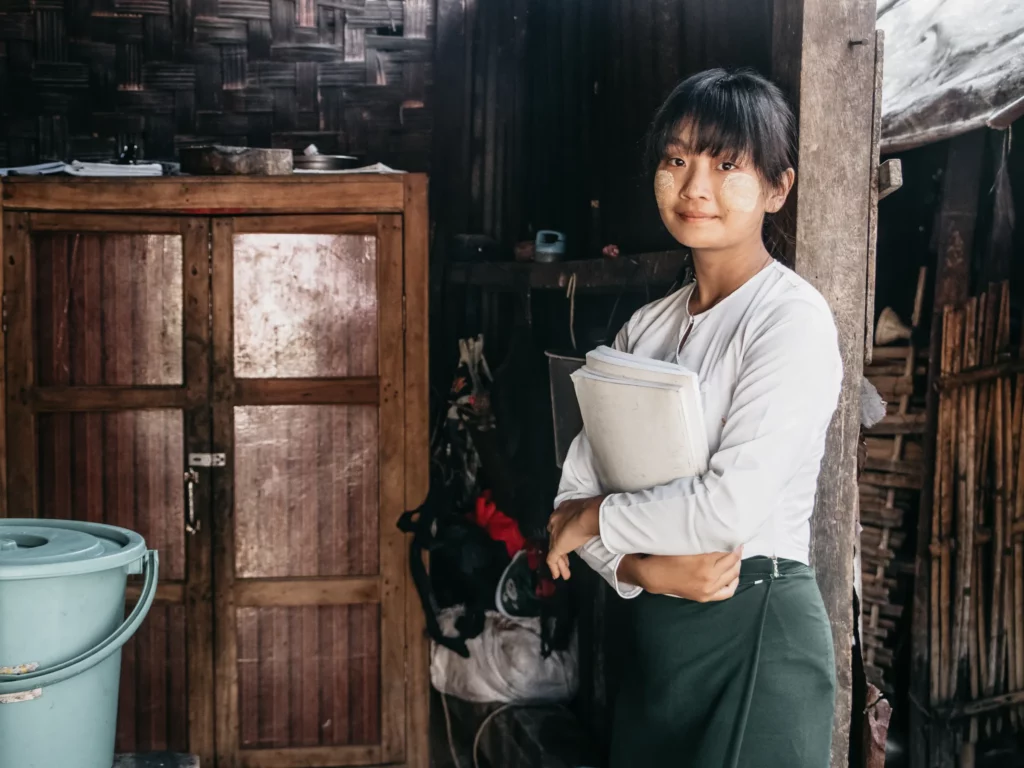
She was just five years old when her family sought refuge from the civil war in the jungle. Today, Maran Hkawn Nu has been living in a refugee camp in Myanmar for 12 years.
The family left everything behind, their home, their daily life and all their belongings. First, the family took shelter in the jungle and then fled to the Shwezet IDP Camp in Kachin State, northern Myanmar. At the time, Maran Hkawn Nu was just five years old.
That was 12 years ago and Maran still lives in the refugee camp with her family.
- There are nine of us in the family so it's a big family. My mom looks after my brothers while my dad tries to find work to support the family. My sister and two of my brothers have disabilities and my sister still needs medical treatment," says Maran.
The family comes from Kachin State in northern Myanmar. There, an armed conflict between the Kachin Independent Organization and the Myanmar government has been ongoing since the military took power in 1962. After a 17-year hiatus, the conflict flared up again in 2011.
Give your Christmas gift to Maran and other refugee children!
Helping more refugee children to live in safety.

Swisha a Christmas gift
900 92 83

Difficult to start over in the refugee camp
In Myanmar, there were hopes for a democratization process after the free elections in 2015, but after a coup d'état in early 2021, the military took power again. Conflicts increased throughout Myanmar and today around 1.5 million people live as internally displaced persons in the country.
For Maran and her family, starting a completely new life in the camp was a difficult adjustment.
- We have had to struggle very hard in the refugee camp. In the beginning, we had to cook, eat and sleep in a very small space. As I have three siblings with disabilities, I think we are the family that has suffered the most. Sometimes the other children in the camp tease my siblings and I can get very angry, even though I try to stay calm," says Maran.

Maran Hkawn Nu has been living in a refugee camp for 12 years. Photo: Kachin Baptist Convention.
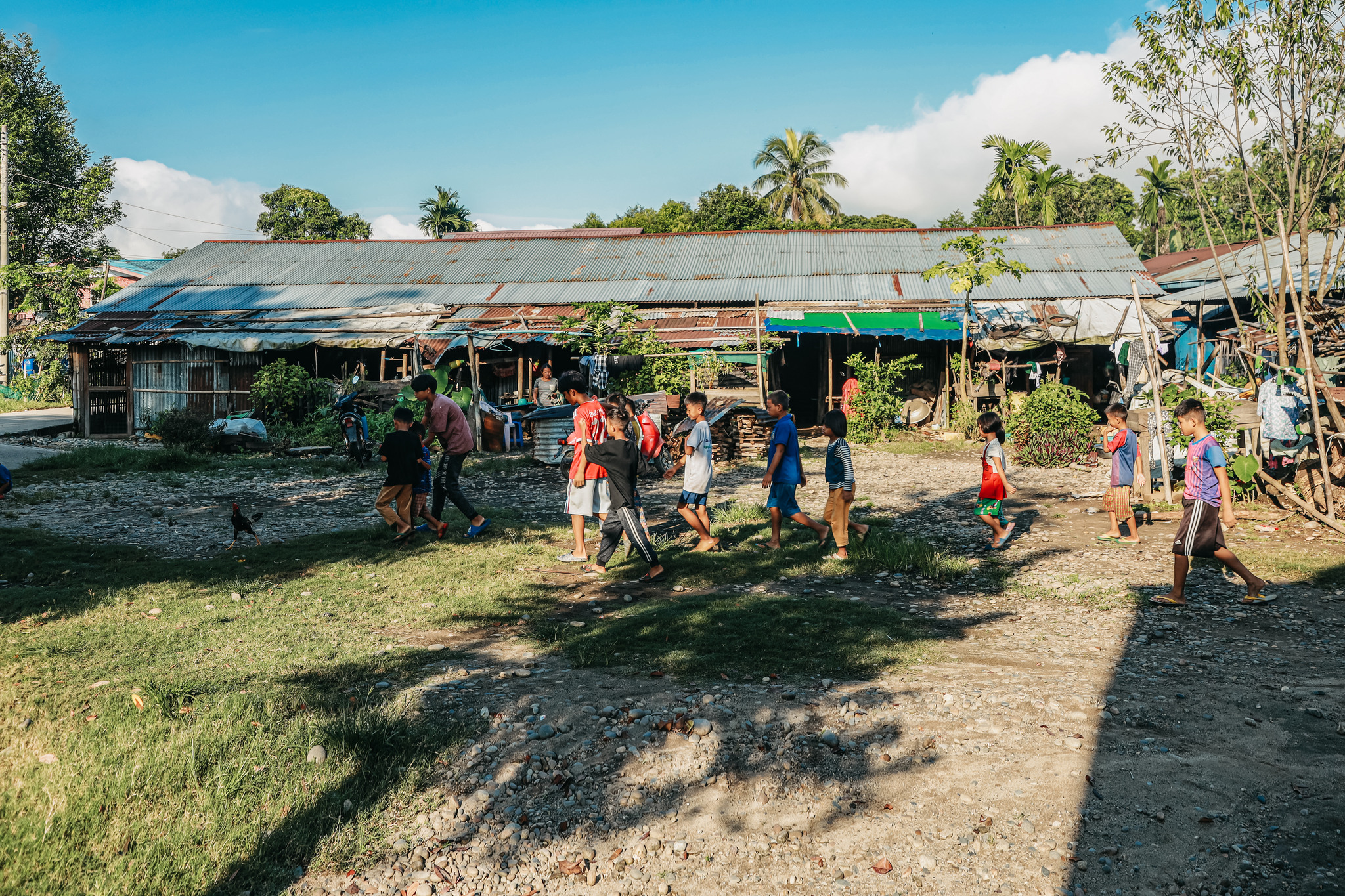
The Shwezet IDP Camp. Photo: Kachin Baptist Convention.
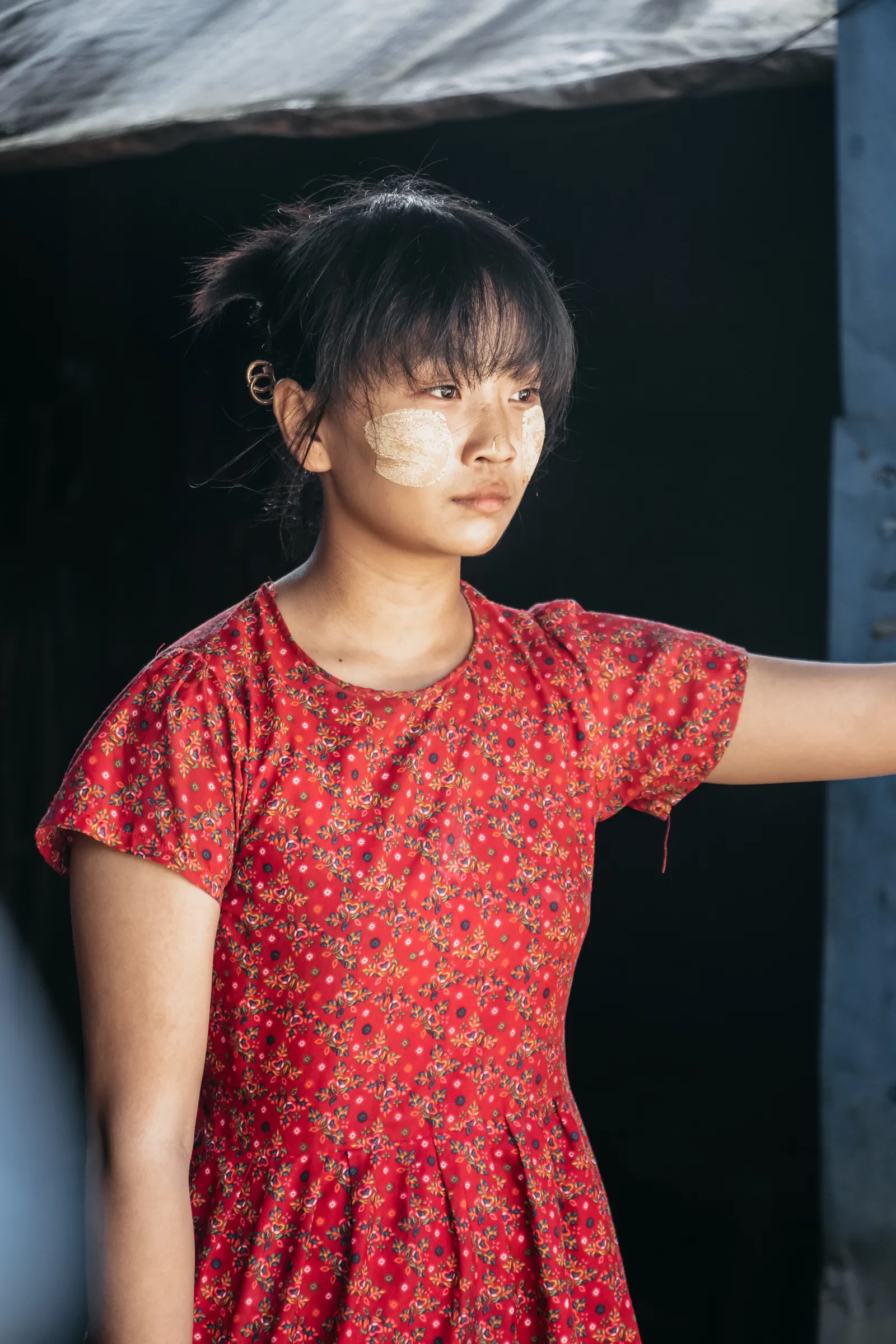
Maran Hkawn Nu has been living in a refugee camp for 12 years. Photo: Kachin Baptist Convention.
The Shwezet IDP Camp. Photo: Kachin Baptist Convention.
We have had to struggle very hard in the refugee camp. In the beginning, we had to cook, eat and sleep in a very small space.
Fighting for their siblings' schooling
In the refugee camp, Erikshjälpen has worked together with the local partner organization Kachin Baptist Convention to give the children a safe and secure life in the midst of the burning civil war. After decades of conflict, Myanmar is today one of the most insecure countries in Southeast Asia and, as always in armed conflicts, it is the children who suffer the most.
These range from high child mortality rates due to lack of health care to large numbers of children dropping out of education after primary school. In the Shwezet refugee camp, Maran struggles to keep her siblings going to school every day.
- I understand that my siblings are a bit behind in school because of their disabilities and I pray that they will do well. Even though we live in a refugee camp, I want them to succeed in their education," says Maran.
Wants to return home as soon as possible
Violence, drugs, trafficking, child labor and landmines are commonplace for many children in Myanmar. According to the Kachin Baptist Convention, many children live in constant fear of losing a relative or being killed themselves. The Kachin Baptist Convention works on the basis of a special child protection program where the children themselves are involved in activities that strengthen their protection against violence and various forms of exploitation.
For example, protecting children from being sexually exploited and helping those who have been exploited, or offering child soldiers the opportunity to start vocational training instead.
Maran dreams of one day being able to train as a nurse, but it is difficult. She has to help out in the family by taking care of her siblings, and she also has to do extra work in a laundry to earn money for her sister's treatments.
- We have now lived here in the refugee camp for twelve years. I wish for nothing but peace so that we can return to our home village.
Thanks to Erikshjälpen's work in Myanmar, Maran and her younger siblings can grow up in protection from the dangers of war.
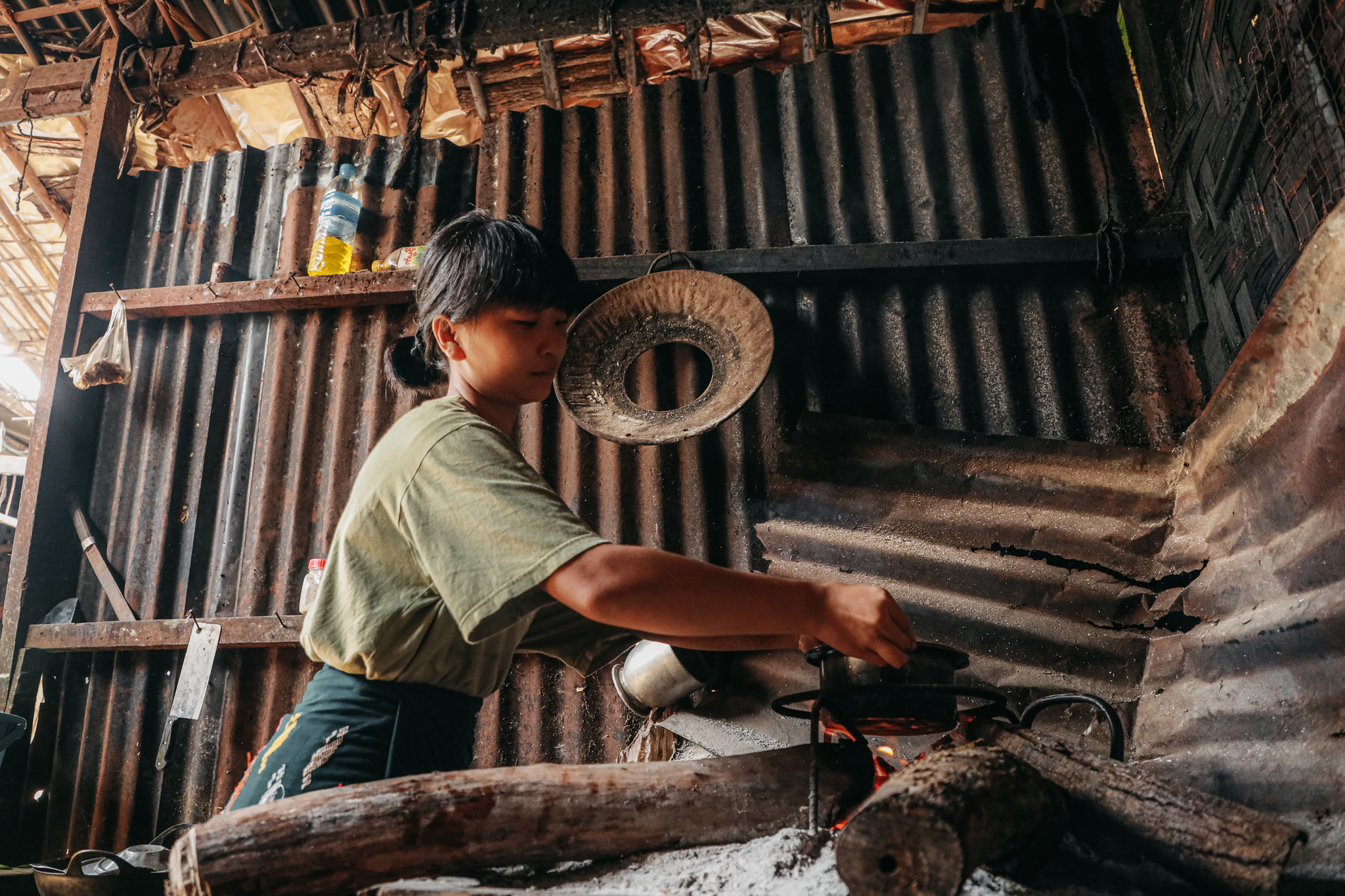
Maran helps in the family by taking care of her siblings. Photo: Kachin Baptist Convention.
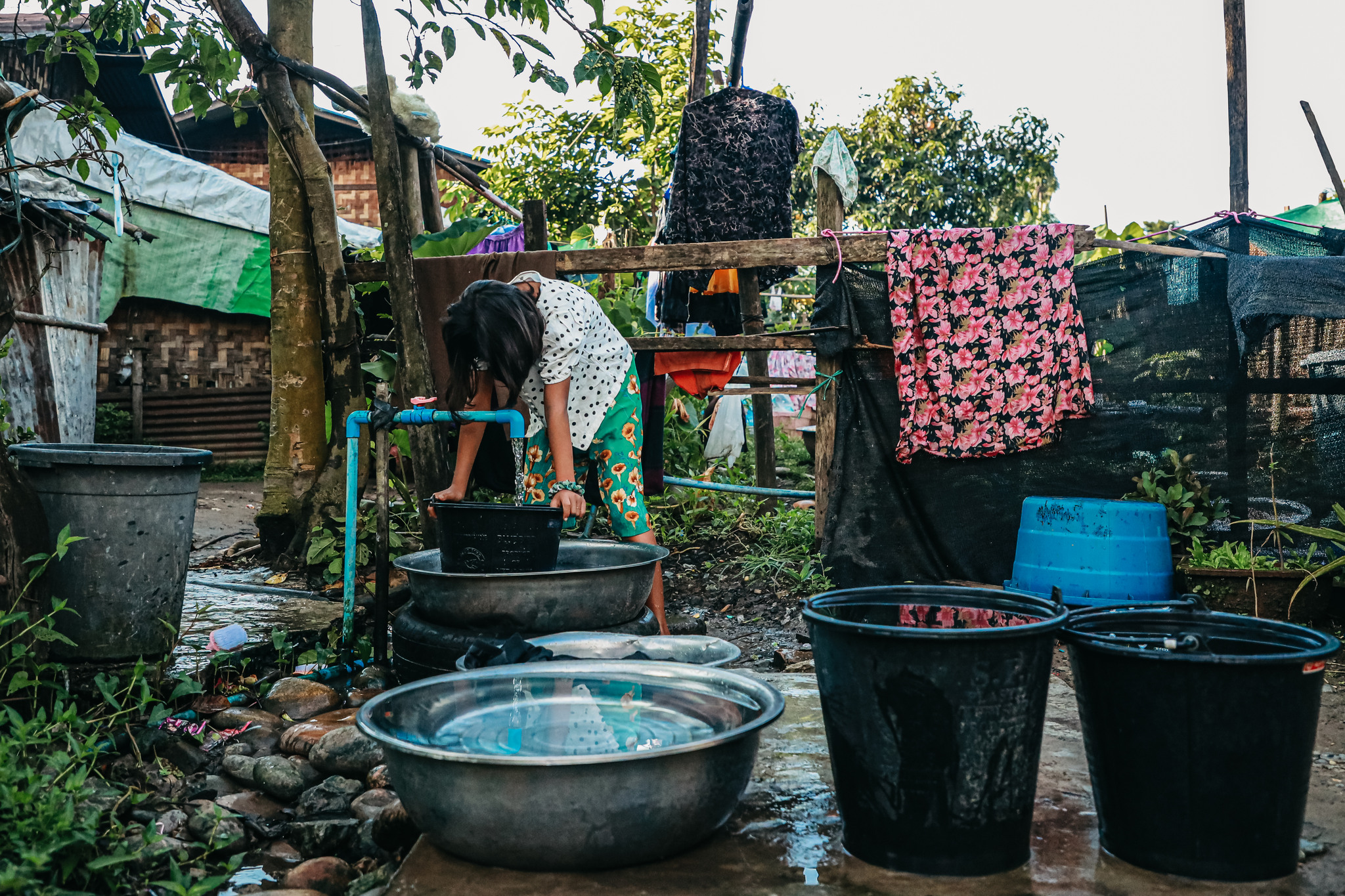
Maran works extra in a laundry. Photo: Kachin Baptist Convention.
Maran helps in the family by taking care of her siblings. Photo: Kachin Baptist Convention.
Maran works extra in a laundry. Photo: Kachin Baptist Convention.
We have now lived here in the refugee camp for twelve years. I wish for nothing but peace so that we can return to our home village.
Military coup forced millions to flee
In February 2021, the military staged a coup d'état in Myanmar and a state of emergency has been in place throughout the country since then. The military coup led to widespread protests and armed resistance against the military junta is ongoing throughout the country. In addition to a large number of deaths, the conflict has displaced over 1.5 million people.
Author: Johan Larsson
The nightmares have disappeared. Instead, 14-year-old Djemirata can dream of training as a seamstress and one day reuniting with her family in her home village of Goinlingin.
In Burkina Faso, around two million people live as internally displaced persons. The country has been politically unstable for years and was hit by two military coups in 2022. This led to a dramatic increase in violence and now an estimated 4.9 million people are in urgent need of Humanitarian Assistance.
For 14-year-old Djemirata Nabalum, violence came very close. Her village was attacked by armed terrorists and she was forced to flee to the town of Kaya in central Burkina Faso. The security situation in Kaya is somewhat better than in the rest of the country and just outside the town is the Tansega Wayalguin IDP camp.
In the refugee camp, Erikshjälpen works together with the local partner organization Organisation Catholique pour le Développment et la Solidarité, OCADES, to support children and families who have fled from armed militias that terrorize large parts of the country.
- We are well looked after and get to take part in fun leisure activities that make us feel good here," she says.
Give your Christmas gift to Djemirata and other refugee children!
Helping more refugee children to live in safety.
Swisha a Christmas gift
900 92 83
Children's nightmares have disappeared
There is a strong focus on psychosocial work. For example, many of the children in the refugee camp have seen their parents or other adults killed. Together with UNICEF, OCADES and Erikshjälpen run a special activity area, Children's Friendly Space, where children can feel safe and at the same time have access to education and leisure activities.
- Our nightmares disappeared when we started hanging out in the Children's Friendly Space. Now we dream about playing together instead. We are very grateful for that. The whole environment makes me feel more secure," says Djemirata.
Since arriving in Tansega Wayalguin refugee camp, Djemirata has begun to dream of a future as a seamstress - and, of course, of one day moving back home and reuniting with her family.
- When I look ahead five years, I see myself learning to sew and making a living as a seamstress. I also want to pass it on to my future children, just like my mother did, so they can be self-sufficient in the future.
Our nightmares disappeared when we started hanging out in the Children's Friendly Space.
Halidou has met new friends
Around 120,000 people live as internally displaced persons (IDPs) in the city of Kaya, and over 77,000 of them are children under the age of 17. For 15-year-old Halidou Sawadogo, who has fled to the Tansega Wayalguin IDP camp with his family, every morning starts with a visit to the Children's Friendly Space.
In the evenings, he works in the fields to help support his family.
- I have met many new friends at Children's Fiendly Space and we have a lot of fun hanging out together. Despite all the challenges, I try to find the joy in the small things. Children's Friendly Space has meant a lot to me, because I have something to do during the day instead of just thinking about everything that is difficult," he says.
Despite all the challenges, I try to find the joy in the small things.
The world's most forgotten conflict
The NRC Refugee Council ranks the situation in Burkina Faso as the world's most forgotten conflict in terms of media coverage, aid and the international community's willingness to resolve the conflict. Meanwhile, the Global Terrorism Index 2023 ranks Burkina Faso second among countries most affected by terrorism - just behind Afghanistan.
Thanks to Erikshjälpen's work in Burkina Faso, more children can feel safe in one of the world's most insecure countries.
Author: Johan Larsson
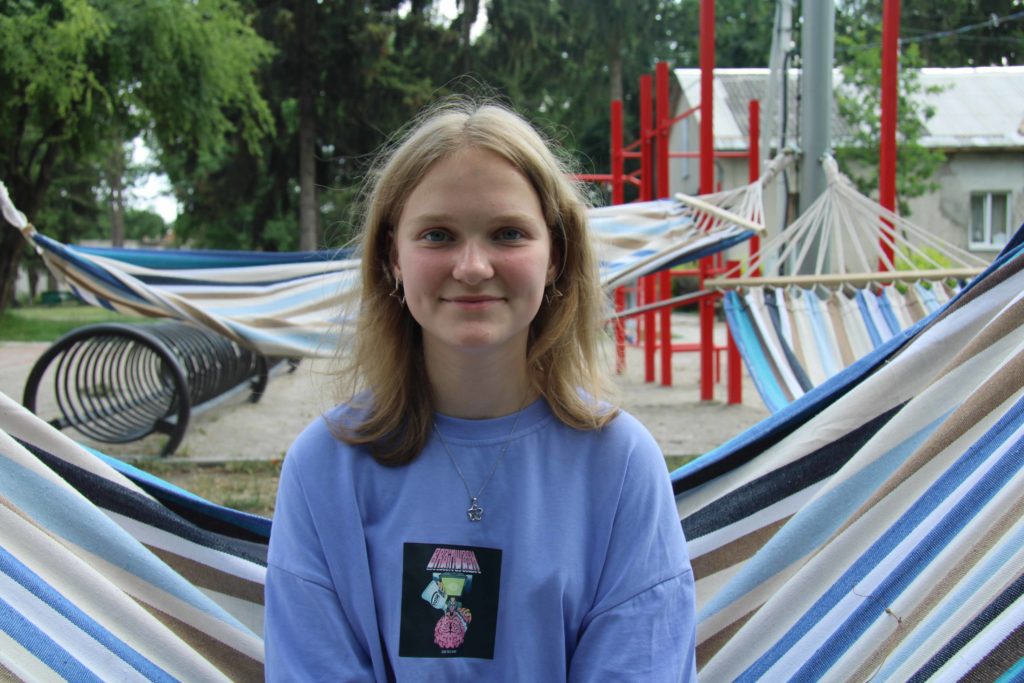
For 14-year-old Viktoria, Russia's war of invasion against Ukraine turned her life upside down. But with the help of Erikshjälpen, Viktoria can dream of one day being able to return home again.
For the past year, 14-year-old Viktoria has been living with her mother, father and older sister in a one-room modular house in the Ukrainian city of Irpin. Before the war, the family lived in an apartment in Irpin, but everything changed one morning at the end of February 2022 when the family was woken up by loud explosions after Russia started its war against Ukraine and fierce fighting broke out in Irpin.
- It was very scary. We rushed to a shelter where we spent a day and a night," says Viktoria.
The next day, the family was evacuated from the city. All but the father then made their way to Poland.
- My father couldn't come with me. "All men under the age of 60 must stay in Ukraine to defend the country," explains Viktoria.
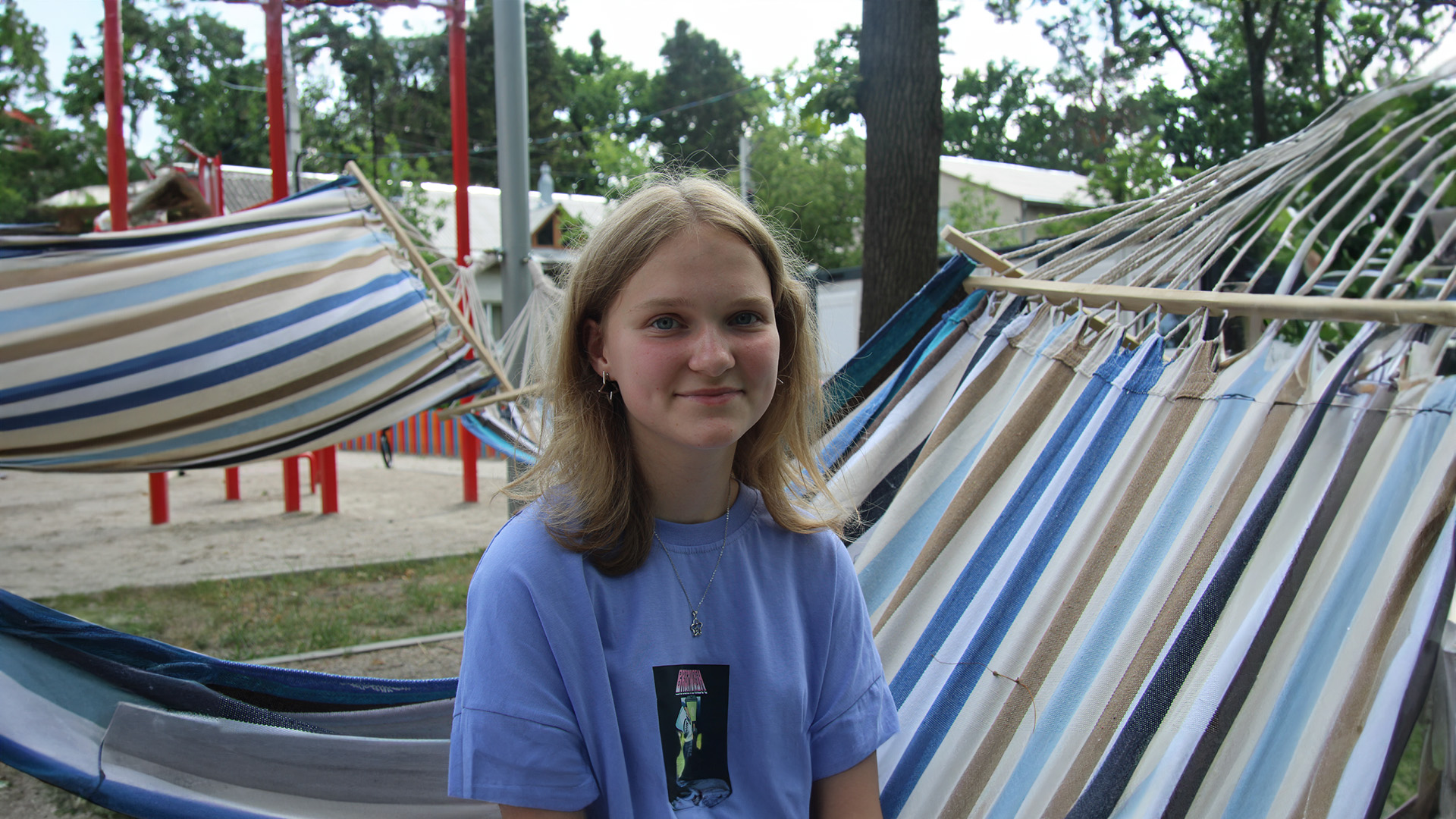
Viktoria, 14 years old. Photo: Bengt Sigvardsson.
Viktoria, 14 years old. Photo: Bengt Sigvardsson.
My dad couldn't come with me.
In early April, the Russian army withdrew from Irpin and Viktoria's family decided to return. They didn't want to stay in Poland because Ukraine is their homeland where they want to live. Before they returned, Viktoria knew that her family's house had been destroyed in a Russian attack.
- But when I returned here and saw it with my own eyes, I felt terrible. It was destroyed and black with soot. I was very sad," says Viktoria.
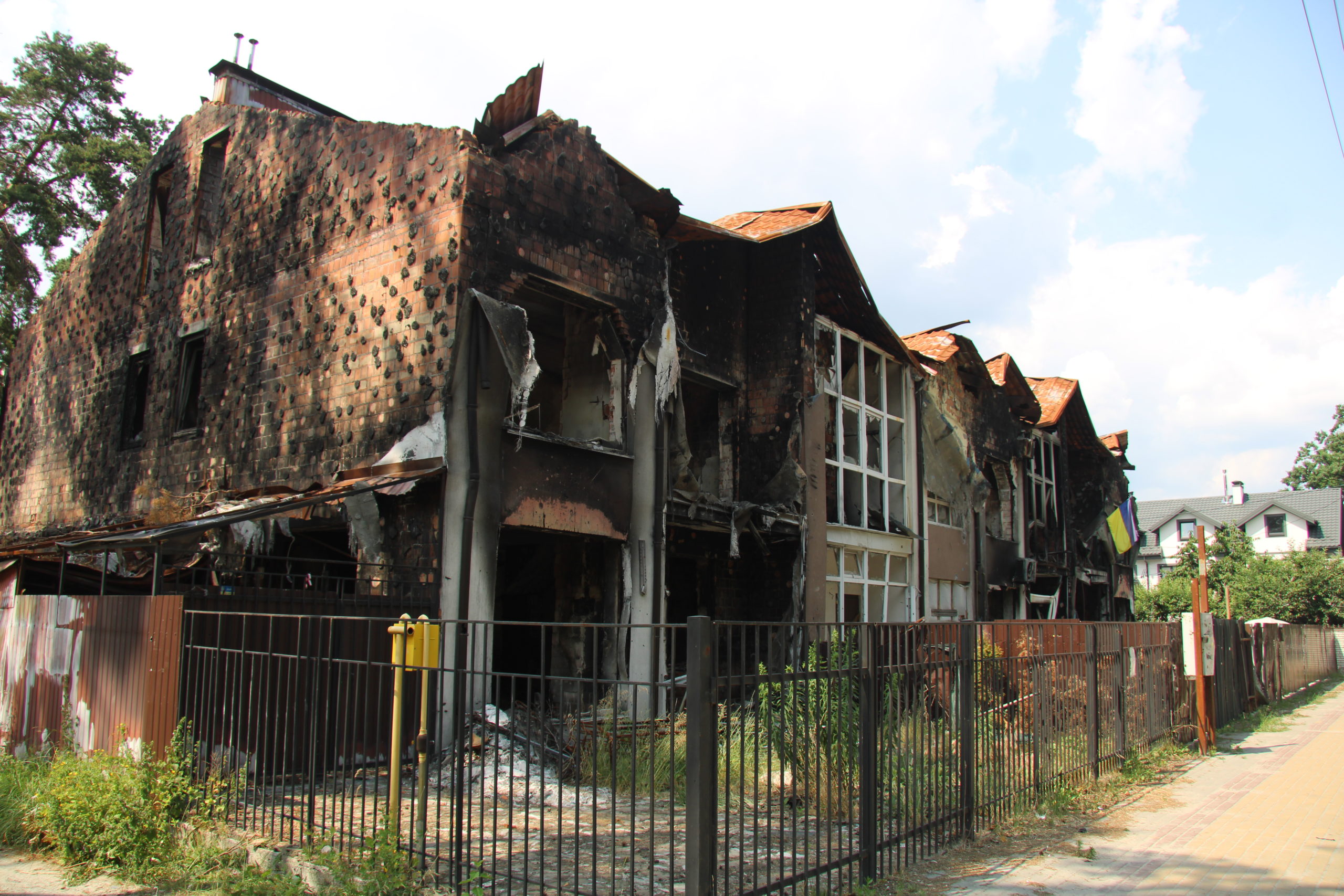
The house in the picture is not Victoria's but a similar one nearby. Photo: Bengt Sigvardsson.
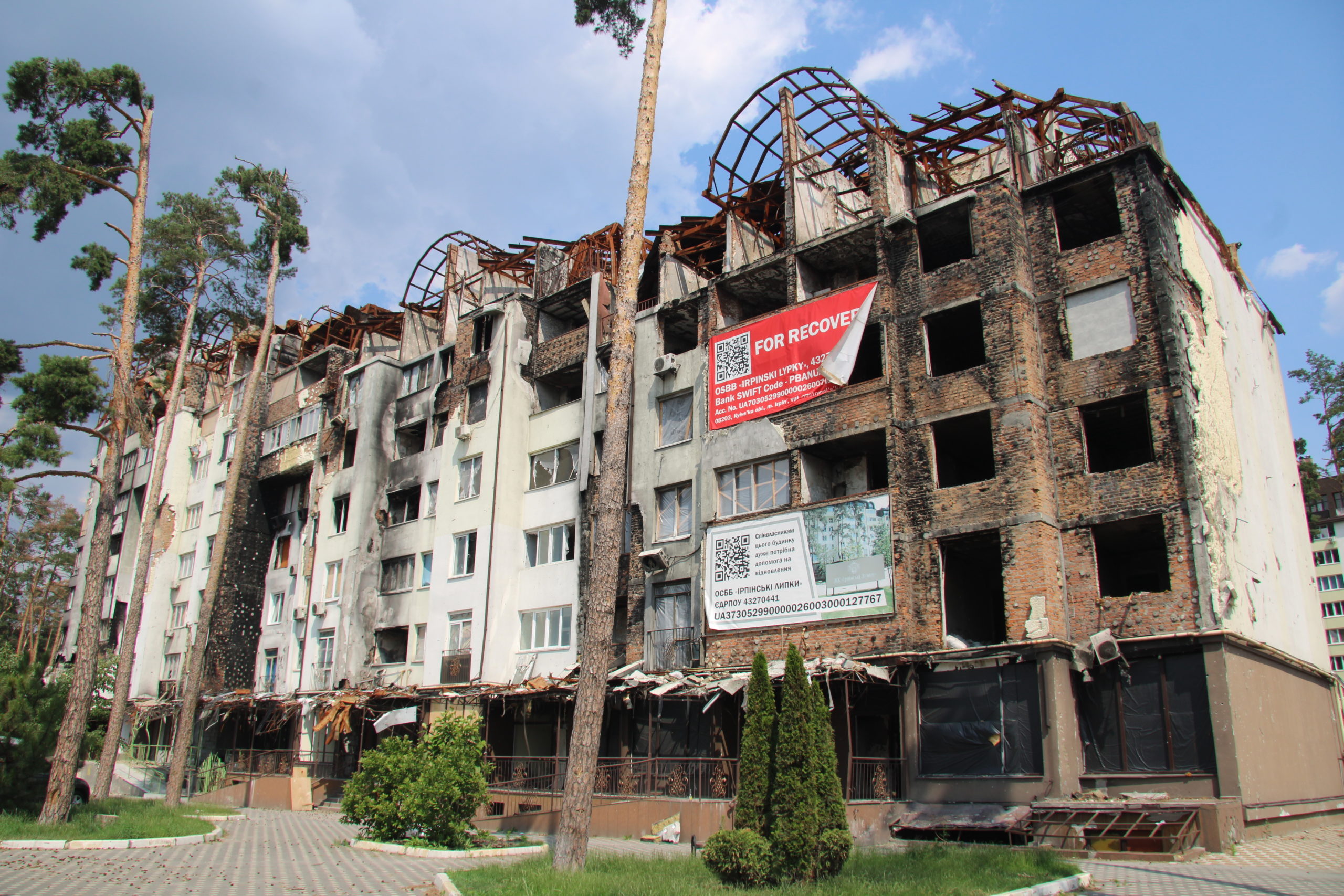
Irpin was brutally attacked by the Russian army during the first month of the Ukrainian War. Much of the settlement was destroyed. Photo: Bengt Sigvardsson.
The house in the picture is not Victoria's but a similar one nearby. Photo: Bengt Sigvardsson.
Irpin was brutally attacked by the Russian army during the first month of the Ukrainian War. Much of the settlement was destroyed. Photo: Bengt Sigvardsson.
Support from Erikshjälp's partner organization
Initially, the family stayed with relatives in Irpin, but in the fall of 2022 they moved into the room in the modular house that is now their home. The room is 13 square meters and the family shares a bathroom, toilet and kitchen with other IDPs.
- Our living conditions are completely different from how we lived before, but I've gotten used to it. Now it feels okay," says Viktoria.
She goes to school in Irpin and in her spare time she mostly hangs out with friends. Sometimes life gets boring, but on this day Erikshjälpen's Ukrainian partner organization WCU has been visiting and had social activities. Viktoria has participated in them with some other children and young people. During the activities, the children get the opportunity to process traumatic experiences while having a fun time.
- I love it when volunteer organizations come here and do activities with us or give us presents. For Christmas and New Year last year, we had to write Christmas wish lists. I wished for, and received, a power bank that I often use here," says Viktoria.
Give your Christmas gift to Victoria and other refugee children!
Helping more refugee children to live in safety.
Swisha a Christmas gift
900 92 83
Dreaming of lasting peace
Electricity is often lost in the 'modular city' because many power plants have been destroyed in bombings. The Russian army often fires missiles at Irpin, but the Ukrainian air force manages to destroy most of them in the air.
- The airplane alarm sounds quite often and then we have to run to the shelter. It's scary, but we've had to get used to it," says Viktoria.
Victoria usually reads or draws when she is scared. As an adult, she wants to be an artist.
- Now my greatest wish is for our house to be renovated so that we can move back home. I don't know when that will happen. It might take five years," she says.
Victoria believes, and hopes, that Ukraine will win the war and that there will be a lasting peace.
- Even though there is still a war going on, I have high hopes for a better future," concludes Viktoria.
Although there is still war, I have high hopes for a better future.
A humanitarian crisis in Ukraine
Since Russia's invasion of Ukraine on February 24, 2022, UNHCR estimates that 6.3 million Ukrainians have fled abroad and more than 5 million are living as internally displaced persons. In addition to the large number of refugees, UNHCR estimates that over 17 million people are in urgent need of Humanitarian Assistance.
Author: Bengt Sigvardsson
Emil Andreasson, 17, from Skövde , has a passion for music and is releasing a jazz album, with all proceeds going to the children's rights organization Erikshjälpen.
Erikshjälpen's work for children's rights is something I really want to support.
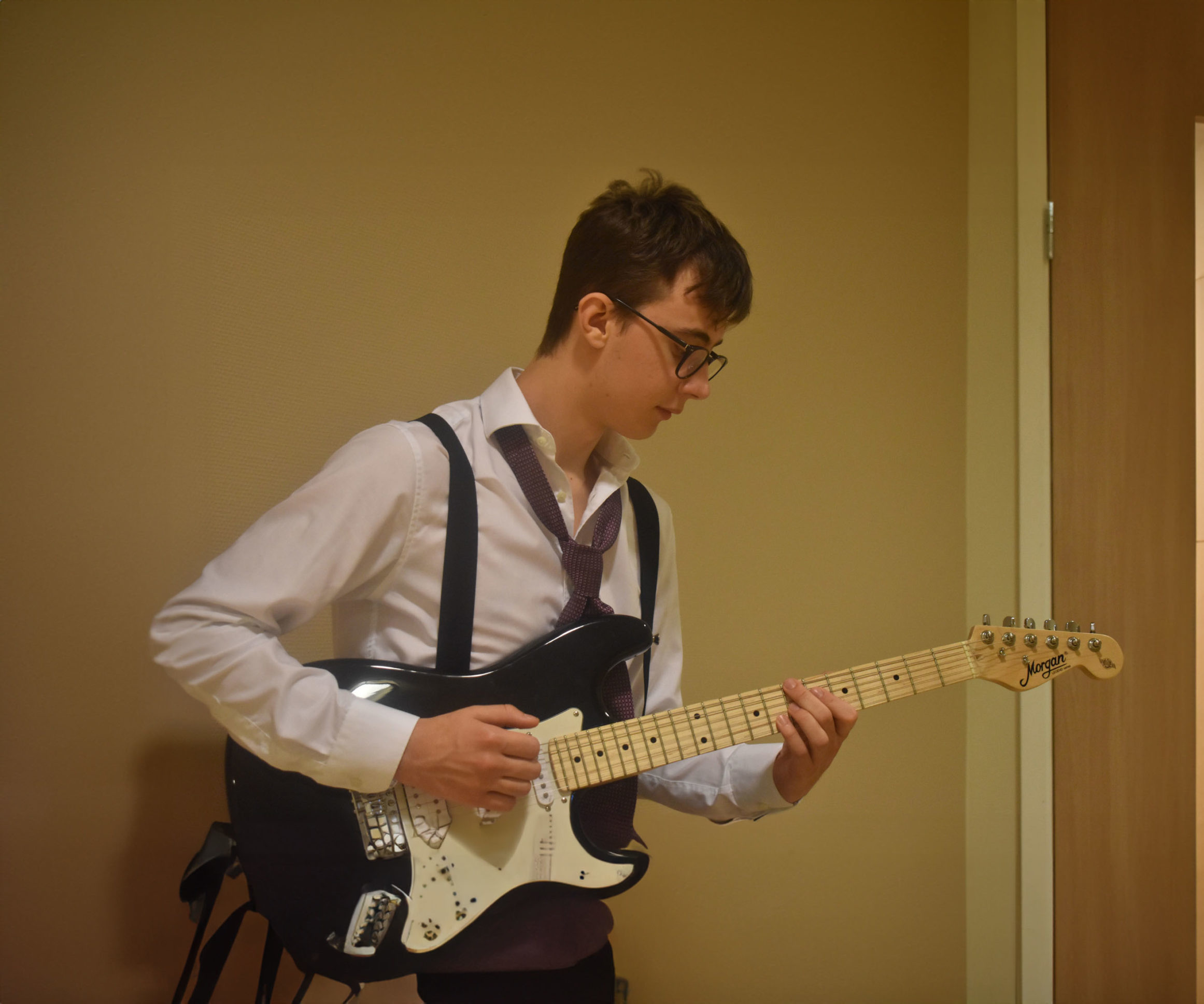
Emil himself wrote and produced all the songs on his EP. Photo: Kajsa Carlén
Emil himself wrote and produced all the songs on his EP. Photo: Kajsa Carlén
- I wanted to do something meaningful and music is something I know. I chose Erikshjälpen because I know that the organization does good work for children, says Emil.
Emil Andreasson is a second-year music student at Olinsgymnasiet in Skara. Together with some musician friends, he will release a music album called "A warm feeling" on November 18. The music album is an EP, short for "extended play", which is an album containing fewer songs than a full-length album but more than a single.
- "It's traditional jazz, with a focus on so-called 'dinner jazz', a little more accessible jazz that everyone can listen to," says Emil.
It feels good to do something for the children.
Emil was inspired to make his EP after spending a lot of time as a child at the local “ Erikshjälpen Second Hand ” store in Skövde. All proceeds from the album will go directly to Erikshjälpen’s children’s rights initiatives.
- I was often at Gengåvan, Erikshjälpen, with my grandmother, I thought it would be fun to do something for them, he says. "All aid organizations are important, but Erikshjälpen's work for children's rights is something I really want to support.
The fact that it became a jazz album is simply because it is the kind of music that Emil listens to and plays himself. He produced all the songs himself and also plays guitar and piano on some of them. He is helped by a group of classmates who have contributed with trumpet, piano and vocals.
The album will be ready and released on Spotify and other music services on November 18. Emil hopes that it will raise a lot of money for Erikshjälpen's activities.
- You never know how things will turn out, but it feels good to do something for the children.
A warm feeling
Emil Andreasson - guitar, producer, songwriter
Isak Andersson - trumpet
Hugo Wejshag - piano
Lina Sito - electric piano solo
Ishak Vizlin - mixer
Kajsa Carlén - photographer
Simon Strålman - editor of the album art
Author: Lena Elf
In Bangladesh, it is a national problem that many people do not have access to sanitary toilets. Through a children's club, which Erikshjälpen supports, they have gained better knowledge of personal hygiene, which has contributed to better health.
She is called a "hygiene hero"
Afsana Khatun is 13 years old and lives in an area called Pargobindopur Abashon in Bangladesh. In the community, Afsana has been given the title of "hygiene hero". Through the children's club that Erikshjälpen supports, she has learned about personal hygiene. Afsana now teaches her knowledge to family and friends, which has led to improved health for everyone around her.
Before I joined the kids' club, I didn't have much knowledge about hygiene. We often got sick in the family but nobody really did anything to improve the situation.
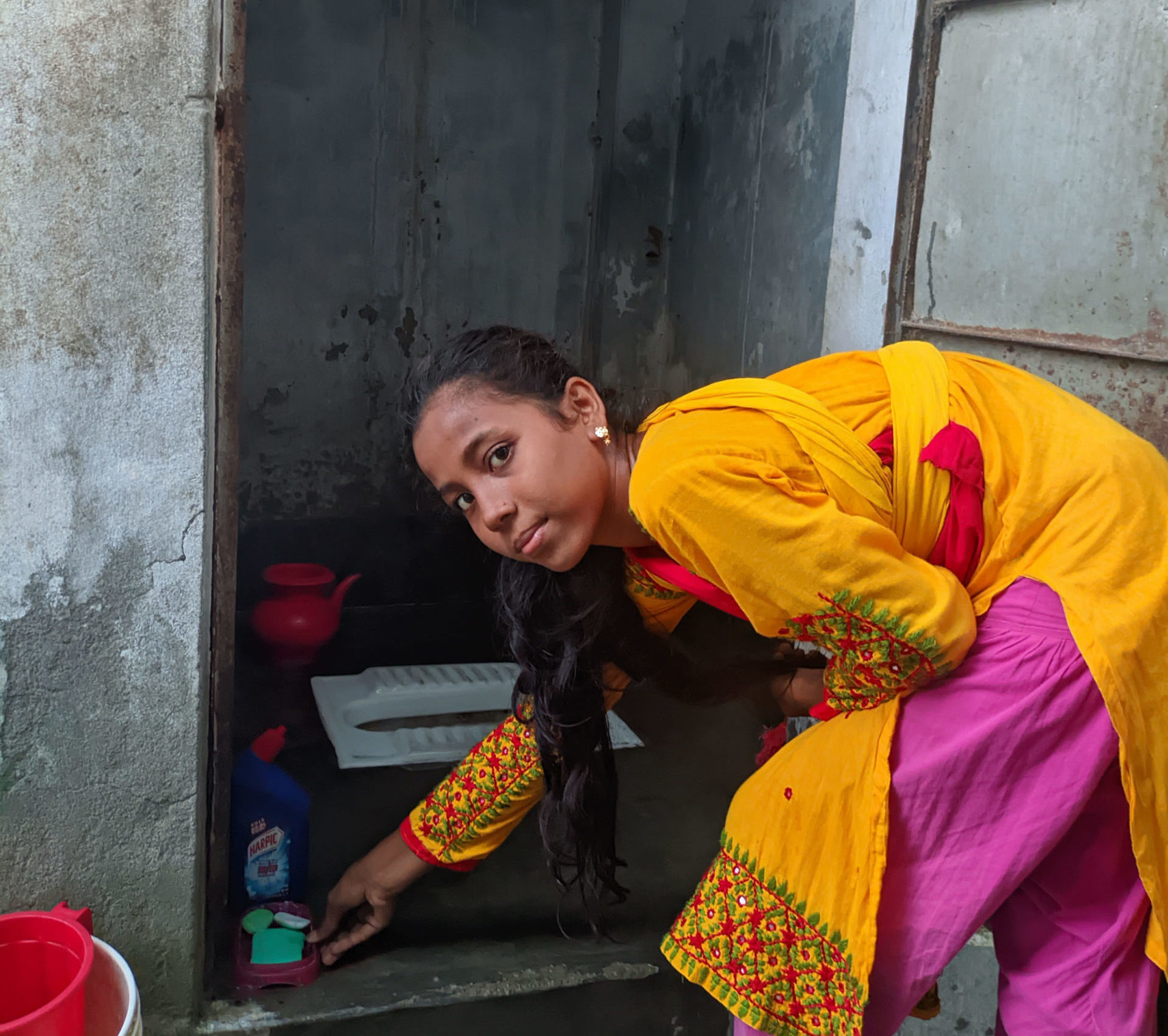
Afsana Khatun keeps her toilet hygienic.
Afsana Khatun keeps her toilet hygienic.
Diseases spread easily
Apart from the fact that few people in the country have access to sanitary toilets, there is also a lack of understanding about how to dispose of waste safely. As a result, diseases are spread through contaminated waterways where garbage is dumped, and despite government interventions , progress is too slow. That is why it is important that children, like Afsana, become advocates for good hygiene.
At the kids' club, they talk about the importance of washing often with soap and brushing your teeth every day. They have also talked about small things you can do in everyday life to keep things clean around you. For example, wearing different slippers in the toilet than the ones you wear at home.
Fewer people get sick
It is Afsana's persistence and knowledge that means those in the village are now seeing an improvement with fewer people falling ill. All thanks to her teaching people about the importance of good hygiene.
I feel proud when I am called a hero. It motivates me to continue contributing to society.
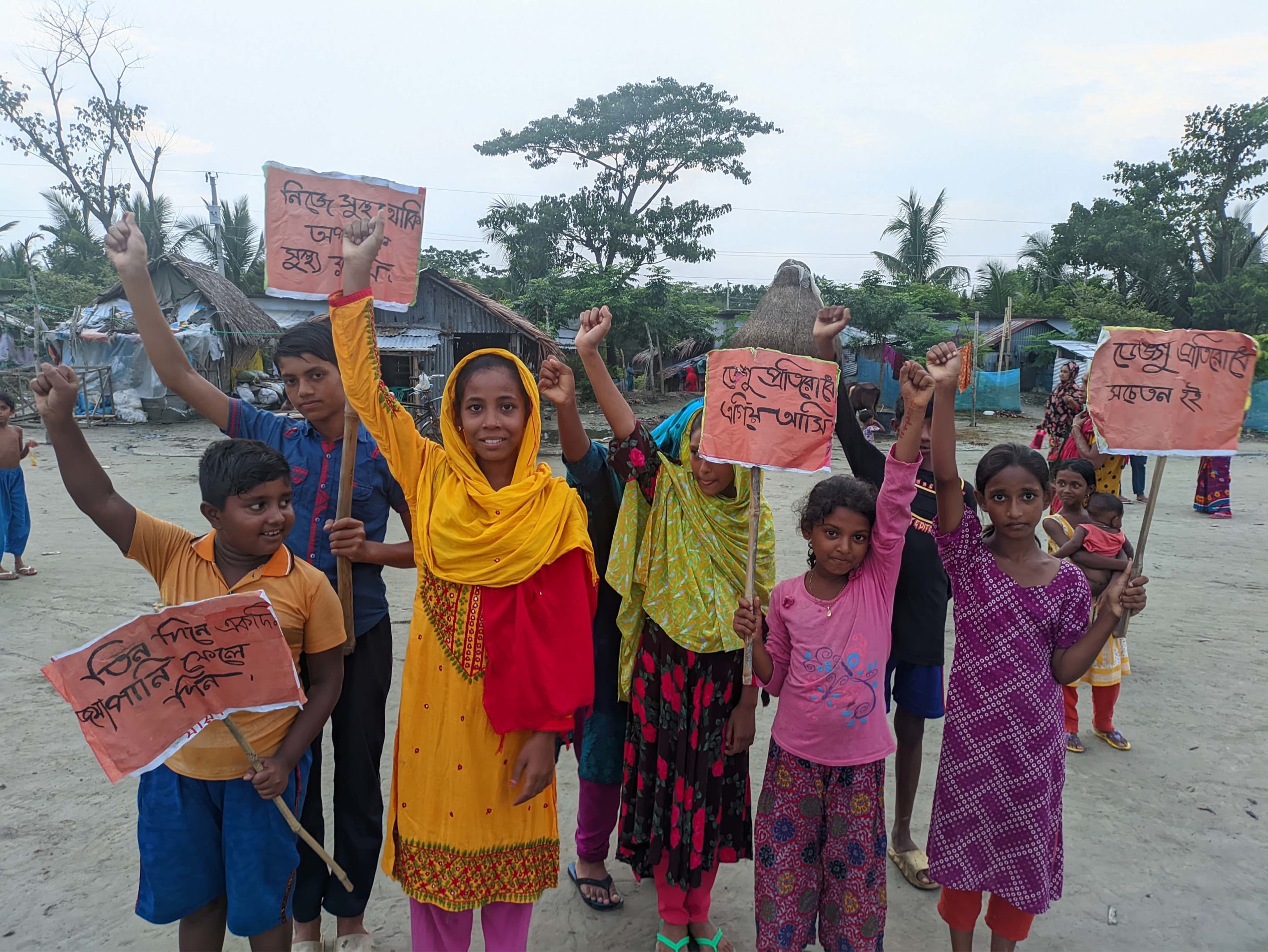
Through the Kids Club, more people learn about personal hygiene.
Through the Kids Club, more people learn about personal hygiene.
Your contribution creates heroes like Afsana!
Author: Anton Eriksson
In a joint opinion piece, Erikshjälpen and the World Childhood Foundation write about new reports confirming the risks of growing up in orphanages.
The harmful effects of orphanages have long been known. Children in institutions are at greatly increased risk of violence and abuse, and they often carry trauma and attachment problems with them throughout their lives. These children are also at increased risk of criminality, substance abuse and mental health problems. Orphanages are simply not a safe place for children.
Up to 90% of children in institutions around the world have a parent alive. Often, it is poverty or other social traumas that lead to children being placed in orphanages. More and more countries are now choosing to close down orphanages and invest in support services so that children can grow up in families. Despite this, the idea that orphanages are good for vulnerable children persists. Donations from Sweden and other countries continue to flow in, when the needs are actually quite different.
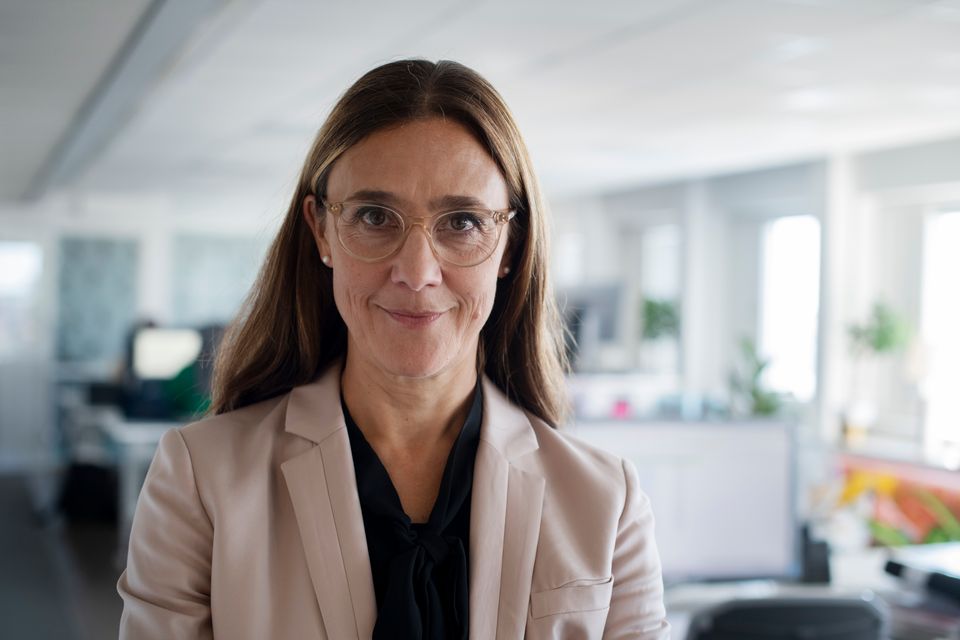
Paula Guillet de Monthoux, Childhoood
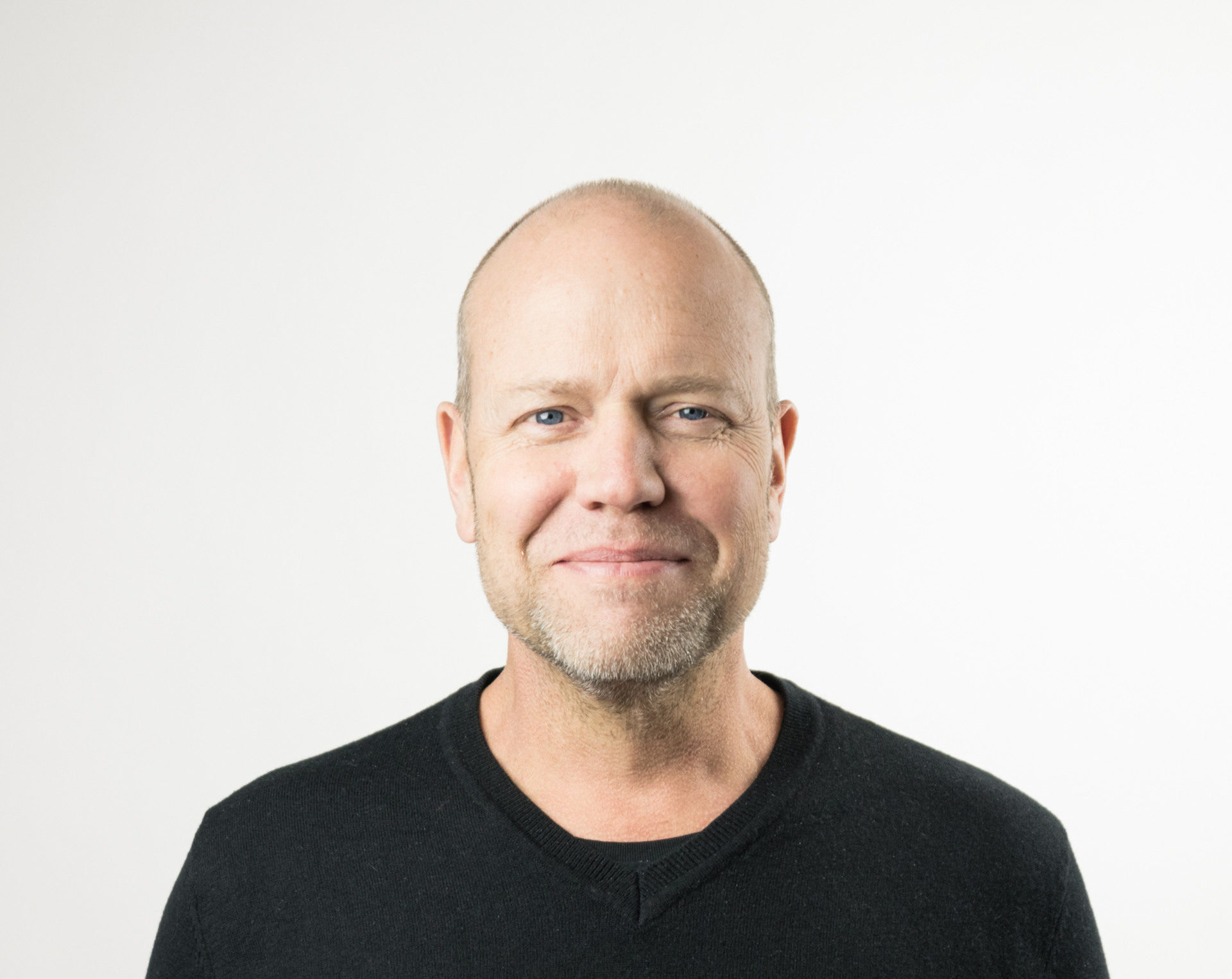
Daniel Grahn, Erikshjälpen
Paula Guillet de Monthoux, Childhoood
Daniel Grahn, Erikshjälpen
Erikshjälpen, together with the World Childhood Foundation, works to spread knowledge and create debate about how children are affected by growing up in orphanages and encourage a commitment to more sustainable alternatives.
Read our debate article in Aftonbladet here: Stop Donate money to orphanages, Swedes
Around the world, girls receive little or no education. That is why Erikshjälpen highlights the important work done in collaboration with the Postcode Lottery to improve girls' opportunities.
October 11 is International Day of the Girl Child. On this day, like all other days, Erikshjälpen wants to draw attention to the situation of girls in the world and emphasize the power of education as a tool for change. Today, more than 600 million girls receive little or no education. There are many reasons why girls around the world are forced to drop out of school, but poverty is often a root cause.
Girls are missing out on education
- For girls, it can also mean that they are married off very young, so that the family does not have to support them. The girl's value lies in being a virgin, and the younger she is, the more likely she is to be a virgin," says Marianne Stattin-Lundin, program advisor at Erikshjälpen.
Forcing girls to drop out of school may also be related to the environment in and around school. The route to school can be long and unsafe, with the risk of being subjected to various forms of abuse. Many girls also miss part of their schooling because they stay home during periods.
- "Menstruation is often a problem because sanitation at school is poor and girls feel uncomfortable, causing them to stay at home," says Marianne Stattin-Lundin.
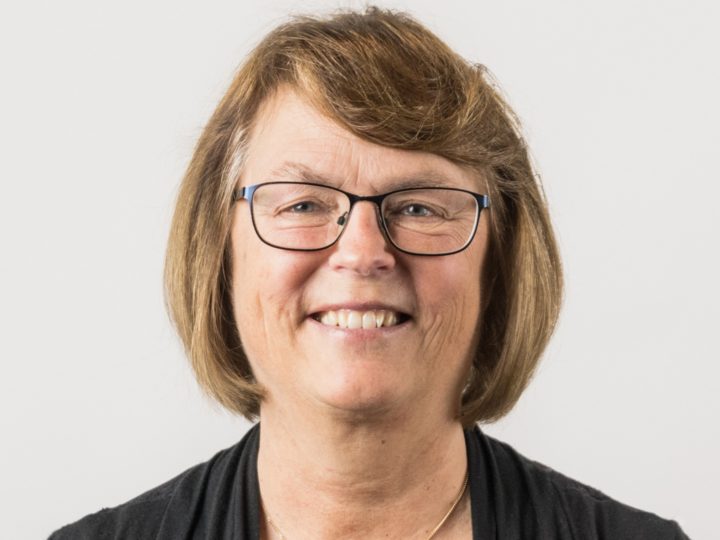
Marianne Stattin-Lundin
Poverty means not being able to afford school supplies or school uniforms. Parents also cannot 'afford' to spare the income their daughters contribute, for example by looking after younger siblings, taking care of the household when their parents are working, or the girls having other jobs
Keya is now back in school
Keya, a 14-year-old from Bangladesh, was forced to drop out of school when her father passed away. Instead of going to school, she had to take responsibility for the household and her younger siblings while their mother was at work. The school she attended was far away, the road to it was unsafe and once at the school, teachers used violence against students when they thought they were talking too much. Keya's dream has always been to become a doctor and now she dares to dream about it again.
With the support of the Postcode Lottery and Erikshjälpen's donors, a new school has been built that is just five minutes from Keya's home. The teachers there are supportive and Keya and her friends have the opportunity every day to continue to be curious and deepen their studies. At the school, the students are challenged to get involved in children's rights in various activities. The school has special separate toilets, precisely so that the girls feel safe at school even when they are menstruating. The girls have also been given access to sanitary pads.
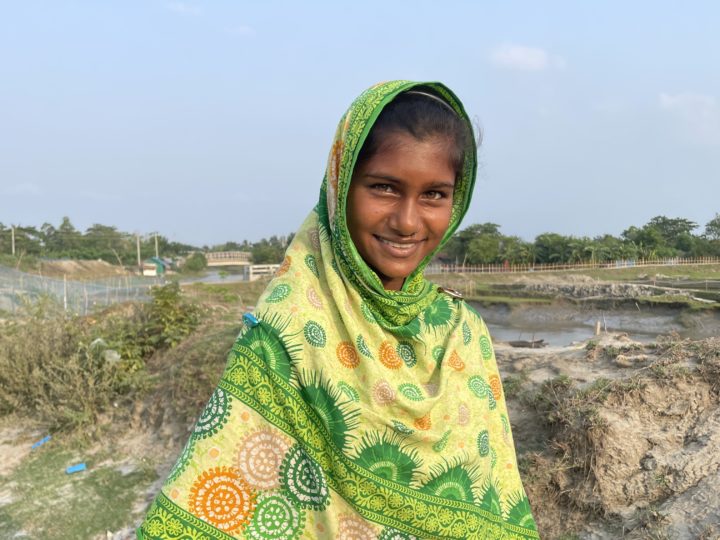
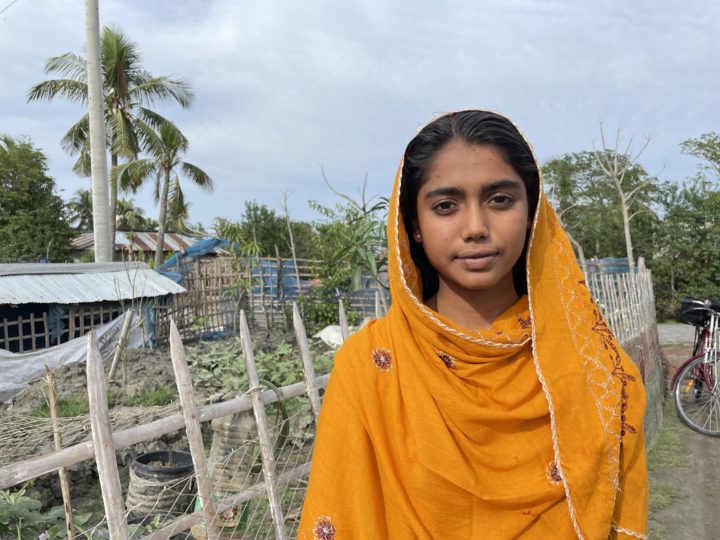
Keya, 14 years old
If it hadn't been for school, I would probably have been married off, had to work or stayed at home to help the family instead
Suraeya escaped being married off
According to the United Nations Educational, Scientific and Cultural Organization (UNESCO), one in five girls in the world is at risk of being married off. 17-year-old Suraeya, also from Bangladesh, escaped child marriage thanks to the knowledge and courage to stand up for her rights. Through the meetings at the children's center that Erikshjälpen supports, she has learned more about her rights. There, together with her friends, she has also learned and practiced how to raise their voices and express their opinions. There they have understood that they have the right to participate and influence their future.
Suraeya, 17 years old
I almost got married off. My parents wanted it, but I didn't want it. I talked to my friends and got support from adults at the children's center. They took the initiative to stop it.
Supporting work for girls' rights
Suraeya was brave and had many people supporting her. Her sister, on the other hand, was married off at the age of 13. Now Suraeya has only one year left in the local school, her dream is to become a fashion designer.
You can support the work for girls' rights by making a donation. Contribute to Erikshjälpen's work here:
Give a gift to education and leisure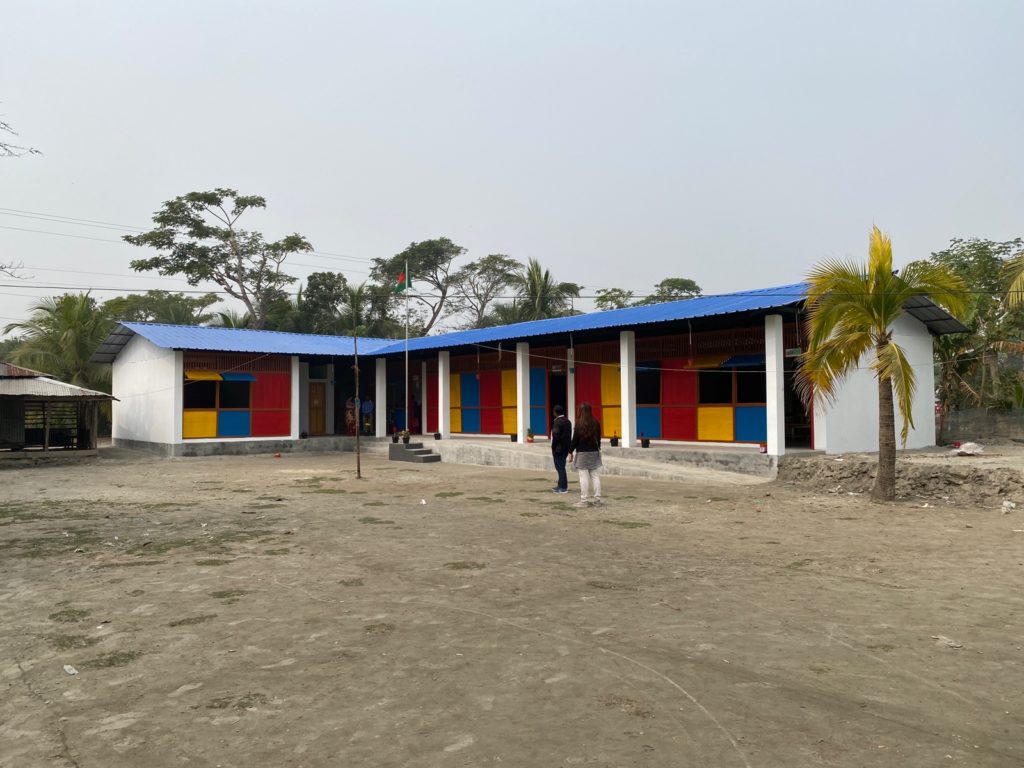
Postcode lottery initiative for girls' right to education
You can also read more about the situation of girls in the world and the Swedish Postcode Lottery's initiative for girls' right to education, of which Erikshjälpen is a part, here
We are in a global education crisis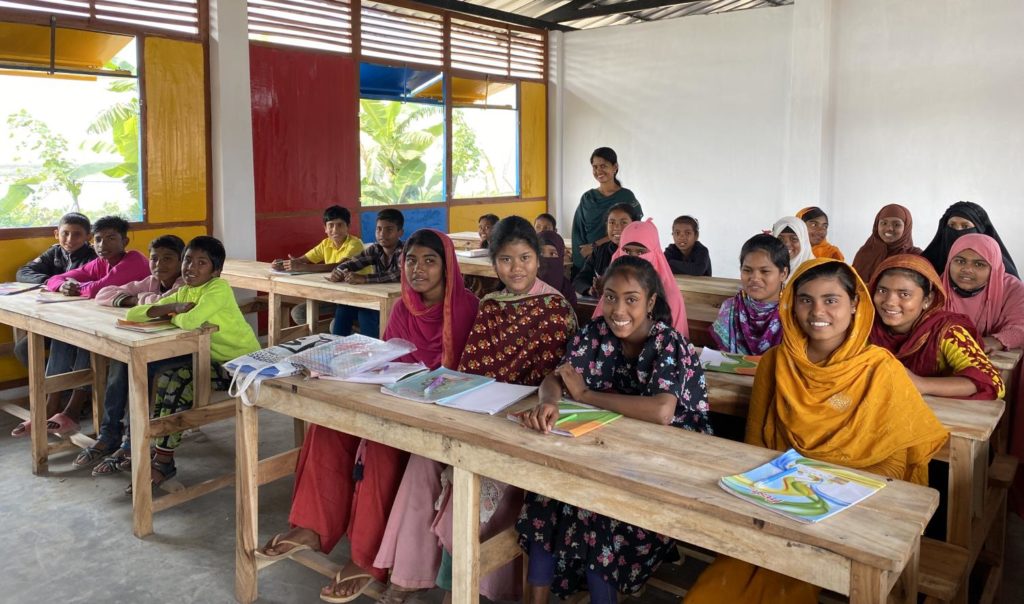
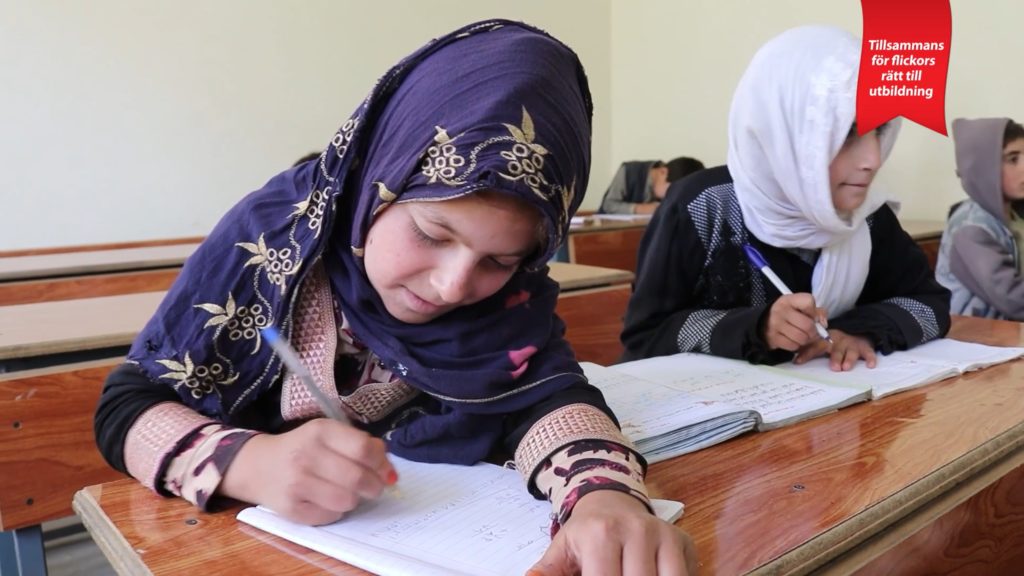
Thank you to those who support Erikshjälpen's work and to those who, through lottery purchases, help to improve the situation of girls. You are helping to ensure that children like Keya and Suraeya get an education and can dream of a better future.
Author: Frida Vingren
Once again, Världens Barn has raised money for children's rights all over the world and this year Erikshjälpen has also contributed in its own way.
For 26 years, Radiohjälpen's fundraising campaign Världens Barn has raised funds to help children in vulnerable situations around the world. For 24 of these years, Erikshjälpen has walked along the side of the fundraising campaign and donated a day's takings from all Second Hand shops and e-commerce to the fundraising campaign. For the fourth year in a row, Erikshjälpen is also breaking records for its fundraising with more than 3.7 million Swedish kronor (SEK) for the benefit of Världens Barn.
This would not have been possible without the great commitment that exists in all our stores for Världens Barn. So many nice local elements to support the collection have occurred around our stores and secondhand.se
On Saturday, October 7, there was great engagement with various activities in Erikshjälpen's Second Hand shops. Children and adults alike flocked in for everything from sausage grilling and face painting to bargain shopping in the store or to have a cinnamon bun in Uncle Erik's café. The joy and warmth were great this day as all purchases went to the collection and the children had a pleasant time.
Tens of millions doubled
The collection for Världens Barn continues throughout the year, but during the campaign week, week 40, the collection reached a high note. During the TV gala, which took place on Saturday, the result rose to 72 million Swedish kronor (SEK). Already the next day, the sum had reached 77.6 million Swedish kronor (SEK).
This year's campaign is also special because the charity organization Akelius Foundation is doubling the donations that come in until 31 October. This makes it possible for more children to take part in the projects and interventions that Erikshjälpen, among others, is doing with its share of the funds raised.
Erikshjälpen's involvement in radio and TV
Erikshjälpen, one of 13 aid organizations participating in the collection, has been seen and heard in several places during the collection campaign.
P4's reporter Lasse Persson was on site in Cambodia at Erikshjälpen's partner to take part in what is done with some of the money collected and what difference the money makes in the lives of children. Listen to some of the features that were made.
Working to stop violence against students: "Their dreams will come true"
P4 Extra The feature with Lasse Persson about Erikshjälpen runs between about 20:20 - 24:40 in the broadcast.
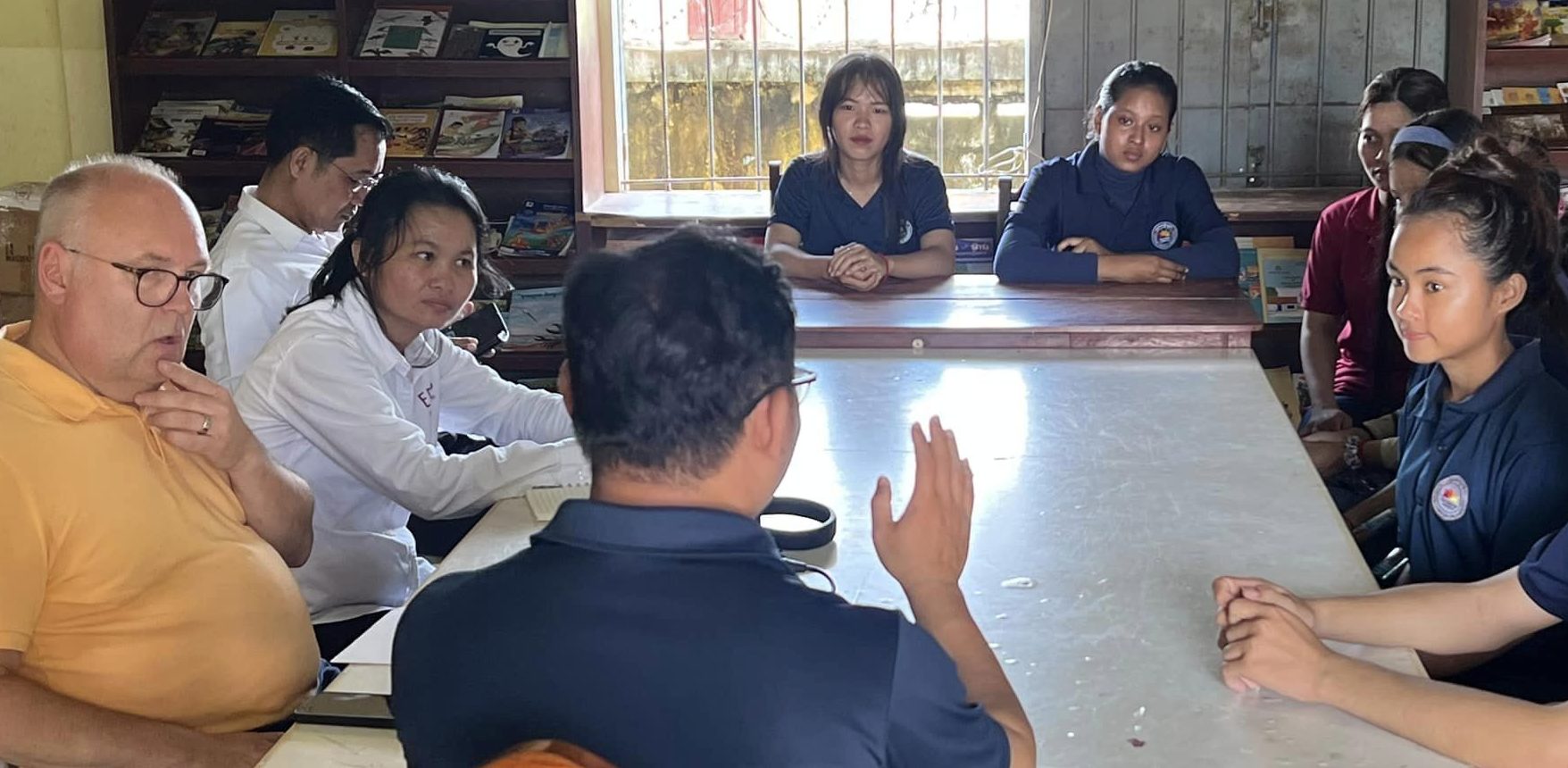
Lasse Persson, left, during the visit to Cambodia.
Lasse Persson, left, during the visit to Cambodia.
Erikshjälpen's Secretary-General Daniel Grahn participated in the TV broadcast and talked about Erikshjälpen's work, where a film from the operations in Ukraine was also shown.
Together for the Children of the World Daniel Grahn and Erikshjälpen are on air between 43:20 and 55:20.
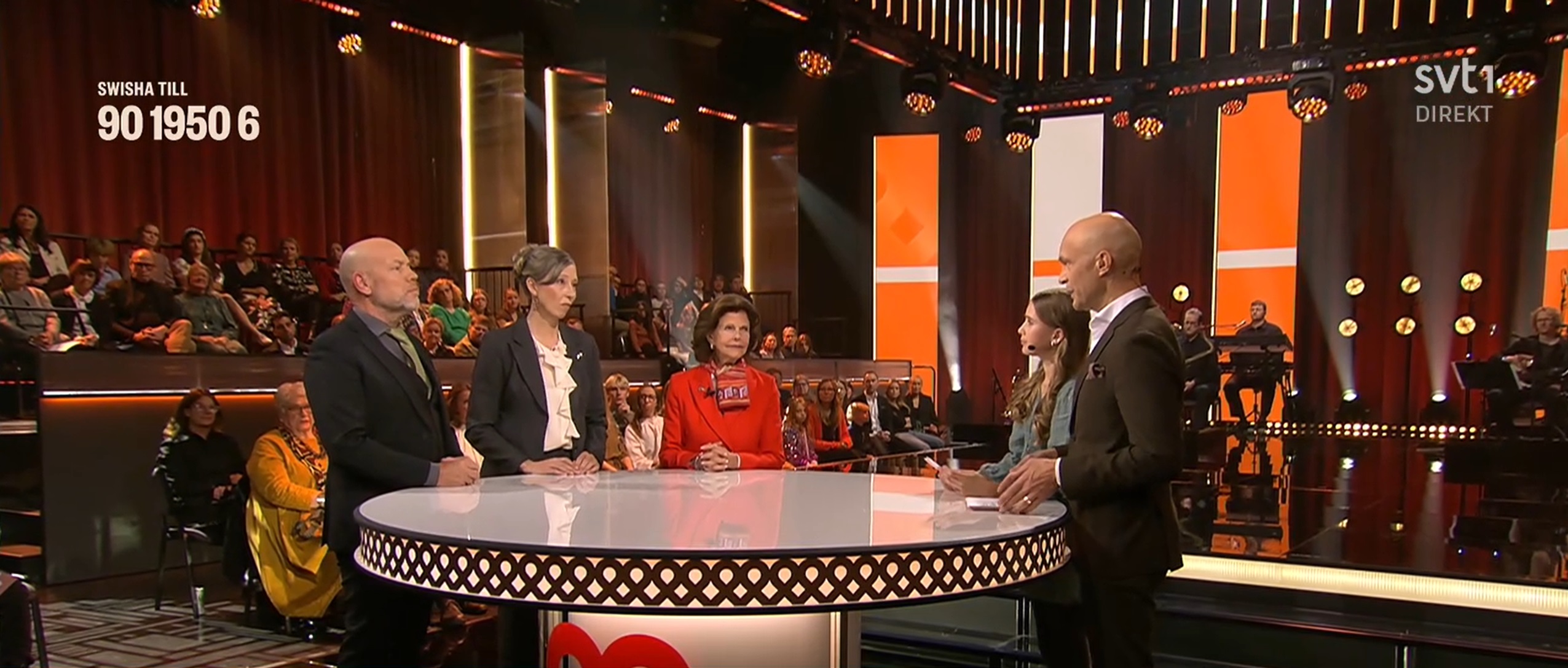
Daniel Grahn, far left, in the SVT broadcast.
Daniel Grahn, far left, in the SVT broadcast.
The world's biggest thank you to you who contributed to Erikshjälpen being able to give over 3.7 million Swedish kronor (SEK) to the collection for Världens Barn. Together you are making a difference for children. And the world they dream of.
Author: Anthon Talhaug

On the Day of the Convention on the Rights of the Child, Monday, November 20, from 1:00 p.m. to 5:00 p.m., Erikshjälpen is organizing a conference on children’s rights in collaboration with Jönköping ’s University, and the Jönköping County Administrative Board. “How can we create equal conditions for all children to grow up in?” is the question the conference will focus on.
All children are equally valuable and should have the same rights. At the same time, the recommendations of the UN Committee on the Rights of the Child show systematic shortcomings in Sweden regarding the integration of a child rights-based approach and child participation.
At the children’s rights conference in Jönköping , Children’s Ombudsman Elisabeth Dahlin, researcher Frida Lygnegård, and children’s rights consultant Åsa Ekman will focus on children’s right to safe and equitable conditions for growing up. Together with expert panels, they will discuss what Sweden needs to do better to implement the UN’s recommendations, as outlined at the United Nations Convention on the Rights of the Child.
Programme Children's Rights Conference 20 November 2023
Date: November 20, 1:00 p.m.–5:00 p.m. (networking and mini-expo 12:00 p.m.–1:00 p.m.)
Location: Auditorium at the School of Learning and Communication, Jönköping University, Gjuterigatan 5, 553 18 Jönköping.
Registration: The deadline for registration is November 10, 2023. Registration is done via registration form
Last Friday, September 29, the start of this year's fundraising week for Världens Barn took place. For 22 years now, Erikshjälpen has been involved in donating a whole day's worth of money to the collection and this year is no exception.
Världens Barn is Radiohjälpen's fundraising for all children's right to safety, health and school. The fundraising is done in collaboration with Swedish Television, Swedish Radio and 14 civil society organizations, including Erikshjälpen.
For Erikshjälpen, it is a matter of course to contribute to the collection for Världens Barn. Since 2000, Erikshjälpen has contributed in a unique way, namely by donating an entire day's takings from all second-hand shops. Last year, the sum amounted to more than 3.4 million Swedish kronor (SEK).
This Saturday, October 7, you have the opportunity to contribute to the collection by shopping in one of Erikshjälpen's second-hand shops. That's when we donate the entire day's cash! Many stores will also have extra activities.

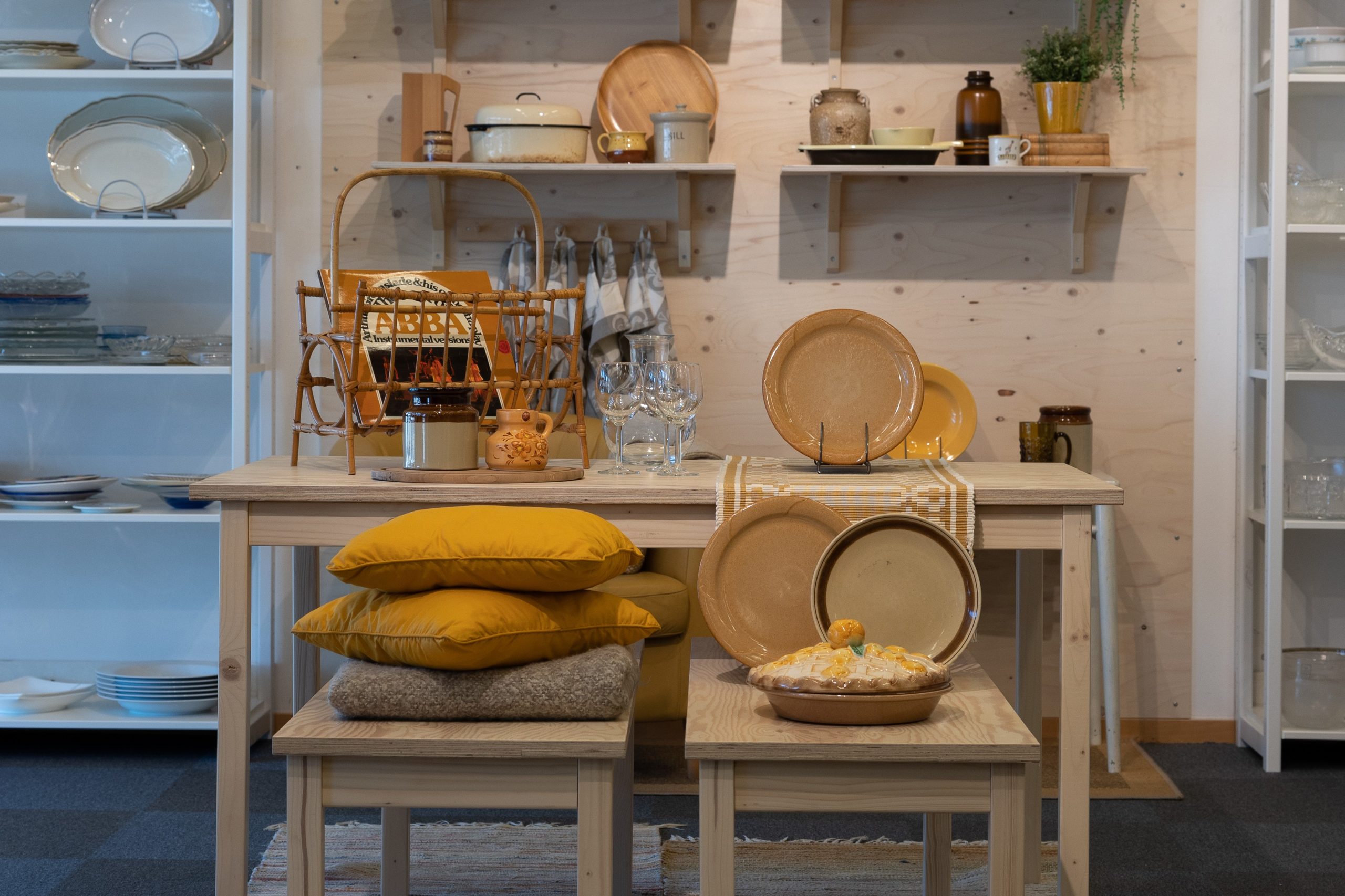
And this year, your action is more important than ever. The charity Akelius Foundation will contribute by doubling the money raised for Världens Barn until October 31. So every krona raised is two Swedish kronor (SEK) until then.
On the Världens Barns website you can read more about what the money from the fundraising goes to. The common goal is to raise money for projects around the world to promote children's rights.
The money is enough, varldensbarn.se
Each organization that participates has a special project that is highlighted each year. This year, Erikshjälpen is highlighting a project in Cambodia to help children grow up without violence. In particularly vulnerable areas of Cambodia, violence is part of everyday life, mainly due to poverty and ignorance. There, Erikshjälpen provides support in schools and in parent clubs that make a difference for children to grow up in a world without violence.
Read about Erikshjälpen's project here: A childhood without violence
Author: Martina Bohl
 Listening