In the fall budget, the government is making significant cuts to Sweden's international aid, removing an additional SEK 3 billion per year from 2026-2028.
- As a child rights organisation , Erikshjälpen is deeply concerned about the decisions that are now being made for aid policy, says Mattias Ingeson, Secretary-General of Erikshjälpen. The government is once again backing away from its global responsibility. Further reducing aid means that Sweden will most likely not be able to meet its international commitments. Only a small part of the global goals are expected to be achieved by 2030.
The cuts are visible in area after area. Climate, peace work, aid, gender equality, trade and not least daring to demand that Corporate take responsibility for human rights.It is now more important than ever that Erikshjälpen continues to work in the hard-hit countries that the government chooses to leave to their fate.
As a child rights organisation , Erikshjälpen is deeply concerned about the decisions now being made for aid policy.
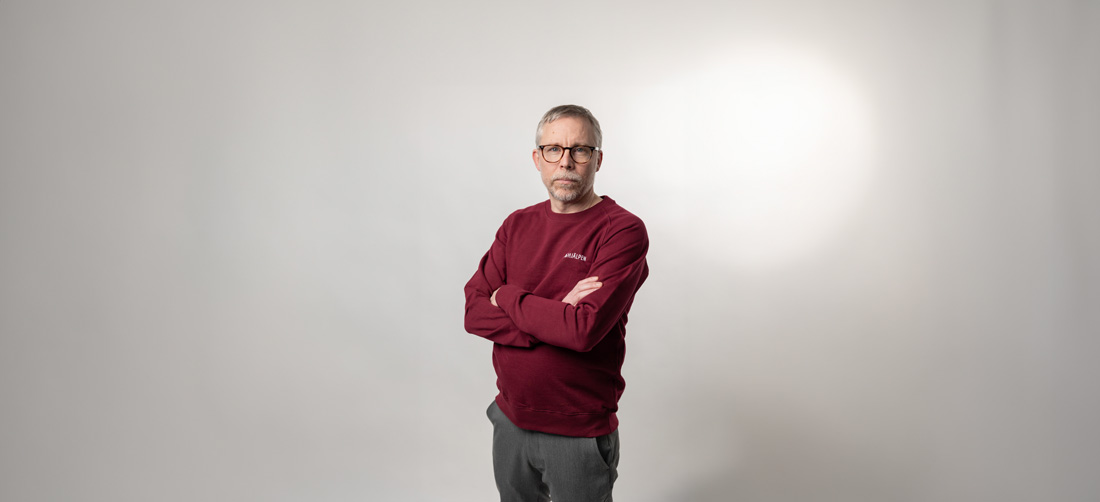
Mattias Ingeson, Secretary General of Erikshjälpen
Mattias Ingeson, Secretary General of Erikshjälpen
New government decision for Sida support
In the same week as the autumn budget was presented, the government also decided on a new strategy for support to civil society (the CIVSAM strategy). The strategy is valid between 2025-2029 and it is through this that Erikshjälpen and other civil society organizations receive support for their activities.
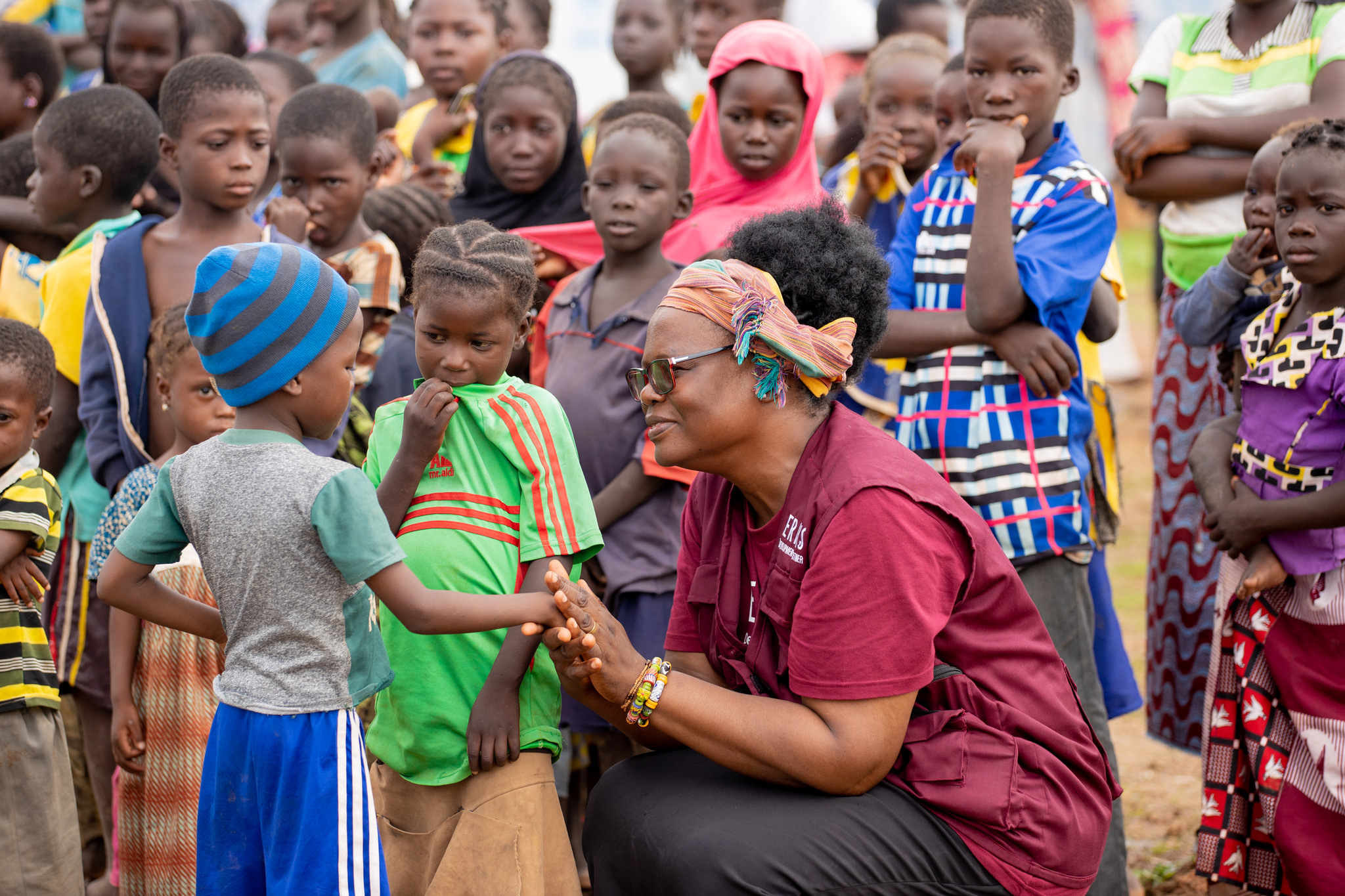
The situation in Burkina Faso is one of the world's most forgotten conflicts. The country is one of those that the Swedish government is leaving, but where Erikshjälp's interventions continue.
The situation in Burkina Faso is one of the world's most forgotten conflicts. The country is one of those that the Swedish government is leaving, but where Erikshjälp's interventions continue.
Erikshjälpen is cautiously positive about the new strategy. The government will continue to emphasize the rights of women and girls, an area that Erikshjälpen prioritizes in many of its interventions. An area that Erikshjälpen prioritizes in several of its interventions. The following lines also give hope for the future:
"It is by investing in the younger generation that aid can help lay the foundations for longer-term positive change in the welfare of poor countries. For this reason, attention should also be given to activities that include children, their experiences and life situations."
- "The doors for continued support to Erikshjälpen are still open," says Mattias Ingeson. "Now Sida can decide who will be allowed to apply for funding for next year and beyond. We hope for a positive decision within a few weeks.
We hope for a positive decision within a few weeks.
To go to school. Not to be married off. To have the opportunity to dream and to dare to believe that the best is in the future. It is the right of every child.
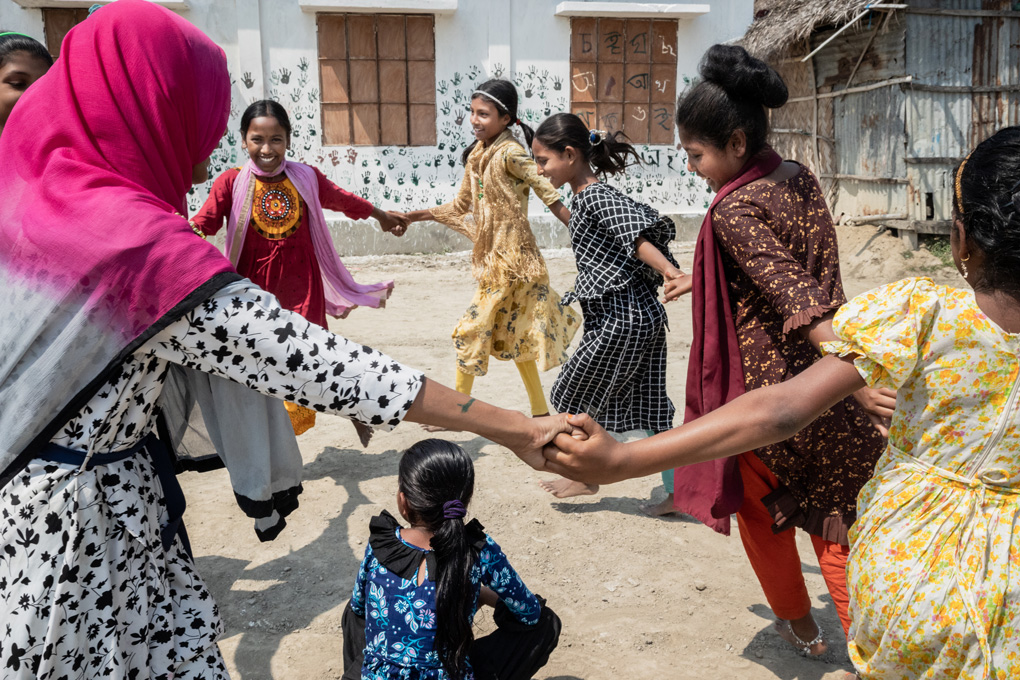
Today, there are 250 million children around the world who cannot go to school. Jannatul Ferdus, 11, is one of the children at the Pakkhali Education Center, an education center supported by Erikshjälp's donors. We are in southern Bangladesh, out in the countryside where the landscape is constantly changing and children's access to education is limited.
In the area of the Pakkhali Education Center in southern Bangladesh, there are around 500 families. Many of the children come here to receive remedial education and participate in various activities. There is also a parent group attached to the center. Few children here continue their studies beyond grade 5, but at the center they are supported to cope with school and prepare for further studies. Last year, eight children were helped to progress to secondary school.
Currently, 33 students are enrolled at Pakkhali Education Center, of which 22 are girls, grades 2-5.
- We get extra lessons and help with homework. But we also get to dance and sing and have fun together," says Jannatul with a smile.
We get extra tuition and help with homework.
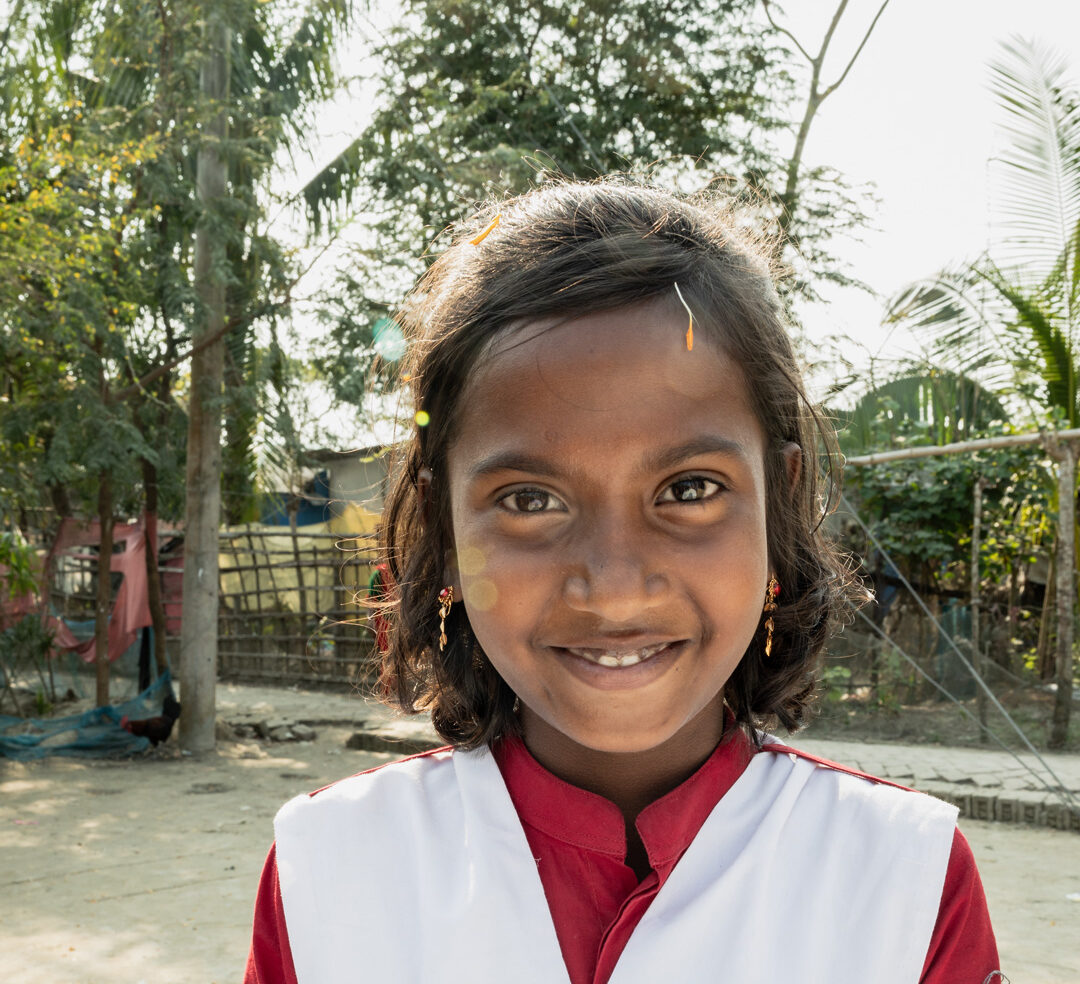
Jannatul Ferdus, 11, attends school at the Pakkhali Education Center in southern Bangladesh.
Jannatul Ferdus, 11, attends school at the Pakkhali Education Center in southern Bangladesh.
Poverty, poor roads, long distances to school, low levels of parental education and marriage are some of the reasons why many children do not attend school for many years. Families cannot afford to send their children to school. Instead, girls risk being married off and boys are forced to work. Many children have parents who did not go to school themselves and therefore do not receive much support with schoolwork from home. This is why the center is so important! Several children have been helped to apply for scholarships that enable them to continue studying despite their family's financial situation.
- Here we get the opportunity to prepare ourselves and we get help to pass school so that we can continue our studies," says Jannatul. She continues:
- We have different study circles and support each other. We also celebrate and recognize each other when things go well.
Inside the center, there are safe adults who support the children. Outside, the children grow vegetables, fruit and flowers. Together they have started a small fund, through which they help each other when someone in the group is having a particularly tough time financially.
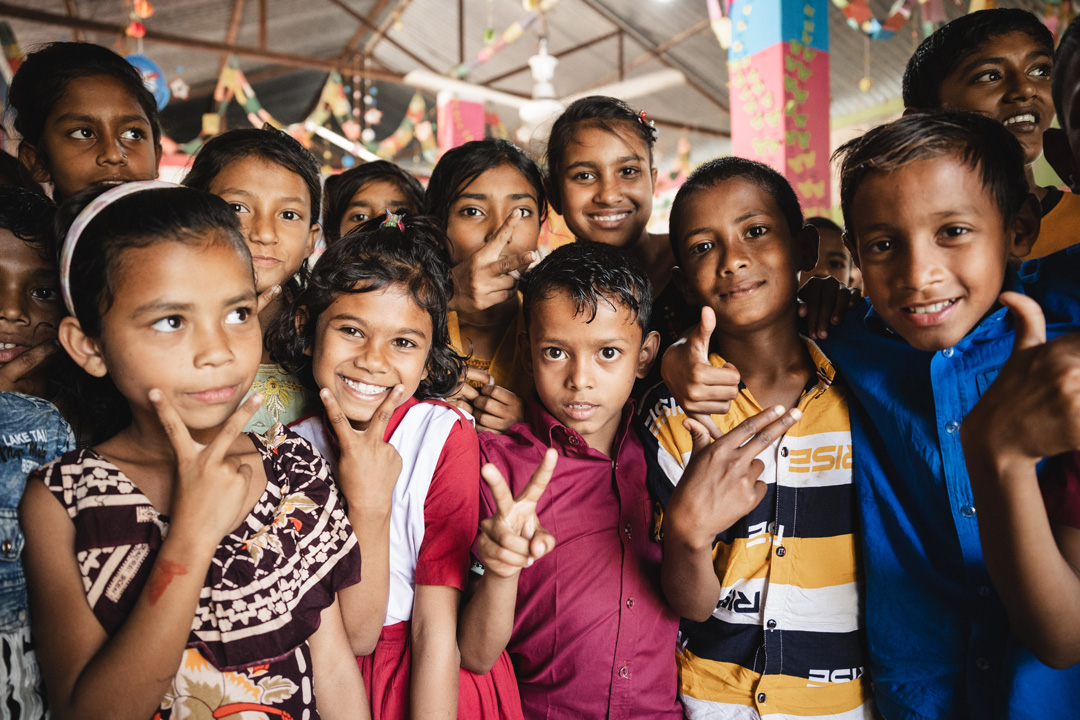
Pakkhali Education Center has 33 students enrolled, 22 of whom are girls in grades 2-5.
Pakkhali Education Center has 33 students enrolled, 22 of whom are girls in grades 2-5.
Disaster preparedness, sustainability and equipping children to adapt to climate change is one of the objectives of the activity. Giving children a better understanding of their rights and being involved in influencing their local village is another. Giving children meaningful leisure time and the opportunity to succeed in their studies is a third. And the benefits are enormous. The children shine when they talk about what the center means to them, this is their context.
- We take care of each other and the center together, it's fun to be part of it, says Jannatul and her friends next to her nod eagerly.
Together with our local partner, Erikshjälpen supports several interventions in Bangladesh, to fulfill children's right to go to school, ensure that they feel good and feel safe.

Support our work for children's right to education
Thanks to you, more children can go to school and dream of a bright future.
Give a gift to children's right to education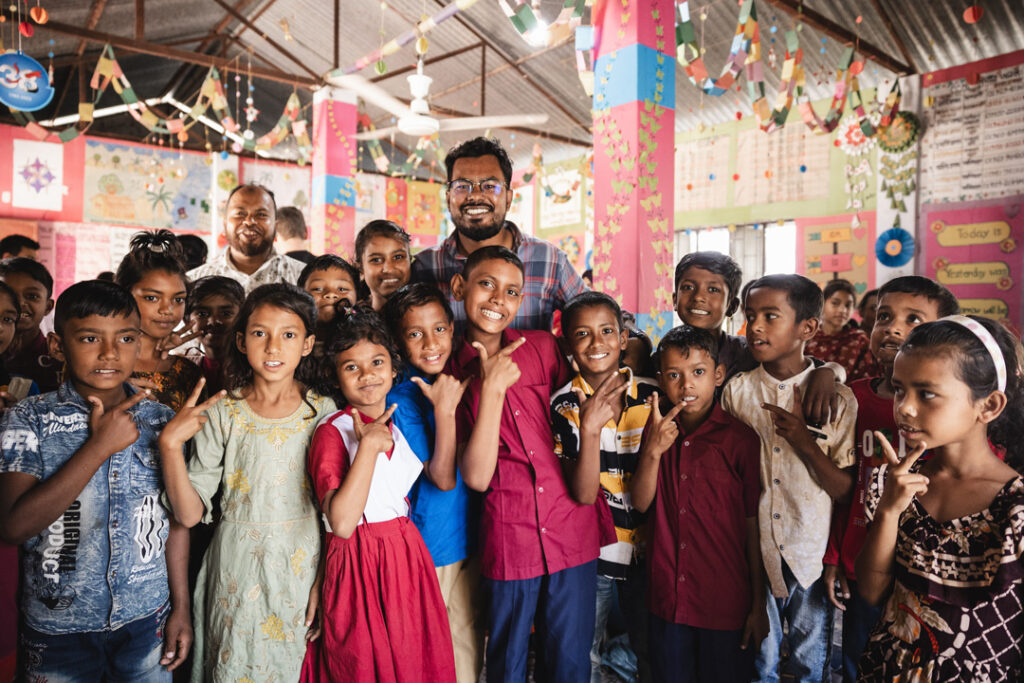
Gudrun Brunegård, Member of Parliament and spokesperson on development aid policy for the Christian Democrats visiteda this week head office of Erikshjälpen at Huskvarna. Brunegård is one of those working to shape and influence Sweden’s new development aid policy, which is currently undergoing major changes.
Gudrun Brunegård met with Erikshjälpen's Secretary-General Mattias Ingeson, Sweden Director Birgitta Johansson, and International Director Anders Malmstigen. They discussed the government's aid reform agenda and its potential impact on civil society organizations.
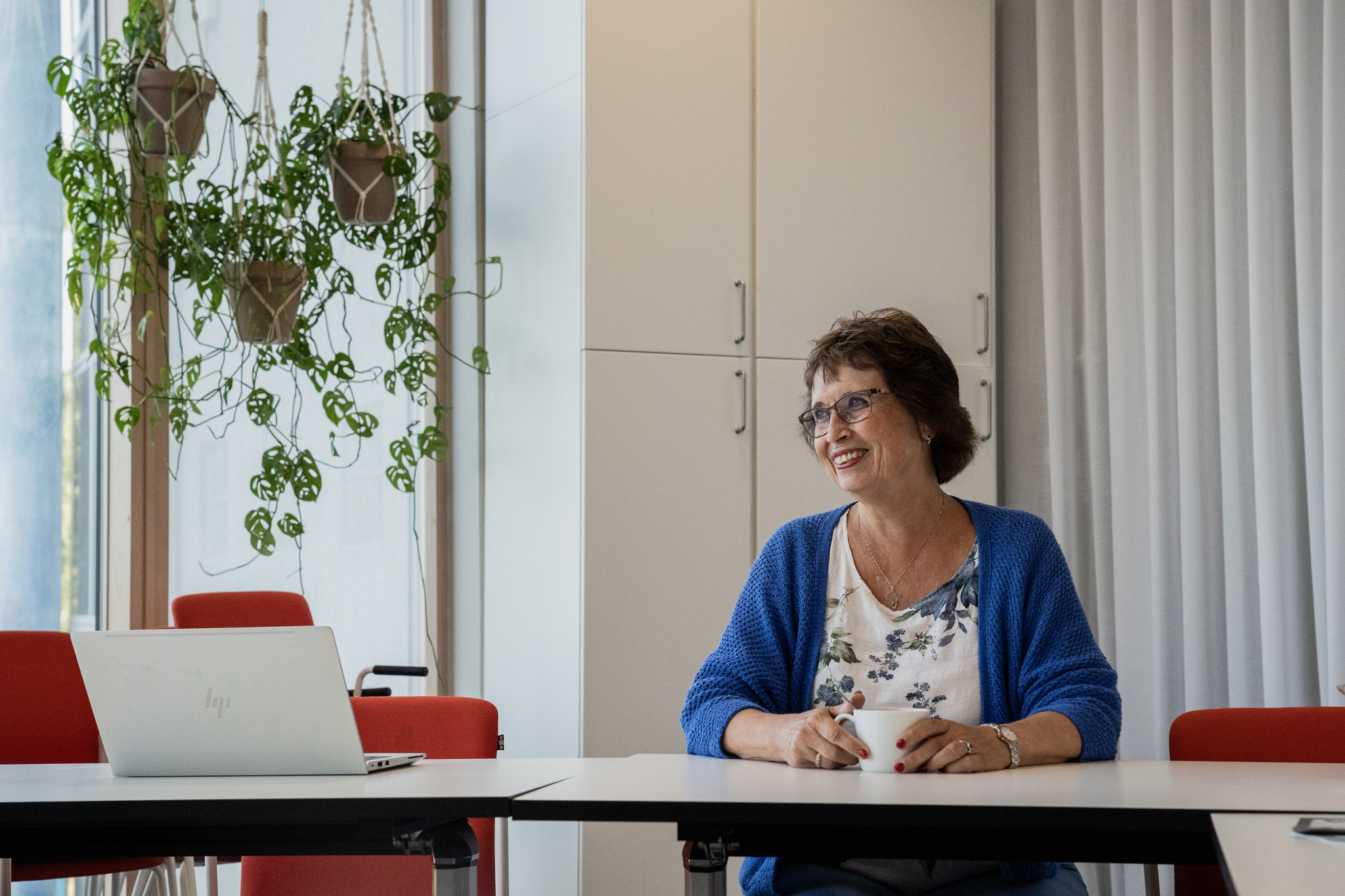
Gudrun Brunegård, Member of Parliament and spokesperson on development policy for the Christian Democrats.
Gudrun Brunegård, Member of Parliament and spokesperson on development policy for the Christian Democrats.
Anders Malmstigen particularly highlighted the importance of organisations such as Erikshjälpen being able to continue working in countries such as Burkina Faso and Mali, where both the EU and Sweden are now considering withdrawing their support. He emphasized that Erikshjälpen's future interventions in these countries depend on the future distribution of aid from Sida.
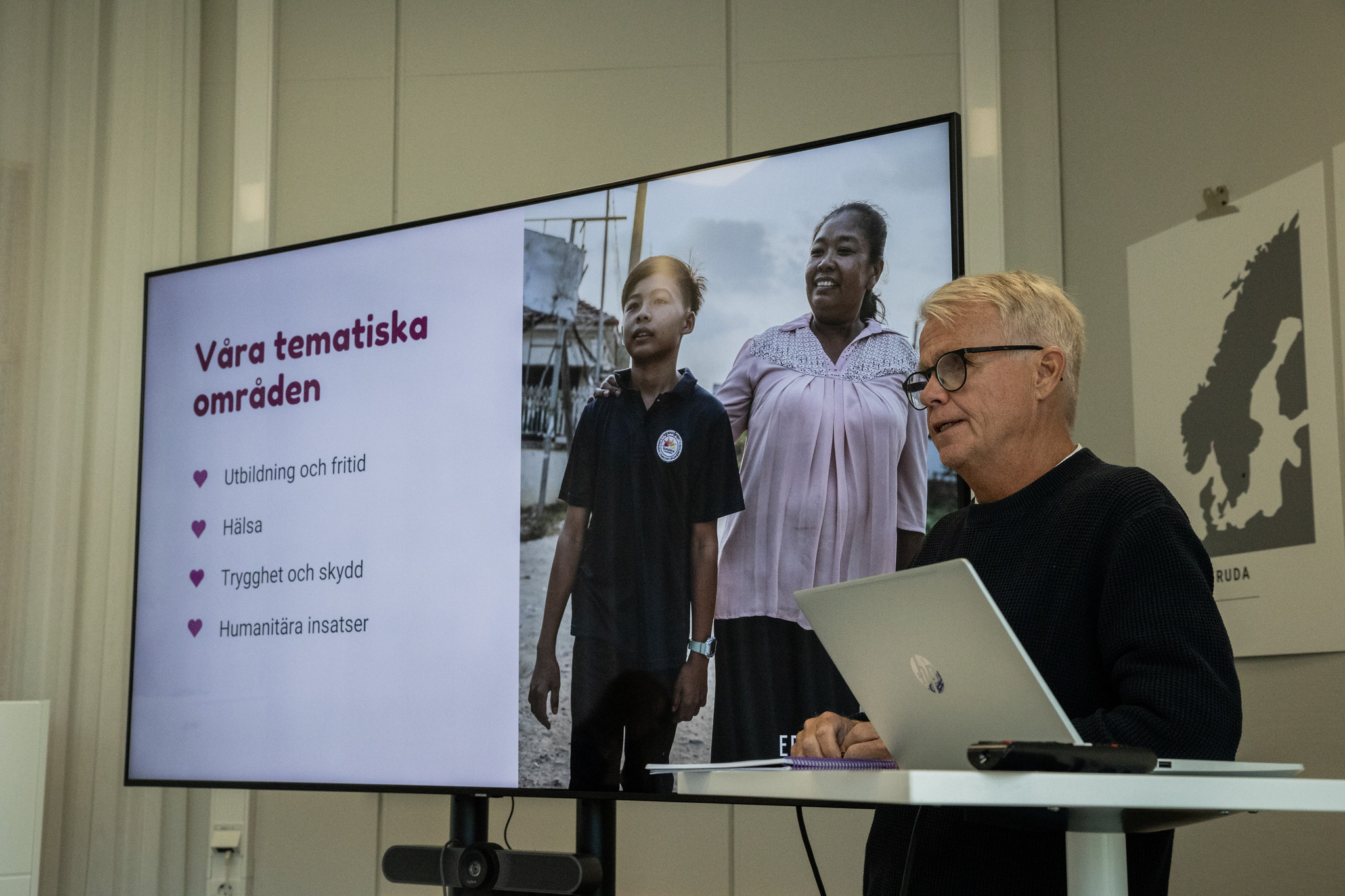
Anders Malmstigen, International Director at Erikshjälpen
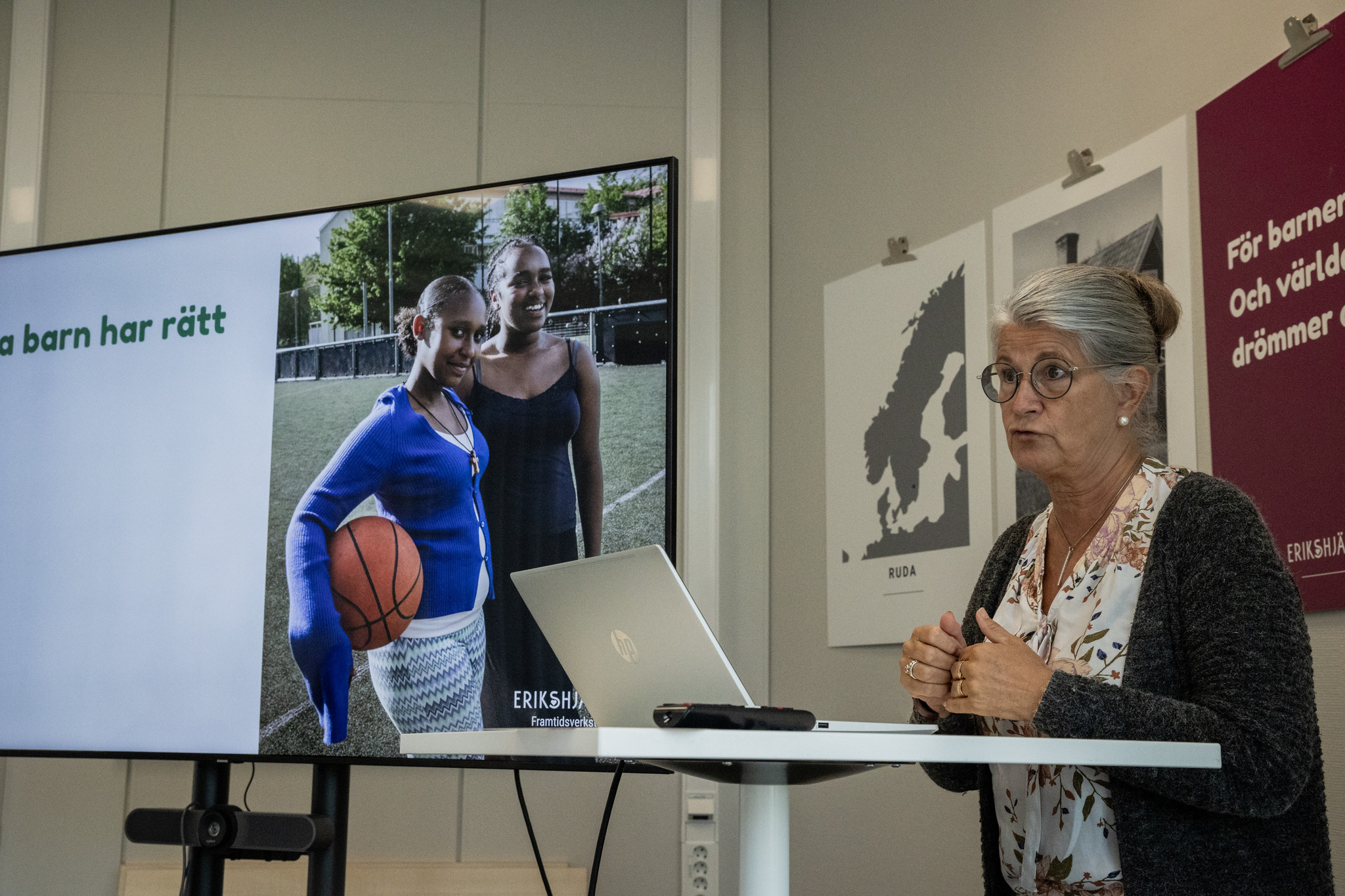
Birgitta Johansson, Head of Sweden at Erikshjälpen
Anders Malmstigen, International Director at Erikshjälpen
Birgitta Johansson, Head of Sweden at Erikshjälpen
Gudrun Brunegård shared the work that has been done so far and the processes that lie ahead. She agreed on the need for a long-term approach in development policy.
- I have great confidence in Erikshjälpen's commitment and work, both in Sweden and abroad, says Gudrun Brunegård.
The meeting is one of several important steps in the dialogue between politicians and civil society on the future of aid and how Swedish civil society organizations can continue to contribute in the best possible way.
I have great confidence in Erikshjälpen's commitment and work, both in Sweden and abroad.
In Bangladesh, the land of many rivers, Erikshjälpen works together with the partner organization Friendship with portable schools, so that children can go to school despite the climate disasters that constantly threaten the country.
Together with the partner organization Friendship, Erikshjälpen works to strengthen children's right to education, health and safety and protection in northwestern and northern Bangladesh. Here it is far from obvious that the children who live in the remote areas in the countryside around all the river deltas have access to education. Most commonly, children attend school up to grade five. What happens after that depends on the family's economic situation and how close or far away the school is.
It is particularly difficult for girls. Instead of being given the opportunity to continue studying, many risk being married off. If one member of the family is married off, there is one less mouth to feed. Other girls risk missing large parts of their education because the road to school is long and dangerous, or because they prefer to stay at home rather than go to school due to a lack of sanitation and the possibility of good hygiene during periods.
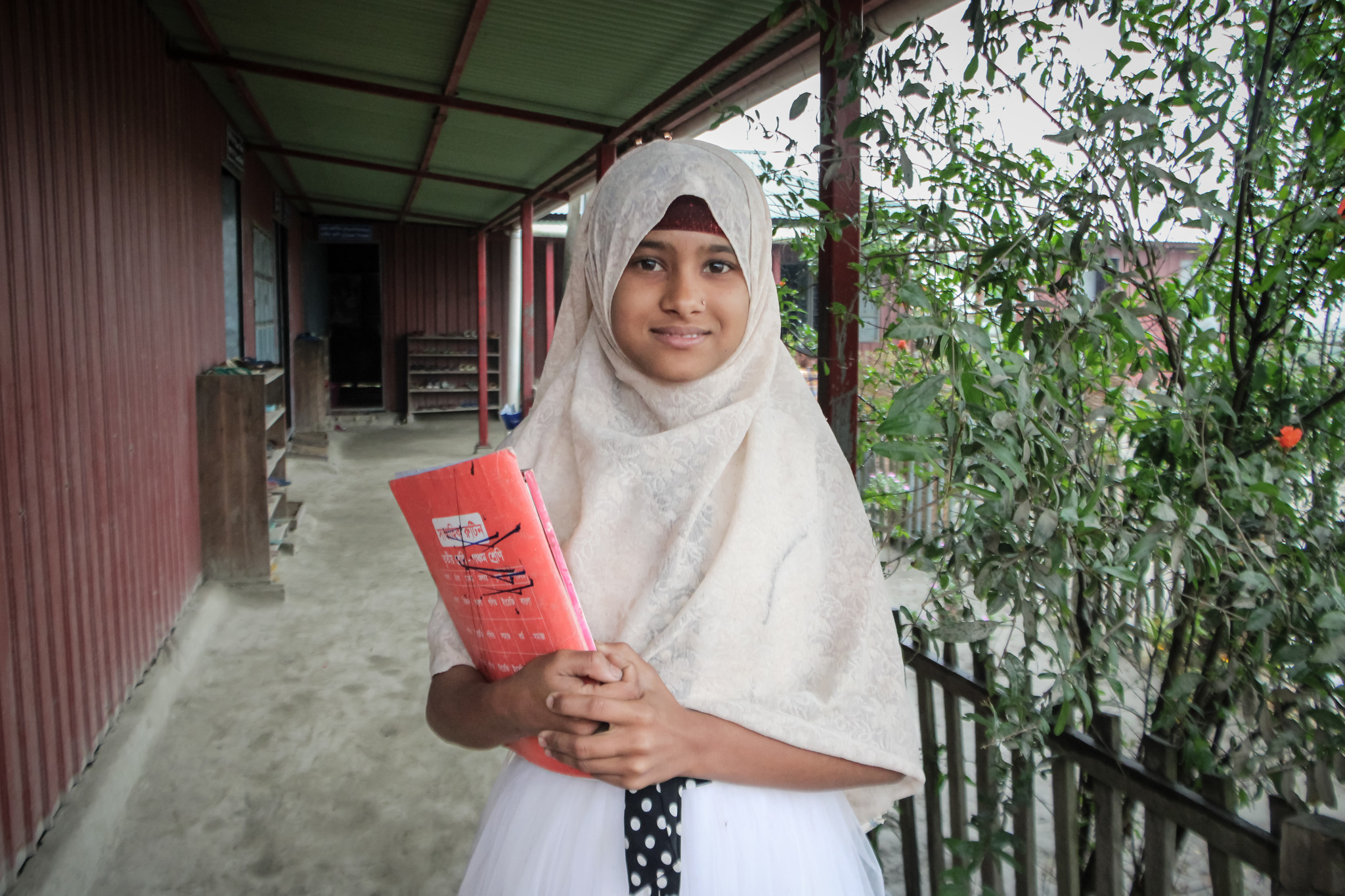
Mim is in grade five at Friendship Primary School Khamarbashpata. She loves school, especially English and is very involved in school activities.
Mim is in grade five at Friendship Primary School Khamarbashpata. She loves school, especially English and is very involved in school activities.
Children can change society
Bangladesh is the land of many rivers. The islands in the river deltas are volatile and prone to recurrent floods and other natural disasters. Because of the islands' impermanence, it has not been possible to establish infrastructure in the form of electricity supply, roads, school buildings and clinics there.
portable schools have proven to be a successful way to reach children living in the most inaccessible and climate-vulnerable areas. Investing in educating children about crisis and disaster preparedness and their rights has also proven to be a success factor. Through their new knowledge, children themselves become involved in changing not only their own future but also entire communities.
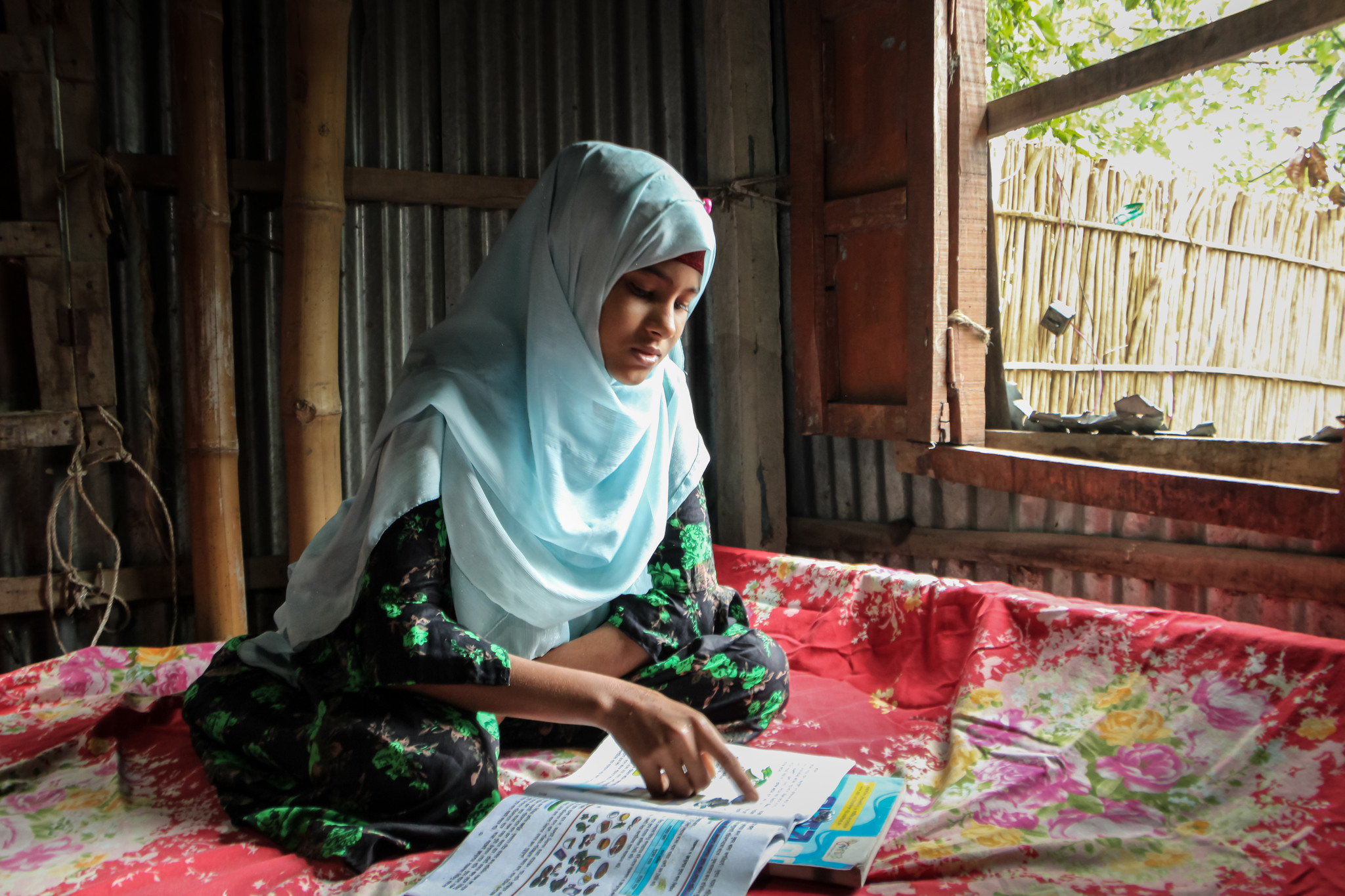
Mim studies at home.
Mim studies at home.
Schools make dreams possible
Staying in school and getting a full education is something 11-year-old Mim Akter hopes for. But it's not something she takes for granted. Coming from Khamarbashpata in Chilmari, northern Bangladesh, she knows too many girls whose lives have taken a different turn.
Child marriage and child labor are common in Bangladesh. Mims' own mother was married off at the age of 15. When a girl is married off, she is forced to drop out of school to take care of the new household and in-laws, and contribute to the family's livelihood.
- I will do everything I can to make my future different. I want to become a teacher and help more children go to school," she says.
Mim is in grade five at Friendship Primary School Khamarbashpata. She loves school, especially English and is very involved in school activities. Her biggest dream is to continue her studies. Today, around 650 million girls in the world receive no or very little education. Poverty, menstruation, or long and dangerous journeys to school are some of the reasons why girls miss large parts of their schooling or are forced to drop out completely.
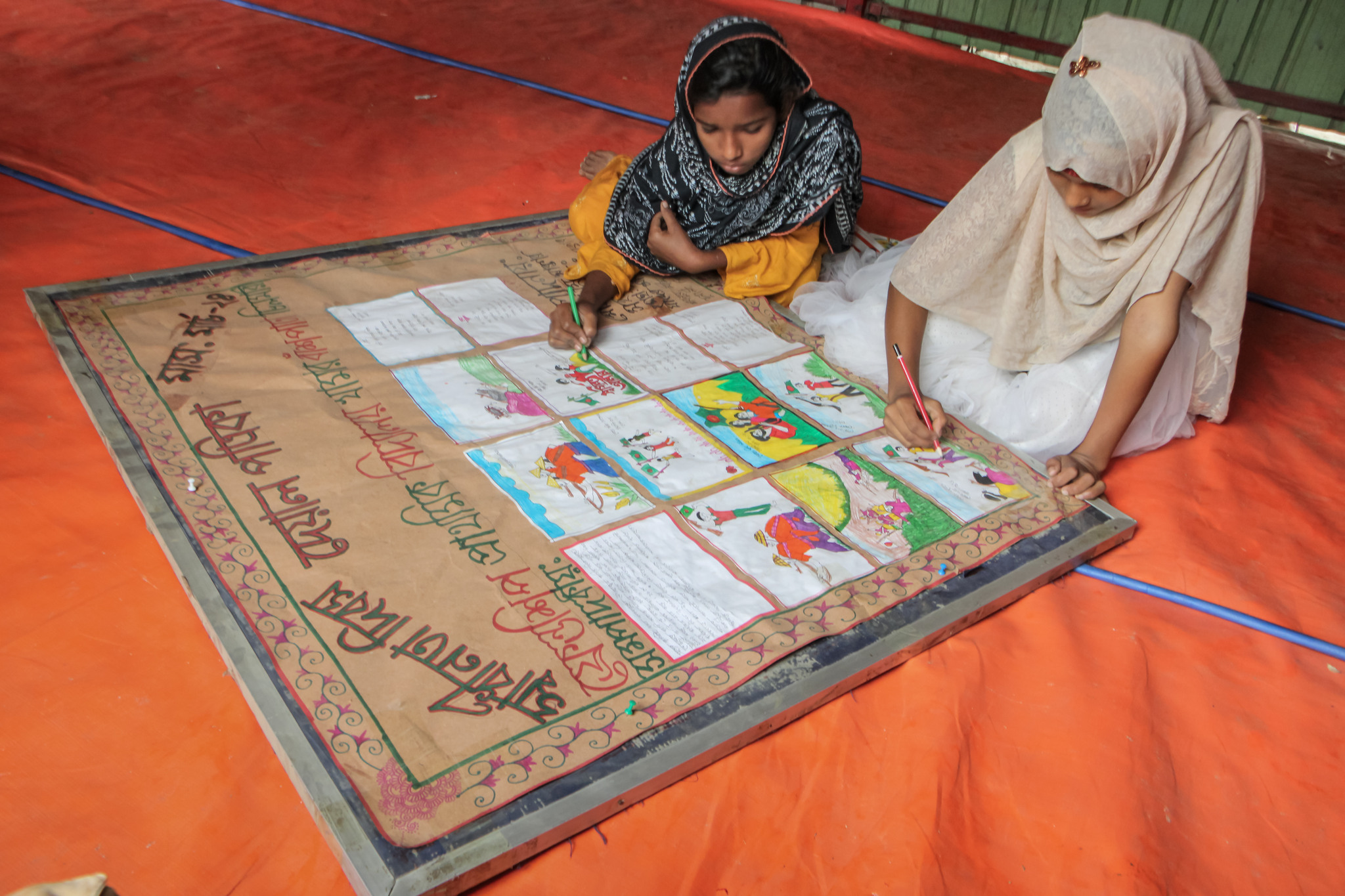
Mims with her friend.
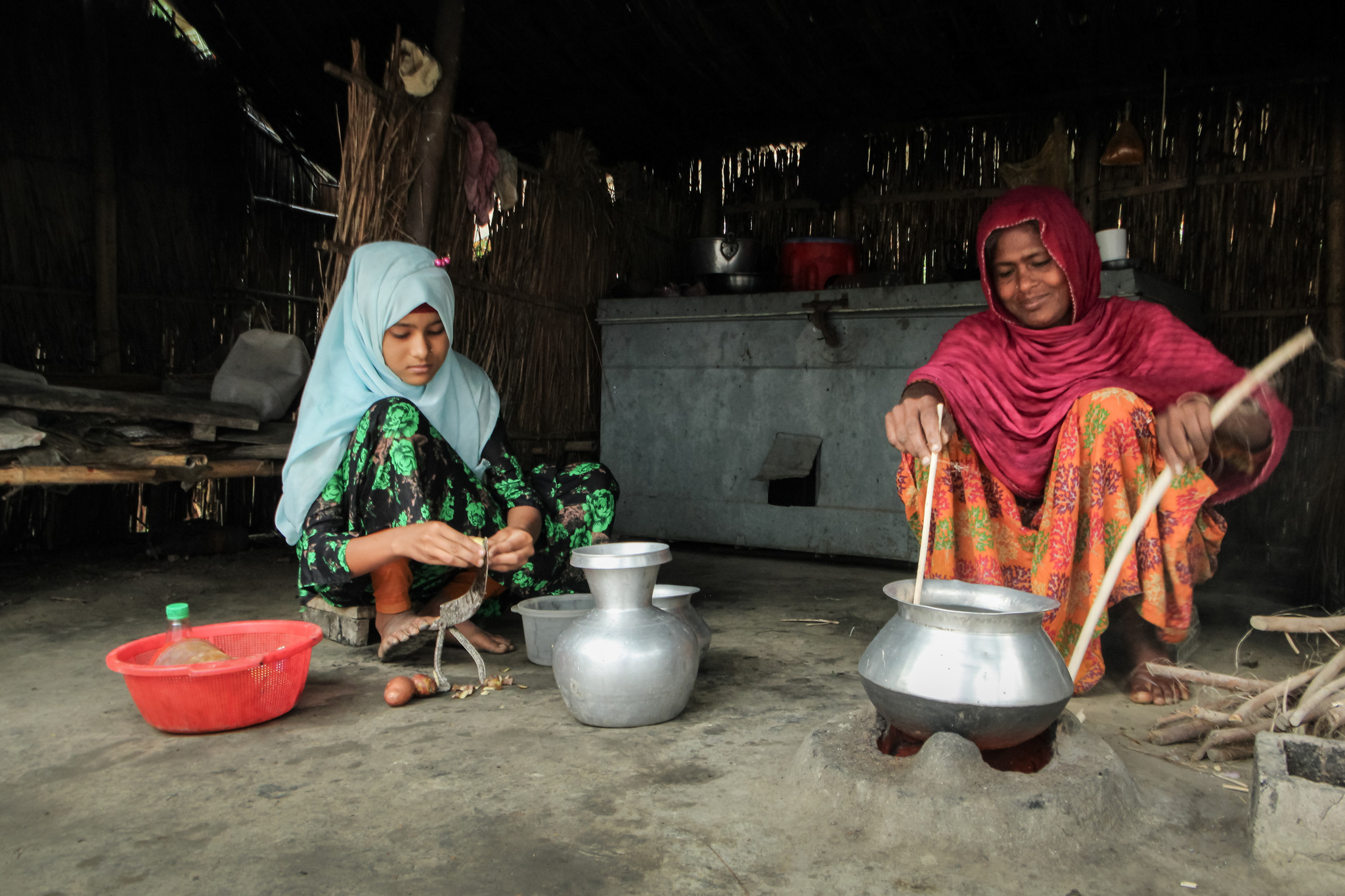
At home, Mim helps her mom cook.
Mims with her friend.
At home, Mim helps her mom cook.
Mim, her parents and five siblings live in a small house on one of the many sand islands that form part of the Brahmaputra River Delta. The area is inaccessible, vulnerable and hard hit by climate change. Floods, cyclones and other natural disasters strike once or twice a year, causing great devastation. Landslides and soil erosion make it difficult to build permanent infrastructure like roads and schools. But thanks to the portable school, which Erikshjälpen has developed and established together with the organization Friendship, Mim and many other children in the area have the opportunity to go to school.
Through school, Mim and her friends have learned about their rights and how to build resilience and cope with natural disasters. The whole village is better. And now Mim dares to hope for a future different from her mother’s.
- Now everyone in the village is committed to the issue of child marriage, she says proudly.
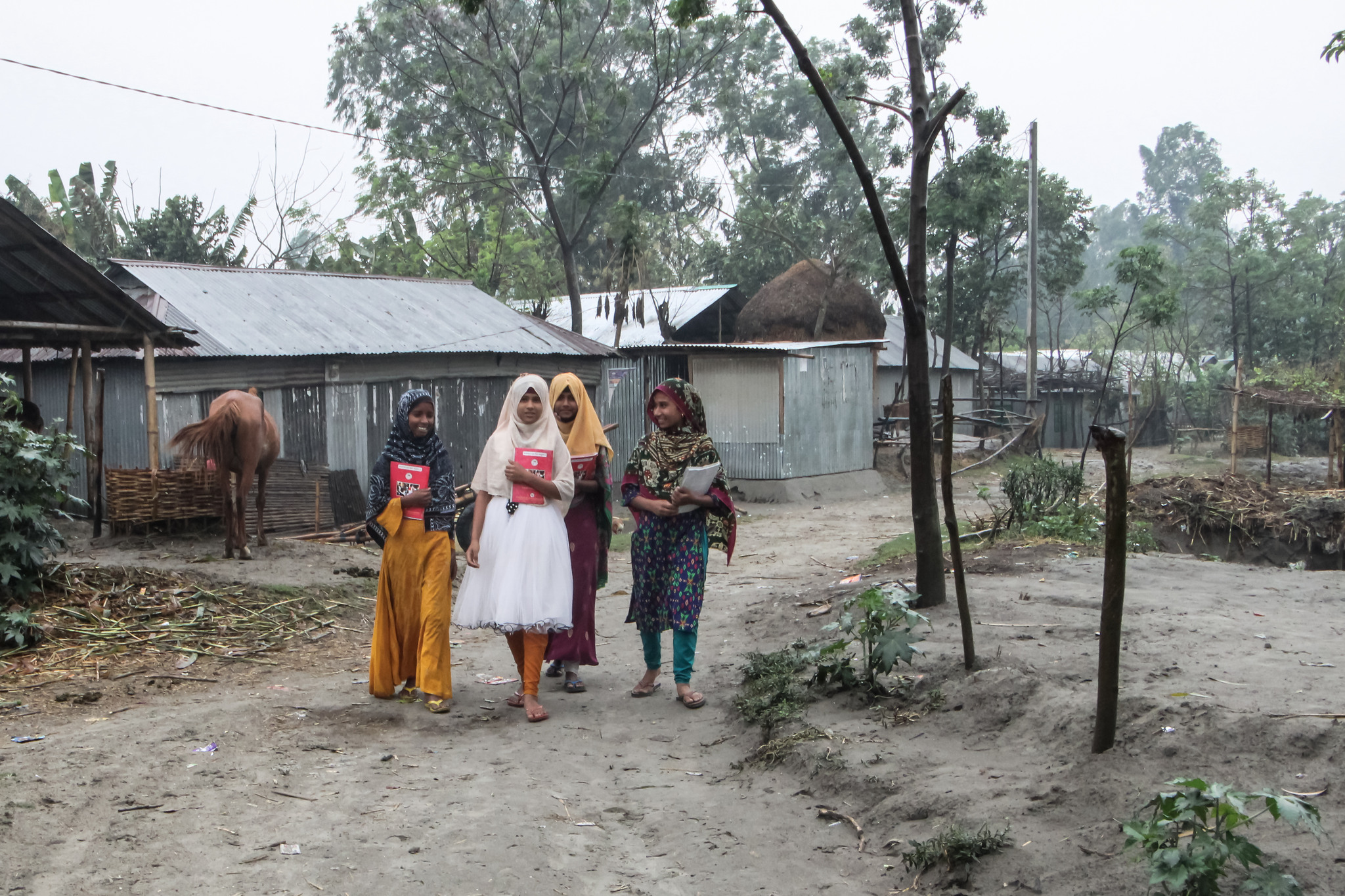
Mims on her way to school with her friends.
Mims on her way to school with her friends.
Today, around 650 million girls worldwide receive no or very poor education. Poverty, menstruation, or long and dangerous journeys to school are some of the reasons why girls miss large parts of their schooling or are forced to drop out completely.
Example of costs
- 100 SEK is enough for school supplies and hygiene products for one child for one to two months
- 300 SEK is enough for school supplies, hygiene products and food for one child for one to two months
- 7000 SEK is the cost of dismantling a portable school and establishing it in a new location
the United Nations Convention on the Rights of the Child affirms every child’s right to life and development, a safe upbringing free from violence, a good education, meaningful leisure activities, and the right to participate in matters that affect them.
Yet, despite this, we rarely hear children’s voices in political discussions or in public debate.
This year, “ the United Nations Convention on the Rights of the Child ” turns 35, and it has been a Swedish law since 2020. It is high time we take responsibility and give children and young people a real say. To uphold the rights of all children and show that we take “ the United Nations Convention on the Rights of the Child ” seriously, it is not enough for us to work for the children—we must work together with them.
This year's Youth Barometer report shows that more and more young people feel that they have little or no opportunity to influence society. At the same time, political engagement among young people and their confidence in politicians' ability to tackle societal challenges is declining.
Five years ago, Erikshjälpen started its first "Erikshjälpen Framtidsverkstad". Today, we work in six neighborhoods and engage children, young people and parents to equalize unequal growing conditions.
During Almedalen, we were on site at Barnrättstorget together with young people from “ Erikshjälpen Framtidsverkstad ” in Gränby, Uppsala. In two seminars, we highlighted experiences and lessons learned from our first five years. Together with politicians and other community leaders, we discussed how to create opportunities for young people to participate in public discourse, as well as how Erikshjälpen Framtidsverkstad encourages and supports young people’s desire to change society.
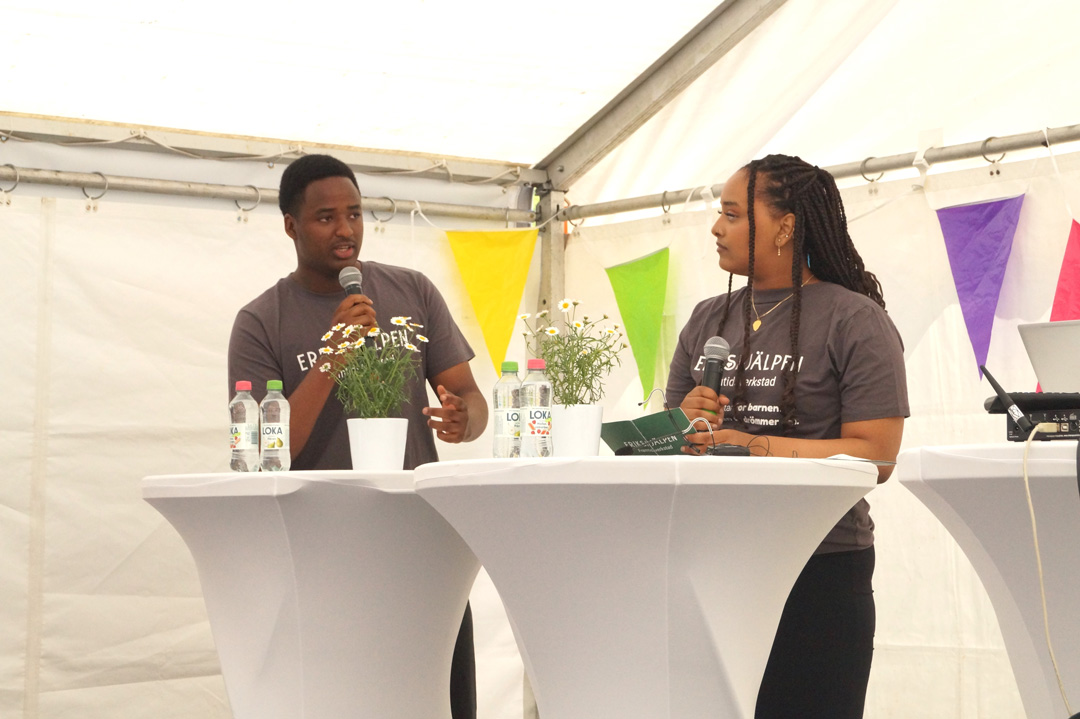
Godwin Coyitungiye and Zahara Siraj from Erikshjälpen Framtidsverkstad in Uppsala are on site in Almedalen.
Godwin Coyitungiye and Zahara Siraj from Erikshjälpen Framtidsverkstad in Uppsala are on site in Almedalen.
The need for both urgent and long-term solutions to equalize growing conditions and reduce social inequalities is obvious. Not least to prevent more young people from being recruited into criminal gangs. The government has also come up with several action plans in the area, both repressive and preventive. We at Erikshjälpen are concerned that some of the repressive proposals risk reducing confidence in both authorities and other social actors. But also lead to increased discrimination and stigmatization, something we also highlighted at our seminars in Almedalen.
It is not only about the future of our young people, but also about the life they deserve to live today. A life in a democratic and safe society with equal conditions where they can feel confident about the future. If there is one thing that Erikshjälpen Framtidsverkstad has learned during its first years, it is how crucial it is for children and young people to be involved in identifying solutions to meet the challenges facing society. This applies to all areas related to crime, increasing inequality, segregation, exclusion and the increased mental health we see throughout the country.
The consequences of segregation are clearly visible in reports and statistics. Opinions on the causes and solutions to the problems vary. But for those of us who meet children every day, it is clear how powerful the power of change is when we involve them.
So let's listen to children and give them the voice they deserve. It is not just a matter of fairness, but a necessity if we are to break the downward spiral together and create a stronger and more democratic society.
Author:
Mattias Ingeson
Secretary General, Erikshjälpen
Birgitta Johansson
Head of Sweden, Erikshjälpen
At the end of May, Cyclone Remal hit the southern coast of Bangladesh. It left behind devastated villages and destroyed crops. Erikshjälpen is now conducting an emergency operation where we help families with children to recover from the cyclone. This includes repairing damaged houses, buying new livestock and supporting small family-owned Corporate. All so that life can get back to normal again.
Cyclone Remal hit southern Bangladesh hard with wind speeds of 135 kilometers per hour. Around 4.6 million people were affected and over 40,000 houses were destroyed. The cyclone hit the regions of Rampal and Mongla the hardest, where Erikshjälpen together with our partner organization CODEC (Community Development Center) has long been working with various interventions to create resilience and facilitate children and their families.

Almost all of the more than 1700 families that Erikshjälpen supports in its projects are fully or partially affected by cyclone Remal. Among these, about 300 families are so severely affected that they need immediate support to survive. In Bagerhat and Patuakhali districts, the floods have caused particularly severe damage to families' homes and primary sources of income such as farming and fishing.
Starting July 1, Erikshjälpen will therefore implement a humanitarian operation in the area, carried out by CODEC in collaboration with the local community. The intervention includes:
- Repair and reconstruction of housing
- Support for fisheries and agriculture
- Support for small businesses.
Give a gift to the effort in Bangladesh
The needs are great.
With your contribution, we can help even more families who have been affected.
Our long-term interventions
Erikshjälpen works long-term in Bangladesh to ensure that children have access to health, education, safety and protection. In communities that are constantly threatened by floods, residents are equipped with disaster preparedness and improve their living conditions for better resilience in terms of, for example, recurring cyclones.
On June 25-27, Erikshjälpen will be in Almedalen as part of the Children's Rights Square. Together with ten other organisations , we will during the week raise current children's rights issues and talk about how we can work together to strengthen children's rights. Welcome to take part in several exciting seminars and program items.
Representatives from Erikshjälpen’s Sweden division will be on site at Barnrättstorget, along with young people from Erikshjälpen’s Framtidsverkstad in Uppsala. Our focus during the week will be on youth participation.
A warm welcome to Erikshjälpen's seminars:
Neighborhood development - through youth engagement and participation
Wednesday, June 26, 14:00-14:45
According to the Act on Children’s Rights ( the United Nations Convention on the Rights of the Child ), which has been Swedish law since 2020, every child has the right to a safe upbringing free from violence, a good education, meaningful leisure activities, and the right to be heard on all matters that affect them. Children and young people growing up in areas facing socioeconomic challenges do not have the same opportunities to have their rights fulfilled. Erikshjälpen Framtidsverkstad works to engage children and parents in community development to level the playing field regarding unequal upbringings.
We will, together with young people who have been involved in the activity, highlight the lessons and conclusions we have seen during the first five years of Erikshjälpen Framtidsverkstad.
Participants:
Camilla Waltersson Grönvall, Minister for Social Services, Moderate Party
Nadim Ghazale, Head of Operations, nattvandring.nu
Ehsan Nasari, City Council Member Uppsala Municipality & Party Leader, Center Party
Birgitta Johansson, Program Manager Sweden, Erikshjälpen
Young people from Erikshjälpen Framtidsverkstad
Moderator:
Mattias Ingeson, Secretary-General, Erikshjälpen.
Young people's political engagement and confidence
Thursday, June 27, 13:00-13:45
Belief in the future is an important measure of how young people assess their ability to influence their life situation. Reports indicate a growing pessimistic attitude towards societal development, a decline in political engagement and widespread skepticism about the ability of those in power to effect change. This is a dangerous development.
Together with young people, we want to take a closer look at what is behind this trend and how we can work together in the long term to reverse it. During the seminar, young people will have the opportunity to raise their thoughts in discussions with those in power.
Participants:
Juno Blom, Ombudsman for Children
Evin Cetin, lawyer, author, lecturer
Jakob Olofsgård, Member of Parliament, Party Secretary, Liberals
Ehsan Nasari, City Council Member & Caucus Leader, Uppsala Municipality, Center Party
Young people from Erikshjälpen Framtidsverkstad
Moderator:
Mattias Ingeson, Secretary-General, Erikshjälpen.
Where to find the Children's Rights Square?
You will find Barnrättstorget at Hamnplan (H209). If you can't make it to Visby, the seminars will also be broadcast live on Erikshjälpen's Facebook page.
In a debate article published on altinget.se, Erikshjälpen and 34 other civil society organizations call on the Swedish government to raise the ambitions of the work with Agenda 2030 if we are to achieve the global goals.
Both the Swedish parliament and the EU have decided that Sweden should pursue policies that contribute to the implementation of the 2030 Agenda. 22 civil society organisations have together reviewed the government's work on the global goals. The results are presented in the member platform Concord Sweden's "Barometer 2024".
In 24 policy areas, only in one has the government made a clear positive contribution. In 11 areas, they have both contributed to and hindered equitable development, or done nothing at all. In 12 areas, they have worked against equitable and sustainable development.
- Sweden should be a leading nation when it comes to implementing coherent policies. The fact that the government's policy only contributes positively in a single area must change, otherwise there is no possibility to fulfill our commitments, says Anders Malmstigen, International Director of Erikshjälpen.

Anders Malmstigen, International Director of Erikshjälpen
Anders Malmstigen, International Director of Erikshjälpen
Now Concord, together with Erikshjälpen and 34 other organisations , writes in a debate article on altinget.se, that Sweden must raise its ambitions in order to achieve the global goals.
Read the full debate article here
Read the full 2024 Barometer here
During the month of May, Erikshjälpen is highlighting the rights of girls and the issue of Menstrual health. Anna Eliasson works as a program advisor at Erikshjälpen, focusing on health, safety and protection, and gender equality. Here she tells us more about Erikshjälpen's work in this area.
What is the situation of girls in the world today?
- Of course, there is no single answer to this question. If we take a closer look at gender equality work, for example, we can see that developments are moving in several directions at once. Over time, gender equality work has made progress. In many places, the level of education of girls and women has increased, as has their representation in leading positions. Maternal mortality has also fallen periodically.
Despite this, there are many negative trends and resistance to girls' and women's rights globally, which require major efforts to achieve the 2030 Agenda.
Today, there are many armed conflicts around the world. In parallel, people are increasingly affected by climate change. It is well known that this has a particular impact on girls and women as a group. They are also more affected by various forms of violence, which tend to increase in times of crisis and conflict. COVID-19 has also had a negative impact on gender equality, with increased gender-based violence and restrictions on sexual and reproductive health and rights. The impact of the pandemic is visible in our work, particularly in education, where girls are often overrepresented among those who have not returned after school closures.

Why is the issue of menstruation important to raise?
- Almost 2 billion people menstruate. At least a quarter of them lack the resources necessary for good Menstrual health. The consequences of this affect their whole lives. Menstruation is much more than a hygiene or health issue. Menstruation is an issue of gender equality and children's rights. As children enter their teenage years, we see how violations of certain rights increase exponentially. Especially for girls and young women, but also for LGBTI people. One of Erikshjälpen's priority areas is therefore sexual and reproductive health and rights (SRHR). These are rights that apply throughout life, including for children. The onset of puberty creates disproportionate differences between the sexes. Menstruation, which in itself is such a fundamental and natural process, is instead a major setback for millions of girls in a range of areas and rights. In turn, the perception that girls are ready for marriage leads to a dramatic increase in the risk of child marriage, female genital mutilation and other forms of gender-based violence. Lack of or inadequate maternal care is one of the leading causes of death or lifelong complications among teenage mothers, girls and young women. Girls' opportunities to go to school are rapidly being taken away from them. Continuing to defend girls' right to education is therefore not only a protective factor, but a fundamental right that will determine girls' future prospects.
Not only do we need to talk more about menstruation, to break the stigma and taboo, we also need to ensure access to both safe and hygienic environments. There are many examples of non-existent or unhygienic facilities, such as school toilets in Bangladesh. But there is also an increased risk of various forms of abuse. Menstrual health work therefore needs to be seen in a broader context with its links to other rights such as access to education and freedom from violence. In some societies, menstruation is an extremely sensitive issue. We need to be aware of how and if issues around menstruation can also open doors to talk about other controversial issues.
How is Erikshjälpen working on the issue?
- Through Erikshjälpen's close cooperation with local partner organizations, which are part of the local community, we can contribute to change that lasts over time. For example, it can start with creating access to sanitation products.
In many interventions , girls learn to sew their own sanitary pads, which helps to ensure school attendance. Through clubs, discussion groups and secured access to sexuality education, not only girls, but also boys, teachers and parents, gain basic knowledge about menstruation and the conditions required for good Menstrual health. Working towards and together with local decision-makers and leaders increases the chances of long-term change. Religious leaders are often a particularly important group when it comes to behavior change. Even if there is legislation in place, cultural and religious traditions and norms can be deeply rooted and thus influence people's attitudes and behaviors.
We work on issues related to menstruation more or less in all our regions. In many cases, it is an integral part of broader work on the rights of children and especially girls. We aim to work in parallel on individual, social and practical components. The individual components to support girls and menstruating persons' self-esteem, knowledge and skills. The social components to promote communities and social norms free of stigma and discrimination, and the practical components to increase access to safe and appropriate facilities.

Anna Eliasson, Program Advisor Erikshjälpen
Anna Eliasson, Program Advisor Erikshjälpen
 Listening