On Saturday, April 25, we celebrated ERIK's day our secondhand stores. Thanks to the tremendous dedication of volunteers, visitors, and customers, sales totaled 3,626,625 Swedish kronor (SEK). These funds will support our work for children’s rights.
Every year on April 25, we celebrate ERIK's day our secondhand stores across Sweden. It’s a day when we honor the memory of our founder, Erik Nilsson—and at the same time make a real difference for children around the world. Every day, our stores’ surplus goes surplus children’s rights. But on ERIK's day , the entire day’s proceeds ERIK's day to Erikshjälpen’s children’s rights work. Since ERIK's day in 2008, the day has raised a total of 44 million Swedish kronor (SEK).
New sales record
Thanks to the tremendous dedication of volunteers, customers, and visitors, this year’s ERIK’s Day was a huge success. Together, we set a new sales record for ERIK's day raised 3,626,625 Swedish kronor (SEK) children’s rights to education, health, safety, and protection.

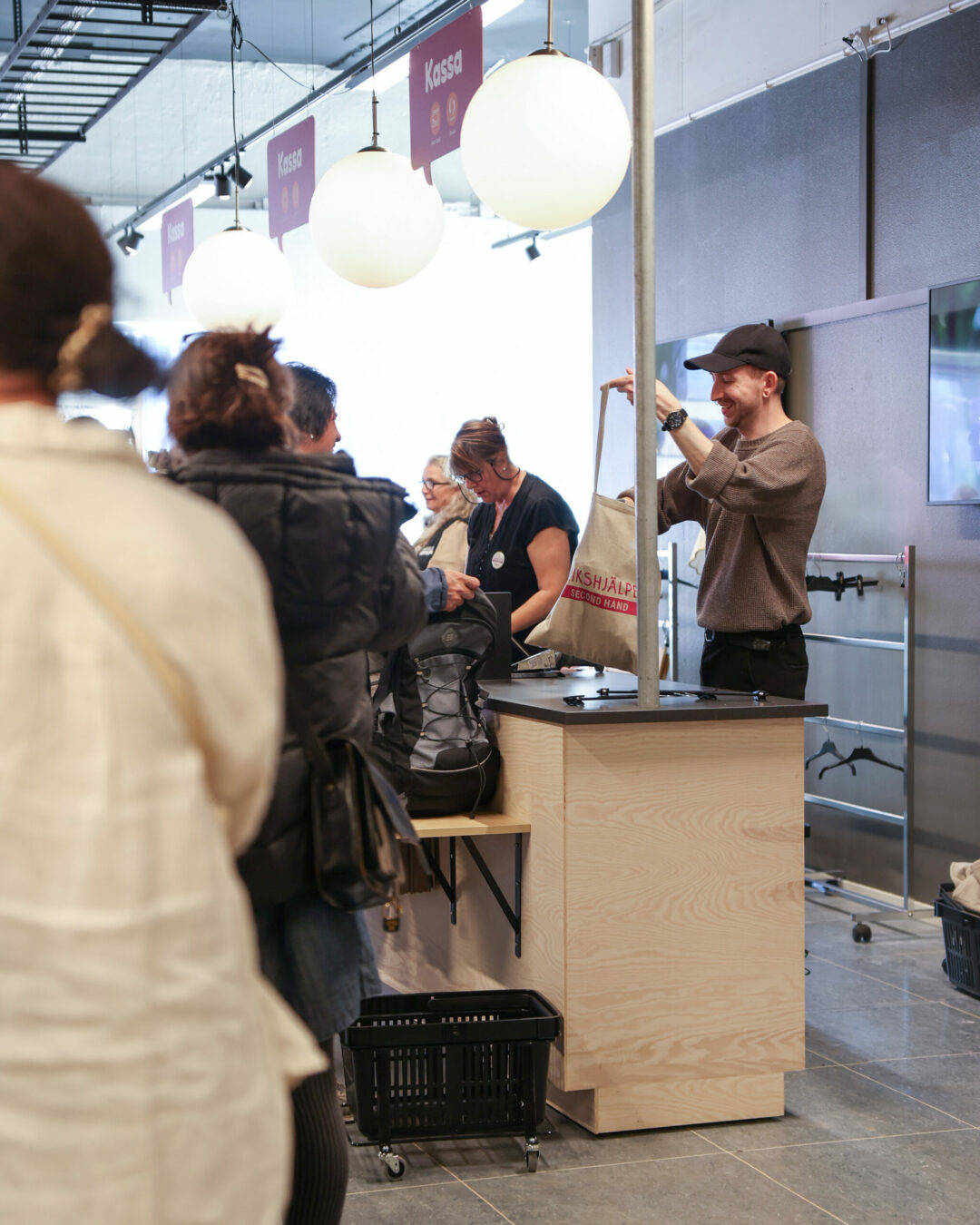
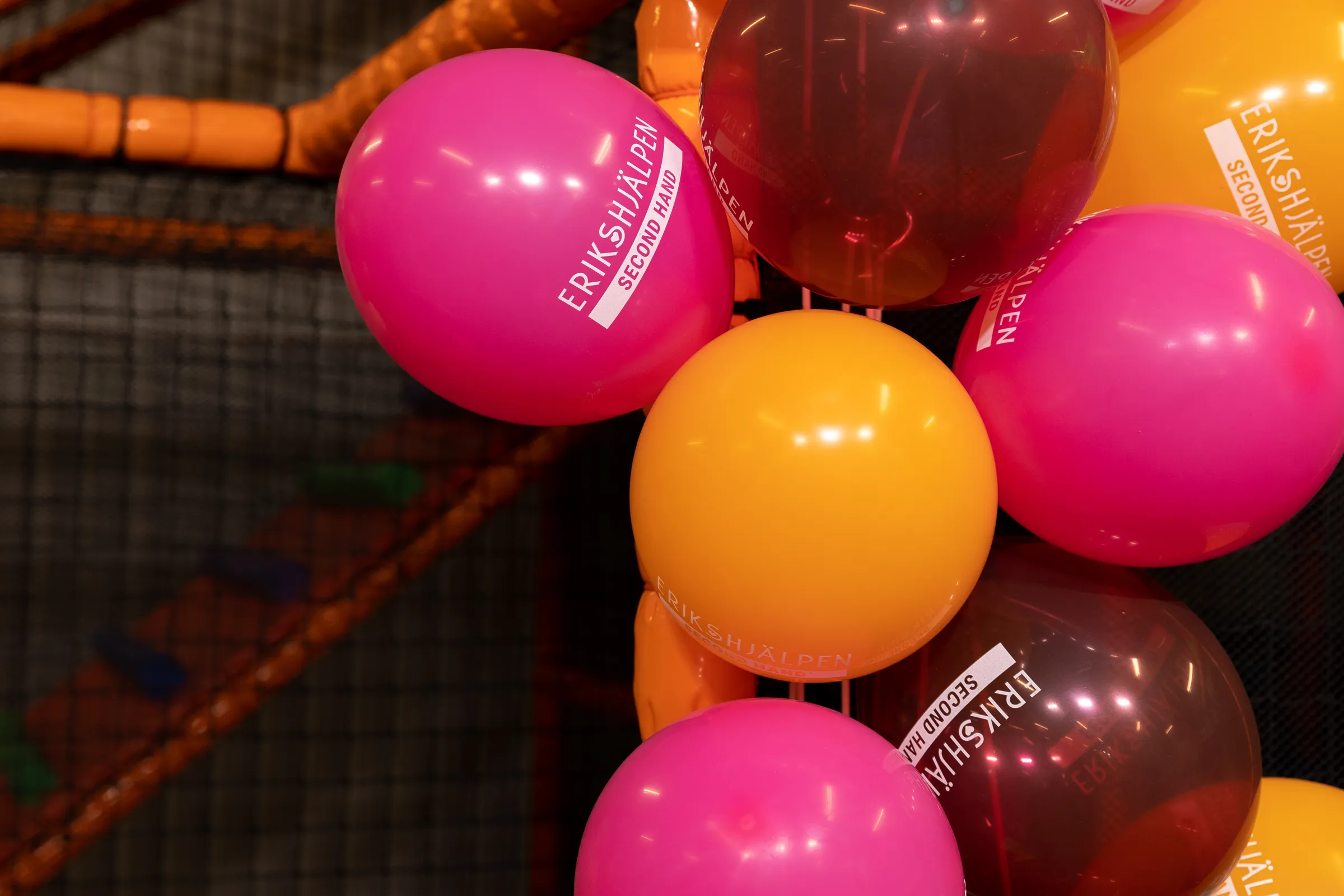
Celebrations at many stores
Several stores celebrated with activities for both children and adults. These included face painting, crafts, and contests. Some locations featured bouncy castles and visits from groups such as the fire department.
Together for Children's Rights
Thank you to everyone who participated and made this day possible. Together, we will continue our work for children’s rights.
Celebrate ERIK's day us on Saturday, April 25, at any of our secondhand stores. It will be a day filled with joy, community, and bargains that make a difference. All proceeds from each store’s daily sales will go toward Erikshjälpen’s work to give children a better future.
On Saturday, April 25, we’ll be celebrating ERIK's day our secondhand stores across the country. It’s a day when we honor the memory of our founder, Erik Nilsson—and at the same time make a real difference for children around the world. Every day, our stores’ surplus go surplus children’s rights. But on ERIK's day , all proceeds from the day’s sales ERIK's day to Erikshjälpen’s work for children’s rights.
A festive day filled with activities, refreshments, and great finds
Many stores will be offering a festive atmosphere with activities for all ages. Visitors can enjoy face painting, crafts, contests, and delicious treats, for example. It will be a day filled with joy, togetherness, and great finds.
That's why we celebrate ERIK's day
ERIK's day annually in memory of Erik Nilsson, the boy who laid the foundation for Erikshjälpen. Despite his own illness, Erik chose to bring hope to other children. This commitment is carried on today by people throughout the country and even internationally.
Erikshjälpen is celebrating its 80th anniversary
This year’s Eriksdag takes on a special significance as Erikshjälpen celebrates its 80th anniversary. The anniversary commemorates a journey that began with one young person’s desire to help and has grown into one of Sweden’s largest children’s rights organizations.

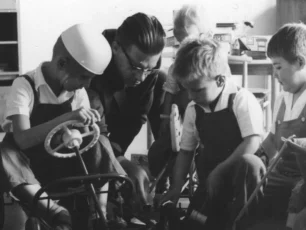
Erik Nilsson, 16 years old.

Erik Nilsson is playing with children at the hospital.
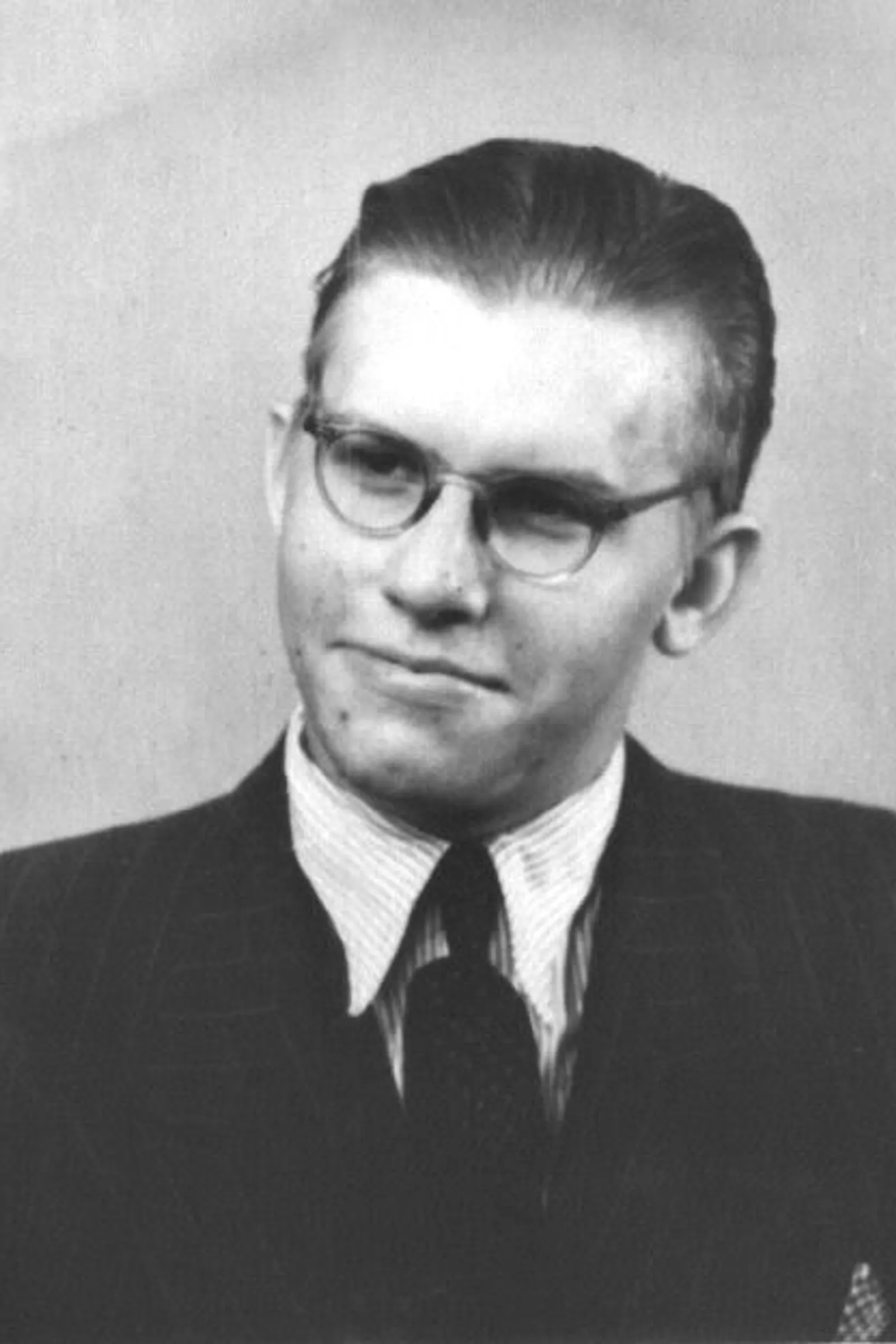
Erik Nilsson, 16 years old.
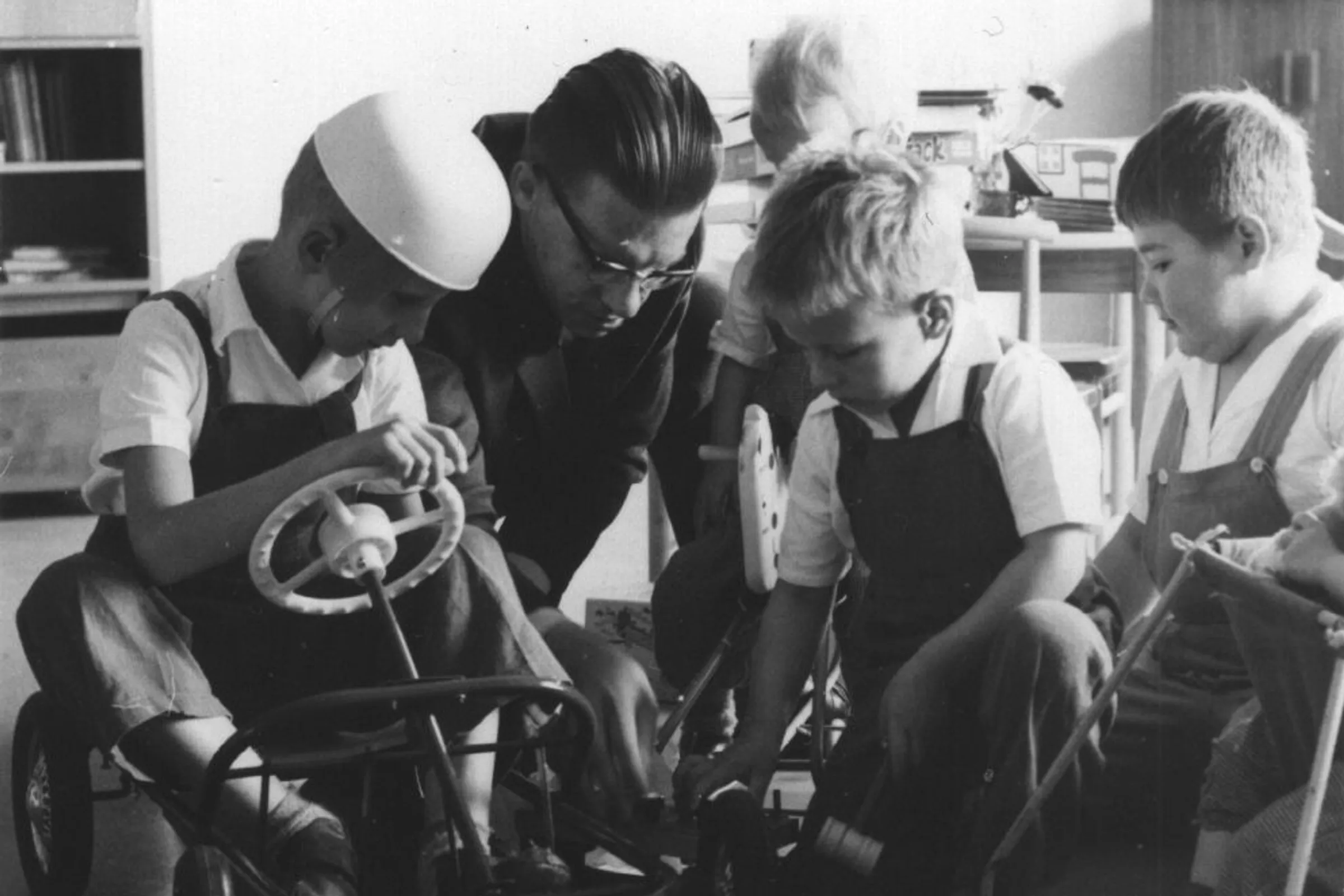
Erik Nilsson is playing with children at the hospital.
How Erikshjälpen Works to Promote Children's Rights
Today, Erikshjälpen works toward long-term goals to strengthen children’s rights in 16 countries, with a focus on areas such as education, health, safety, and protection. In Sweden, we work to ensure that all children have the right to equal and safe conditions in which to grow up.
Erikshjälpen Second Hand a crucial role in this work. The stores help fund our children’s rights initiatives. They also foster a sense of community, provide job training, and open new pathways into the workforce for people who are far removed from the job market. And by focusing our efforts specifically on parents and guardians, we improve the future prospects for many children and young people.
Celebrate with us and shop for the kids
So come celebrate ERIK's day us. Find great deals, socialize, and support Erikshjälpen’s work for children’s rights. When you shop during ERIK's day helping to give children a better future.
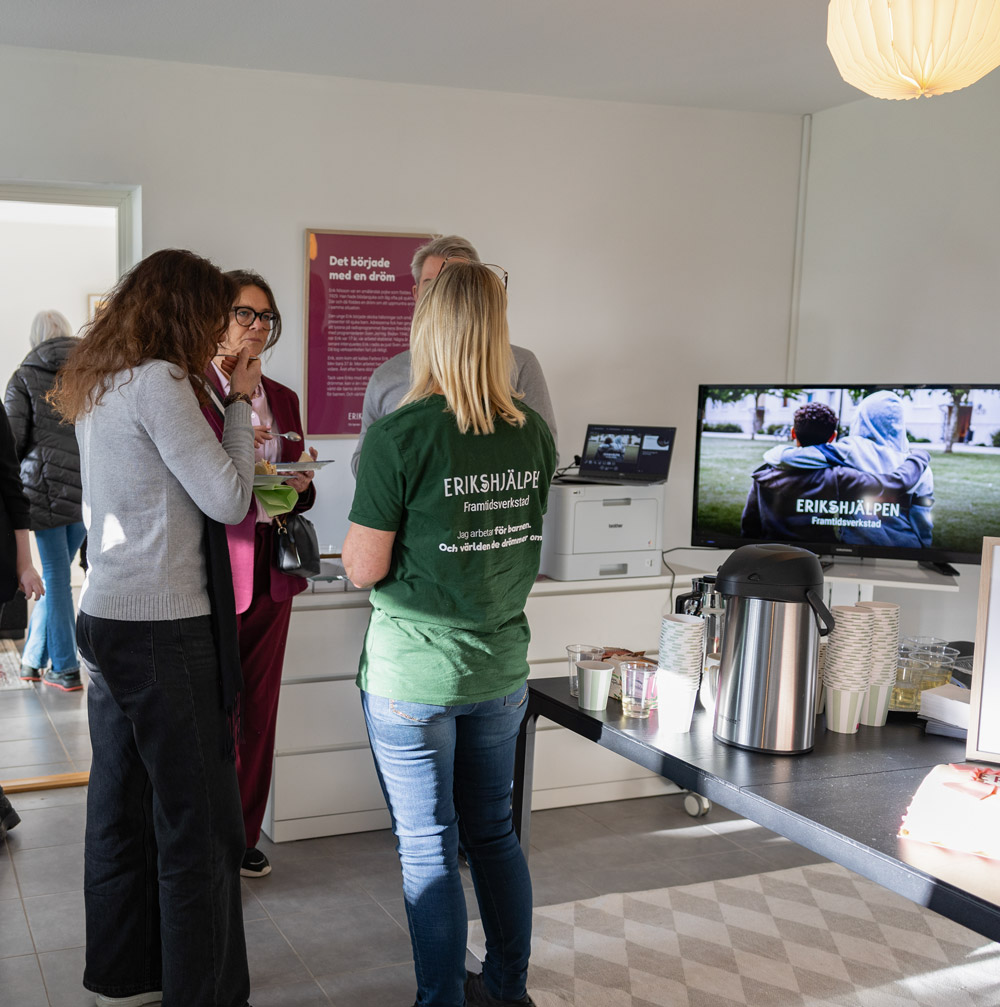
On Thursday, May 26, 2026, Erikshjälpen’s seventh Future Workshop was inaugurated. The new community center in the Linehed neighborhood is designed to provide children, young people, and families with a safe place for support, fellowship, and activities.
With an open house, cake, and a ribbon-cutting ceremony, Erikshjälpen FramtidsverkstadHalmstad in Linehed.
“We want to create a sense of an extended living room here—a safe place where children and young people are met by someone who believes in them and where they can feel that the future belongs to them,” says program coordinator Yasemin Celik.
We want to create a sense of an extended living room here.
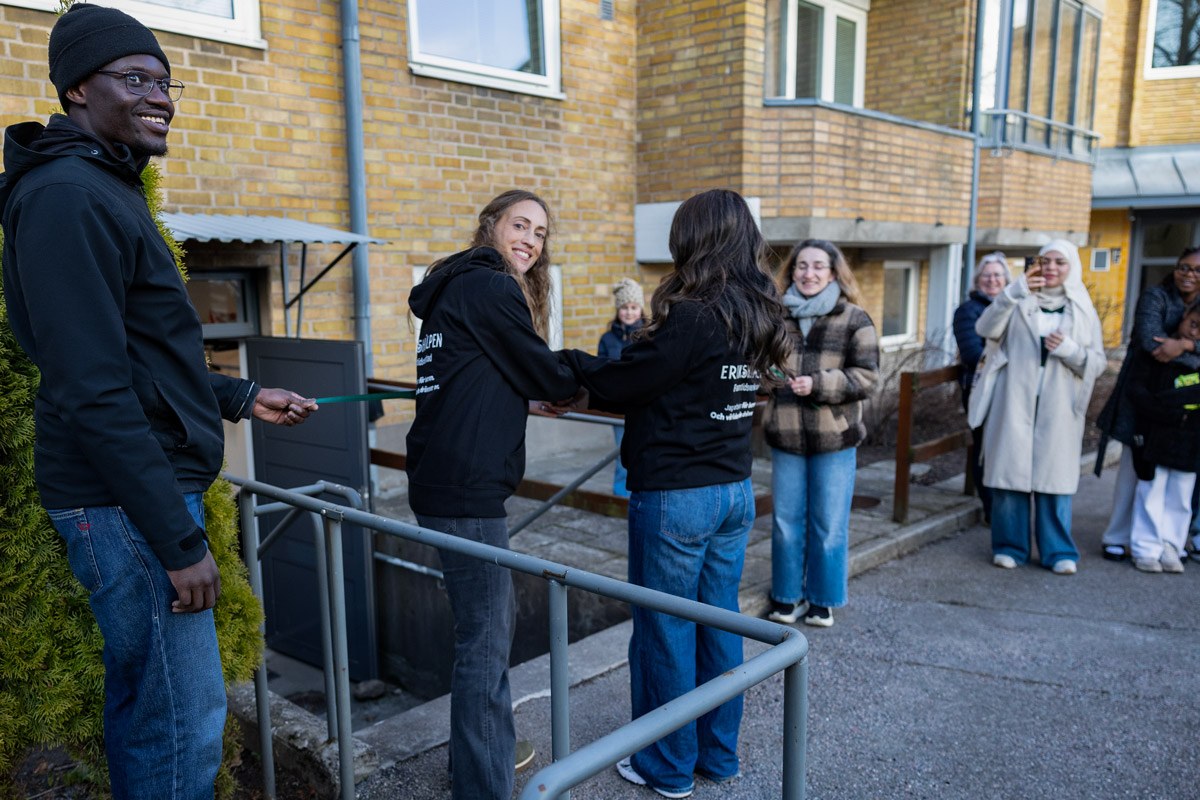
Karin Tengnäs and Yasemin Celik, program coordinators at Erikshjälpen Framtidsverkstad, cut the ribbon during the opening ceremony.
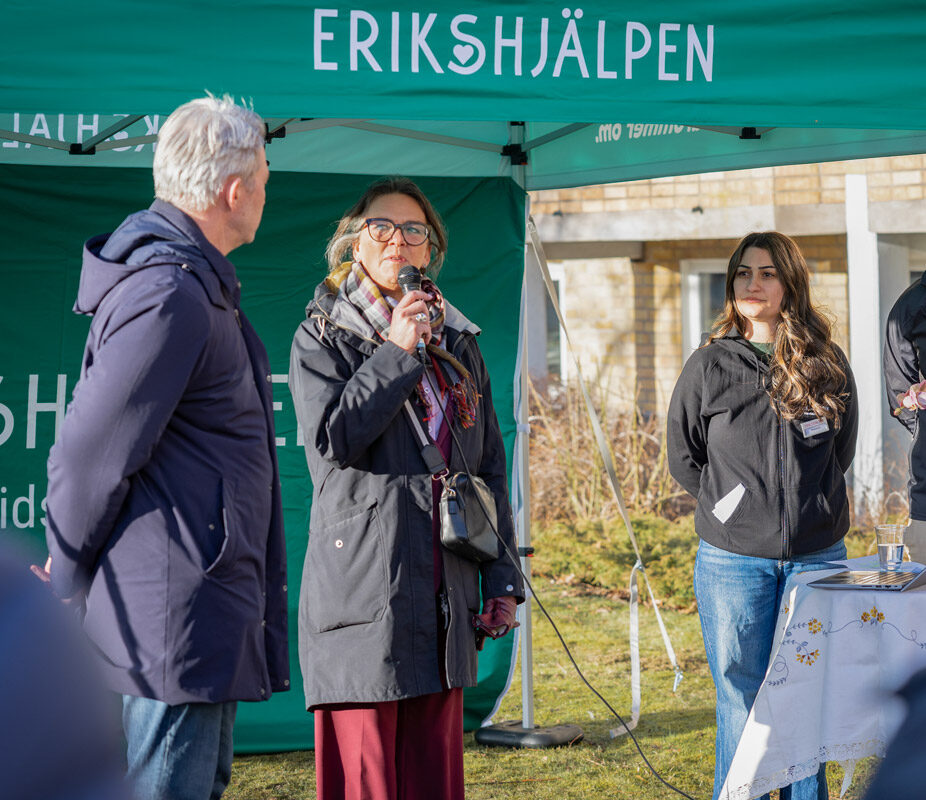
Mikael Elveroth and Ingrid Gustavsson from the Ljungberg Foundation.
Karin Tengnäs and Yasemin Celik, program coordinators at Erikshjälpen Framtidsverkstad, cut the ribbon during the opening ceremony.
Mikael Elveroth and Ingrid Gustavsson from the Ljungberg Foundation.
No Future Workshop without collaboration
Several of Erikshjälpen’s key partners were in attendance at the opening ceremony. Representatives from the City of Halmstad, civil society, and the housing company HFAB were given a tour of the new facility.
The initiative in Linehed has been made possible with support from the Ljungbergska Foundation and will be carried out in collaboration with several local partners. Plans are already underway for a number of activities, in partnership with HFAB and others, to engage children and young people in the area.
“ Halmstad should be a safe municipality with a strong sense of community,” says Anna Wallefors, deputy municipal director of Halmstad Municipality. “Collaboration with civil society is key to our success, and we are convinced that ‘ Erikshjälpen Framtidsverkstad ’ will contribute to this.”
Collaboration with civil society is key to success.
A place for support, community, and growth
The Future Workshop in Halmstad is intended to be a safe place where young people can grow both individually and together with others. Children and young people get to have a say in which activities are offered and which issues are important to address.
The Future Workshop will also serve as a gathering place for the whole family. The goal is to strengthen parenting and contribute to positive development throughout the area.
The program is led by Yasemin Celik and Karin Tengnäs, who both have experience in social work with young people and parents, as well as in children’s rights.
“We complement each other very well, both in our preventive and promotional efforts,” says Karin.
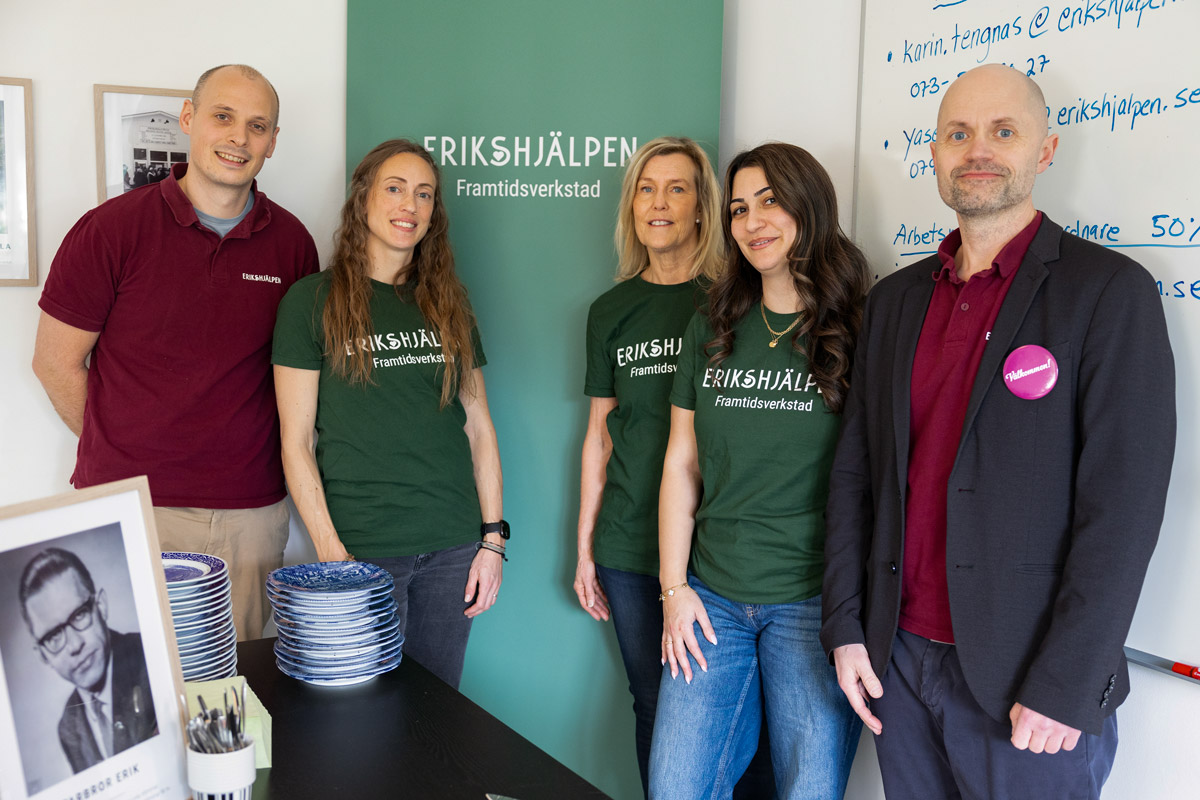
Jonatan Saldner, Karin Tengnäs, Jannica Johansson, Yasemin Celik, Björn Mikmar.
Jonatan Saldner, Karin Tengnäs, Jannica Johansson, Yasemin Celik, Björn Mikmar.
In close collaboration with Erikshjälpen Second Hand
The idea is for Erikshjälpen Framtidsverkstad serve as a bridge between families, civil society, and the workforce—and to create new opportunities for those who are excluded from the labor market.
That is why a key part of the initiative is the partnership with the local Erikshjälpen Second Hand. Jannica Johansson, employment coordinator for Framtidsverkstaden, has her office in the store. From there, she will help young people and parents get closer to the workforce through job training and networking, among other things.
“We hope to play a key role in the municipality’s efforts to support young people who are unemployed while transitioning from school to work, and to create new paths forward,” says Jannica Johansson.
For a future with equal opportunities for all
Now Karin and Yasemin are looking forward to meeting children, young people, and parents in Linehed. One of the first activities being organized is a study workshop in collaboration with the Red Cross and the Halmstad parish. There will also be a resume workshop where young people can get help taking their first steps toward a career. And on April 11, a community organization fair will be held in Linehed Park, where local organizations will present their activities and inspire more people to get involved in community life.
“The Future Workshop is meant to be a place where young people feel included, where more of them can find paths to further education or employment. We want to support and guide both young people and parents toward the right kind of support and opportunities,” says Karin.
Karin and Yasemin hope that Framtidsverkstaden will become an integral part of Linehed. The initiative is intended to be a key component in the effort to promote equal opportunities for children and young people and to strengthen their prospects in the area.
Author: Lena Elf
Photographer: Lena Elf
Every Friday, families gather at Erikshjälpen Framtidsverkstad in Gränby and shares experiences and builds relationships. With support from the Postcode Lottery we run the project Föräldrakraft , with the goal of strengthening parents and giving children safer growing up conditions.
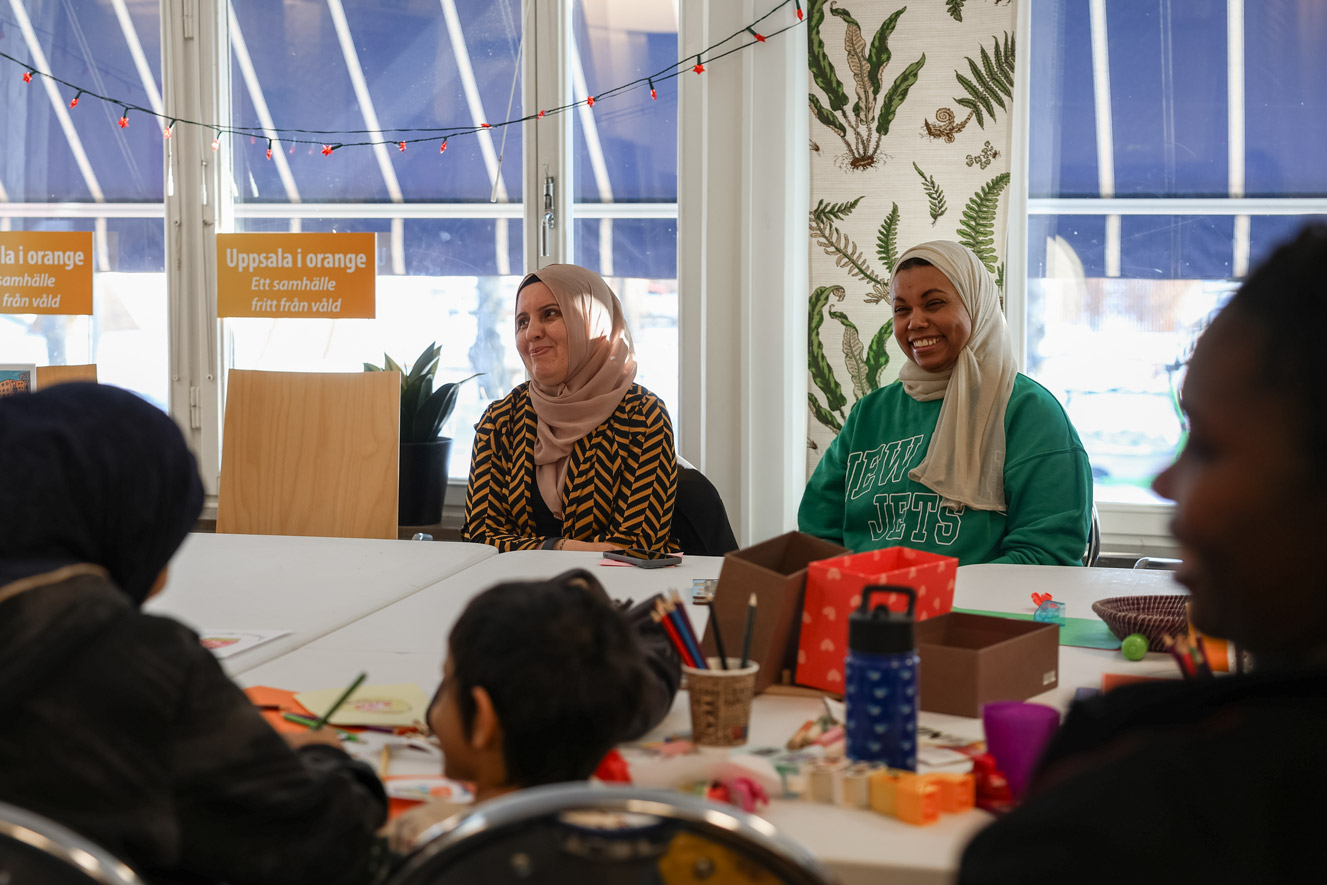
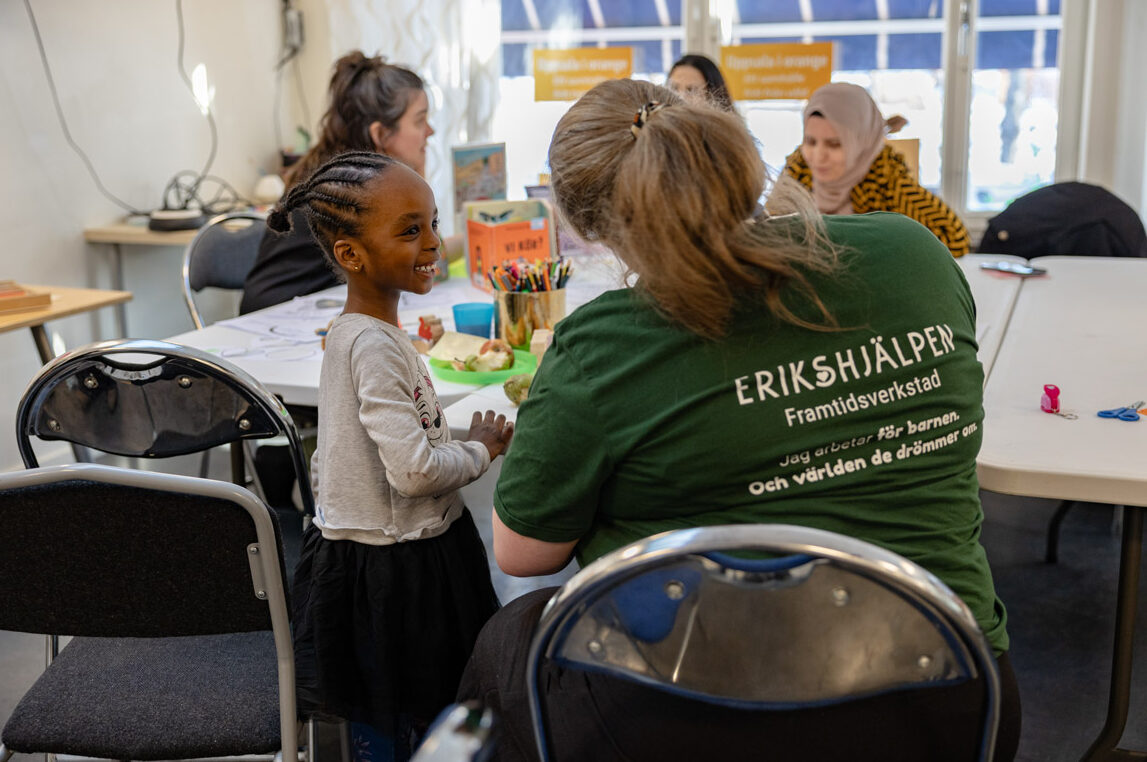
The air is filled with the aroma of coffee and freshly made cheese sandwiches. Parents arrive, greet one another, and take their seats at the tables. They talk about everyday worries and dreams for the future—about children, school, setting boundaries, and the teenage years. The children play nearby. The atmosphere is relaxed, open, and unpretentious.
Café Framtid
From 11 a.m. to 1 p.m., the Café Framtid activity takes place. The main focus here is to meet, talk, and support one another. When “ Föräldrakraft ” was launched, consideration was given to the fact that many families are in a financially vulnerable situation. Therefore, the program focuses on being accessible and costing as little as possible.
“We want to offer a wide range of support to parents,” says program coordinator Sarah Campbell. “This could be a study group, a place to get information, or simply a place where you can take a breather. We recommend activities that cost little or nothing at all, or we organize our own.”
We tailor our activities to the people who come here. How many there are. How they’re feeling. Whether they’re tired, sad, or just need to sit down for a while.
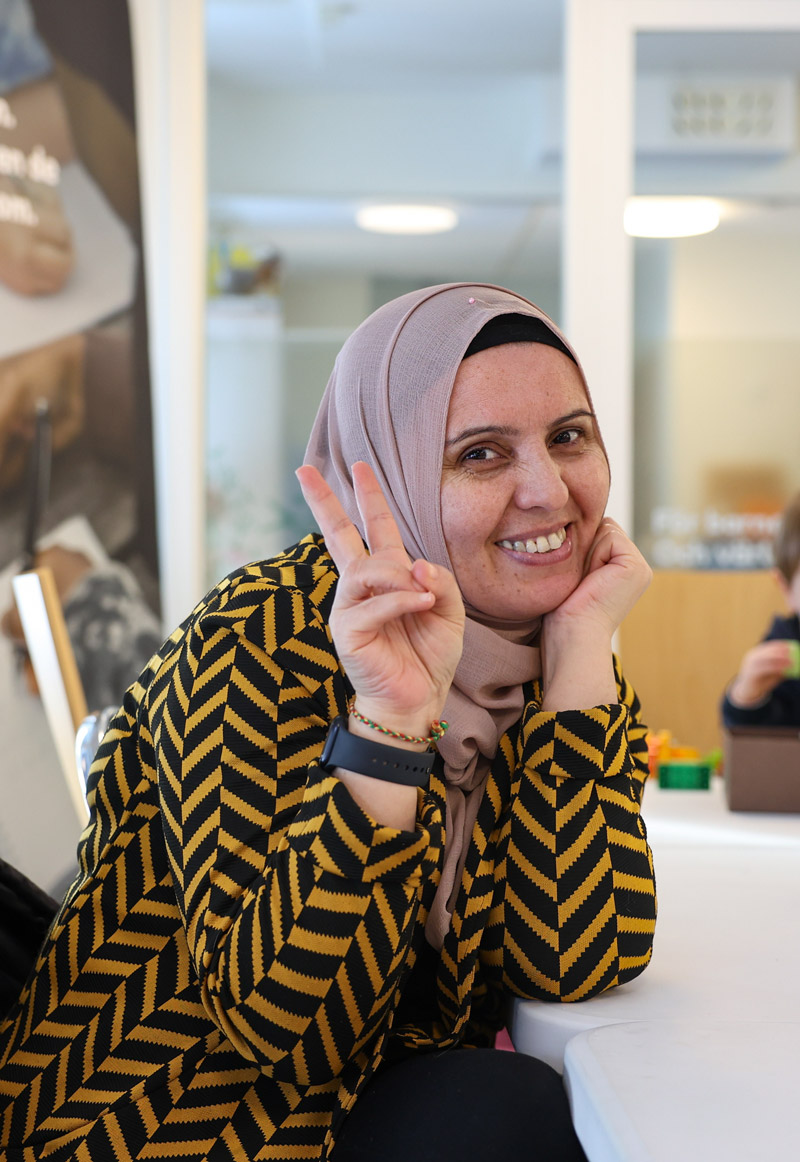
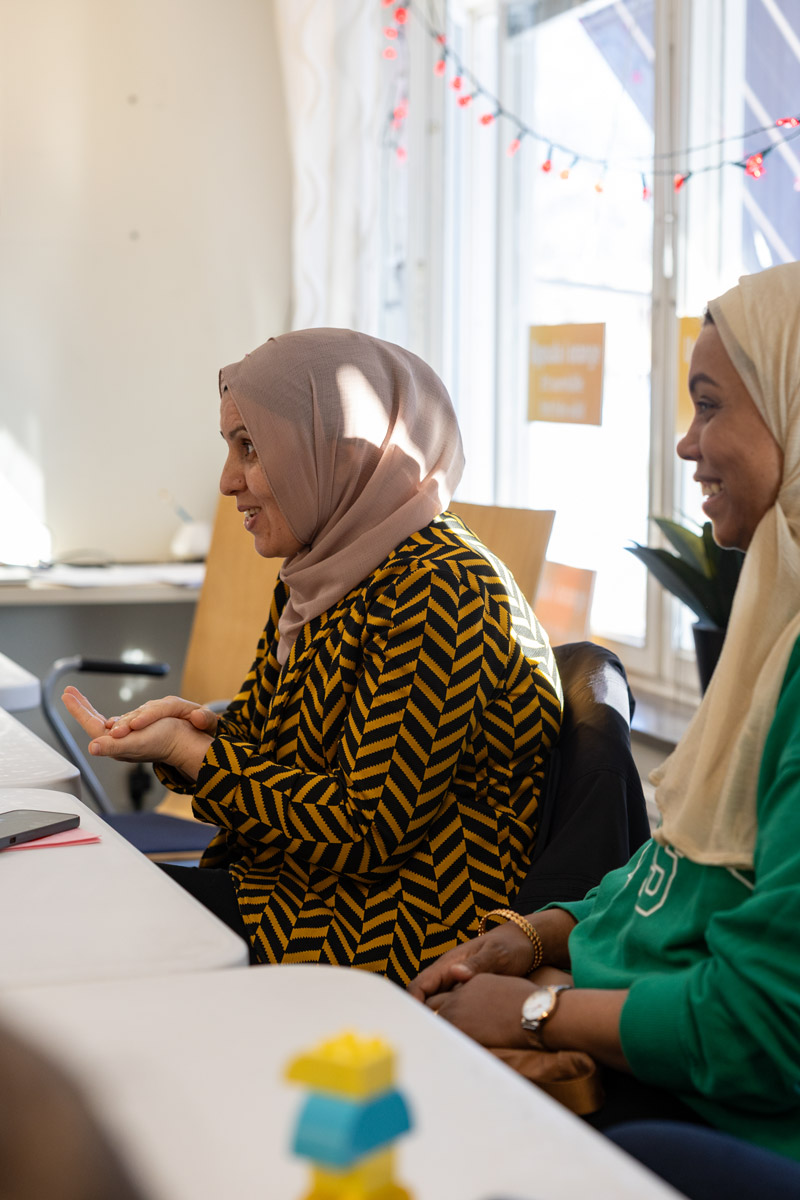
Pinar and Najat, participants in " Föräldrakraft."
Pinar and Najat, participants in " Föräldrakraft."
Finding balance in a new country
Pinar has three children and has been a participant on * Föräldrakraft * since the show began. She and her family are from Turkey and have lived in Sweden for ten years. Pinar’s husband works as an electrician, and she herself completed her training as a childcare worker last year. She says that parenting sometimes feels like walking a tightrope between cultures. The children want to do what their friends do—for example, eat candy more often than just on Saturdays and start wearing makeup earlier than Pinar feels is appropriate.
“Being a parent here in Sweden is very different,” she says. “Religion, language, rules—everything is different.”
For Pinar, it’s important to meet other parents. Not least to get tips and advice from people who are going through similar experiences in their daily lives. That advice means more to her than advice from experts who don’t understand her reality.
“I feel like we understand each other better as a family now,” she says. “My kids listen to me more, and we’ve grown closer as a family.”
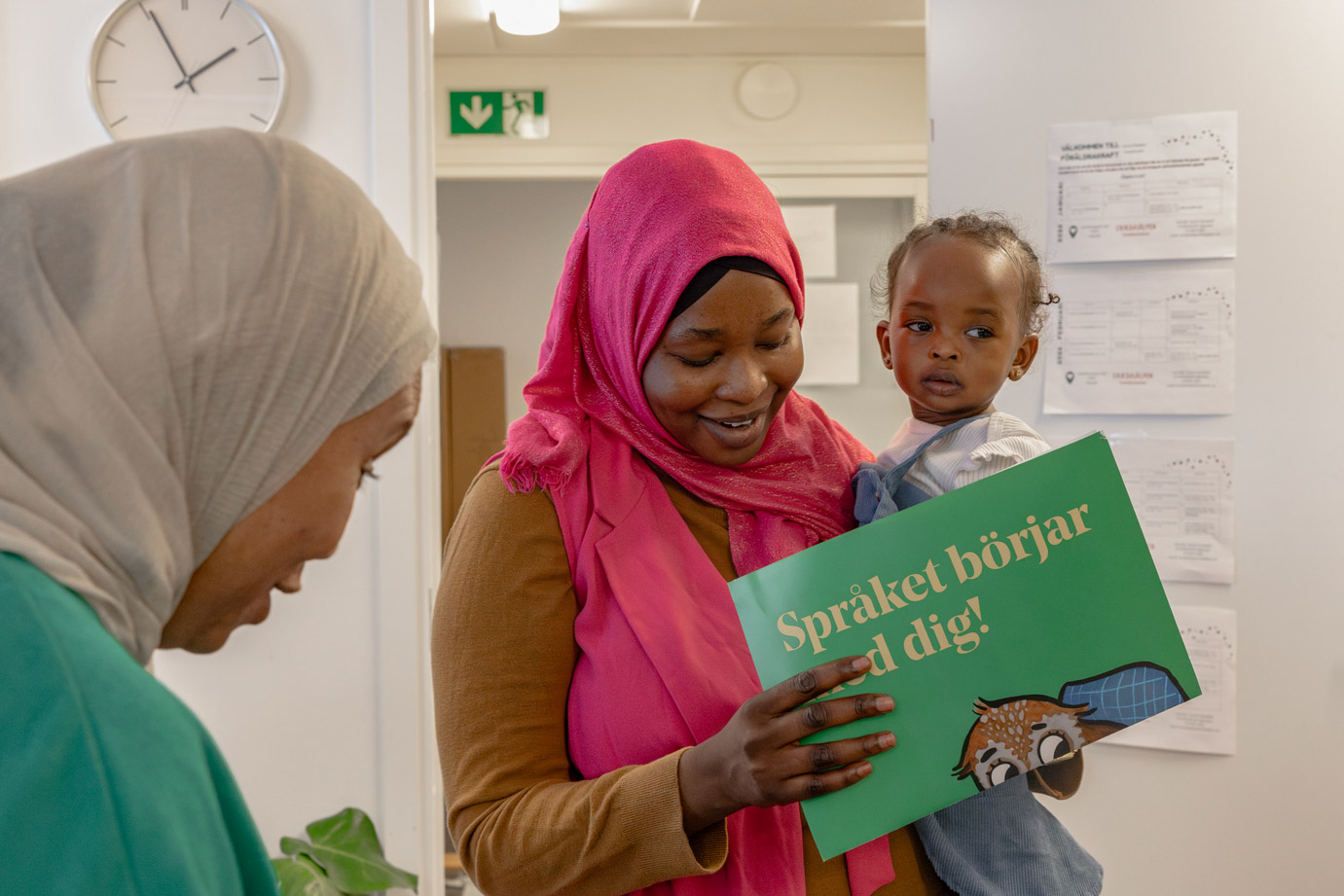
Najat with Amina and her daughter.
Najat with Amina and her daughter.
The Future Workshop as a Second Family
Amina is from Sudan and has no relatives in Sweden. She describes Erikshjälpen Framtidsverkstad a second family—a place where she feels a sense of belonging and receives support. At Café Framtid, she meets other parents, shares experiences, and makes new friends.
“Here, we can socialize and get information at the same time. I’ve become happier and feel more secure,” says Amina.
I've become happier and more confident.
Future Plus – Language, Identity, and the Future
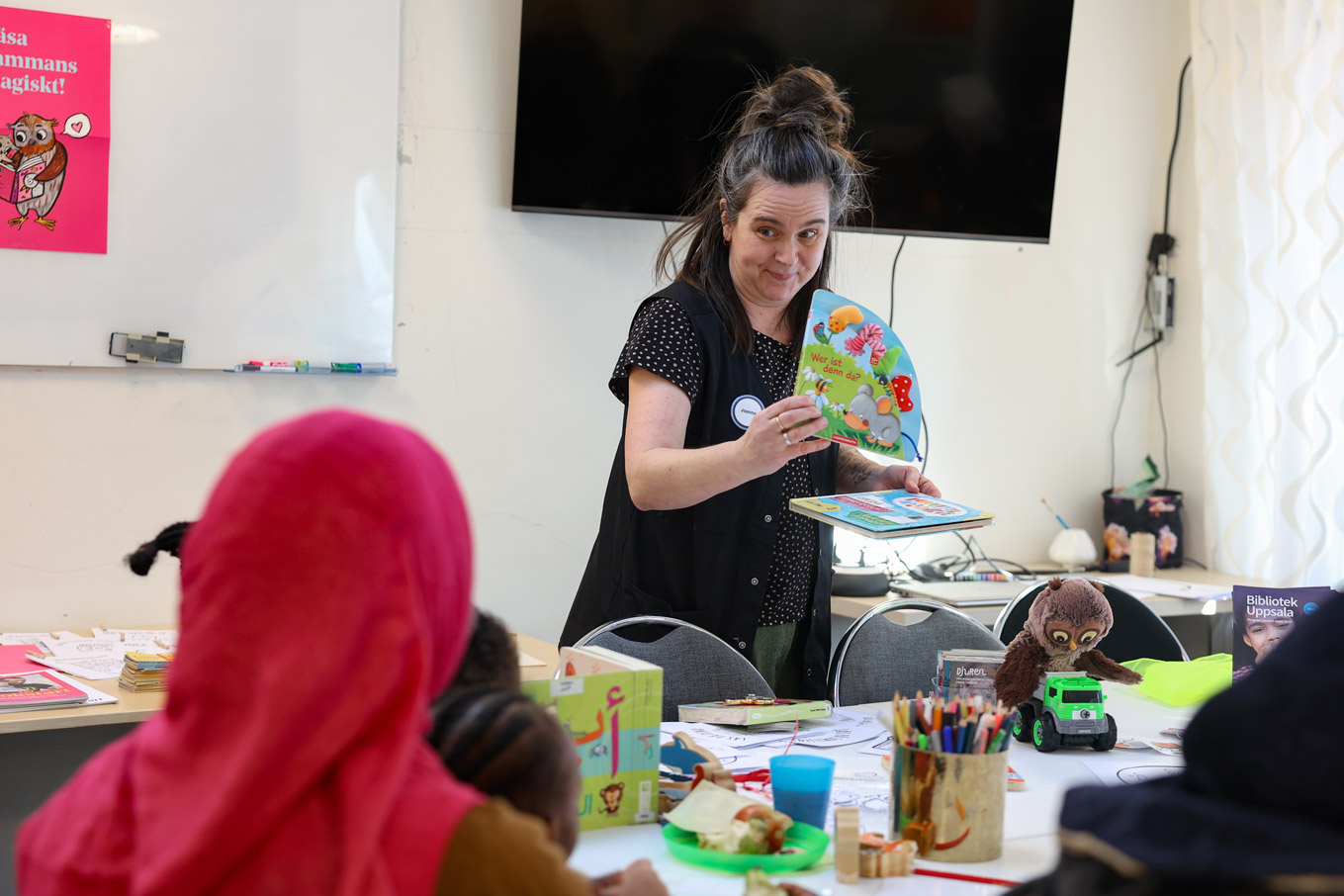
After lunch, the day shifts focus. From 1:00 to 3:00 p.m., it’s time for Framtid Plus. Today, librarian Joanna Meier is visiting. She reads aloud to the children and talks with the parents about language—about speaking multiple languages. About the meaning of words and how language carries both identity and the future. The children participate with curiosity, fascinated by Joanna’s energy and the fact that she speaks multiple languages and uses sign language.
When representatives from libraries, social services, or the police, for example, meet with families in the area, it lowers the barriers to engagement. Parents get to meet the people behind the professional roles and learn where to turn if they need help. This fosters a sense of security and inclusion—an important part of Föräldrakraft’s mission.
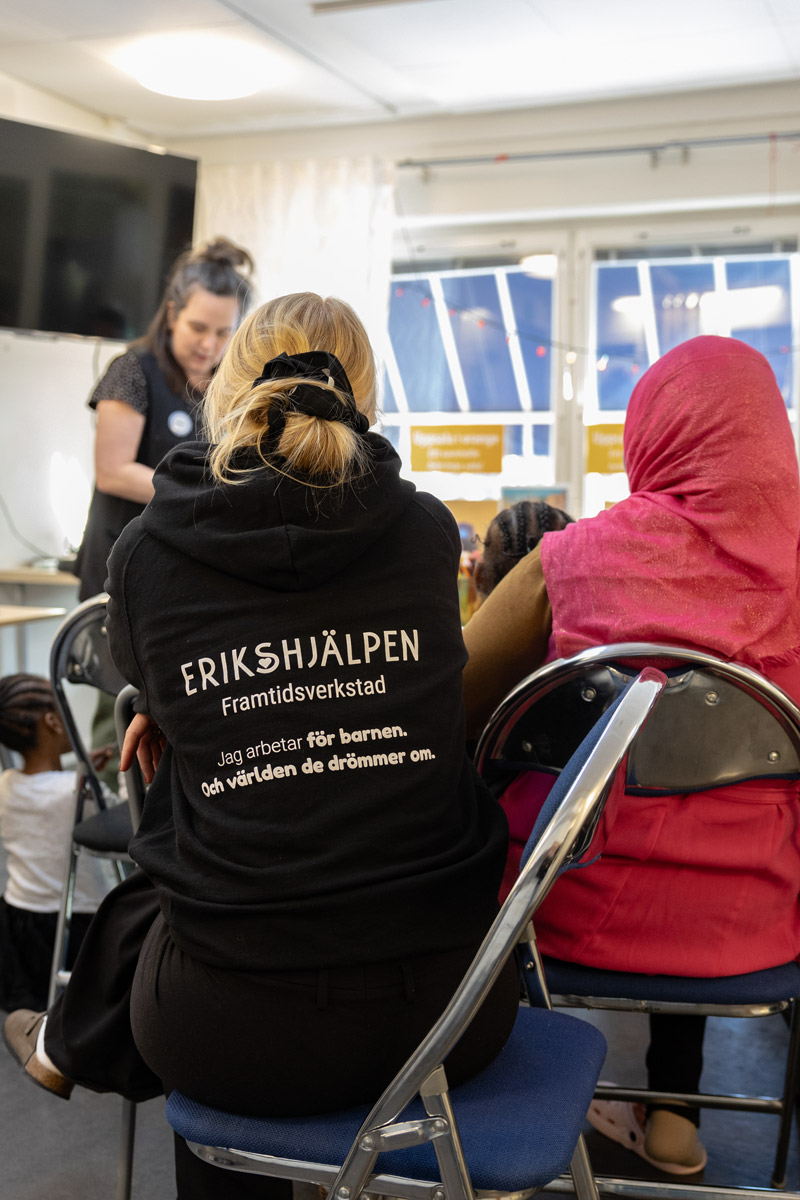
Intermission
Through “ Föräldrakraft ,” children and parents have the opportunity to come together through various activities. One example is “Mellansnack”—an activity aimed at children at an age when they sometimes pull away from their parents and test their independence. This is a time when many parents worry about losing touch with their children.
Sarah describes how wonderful it is to see fathers who are a bit reserved at first, but who, after a while, start joking around playing with their children. Because when parents dare to step in, be present, and show that they want to be part of their children’s world, trust is built, and moments like these can be crucial in preventing the relationship from drifting apart.
This is how we reach parents in the area
One of the biggest challenges for “ Erikshjälpen Framtidsverkstad ” is reaching out to parents. Information about activities is often shared through social media, posters, WhatsApp groups, and key individuals in the area. But collaboration with other organizations is also an important part of the effort. “ Föräldrakraft ” works in partnership with, among others, Lötenkyrkan, Gränby Allaktivitetshus, and Platssamverkan to strengthen the network supporting families.
One example of how “ Föräldrakraft ” reaches out to parents is the “Activity Cart.” When staff members go out into the neighborhood, they bring a cart filled with items that can make everyday life easier. There’s also a party box available to borrow for birthday parties, complete with plates, glasses, and a popcorn machine. This is a much-appreciated resource for families who can’t afford to buy everything themselves, but it’s also good for the environment.
“The cart was the first thing we bought,” says Sarah, proudly showing off the cart filled with essentials like toothpaste, reflectors, paper towels, and small hygiene items. These items were Corporate donated by Corporate purchased at a good price.
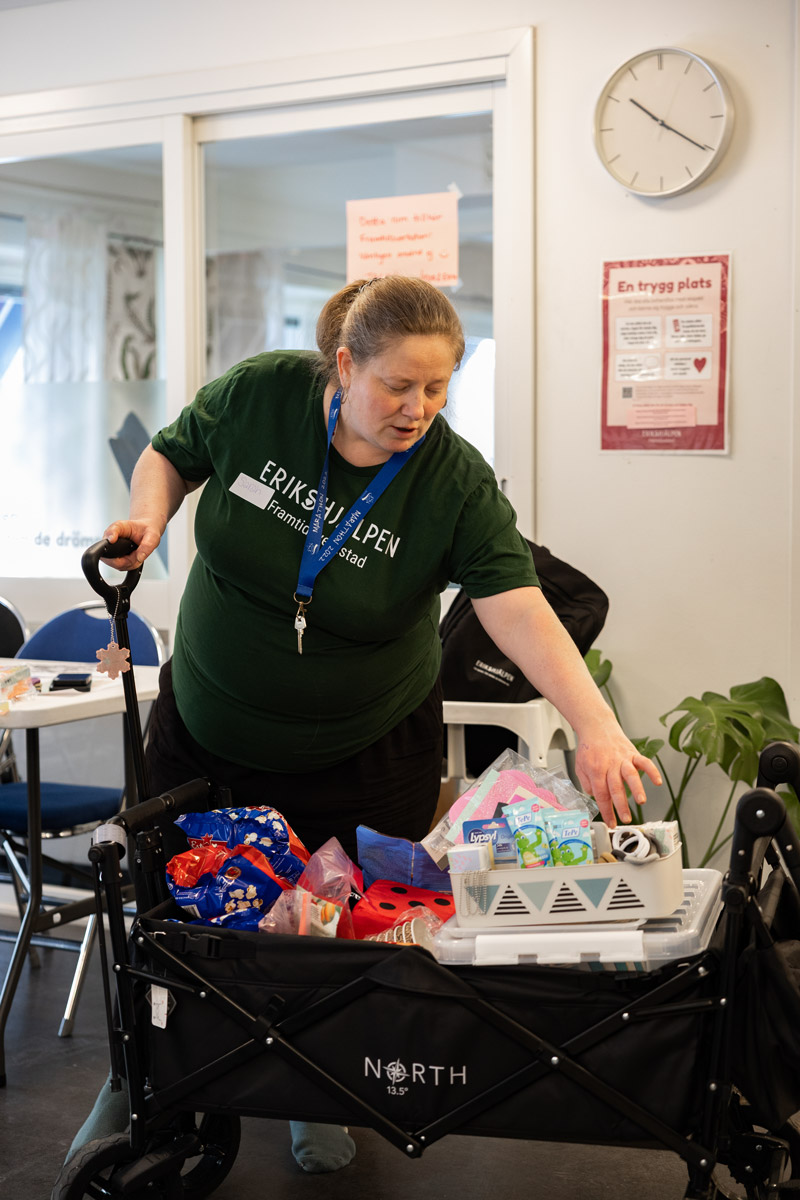
Sarah shows off the “Activity Cart.”
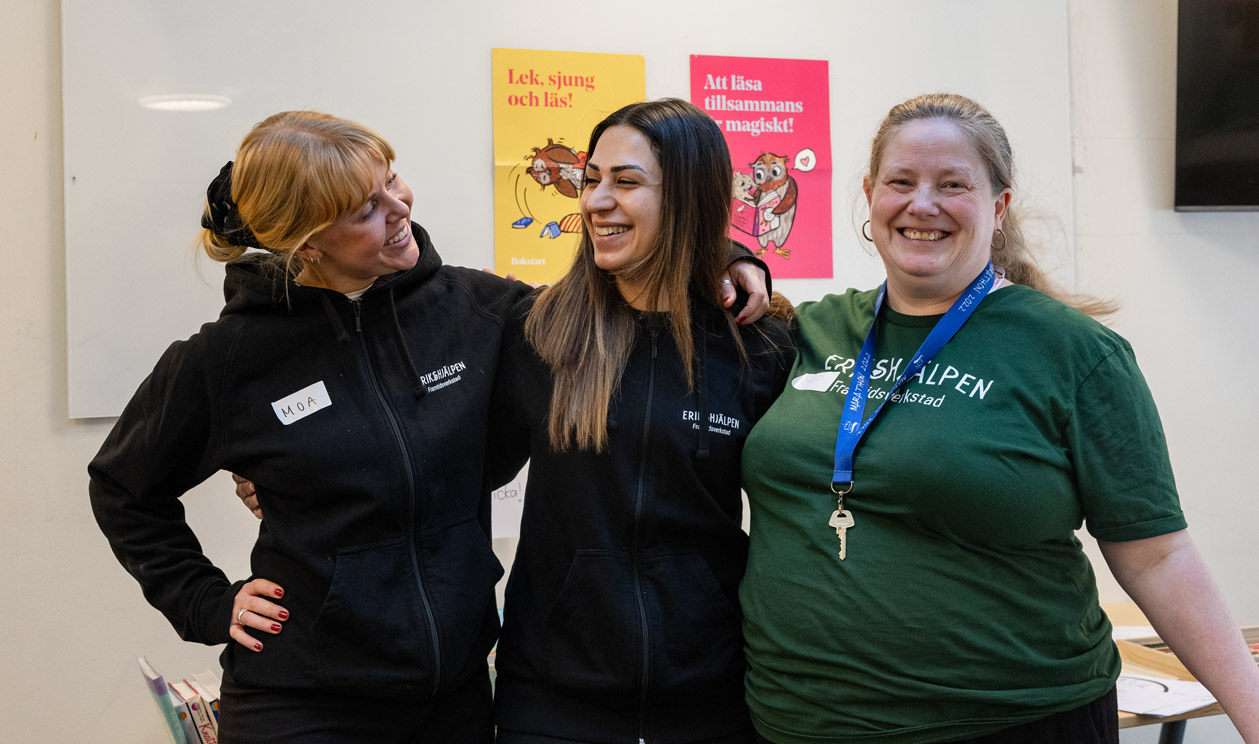
Unit Manager Moa Lindgren, Activity Leader Seham Alali, and Operations Coordinator Sarah Campbell.
Sarah shows off the “Activity Cart.”
Unit Manager Moa Lindgren, Activity Leader Seham Alali, and Operations Coordinator Sarah Campbell.
Föräldrakraft
Föräldrakraft is a project within Erikshjälpen's Framtidsverkstad, which currently operates in seven locations in Sweden.
The aim is to empower parents to support their children in the challenges they face at school and in life. During parent meetings, participants exchange experiences, but also learn more about how society works and how they can support their children.
The project is funded by the Postcode Lottery .
Author: Lena Elf
Photographer: Ronja Fagré
Shornali often saw other children playing outside while she sat alone indoors. Her limited mobility in her legs made it difficult for her to join in. Now she takes part in adapted activities at the renovated children’s center together with her new friends.
Now I know I'm not in the way. I'm just as important as everyone else. And I have dreams, too.
Shornali is twelve years old and lives in the village of Pargobindopur Abashon in Rampal, southern Bangladesh. She lives with her parents and her sister, who is two years younger. Shornali has lived her entire life with limited mobility in her legs, which makes it difficult for her to walk. There are no roads in the village and few buildings adapted for accessibility, so for a long time her world was limited to two places: school and home.
But when the Shopner Chowa Children’s Center was renovated, everything changed. The center is a place where children can play, get help with their homework, and participate in workshops. When the building and its surroundings were adapted to improve accessibility, Shornali’s world became a bigger place.
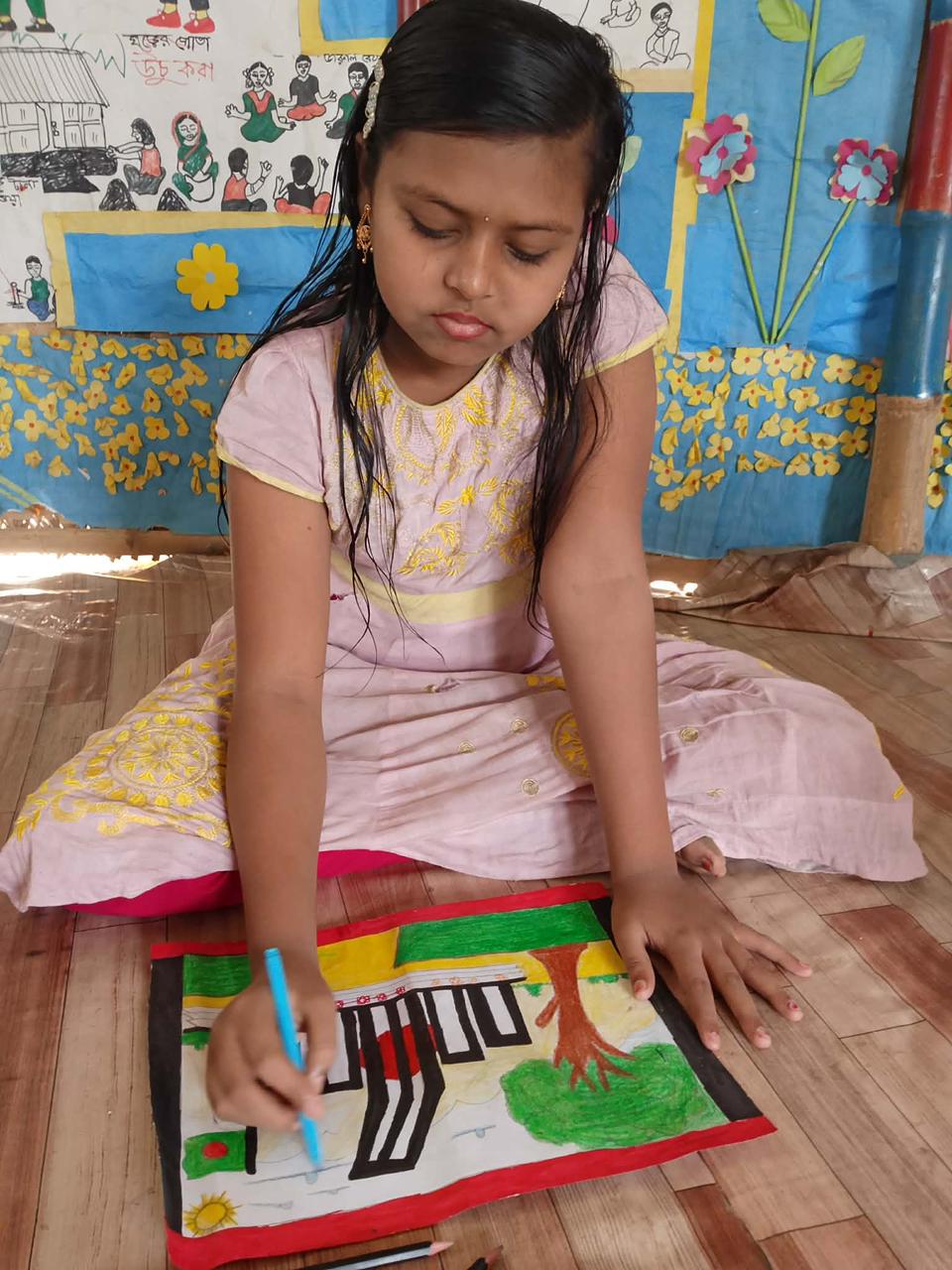
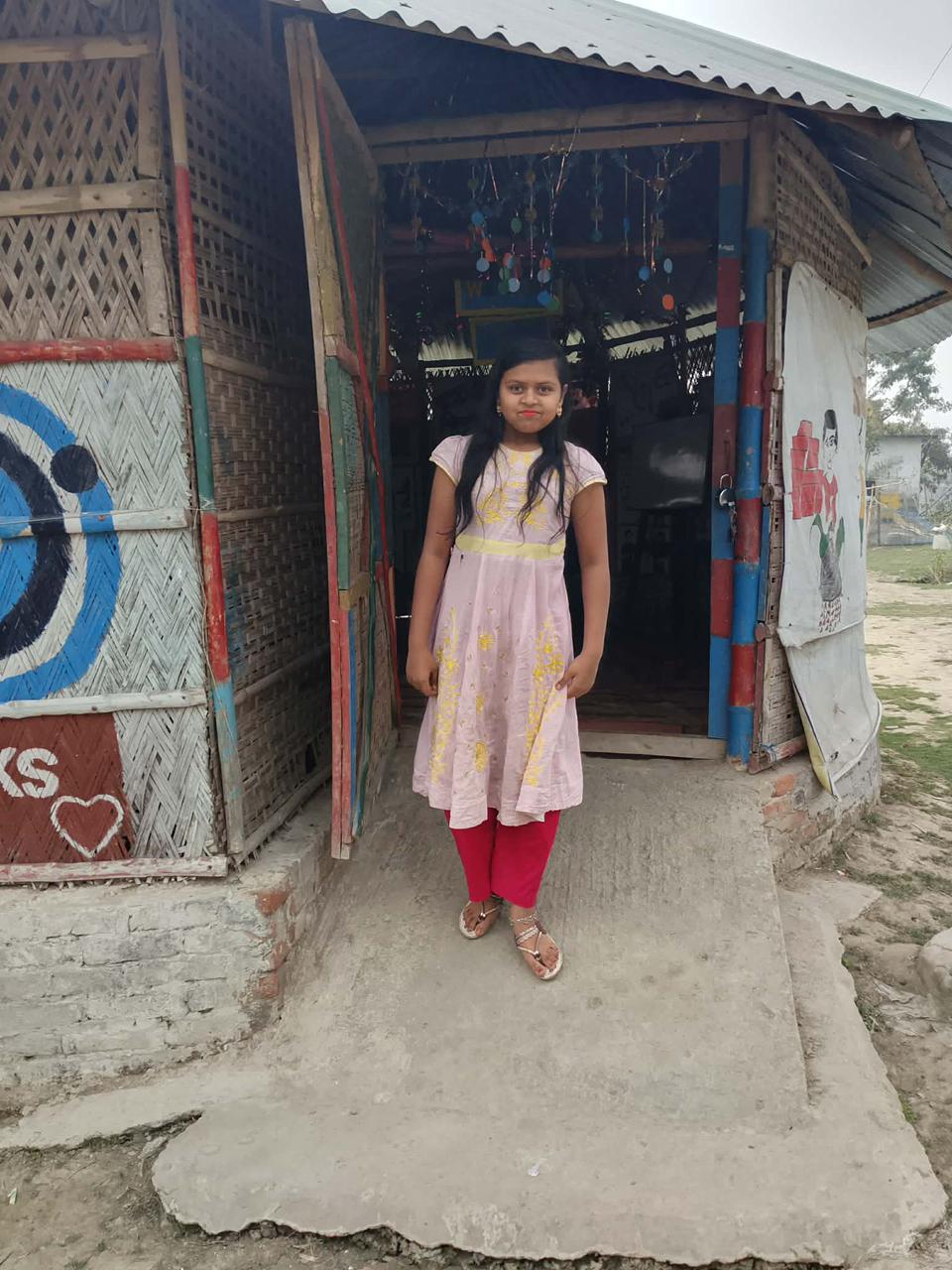
Shornali, twelve years old.
Shornali, twelve years old.
A lonely everyday life
Before Shornali started going to the children’s center, she rarely joined in games with the neighborhood children. The games were often physically demanding, and the other children didn’t know how to include her.
“The kids in my village used to play different games after school. I’d watch them through the window or from the garden. Those games weren’t for me. I couldn’t run like them. I couldn’t jump like them,” says Shornali.
The evenings were the worst. When the sun went down and she could hear the laughter of other children outside, she felt especially lonely.
“It felt like the world was moving, but I was standing still. But my sister was always with me. She was my only friend. Without her, I don’t know what I would have done on all those lonely evenings,” saysShornali.
A ramp changed everything
Shornali says that the renovation of the children’s center gave her something she had long been missing—freedom.
– I have a hard time walking up stairs. When they built a ramp to the children’s center, it completely changed my life.
When the center installed a ramp, the entrance became accessible, and children with mobility difficulties were able to enter on their own for the first time. This simple change removed a major barrier and gave the children both independence and greater self-confidence. Now Shornali could visit the center regularly and meet other children, and her life began to change.
For the first time, I was able to walk in all by myself. I felt free.
A place where all children can participate
Together with local partner organizations, Erikshjälpen works to promote accessibility and inclusion. At the children’s center, children learn more about inclusion through conversations and play. Many children also share what they’ve learned with their parents and neighbors, helping to spread the message further.
“We’ve learned about children’s rights. Now I know I’m not in the way. I’m just as important as everyone else. And I have dreams, too,” says Shornali.
Indoor games and adapted outdoor activities ensure that all children can participate.
“I love playing carrom and Ludo. I’ve even tried to learn chess,” Shornali says proudly.
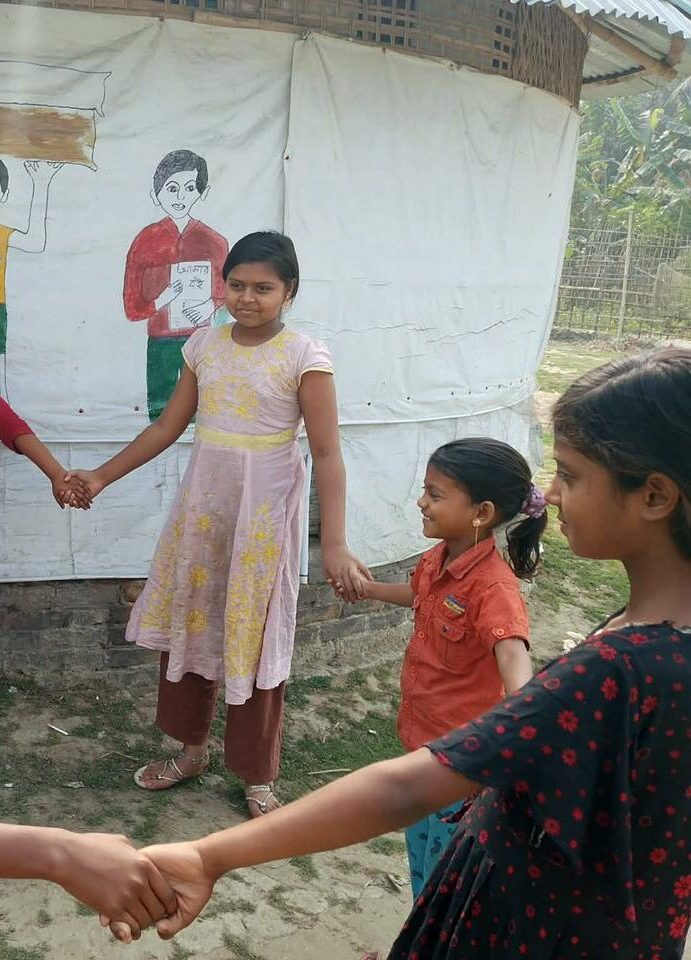
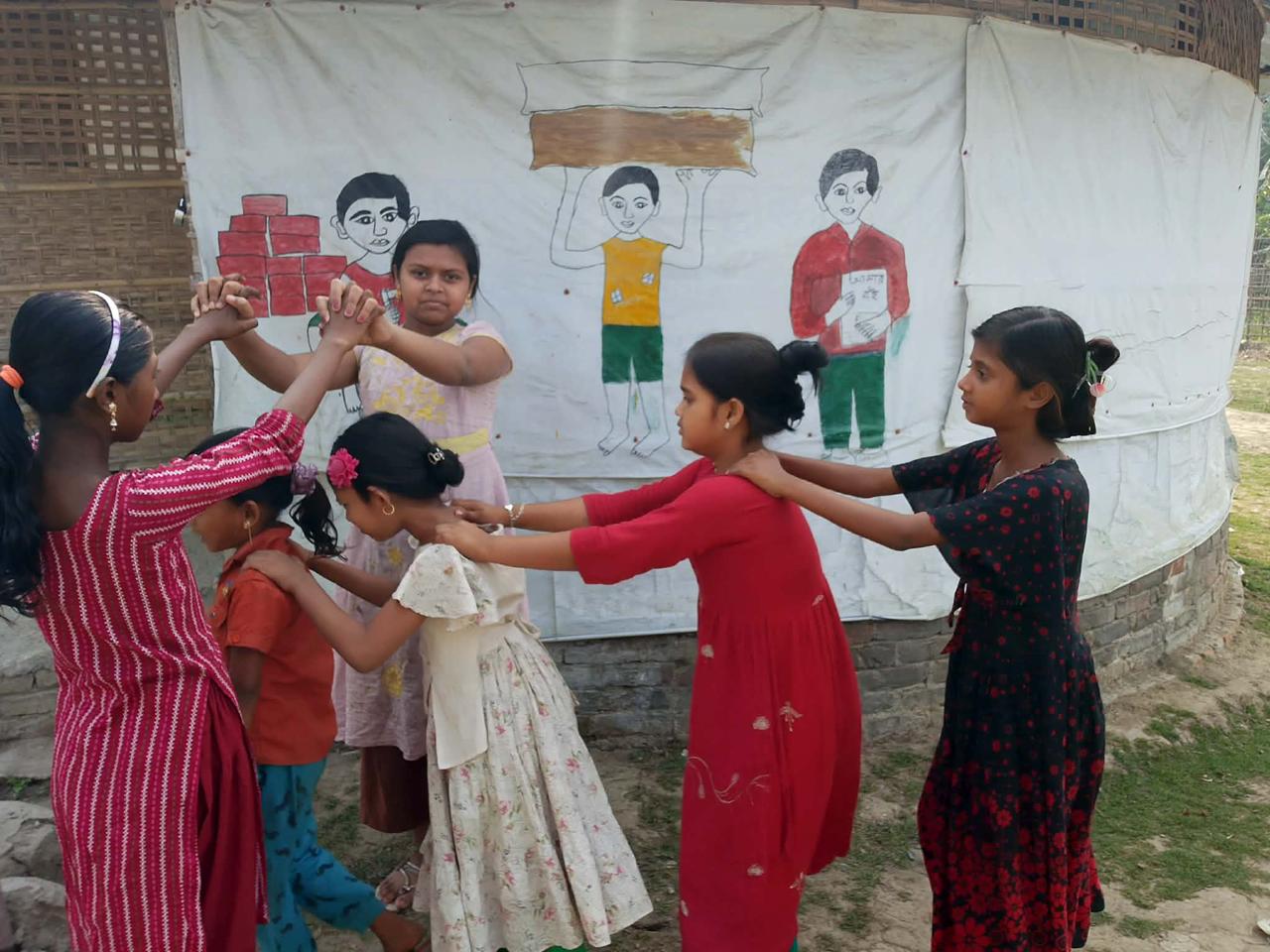
Shornali is playing with her friends outside the children's center.
Shornali is playing with her friends outside the children's center.
“The best part is my new friends”
In the past, Shornali used to feel shy and uncomfortable when talking to her classmates at school because of her disability. She was afraid that the other children would think she was different. But now that she can participate in activities and games, she has made many new friends and her self-confidence has grown.
“The best thing about the center is my 36 friends. They understand me and support me. With them, I don’t feel different,” says Shornali.
Now my evenings aren't lonely anymore. They're the best part of my day.
Pargobindopur Abashon is a government-run settlement consisting of small houses built on a hill. The residents moved here due to river erosion and flooding.
Children with disabilities in villages like these often face both physical and social barriers. Roads and buildings are rarely accessible, and awareness of disabilities is low.
Together with local partner organizations, Erikshjälpen works to change attitudes, improve accessibility, and create a more inclusive environment.
We are now launching a new tool that makes it easy for private individuals, Corporate organizations to start their own fundraising campaigns to support Erikshjälpen’s work for children’s rights.
Celebrate, run, create, and sing for the children! Now, private individuals, Corporate organizations can easily start their own fundraising campaigns via erikshjalpen.se. When you start your fundraising , you fundraising choose a name, set a goal, and get materials to print or share on social media. All funds raised go toward Erikshjälpen’s work for children’s rights.
For example, you can start a fundraising connection with a birthday, a concert, a race, or a yard sale. Everyone who starts a fundraising support from Donor services, which helps promote and track the fundraiser.
Want to learn more? Visit " Start fundraiser " or contact Donor services if you have any questions.

Ukraine is currently experiencing its coldest winter in several years. To meet the urgent needs, Erikshjälpen and Radiohjälpen have launched a new initiative to help families cope with the cold.
It has been four years since Russia's large-scale invasion of Ukraine. The situation remains serious. Today, there are 3.8 million internally displaced persons in the country. Since February 2022, 745 children have been killed and over 2,300 injured, according to the UN.
Cold weather exacerbates situation in Ukraine
The winter of 2025–2026 has proven to be one of the most challenging periods since the start of the war. Families lack warmth and security due to destroyed homes and disrupted infrastructure such as electricity and water supplies. In Kiev, entire neighborhoods have been forced to endure temperatures as low as minus 25 degrees Celsius without the ability to heat their homes.
The harsh winter creates more than just material needs. Parents worry about keeping their children warm, and entire communities live in constant anxiety about how they will survive the winter. The combination of extreme cold and energy shortages increases psychological stress and leaves many in urgent need of both warmth and supplies, as well as psychosocial support.
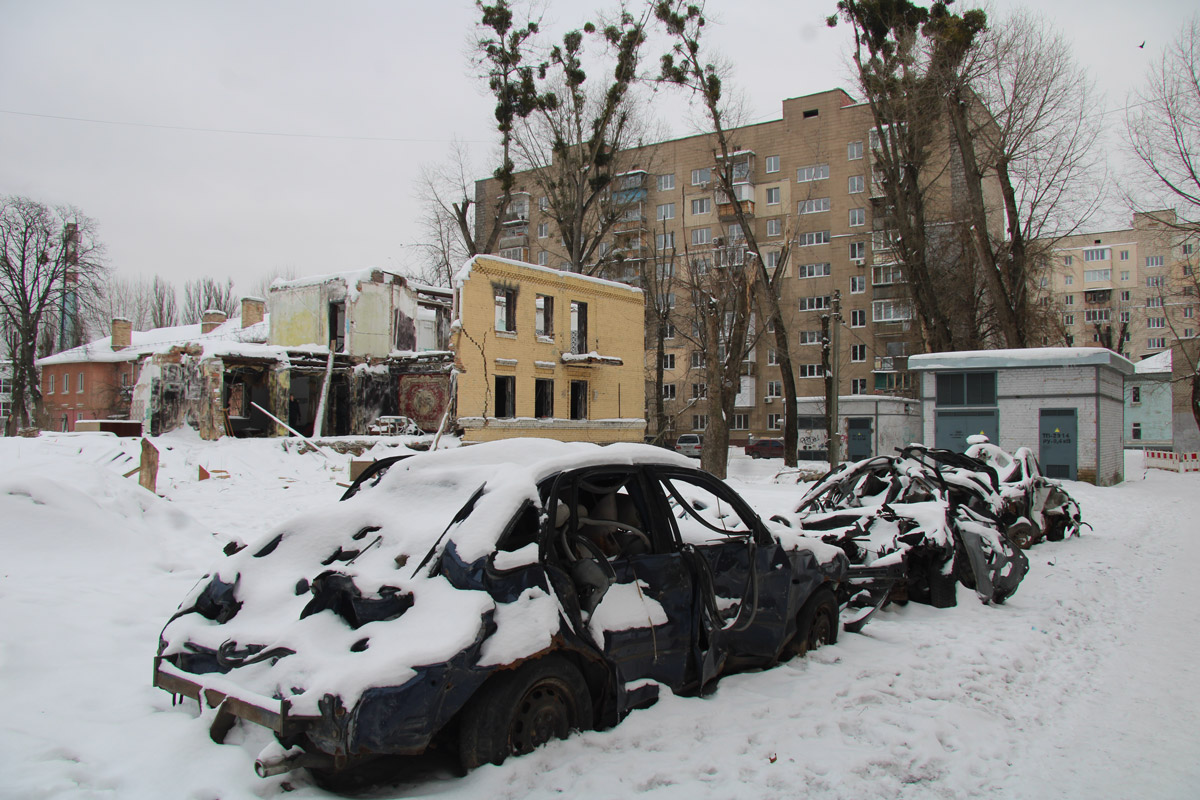
Car wrecks and destroyed houses in a suburb of Kiev. Photo: Bengt Sigvardsson.
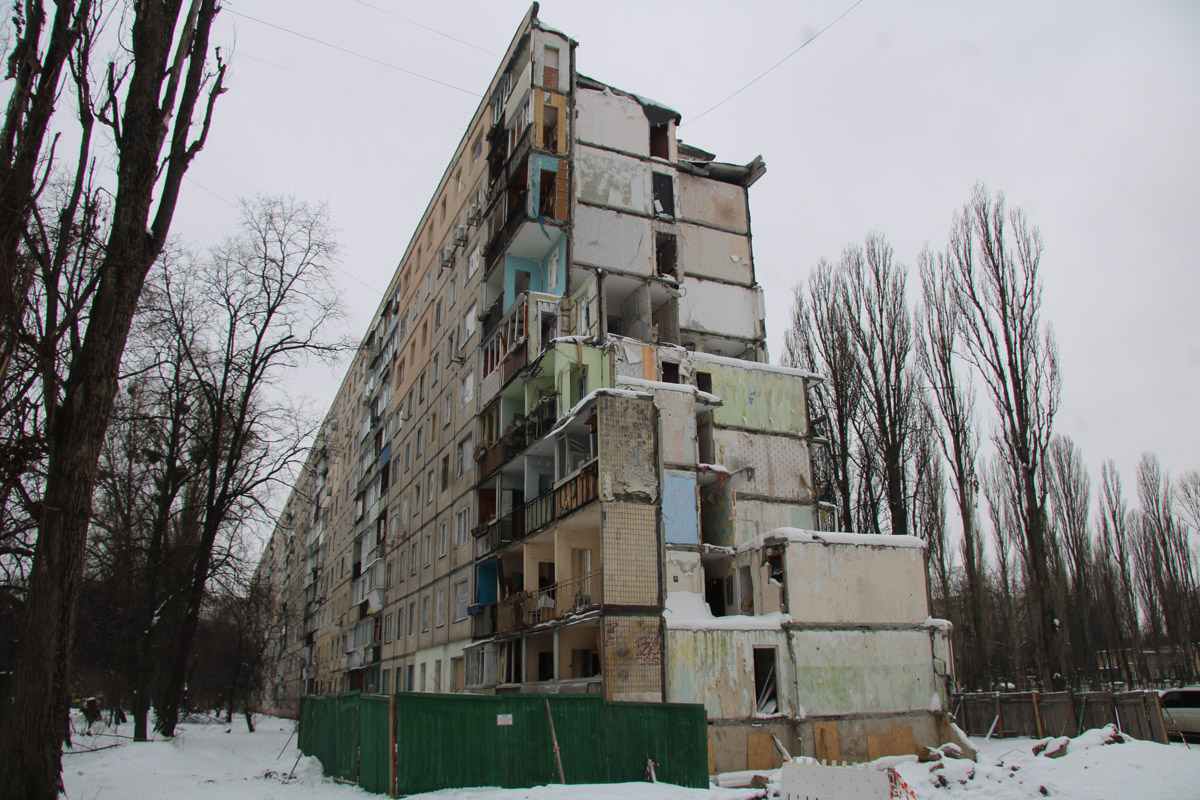
Apartment buildings destroyed by Russian air strikes. Photo: Bengt Sigvardsson.
Car wrecks and destroyed houses in a suburb of Kiev. Photo: Bengt Sigvardsson.
Apartment buildings destroyed by Russian air strikes. Photo: Bengt Sigvardsson.
Erikshjälpen's efforts against the cold
Erikshjälpen, together with Radiohjälpen, has launched an extra initiative to alleviate the worst of the suffering. The initiative has a total budget of Swedish kronor (SEK) 3.3 million Swedish kronor (SEK) is being implemented in ten regions in Ukraine.
This will be distributed:
- blankets
- warm clothes
- food
- thermoses
- LED lights
- heating fans
To enable children to continue their education, we distribute power banks that allow them to charge their phones and computers for distance learning.
Portable power stations are distributed to families with children with disabilities. They provide basic lighting, keep the internet running, and enable necessary assistive devices to be charged.

Support Erikshjälpen's work in Ukraine
With your donation, we can provide warmth, food, winter clothing, emergency supplies, and psychological support to children and families in war-torn Ukraine.
Give a gift
 Listening