The Convention on the Rights of the Child and the Global Goals on how children live
 Listening
 How can we create cities where both people and nature thrive? The SDGs and the UN Convention on the Rights of the Child point the way to a sustainable future. Find out how we can build cities that are safe, fair and environmentally friendly.
Living sustainably is important for both people and the planet. A sustainable city is safe for the people who live there, while being kind to nature.
When something is sustainable, three things are met:
- The economy is sound (economic sustainability)
- People thrive (social sustainability)
- Nature is doing well (ecological sustainability)
Economically sustainable
Financial sustainability is about using money wisely so that it lasts for a long time and helps many people, both now and in the future.
Socially sustainable
To be a socially sustainable city, there should not be large areas of poverty or high crime. Nor should there be a lot of houses that are so old and worn out that they are falling apart. People should also be in good health.
Ecologically sustainable
An ecologically sustainable city has as little pollution as possible. The city can reduce pollution by, for example, sorting waste, having good public transport by bus and train, and using solar energy.
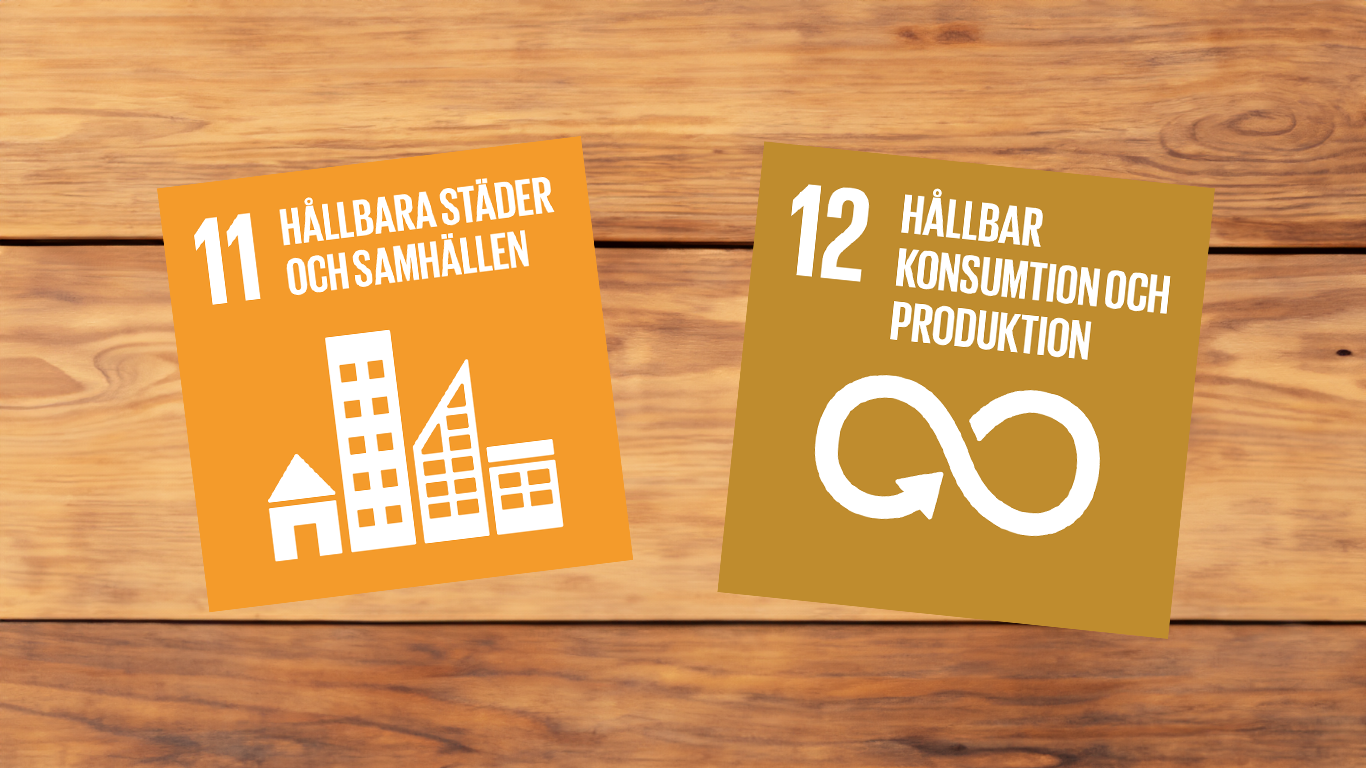
Global goals number 11 and 12.
Global goals number 11 and 12.
Global goals
Global Goals 11 and 12 focus on two of the three sustainability dimensions. The focus is on the well-being of people and on people taking care of nature.
Global Goal 11 - Sustainable cities and communities
Global Goal 11 is about creating sustainable cities and communities where both people and nature thrive. Some of the Goal 11 targets are to:
- Building homes that are not too expensive
- Everyone should have access to sustainable transport systems and public transport.
- Inclusive and sustainable urbanization
Global Goal 12 - Sustainable consumption and production
Global Goal 12 is about people consuming and producing sustainably. What we buy and what we create should be kind to nature and the world around us. One of the targets in goal 12 is to:
- Reduce the amount of waste by reducing, reusing and recycling it.
The Convention on the Rights of the Child
The UNCRC also focuses on social and economic sustainability. According to Articles 26 and 27 of the CRC, every child has the right to security and a standard of living adequate for the child's development. This means, among other things, that every child has the right to housing. Families should be supported so that children can thrive even if their parents are not financially secure, sick or out of work. A parent who does not live with their child should also take responsibility for their child. This could mean paying for the child's food, clothes or a place to live.
This text was originally published 1 March 2018.
Published: 02 December 2024