This year, Erikshjälpen Framtidsverkstad celebrates its 5th anniversary. During its first five years in Adolfsberg, at Helsingborg , the company has already made a significant impact.
Activities coordinators Damir Softic and Mariam Zaoujan tell us how Erikshjälpen Framtidsverkstad has developed and how they see the future. During the anniversary, we get to meet Ismet, one of the first young people at the future workshop in Adolfsberg. Today he is a committed leader himself.
- The Future Workshop means a lot to me. Here I have gotten help with school, practiced in the second-hand shop and gotten help with finding my first job. I have participated in various leadership trainings and now I organize football trainings and tournaments for other children in the area.
The Future Workshop means a lot to me.
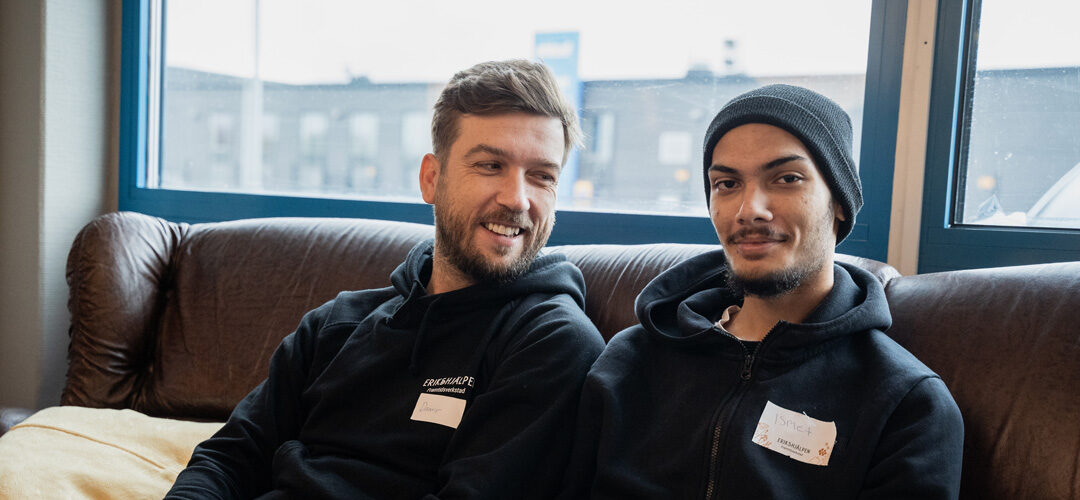
Damir and Ismet.
Damir and Ismet.
It is in Erikshjälpen Second Hand's shop at Måndagsgatan 6 in Adolfsberg that children and young people's dreams for the future take shape. At Erikshjälpen's Future Workshop, they get the opportunity to explore their driving forces, strengthen their abilities and feel that they can influence the development of their own neighborhood.
- For many, it's simply about finding their voice and daring to believe that it matters," says Mariam. "With us, each individual is supported to develop, not only as a person but also in community with others. It's about more than just activities - it's about building self-confidence and faith in the future.
It's about more than just activities - it's about building confidence and trust.
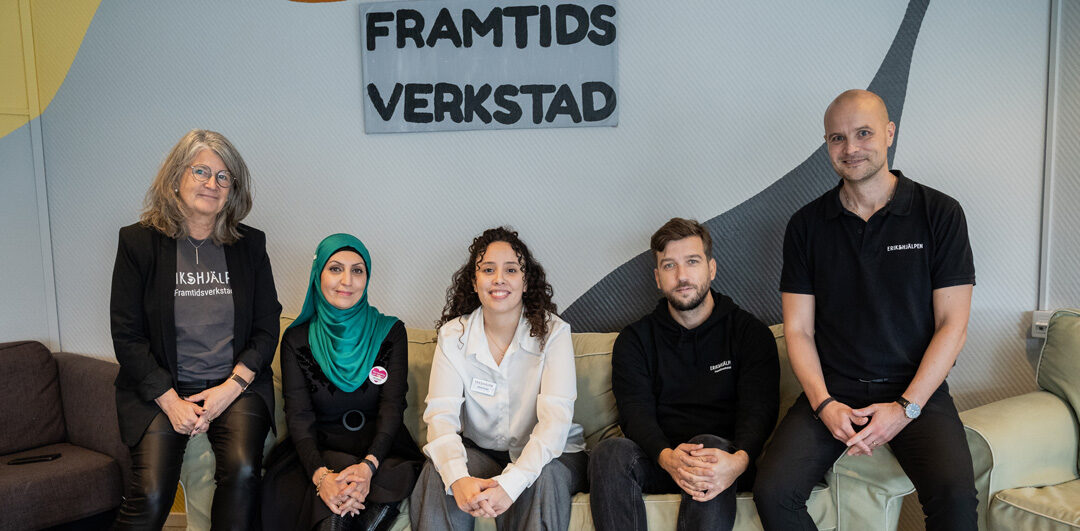
Birgitta Johansson, Rossol Saaid, Mariam Zaoujan, Damir Softic and Håkan Giselsson.
Birgitta Johansson, Rossol Saaid, Mariam Zaoujan, Damir Softic and Håkan Giselsson.
The celebration included a breakfast with cake. The guests included various professionals working with young people in the area. Neighborhood police officers, social services and politicians, who all meet the same young people, but in different roles.
“ Erikshjälpen Framtidsverkstad ” is the glue that holds our collaboration together,” says Christina Wideland from the City Planning Office in Helsingborg, who works on projects such as “Mitt Adolfsberg” and “Trygghetsprojektet,” among others. “We’re so glad you’re here to stay.”
Erikshjälpen Framtidsverkstad is the glue that holds our collaboration together.
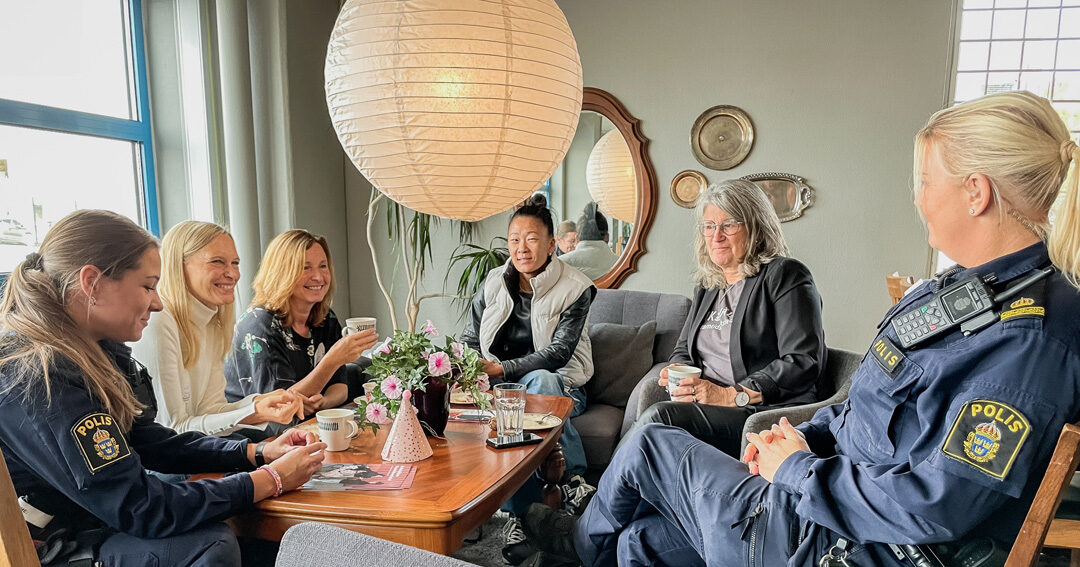
Collaboration was indeed the key word of the morning. Around the coffee tables, both opportunities and challenges were discussed. Lenah and Olivia, area police officers in Adolfsberg, talked about the concern they felt after Adolfsberg's leisure center closed last year. But how safety in the area could still be maintained by Erikshjälpen together with actors from the City of Helsingborg and various youth associations filling the void together.
- "Many people in Adolfsberg don't even believe they have a future," says Lenah. "Together we can build trust and confidence in the adult world and instill hope in young people.
Together, we can build trust and confidence in the adult world and instill hope in young people.
Sofia Corneskog from Bankeryd has designed dresses for celebrities like Carola and Carina Bergfeldt. Now she has made a unique silk dress for Sonja Aldén and it can be yours if you make a contribution to Erikshjälpen.
- "It has always been my goal to use my knowledge to make the world a little better, and Erikshjälpen was closest to my heart," she says.
Sofia Corneskog has her studio in the old station house in Bankeryd. Here, white, loving wedding dresses share space with sparkling gala dresses for celebrity-packed parties. Sofia Wistam, Carina Bergfeldt, Arja Saijonmaa, Lina Hedlund and not least Carola are some well-known names who have worn dresses designed by Sofia - now you can too.
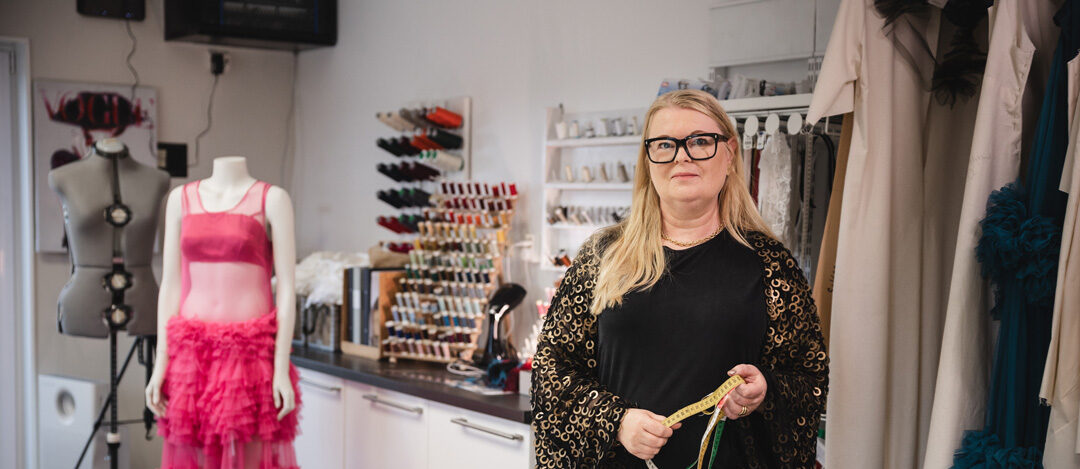
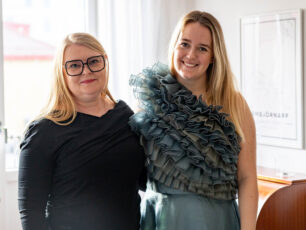
Sofia Corneskog is known for her stunning tulle creations and describes her designs as glamorous, playful and voluminous. The dress in the picture is not the one being raffled.
Sofia Corneskog is known for her stunning tulle creations and describes her designs as glamorous, playful and voluminous. The dress in the picture is not the one being raffled.
- Whoever wins the dress, wins a garment of the highest quality that is handmade in Sweden based on my style and design language. It could be used at a New Year's Eve party, for example, but is of course equally suitable for any party. The dress is two-piece and it is possible to use only the top or skirt if you want. This means that it can easily be dressed up or down, says Sofia.
The dress Sofia is donating to Erikshjälpen was designed together with singer Sonja Aldén. It is made entirely of silk, including the lining, and the color is best described as grey-blue. Sonja will wear the dress during six concerts this fall and then it will be raffled off to a lucky winner who has donated at least Swedish kronor (SEK) 100 to Erikshjälpen.
- This is not a dress from a large chain that supplies garments from a factory abroad, but a completely unique dress that I have designed in collaboration with Sonja. We have also thought about how it should attract the winner and I am happy to help with styling tips such as which shoes and accessories to match - and of course I adjust the dress to suit the winner.
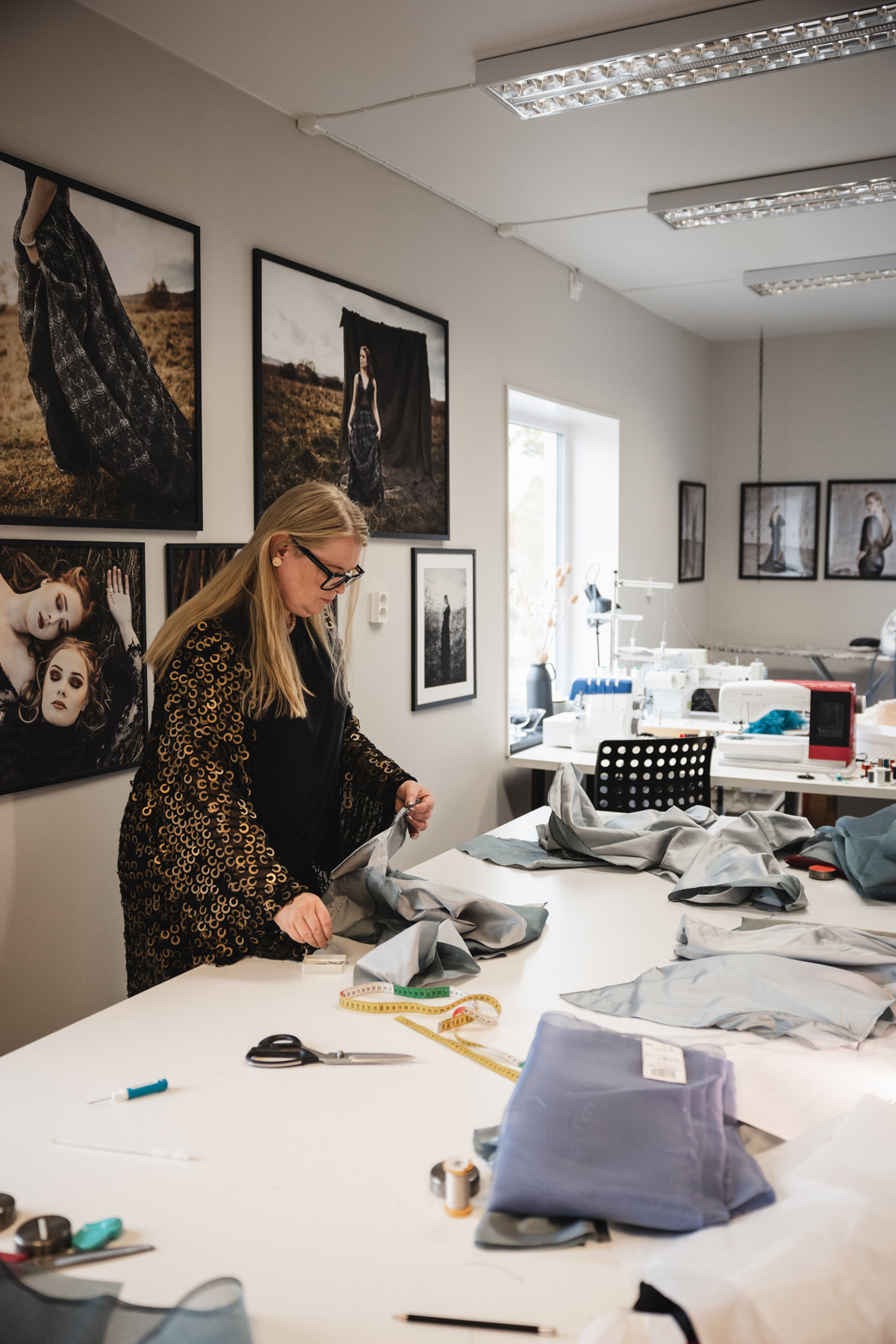
The bright studio in Bankeryd radiates creativity with a large table filled with fabric in the center of the room. Sofia has about ten garments in progress at any one time and has customers all over Sweden. Her design language is glamorous but playful, preferably large tulle creations.
- I like it to be visible and want it to be quite voluminous. The dress I'm making for Erikshjälpen is solid colored but still with a lot of structure. Most focus is on the top while the skirt is a little simpler so that it does not become a circus outfit. For me and Sonja, quality is also important and that's why we chose silk, which is a durable material. Since silk breathes, the dress is also comfortable to wear," says Sofia.
For me and Sonja, quality is also important, which is why we chose silk, which is a durable material.
Sofia studied at the Swedish School of Textiles in Borås and subsequently completed her apprenticeship at Göteborg. After spending a few years away from the forests of Småland, she moved to Bankeryd in 2013 and founded the company Sofia Corneskog Couture. She has also been a monthly donor to Erikshjälpen for nearly 30 years.
- I am a preschool teacher and have my own children, so children's rights issues are important to me. Erikshjälpen is really on the side of the children and I am confident that the help will arrive.
The competition closed on November 18, 2024
The winner was Madeleine Bergenkull!
Together we raised 62 140 Swedish kronor (SEK). Thank you to everyone who participated in the raffle!
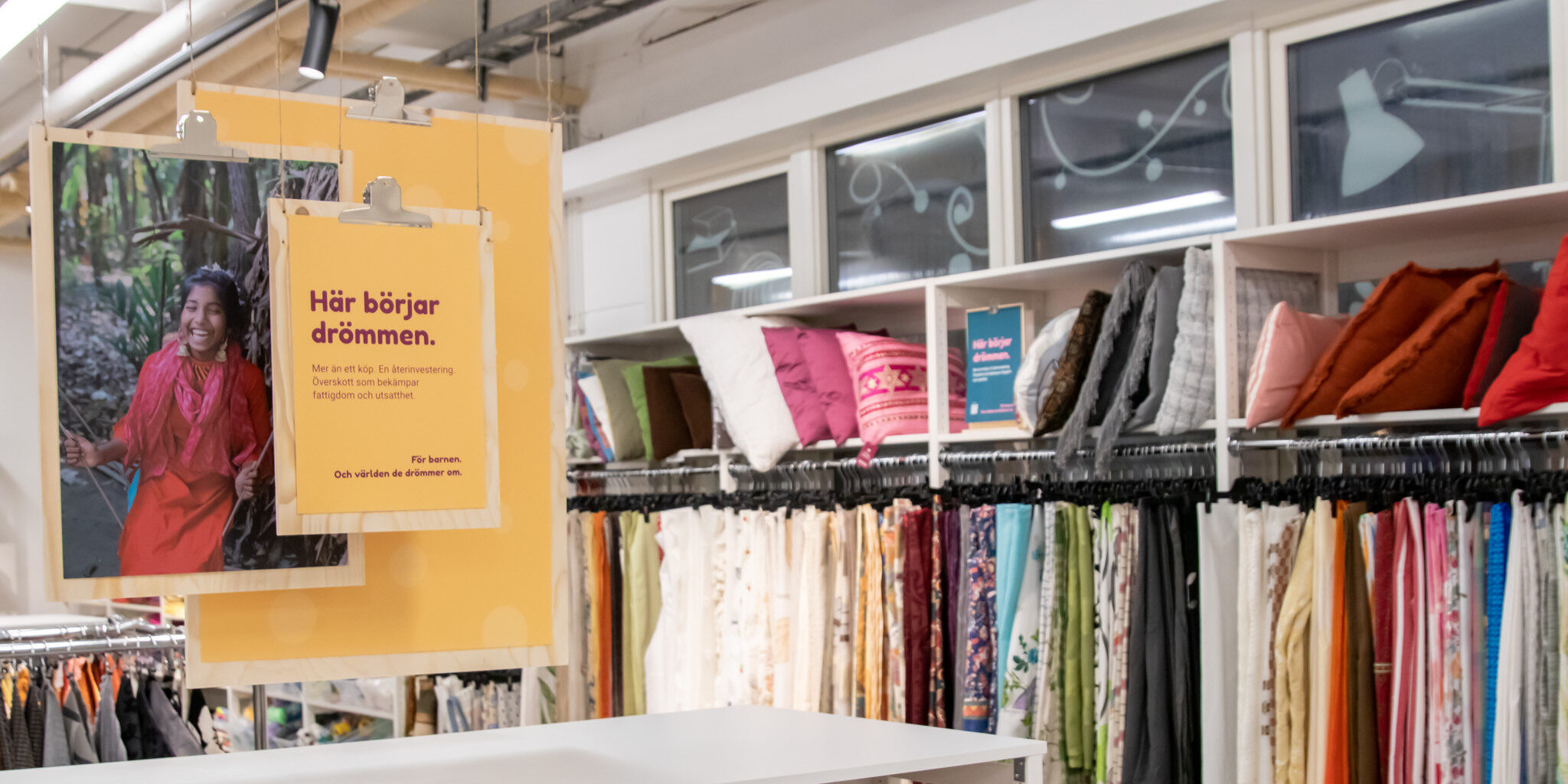
On Saturday, October 5, all daily cash registers from Erikshjälpen Second Hand's stores will go to Radiohjälpen's fundraising campaign "Världens Barn". The project that we highlight in this year's campaign is about how portable schools in Bangladesh ensure that children can continue to go to school despite poverty and climate disasters.
Erikshjälpen is contributing to the Världens Barn campaign for the 27th year and has been involved since the start. Last year, the second-hand shops sold for an unimaginable 3,703,294 Swedish kronor (SEK). In addition to donating the daily takings, many of Erikshjälpen Second Hand's 52 shops draw attention to Världens Barn through various activities.
-"In our stores there is always a great commitment to children," says Jerker Sandell, Executive Director of Erikshjälpen Second Hand. "The Världens Barn campaign gives us the opportunity to do even more for children around the world.
The World's Children campaign gives us the opportunity to do even more for children around the world.
Children of the World
Världens Barn, Sweden's largest fundraising campaign for children's right to health, school and security, is carried out in a unique collaboration with Swedish Television, Swedish Radio P4, Erikshjälpen and 13 other aid organizations. Every year, Radiohjälpen grants funds to around thirty projects in as many countries. All organisations involved in the campaign highlight a special project each year.
- Around the world, many millions of children live in insecurity due to war and disasters. Our knowledge, willingness and ability to help them affects the future development more than anything else and defines who we are, says Mattias Ingeson, Erikshjälpen's Secretary-General and Chairman of the Board of the Swedish National Fund for Children.
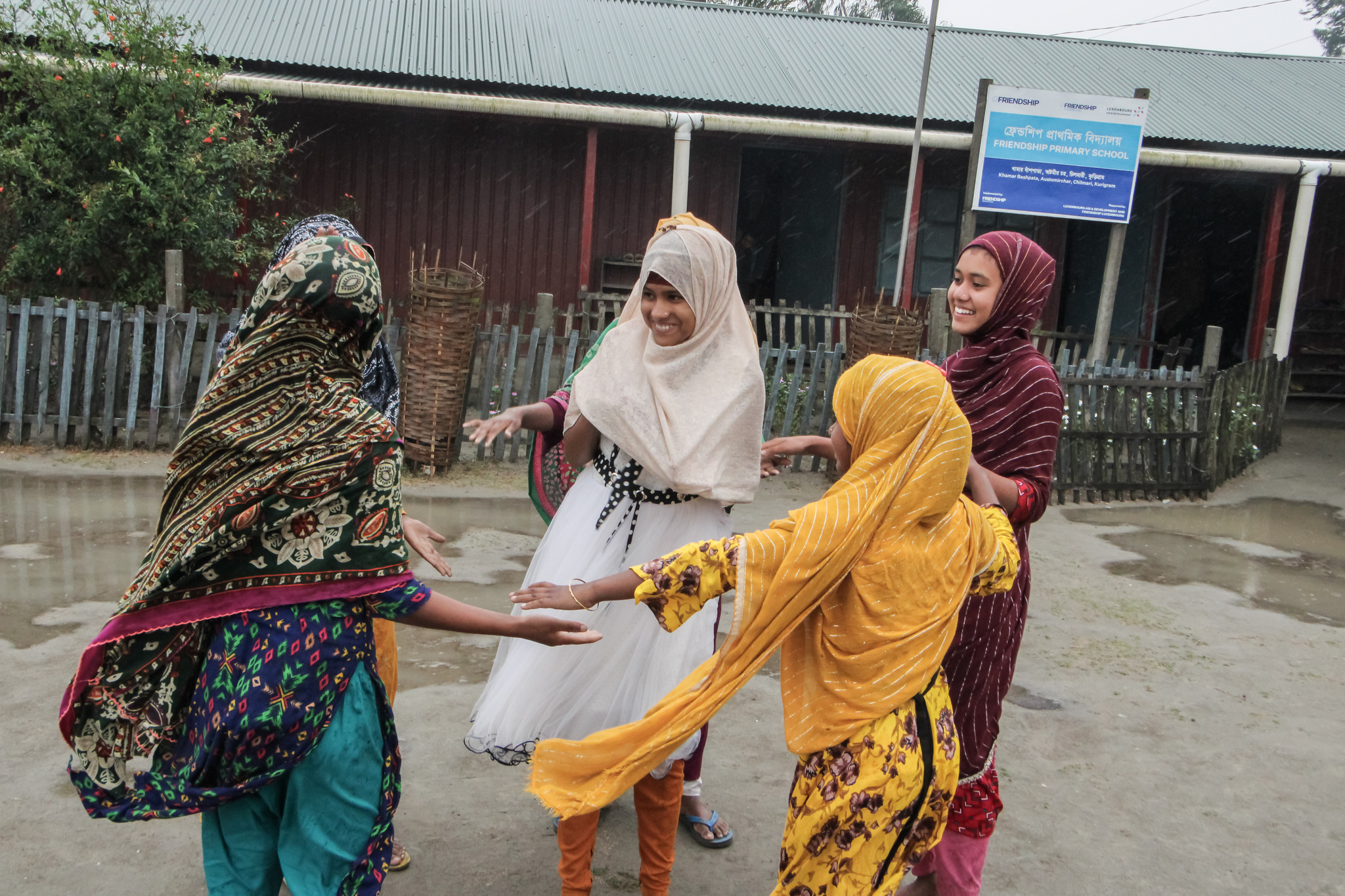
Mim and her friends are playing in the schoolyard.
Mim and her friends are playing in the schoolyard.
Erikshjälp's focus this year - portable schools
Mim, her parents and five siblings live on one of the many sand islands in the Brahmaputra river delta in Bangladesh. Floods, cyclones and other natural disasters strike the area several times a year, causing great devastation. Landslides and soil erosion make it difficult to build roads and schools. But thanks to the portable school, which Erikshjälpen has established together with its local partner Friendship, children in the area have the opportunity to go to school. Mim and her friends have learned about their rights and how to build up preparedness to cope with natural disasters.
Shop for the world's children
Visit one of our second-hand shops on Saturday, October 5 and shop for the children of the world.
Gudrun Brunegård, Member of Parliament and spokesperson on development aid policy for the Christian Democrats visiteda this week head office of Erikshjälpen in Huskvarna. Brunegård is one of those working to shape and influence Sweden’s new foreign aid policy, which is currently undergoing major changes.
Gudrun Brunegård met with Erikshjälpen's Secretary-General Mattias Ingeson, Sweden Director Birgitta Johansson, and International Director Anders Malmstigen. They discussed the government's aid reform agenda and its potential impact on civil society organizations.
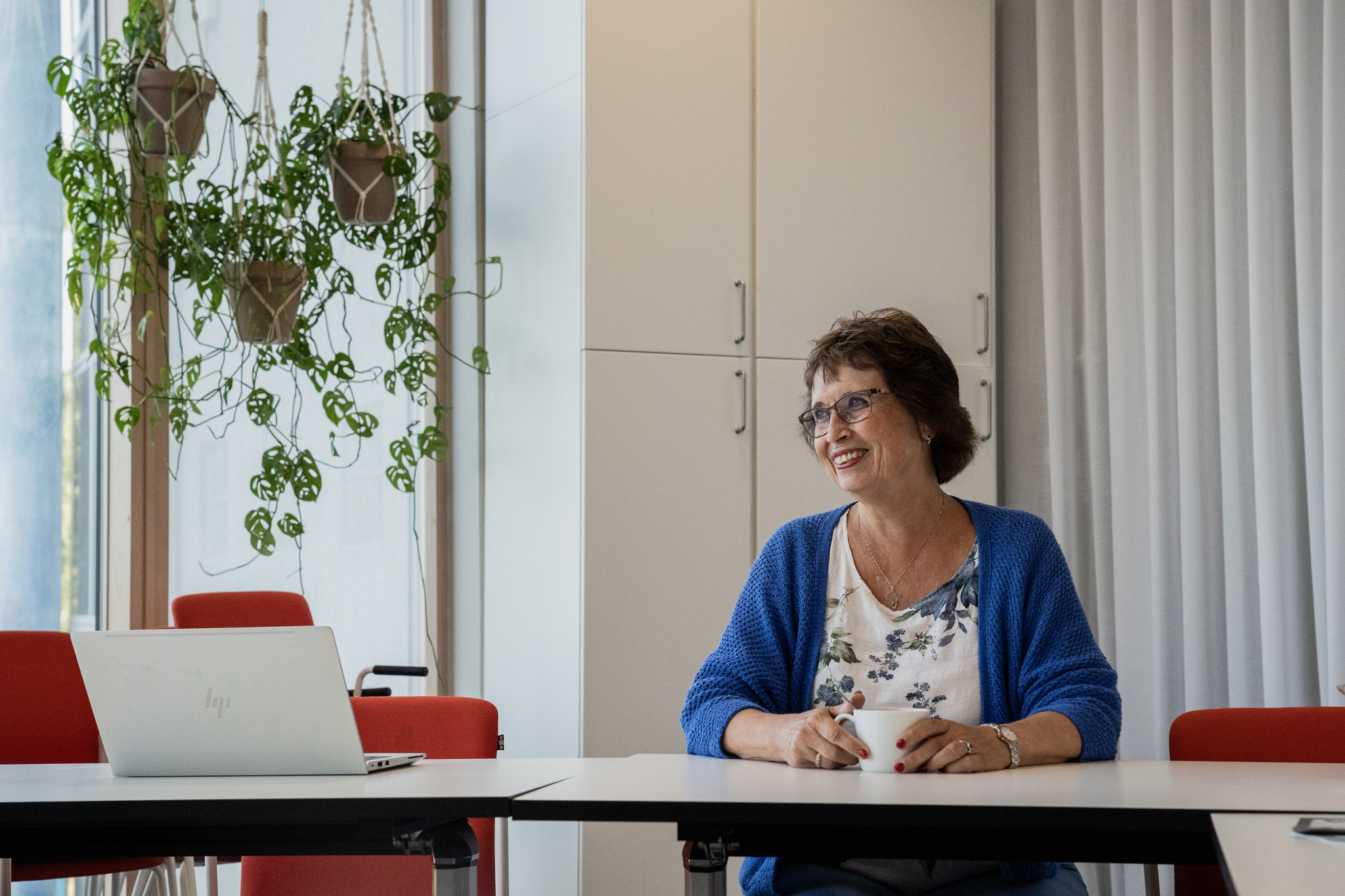
Gudrun Brunegård, Member of Parliament and spokesperson on development policy for the Christian Democrats.
Gudrun Brunegård, Member of Parliament and spokesperson on development policy for the Christian Democrats.
Anders Malmstigen particularly highlighted the importance of organisations such as Erikshjälpen being able to continue working in countries such as Burkina Faso and Mali, where both the EU and Sweden are now considering withdrawing their support. He emphasized that Erikshjälpen's future interventions in these countries depend on the future distribution of aid from Sida.
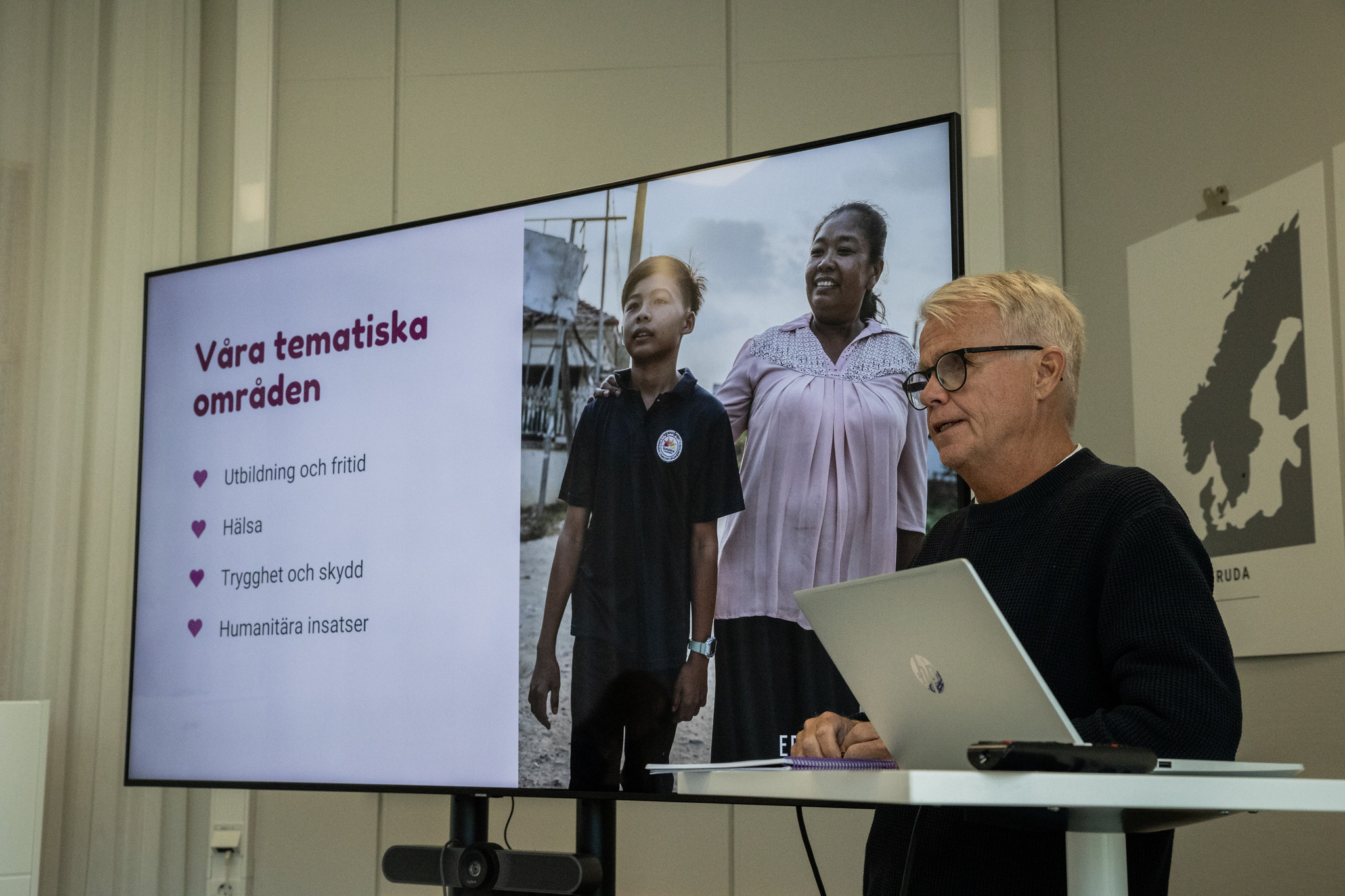
Anders Malmstigen, International Director at Erikshjälpen
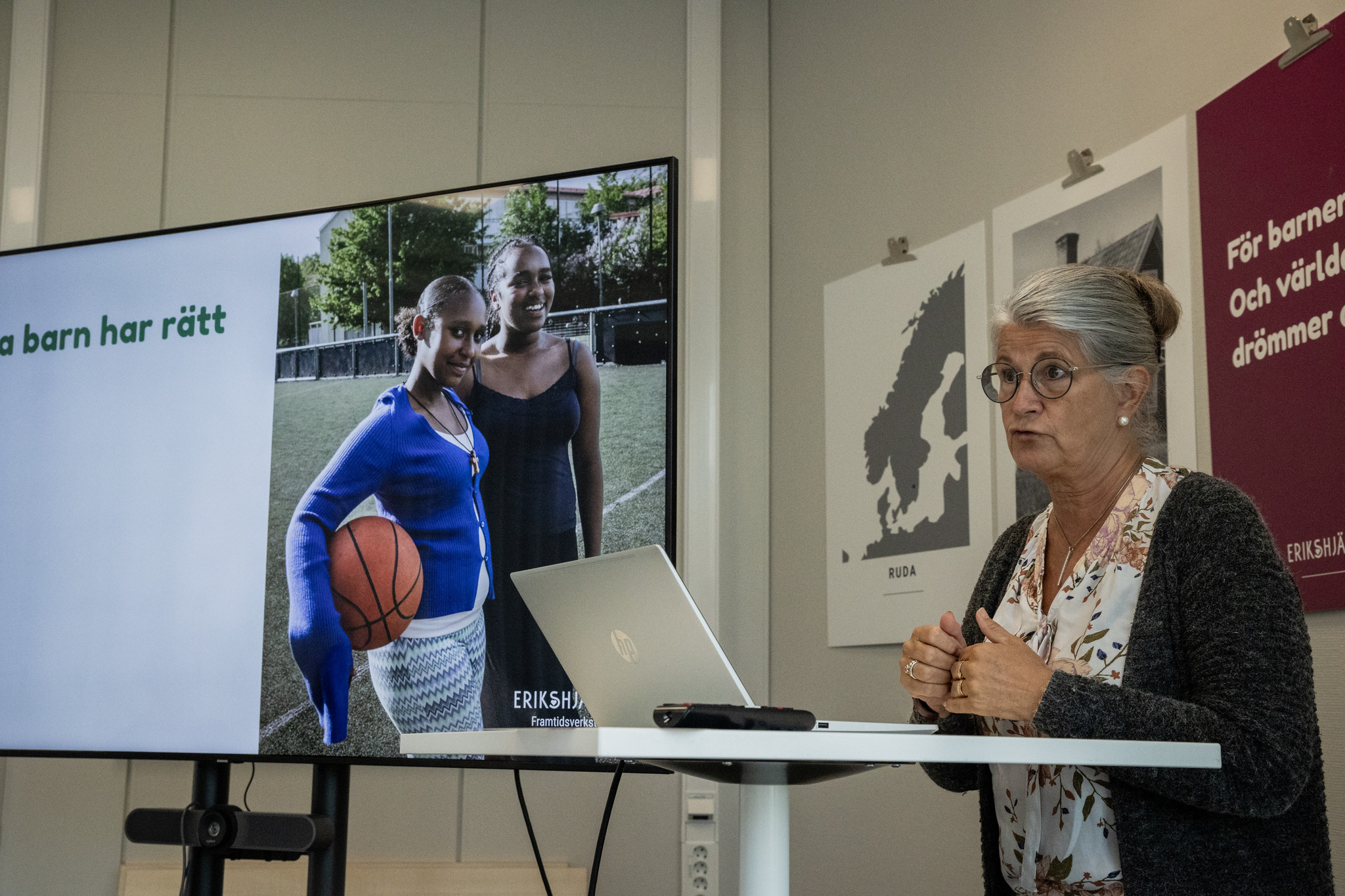
Birgitta Johansson, Head of Sweden at Erikshjälpen
Anders Malmstigen, International Director at Erikshjälpen
Birgitta Johansson, Head of Sweden at Erikshjälpen
Gudrun Brunegård shared the work that has been done so far and the processes that lie ahead. She agreed on the need for a long-term approach in development policy.
- I have great confidence in Erikshjälpen's commitment and work, both in Sweden and abroad, says Gudrun Brunegård.
The meeting is one of several important steps in the dialogue between politicians and civil society on the future of aid and how Swedish civil society organizations can continue to contribute in the best possible way.
I have great confidence in Erikshjälpen's commitment and work, both in Sweden and abroad.
On August 12, 2024, Jerker Sandell took over as the new Executive Director of Erikshjälpen Second Hand. One of Jerker's tasks will be to introduce circular consumption to new customer groups.
Interest in second hand is growing
As head of Erikshjälpen Second Hand , Jerker will be responsible for 51 stores around the country. Erikshjälpen Second Hand is also a business that wants and needs to grow, thanks to the increasing commitment to sustainable consumption.
- Interest in second-hand has grown enormously in the last five years alone. We have broadened our customer group and many younger people have found their way to our stores. Now we will work to ensure that even more people discover how Erikshjälpen not only does good for the wallet and the climate, but also contributes to interventions for children around the world.
Now we will work to ensure that even more people discover how Erikshjälpen not only does good for the wallet and the climate, but also contributes to interventions for children around the world.
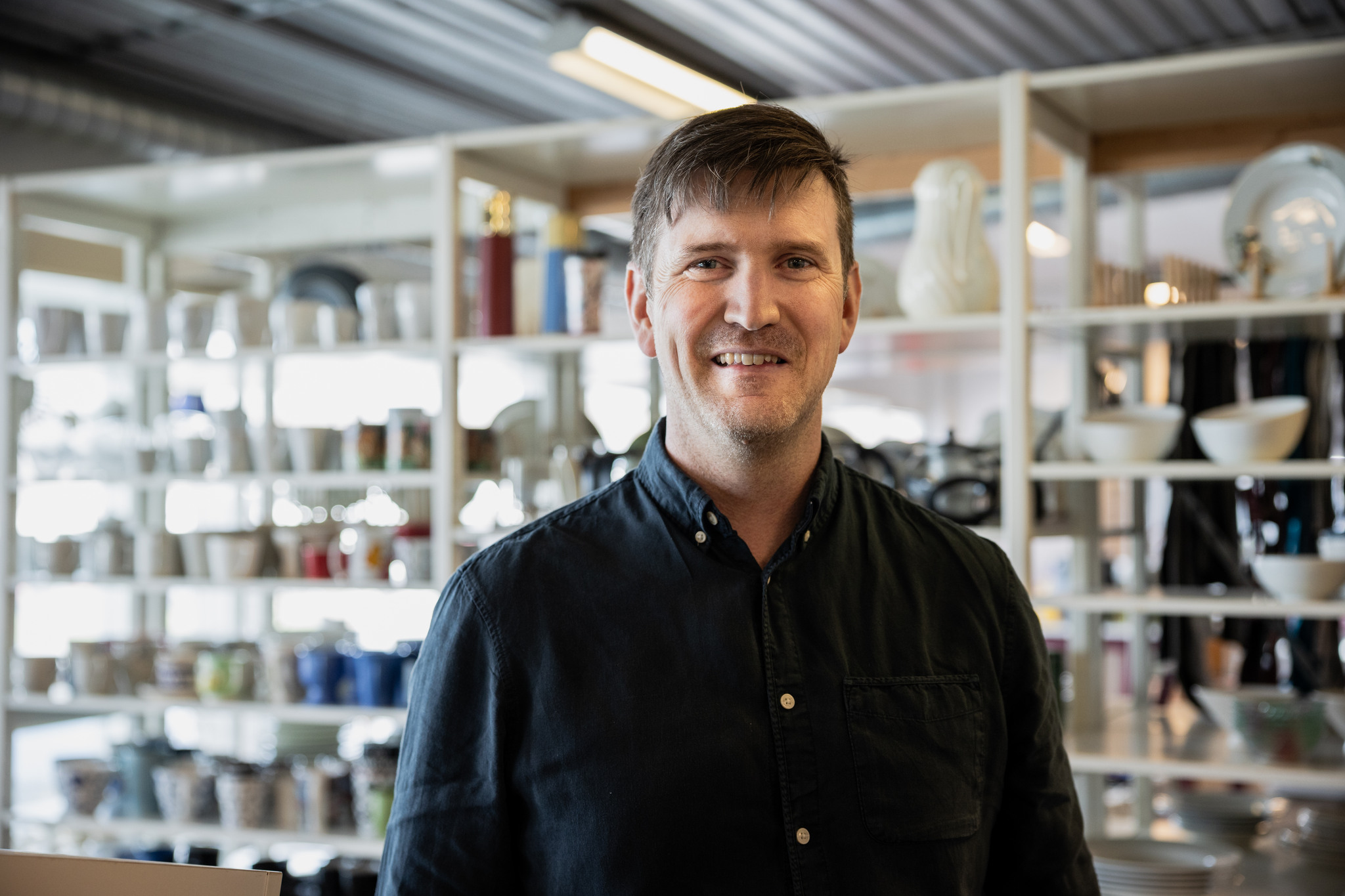
Jerker Sandell, Executive Director Erikshjälpen Second Hand
Jerker Sandell, Executive Director Erikshjälpen Second Hand
Focus in the fall
This autumn, Jerker's priority is to get to know his new organization. He emphasizes the importance of getting all employees on board in reaching out to new markets.
- I want to get to know the people who in different ways have a task in our stores and hubs and take part in their story and knowledge. I also look forward to meeting our customers and hearing their thoughts about Erikshjälpen Second Hand.
I look forward to meeting our customers and hearing their thoughts about Erikshjälpen Second Hand.
At the end of May, Cyclone Remal hit the southern coast of Bangladesh. It left behind devastated villages and destroyed crops. Erikshjälpen is now conducting an emergency operation where we help families with children to recover from the cyclone. This includes repairing damaged houses, buying new livestock and supporting small family-owned Corporate. All so that life can get back to normal again.
Cyclone Remal hit southern Bangladesh hard with wind speeds of 135 kilometers per hour. Around 4.6 million people were affected and over 40,000 houses were destroyed. The cyclone hit the regions of Rampal and Mongla the hardest, where Erikshjälpen together with our partner organization CODEC (Community Development Center) has long been working with various interventions to create resilience and facilitate children and their families.

Almost all of the more than 1700 families that Erikshjälpen supports in its projects are fully or partially affected by cyclone Remal. Among these, about 300 families are so severely affected that they need immediate support to survive. In Bagerhat and Patuakhali districts, the floods have caused particularly severe damage to families' homes and primary sources of income such as farming and fishing.
Starting July 1, Erikshjälpen will therefore implement a humanitarian operation in the area, carried out by CODEC in collaboration with the local community. The intervention includes:
- Repair and reconstruction of housing
- Support for fisheries and agriculture
- Support for small businesses.
Give a gift to the effort in Bangladesh
The needs are great.
With your contribution, we can help even more families who have been affected.
Our long-term interventions
Erikshjälpen works long-term in Bangladesh to ensure that children have access to health, education, safety and protection. In communities that are constantly threatened by floods, residents are equipped with disaster preparedness and improve their living conditions for better resilience in terms of, for example, recurring cyclones.
On June 25-27, Erikshjälpen will be in Almedalen as part of the Children's Rights Square. Together with ten other organisations , we will during the week raise current children's rights issues and talk about how we can work together to strengthen children's rights. Welcome to take part in several exciting seminars and program items.
Representatives from Erikshjälpen’s Sweden branch will be on site at Barnrättstorget, along with young people from Erikshjälpen’s Framtidsverkstad in Uppsala. Our focus during the week will be on youth participation.
A warm welcome to Erikshjälpen's seminars:
Neighborhood development - through youth engagement and participation
Wednesday, June 26, 14:00-14:45
According to the Act on Children’s Rights ( the United Nations Convention on the Rights of the Child ), which has been Swedish law since 2020, every child has the right to a safe upbringing free from violence, a good education, meaningful leisure activities, and the right to be heard on all matters that affect them. Children and young people growing up in areas facing socioeconomic challenges do not have the same opportunities to have their rights fulfilled. Erikshjälpen Framtidsverkstad works to engage children and parents in community development to level the playing field regarding unequal upbringings.
We will, together with young people who have been involved in the activity, highlight the lessons and conclusions we have seen during the first five years of Erikshjälpen Framtidsverkstad.
Participants:
Camilla Waltersson Grönvall, Minister for Social Services, Moderate Party
Nadim Ghazale, Head of Operations, nattvandring.nu
Ehsan Nasari, City Council Member Uppsala Municipality & Party Leader, Center Party
Birgitta Johansson, Program Manager Sweden, Erikshjälpen
Young people from Erikshjälpen Framtidsverkstad
Moderator:
Mattias Ingeson, Secretary-General, Erikshjälpen.
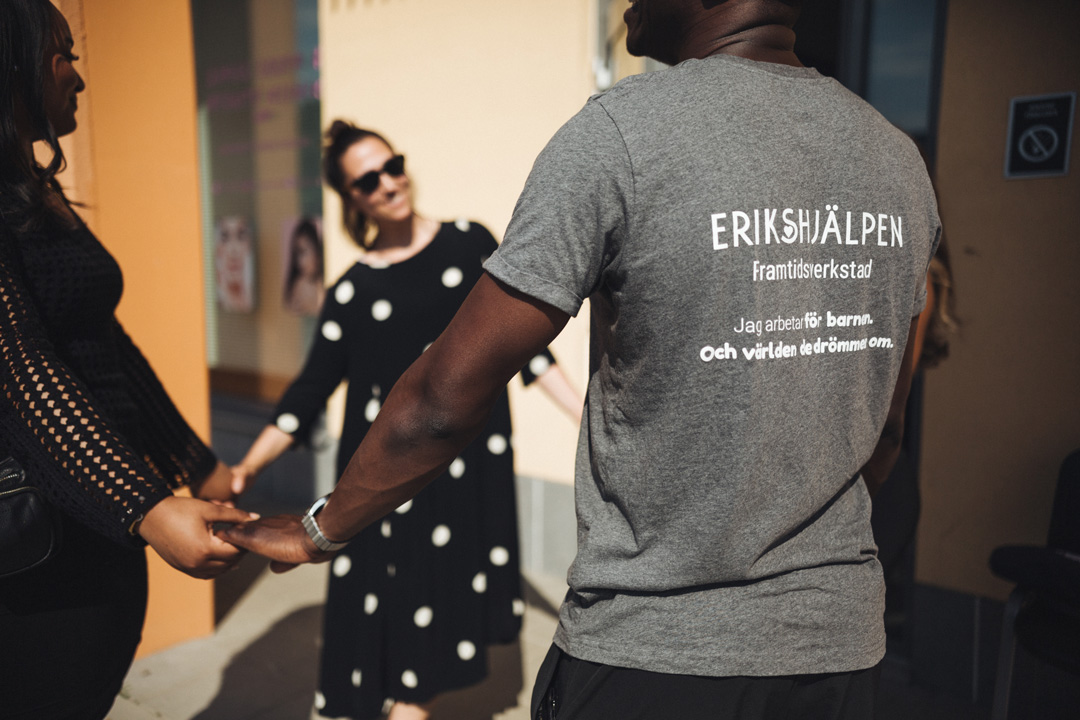
Young people's political engagement and confidence
Thursday, June 27, 13:00-13:45
Belief in the future is an important measure of how young people assess their ability to influence their life situation. Reports indicate a growing pessimistic attitude towards societal development, a decline in political engagement and widespread skepticism about the ability of those in power to effect change. This is a dangerous development.
Together with young people, we want to take a closer look at what is behind this trend and how we can work together in the long term to reverse it. During the seminar, young people will have the opportunity to raise their thoughts in discussions with those in power.
Participants:
Juno Blom, Ombudsman for Children
Evin Cetin, lawyer, author, lecturer
Jakob Olofsgård, Member of Parliament, Party Secretary, Liberals
Ehsan Nasari, City Council Member & Caucus Leader Uppsala , Center Party
Young people from Erikshjälpen Framtidsverkstad
Moderator:
Mattias Ingeson, Secretary-General, Erikshjälpen.
Where to find the Children's Rights Square?
You will find Barnrättstorget at Hamnplan (H209). If you can't make it to Visby, the seminars will also be broadcast live on Erikshjälpen's Facebook page.
Järva Week is taking place in Solna from May 29 to June 1 at Stockholm. Erikshjälpen Second Hand is on site and is premiering its new concept, “Pop up on the road.” With the help of mobile stores, we can now get out and meettnew customer groups.
The concept "secondhand.se by Erikshjälpen" has been taken to a new level. With the help of temporary shops at short events, so-called "Pop up on the road", more Swedes can discover second hand.
- We are doing this initiative to get closer to our customers and get more consumers to become circulators, says Cathrine Kylesten, Sustainability Manager at Erikshjälpen Second Hand.
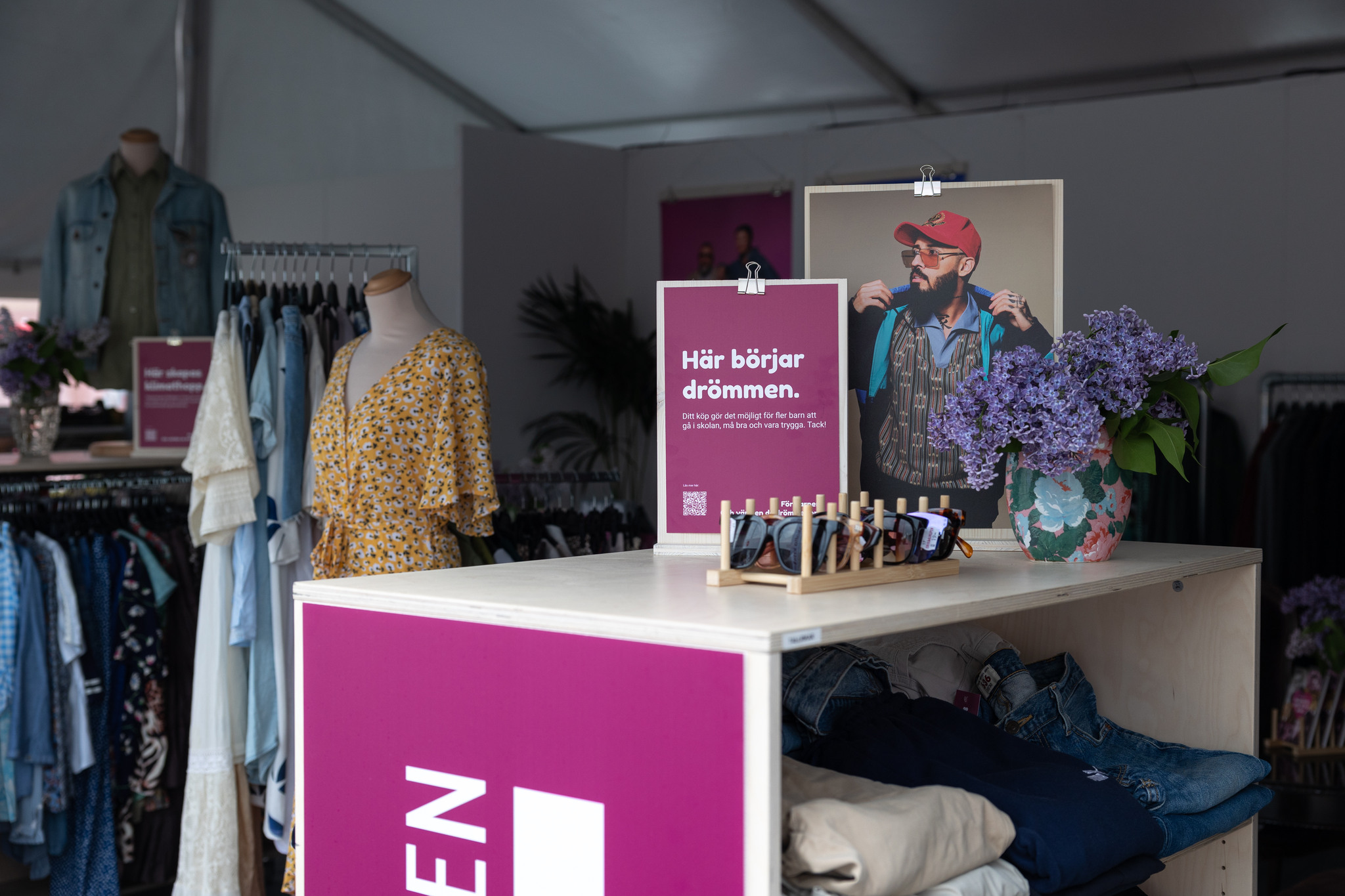
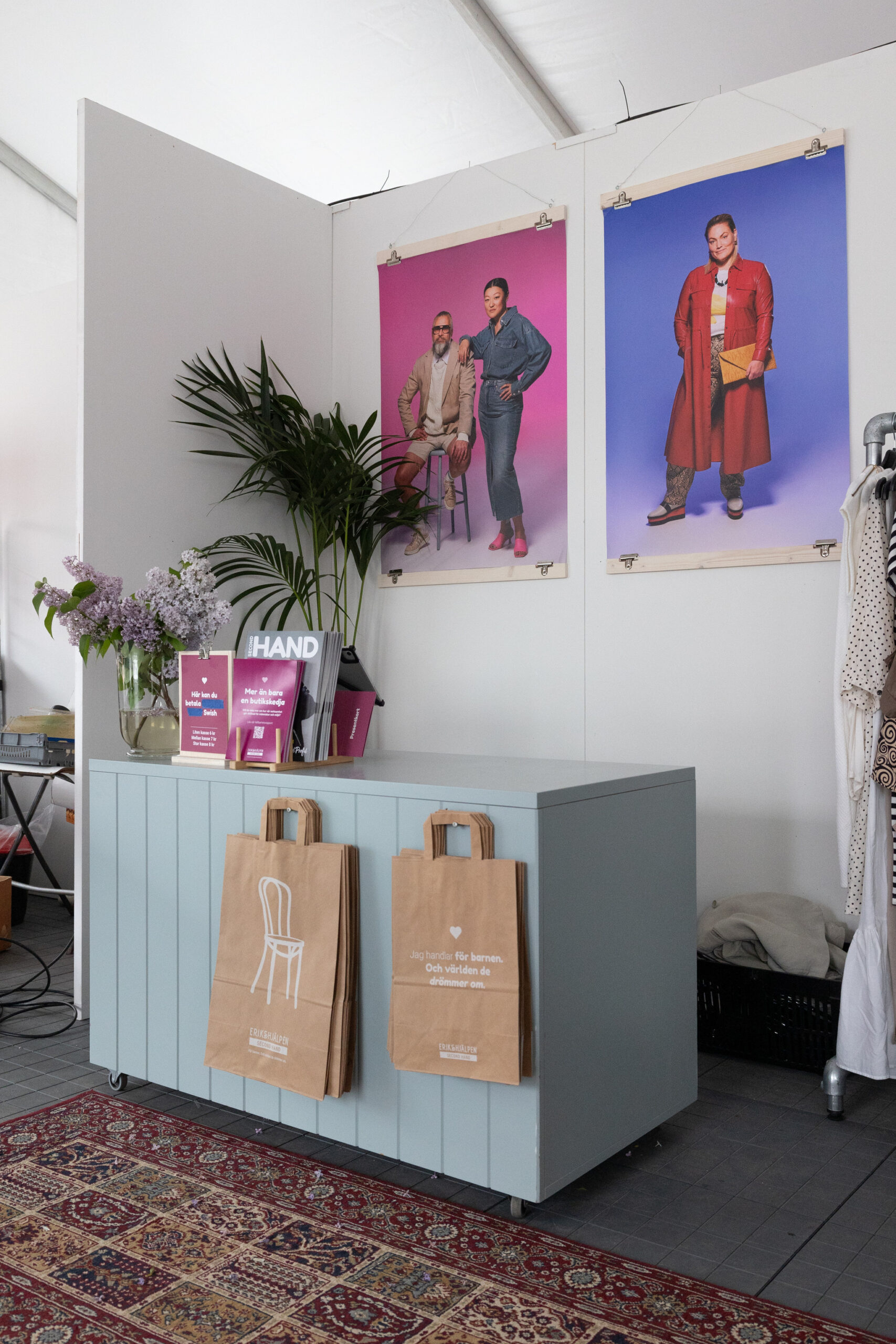
Erikshjälpen Second Hand at Järvaveckan
The fact that Erikshjälpen Second Hand this year chooses to be present during Järvaveckan is not only about reaching a new market, but it is also about participating in the political conversation.
- In addition to spreading the joy and benefits of circular shopping, we hope to show the added value of non-profit second hand, in the form of social work and a surplus that goes to interventions for children's rights, says Cathrine Kylesten.
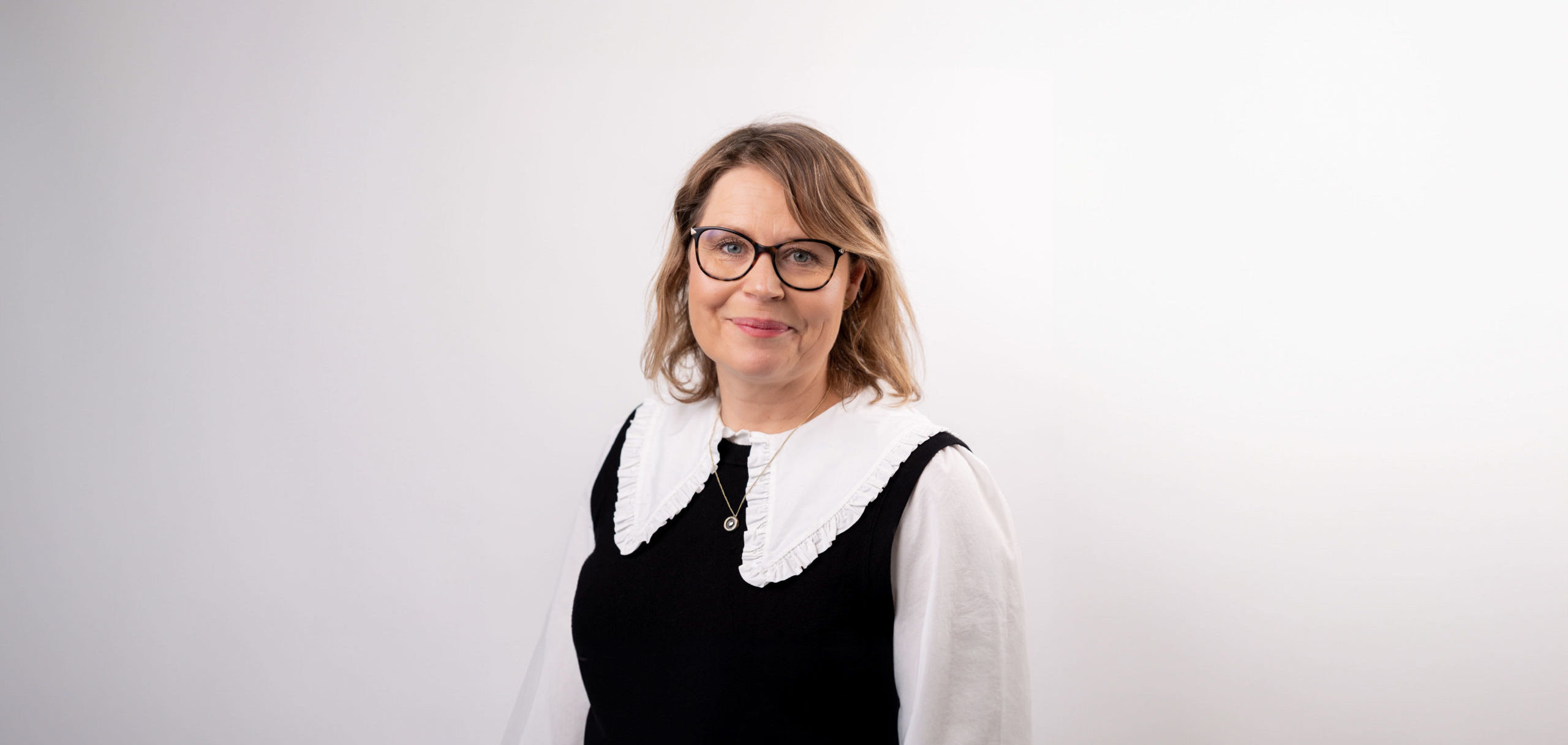
Cathrine Kylesten, Sustainability Manager at Erikshjälpen Second Hand
Cathrine Kylesten, Sustainability Manager at Erikshjälpen Second Hand
The range of the pop-up shop
During Järvaveckan, the shops in Vårby and Häggvik are responsible for the range in the pop-up shop. Visitors will be able to buy everything from a stylish jacket, summer dresses and sunglasses to a hand-picked selection for home and household.
- Our pop-up shop shows how easy and fun it can be to shop second hand and at the same time contribute to a sustainable future," says Cathrine Kylesten.
During the month of May, Erikshjälpen is highlighting the rights of girls and the issue of Menstrual health. Anna Eliasson works as a program advisor at Erikshjälpen, focusing on health, safety and protection, and gender equality. Here she tells us more about Erikshjälpen's work in this area.
What is the situation of girls in the world today?
- Of course, there is no single answer to this question. If we take a closer look at gender equality work, for example, we can see that developments are moving in several directions at once. Over time, gender equality work has made progress. In many places, the level of education of girls and women has increased, as has their representation in leading positions. Maternal mortality has also fallen periodically.
Despite this, there are many negative trends and resistance to girls' and women's rights globally, which require major efforts to achieve the 2030 Agenda.
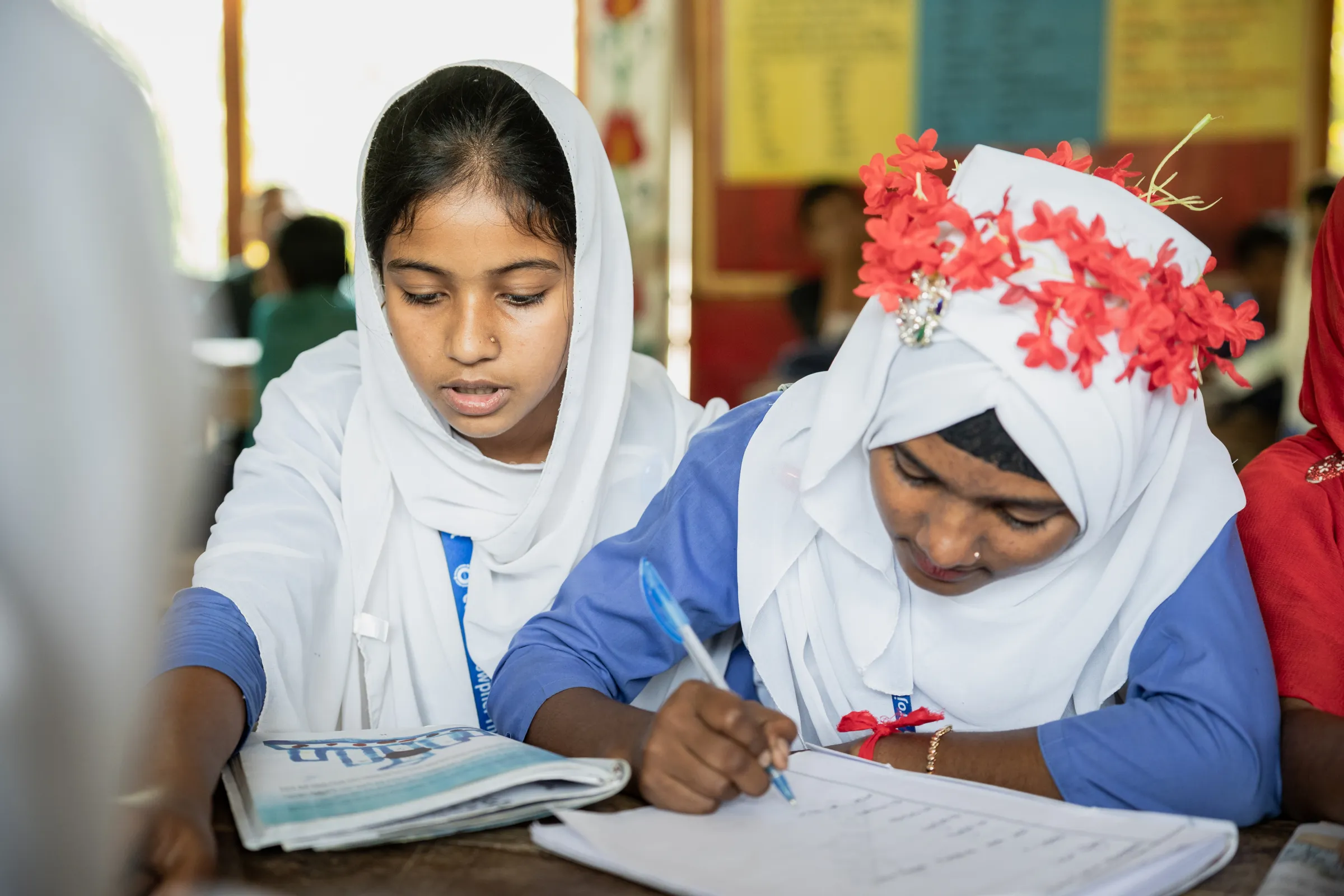
Today, there are many armed conflicts around the world. In parallel, people are increasingly affected by climate change. It is well known that this has a particular impact on girls and women as a group. They are also more affected by various forms of violence, which tend to increase in times of crisis and conflict. COVID-19 has also had a negative impact on gender equality, with increased gender-based violence and restrictions on sexual and reproductive health and rights. The impact of the pandemic is visible in our work, particularly in education, where girls are often overrepresented among those who have not returned after school closures.

Why is the issue of menstruation important to raise?
- Almost 2 billion people menstruate. At least a quarter of them lack the resources necessary for good Menstrual health. The consequences of this affect their whole lives. Menstruation is much more than a hygiene or health issue. Menstruation is an issue of gender equality and children's rights. As children enter their teenage years, we see how violations of certain rights increase exponentially. Especially for girls and young women, but also for LGBTI people. One of Erikshjälpen's priority areas is therefore sexual and reproductive health and rights (SRHR). These are rights that apply throughout life, including for children. The onset of puberty creates disproportionate differences between the sexes. Menstruation, which in itself is such a fundamental and natural process, is instead a major setback for millions of girls in a range of areas and rights. In turn, the perception that girls are ready for marriage leads to a dramatic increase in the risk of child marriage, female genital mutilation and other forms of gender-based violence. Lack of or inadequate maternal care is one of the leading causes of death or lifelong complications among teenage mothers, girls and young women. Girls' opportunities to go to school are rapidly being taken away from them. Continuing to defend girls' right to education is therefore not only a protective factor, but a fundamental right that will determine girls' future prospects.
Not only do we need to talk more about menstruation, to break the stigma and taboo, we also need to ensure access to both safe and hygienic environments. There are many examples of non-existent or unhygienic facilities, such as school toilets in Bangladesh. But there is also an increased risk of various forms of abuse. Menstrual health work therefore needs to be seen in a broader context with its links to other rights such as access to education and freedom from violence. In some societies, menstruation is an extremely sensitive issue. We need to be aware of how and if issues around menstruation can also open doors to talk about other controversial issues.
How is Erikshjälpen working on the issue?
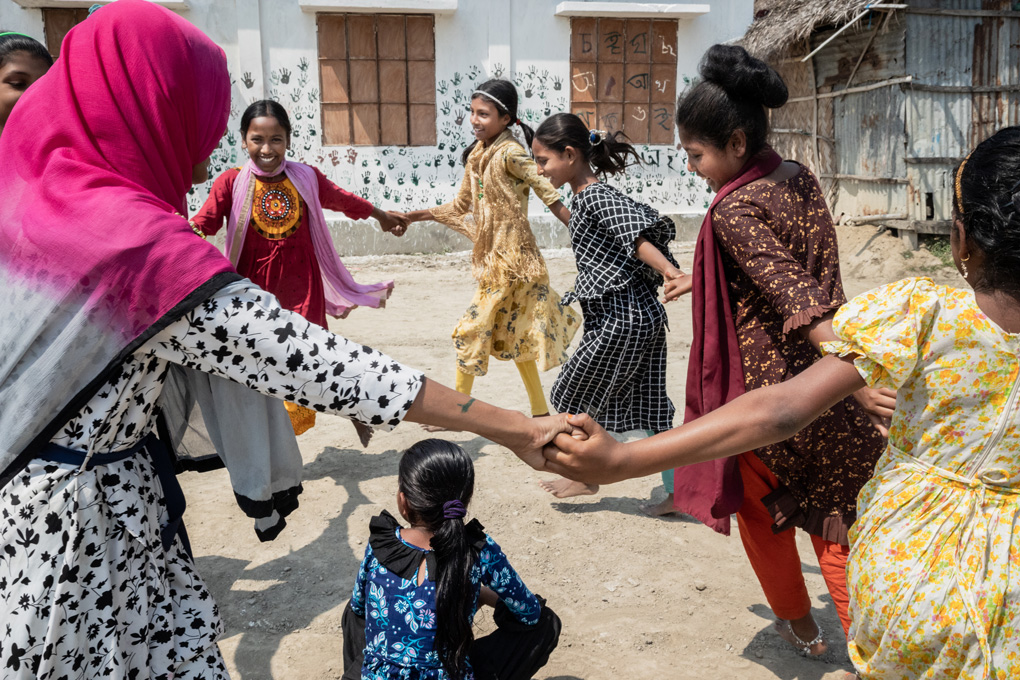
- Through Erikshjälpen's close cooperation with local partner organizations, which are part of the local community, we can contribute to change that lasts over time. For example, it can start with creating access to sanitation products.
In many interventions , girls learn to sew their own sanitary pads, which helps to ensure school attendance. Through clubs, discussion groups and secured access to sexuality education, not only girls, but also boys, teachers and parents, gain basic knowledge about menstruation and the conditions required for good Menstrual health. Working towards and together with local decision-makers and leaders increases the chances of long-term change. Religious leaders are often a particularly important group when it comes to behavior change. Even if there is legislation in place, cultural and religious traditions and norms can be deeply rooted and thus influence people's attitudes and behaviors.
We work on issues related to menstruation more or less in all our regions. In many cases, it is an integral part of broader work on the rights of children and especially girls. We aim to work in parallel on individual, social and practical components. The individual components to support girls and menstruating persons' self-esteem, knowledge and skills. The social components to promote communities and social norms free of stigma and discrimination, and the practical components to increase access to safe and appropriate facilities.

Anna Eliasson, Program Advisor Erikshjälpen
Anna Eliasson, Program Advisor Erikshjälpen
Read more about Erikshjälpen's work with Menstrual health
A new study from Umeå University shows that a religious worldview can be an asset in the work against human trafficking.
- "Despite differences in religion, Christian aid organizations manage to create a common understanding of what causes trafficking and how to combat it," says researcher Andreas Henriksson.
Trafficking is a global problem that affected around 49 million people in 2023.
Erikshjälpen is one of the organisations that, together with partners, work against human trafficking in different countries. Strengthening the rights of women and children is a central part of this work.
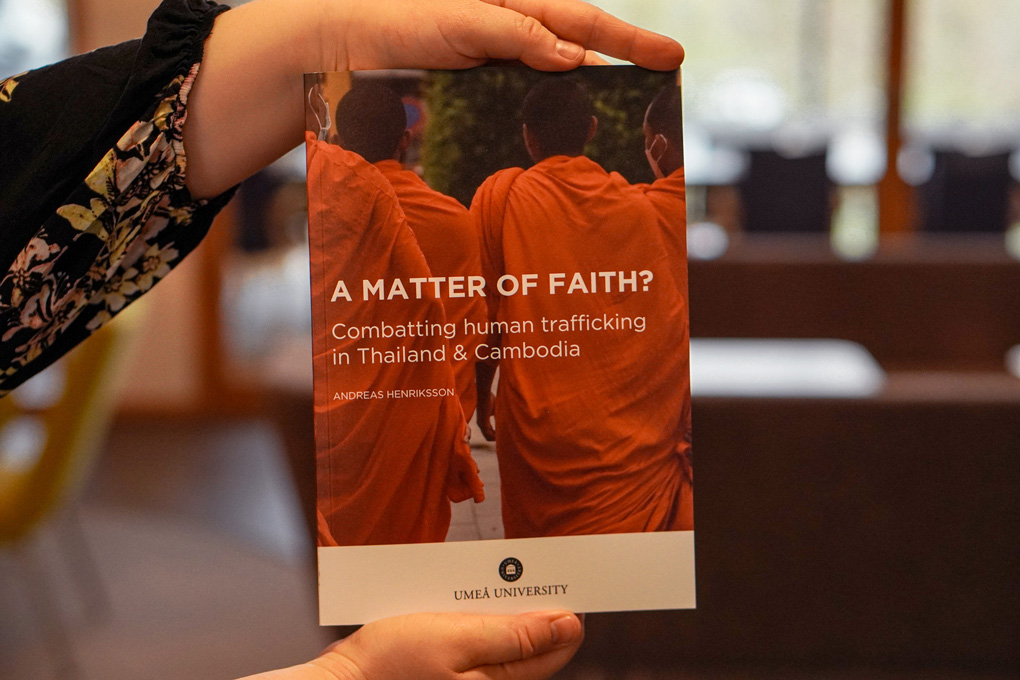
In his thesis "A matter of faith?The fight against human trafficking in Thailand & Cambodia", Andreas Henriksson has examined how religion shapes the work against human trafficking. The research report is based on case studies of Christian aid organizations working in Thailand and Cambodia, where the children's rights organization Erikshjälpen and the parish and missionary movement Evangelical Free Church (EFK) have been included as partners.
- "I have tried to understand what governs the work of religious organizations and how it is received in the local communities where they operate," says Andreas Henriksson. "A religious worldview can make cooperation with secular aid actors and donors difficult, but at the same time religion is often an asset in relation to the local communities where they operate.
Easier to bridge the gap
International aid is characterized by a secular approach, which means that Christian aid organizations are mainly funded by religious donor networks. Networks that make it easier for organizations to highlight the role of religion.
Henriksson has investigated how religious organizations succeed in reaching out to the secular aid world and shows that organisations that are not affiliated with a particular church or denomination may in some cases find it easier to bridge the distance to secular actors.
- "Our organization is based on Christian values, and this is reflected in how we treat people around the world," says Mattias Ingeson, Secretary-General of Erikshjälpen. "Based on our identity and background, we have knowledge of the importance of religion for both individuals and societies. Our understanding and respect for other people's religion and culture creates good conditions for working together.
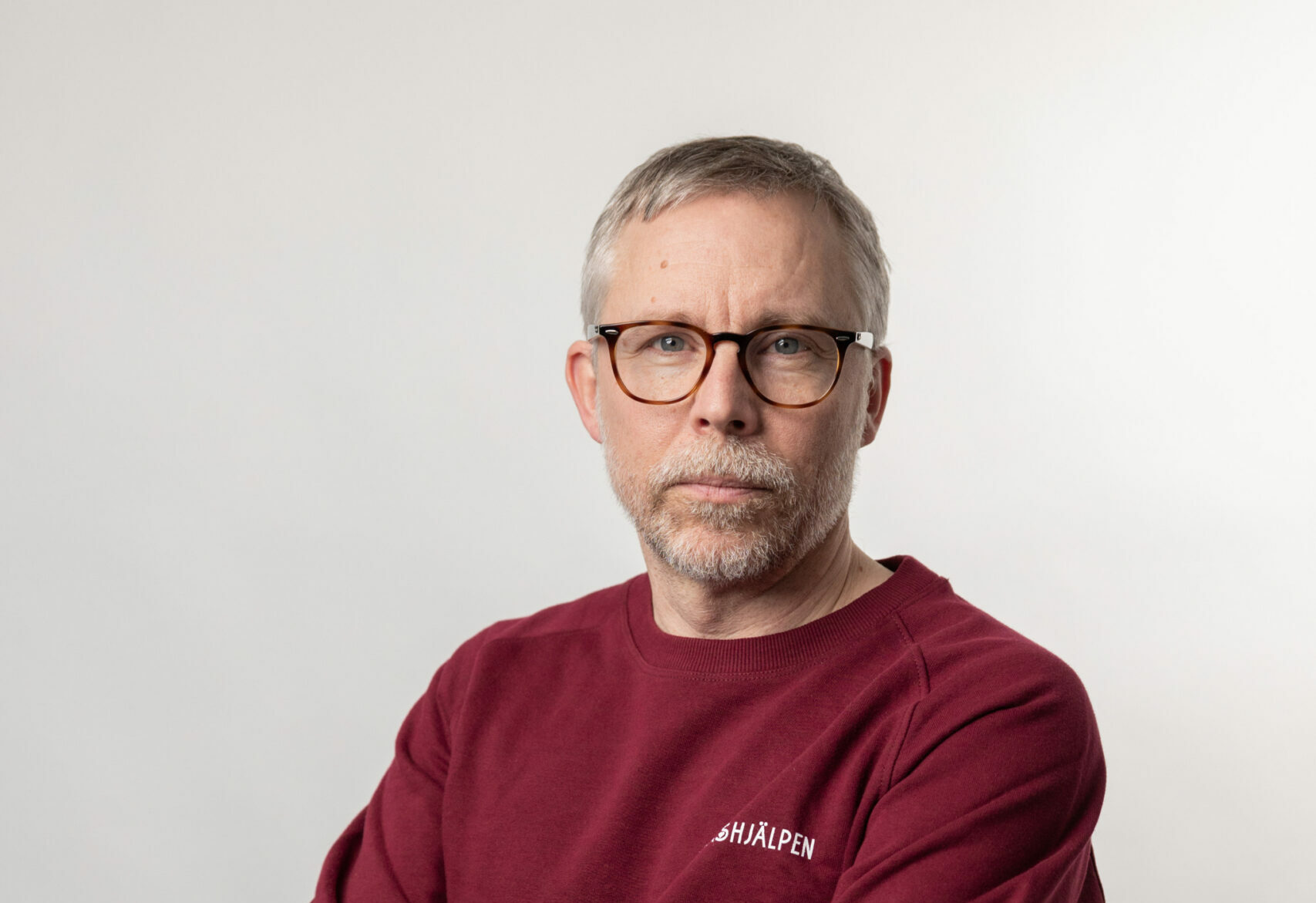
Mattias Ingeson Secretary General Erikshjälpen
Mattias Ingeson Secretary General Erikshjälpen
A motivating factor
Henriksson's research shows that there is local trust in religious actors. That religion is not seen as something negative, even if you do not share the same beliefs. Faith is even a motivating factor.
The results of the thesis can provide insights to improve collaboration with other actors. The hope is a better understanding of religious aid organizations and how their identity and worldview leads to both opportunities and challenges.
- "Erikshjälpen will disseminate Andrea's research results to our partner organisations and use it in our joint work against trafficking," says Mattias Ingeson. We will also highlight the results and spread the knowledge further in our networks.
 Listening